
Western sanctions against Russia have failed
Russia’s economy is growing as Western sanctions fail to impede President Vladimir Putin’s war against Ukraine. On Monday, the World Bank said Russia has gone from being an upper-middle-income country to a high-income country. Military investment and major government subsidies have spurred this economic growth.
After the initial full-scale invasion of Ukraine in 2022, the Russian ruble lost 40% of its value. Western companies left the country and the international banking system, SWIFT, closed to Russian banks. Western states also banned the exporting of weapons technology to Russia, the importing of Russian gold and diamonds, and sanctioned individual oligarchs.
While these sanctions certainly hit Russia hard in 2022, the Russian economy has been recovering since then. Gross domestic product growth in 2023 was 3.6% and is on track to be 2.5% in 2024. Western sanctions have made Russia negotiate new trade partners and increase domestic industry. Most critically, Russian oil exports are continuing. Since the oil market is global, it is hard for Western countries to dramatically hurt Russian oil exports in the long term as prices and supply chains will adjust to sanctions.
This is not meant to say that the Russian economy is healthy. This wartime growth is not sustainable long-term. High amounts of government spending on military goods and housing have been driving the economy’s recovery. While consumer spending and incomes have increased, technology and production capabilities have not dramatically improved. Inflation is still high and the 2022 mobilization worsened the country’s ongoing brain drain.
However, these issues will not deter Putin from continuing to pursue his goal of dominating Ukraine. Putin is content with the current trajectory of the war in Ukraine as he thinks he can outlast Western resolve. He is fighting an attritional war that is currently to his advantage. Russian troops are continuing to slowly take ground while Ukraine has been incapable of waging a successful counteroffensive since its victories in the autumn of 2022.
The West must learn from the war in Ukraine that economic incentives are not enough to block determined foes. While they can be a nice carrot to encourage good behavior, other states must be receptive to Western goals for aid and sanctions to matter.
This means that the diagnosis of a state’s goals is all important in determining which tools to use. Western wealth is a useful tool for states that desire Western wealth more than they want to pursue anti-Western goals. But it cannot be used as a catch-all solution to negotiate with adversaries. Other states and their leaders do not have the same priorities as us.
CLICK HERE TO READ MORE FROM THE WASHINGTON EXAMINER
The failure of Western sanctions to incentivize Putin to not invade in 2022 and to actually stop his campaign shows that other tools matter more in the rough-and-tumble world of geopolitics. The backbone of international relations is still hard military power and the consistently demonstrated willingness to use it.
At the end of the day, there are things in life more important than money. Even if we don’t realize that, our foes do. The failure of Western sanctions against Russia has taught us this lesson.
Radio silence is a double-edged sword for the Trump campaign
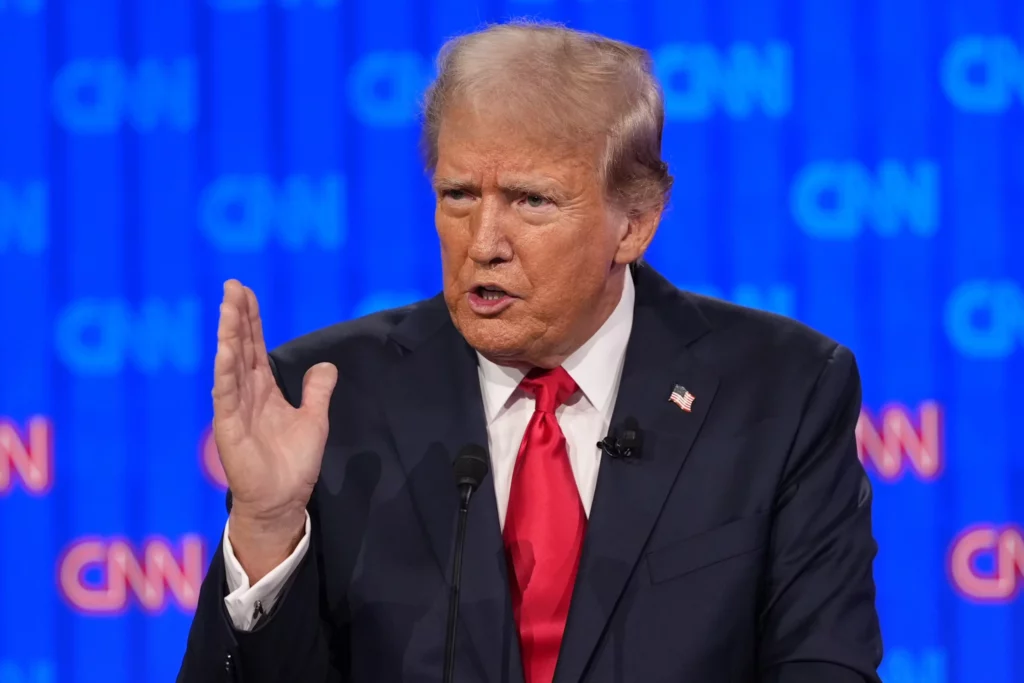
The reelection campaign of President Joe Biden may be spiraling into chaos since last week’s debate, but the radio silence from the campaign of former President Donald Trump could prove to be a bit of a double edged sword.
Since Biden turned in the worst debate performance of any candidate in recent memory at last week’s CNN debate, the Trump campaign and even Trump himself have proved content with watching their political rivals panic and wonder if their nominee is fit to win the presidential election.
Conventional wisdom would say you should never interrupt your enemy when he is hurting himself, and that is how the Trump campaign has operated to this point. But such a strategy could prove to be a double-edged sword if the focus on Biden becomes so intense that he withdraws from the race in favor of another candidate.
Now Trump should be considered the favorite to win the election, regardless of who the Democratic Party nominates. His polling lead over Biden is substantial at this point, and hypothetical polling against potential replacement candidates is only marginally better for Democrats.
Still, Trump and the Republican Party want to face off against Biden, not simply because it will afford voters the chance to redo the 2020 election but because he is by far the weakest candidate the party could select. His approval ratings are mired in the mid-30s, and typically safe Democratic states such as Virginia and Minnesota are suddenly competitive.
CLICK HERE TO READ MORE FROM THE WASHINGTON EXAMINER
This is where the Trump campaign’s radio silence could be too smart. At a certain point, whether it is by announcing his running mate or something else, Trump needs to inject himself back into the news cycle and distract the media and the Democratic Party from Biden’s feebleness.
At some point, Biden will show his senility again, and the panic around the president’s ability to win the election among the Democratic Party will once again bubble over. But to avoid Biden being replaced, Trump may want to think about turning the news cycle back on himself.

Youngest students recovering slower from pandemic: Study
Children who started school during the coronavirus pandemic are well behind the historical trend of academic achievement for their age group, and recovery lags behind their older peers, according to a study.
According to new data from Curriculum Associates, students who began school during the pandemic are consistently behind in math and reading, while older students show signs of recovery in reading but not math. The study compared three years of reading and math results from students who were between the ages of 3 and 9 in 2021 and compared them to historical trends.
“This only further validates the concern and frustration parents felt throughout the COVID era,” Michele Exner, senior adviser at education advocacy group Parents Defending Education, told the Washington Examiner. “This was a predictable outcome and yet the adults in charge of these school districts did nothing. Weak policymakers more beholden to teachers unions than children’s education created catastrophic learning loss and the youngest students continue to suffer the dire consequences.”
Researchers compared the academic growth patterns of students starting kindergarten through fourth grade in 2021, tracking through 2024, to those starting the same grade levels in 2016 and tracking through 2019.
The study comes as many in the education industry are making a play for more money as Elementary and Secondary School Emergency Relief funds are set to expire this year, but the nearly $200 billion pumped into schools during the pandemic only showed modest academic recovery.
Data show that the youngest group tested, who were in kindergarten or first grade in 2021, is the furthest behind the academic growth pattern of the same groups prior to the pandemic, or compared to students who were in kindergarten and first grade in 2016. They not only have not recovered to the same extent as their older peers, but are actually in some cases widening the gap from historical trends.
While the oldest group tested, who were in fourth grade in 2021, shows signs of accelerated growth in recovery, having started far behind historical trends their first year back from the pandemic, kindergarteners are falling further behind the trend, while first graders are maintaining an upward trajectory but not making up for lost time.
“The only cohort to demonstrate small signs of recovery are those students beginning Grade 4 in 2021,” the study stated. “By stark contrast, younger cohorts are either falling behind or consistently hovering below historical trends in both subjects. The differences by cohort could occur for a variety of reasons, including the disruption to early childhood experiences, challenges building foundational skills, young students being less responsive to virtual instruction, or simply the interventions utilized targeted students in older grades.”
“Given young cohorts missed their pre-K to Grade 1 school years, or received instruction virtually at this time, they may have missed a critical window during which foundational skills develop,” researchers added.
CLICK HERE TO READ MORE FROM THE WASHINGTON EXAMINER
Some of the reason for divergent academic recovery among age groups, the study noted, is grade placement level. The students who were placed on grade level for reading “rarely fell behind” the historical trend and were close to the trend for math. However, students who were behind their grade level for both subjects were consistently behind the historical growth over time.
As the Washington Examiner reported, many of the protocols put into place by elected leaders, pressured by the federal government, have had detrimental impacts on children academically, socially, and developmentally. Many of the protocols, such as masking and social distancing, both had little or zero scientific backing but had some of the worst long-term effects on children.
General Motors to pay nearly $146 million for cars that violated emissions regulations
General Motors has reached an agreement with the Environmental Protection Agency and the Transportation Department to resolve excess emissions stemming from nearly 6 million of its vehicles — and the company has agreed to pay a penalty of nearly $146 million.
The penalty is a result of an EPA investigation that identified excess carbon emissions from GM vehicles, violating federal regulations. Tests done by both GM and the EPA showed that the company’s vehicles were emitting an average of 10% higher CO2 levels than previous reports claimed.
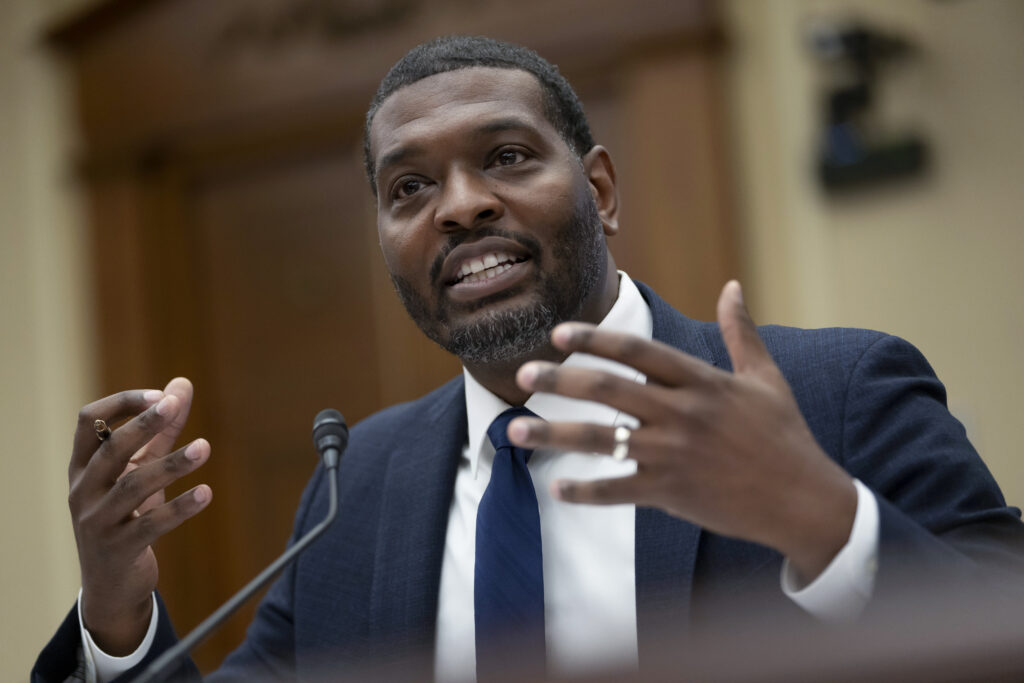
“EPA’s vehicle standards depend on strong oversight in order to deliver public health benefits in the real world,” EPA Administrator Michael Regan said. “Our investigation has achieved accountability and upholds an important program that’s reducing air pollution and protecting communities across the country.”
The agreement comes after the Biden administration has issued one of the toughest tailpipe emission standards for vehicles.
CLICK HERE TO READ MORE FROM THE WASHINGTON EXAMINER
As part of the agreement, the car company has retired approximately 50 million metric tons of greenhouse gas credits. In a statement to the Washington Examiner, a spokesperson for GM said the company will resolve outstanding problems with the National Highway Traffic Safety Administration through a combination of compliance mechanisms. However, in agreeing to the resolution, General Motors admitted to no wrongdoing or noncompliance with federal regulations, including the Clean Air Act and the Energy Policy and Conservation Act of 1975.
“We believe this is the best course of action to swiftly resolve outstanding issues with the federal government regarding this matter,” said Bill Grotz, a spokesman for the company. “GM remains committed to reducing auto emissions and working toward achieving the administration’s fleet electrification goals.”

Zelensky and Kremlin push back on Trump claims of ending war in 24 hours
Former President Donald Trump has repeatedly claimed he could end the Ukraine-Russia war within 24 hours of being elected. Ukrainian President Volodymyr Zelensky wants to know how.
“If Trump knows how to finish this war, he should tell us today,” Zelensky said in a Bloomberg TV interview aired on Wednesday. “If there are risks to Ukrainian independence, if we lose statehood — we want to be ready for this, we want to know.”
During last week’s debate with President Joe Biden, Trump claimed that if the United States had “a real president, a president that knew — that was respected by [Russian President Vladimir] Putin, he would have never invaded Ukraine.”
He also claimed at the debate that he will “have that war settled between Putin and Zelensky as president-elect before I take office on Jan. 20.”
“I’ll get it settled fast, before I take office,” he added.
At a May 2023 CNN town hall, Trump acknowledged that there have been mass casualties in the multiyear war and that he could make it stop.
“And I’ll have that done — I’ll have that done in 24 hours,” he said.
Trump claimed then, as he has several times since on the campaign trail, that his superior negotiating skills would kick in once he got Putin and Zelensky into a room together. He’d have a deal between the two warring nations wrapped up in a day, he said.
Trump has also claimed that the billions of dollars in aid going to Ukraine was doing little good, adding that Kyiv is “not winning the war.”

Zelensky took umbrage with Trump’s comments that Kyiv is losing, rejecting the term “deadlock” that Trump used to describe the conflict.
“It’s not a deadlock, it’s a problematic situation,” Zelensky said. “A deadlock means there’s no way out. But a problem can be solved if one has the will and has the tools. We do have the will, and the tools — they haven’t arrived yet.”
Zelensky acknowledged that they’ve had a “real long, long, long wait” between what they’ve been promised regarding money and aid and when they’ve received it. However, he lauded the $61 billion assistance package approved by Congress this year.
Another person not buying Trump’s claims of a quick fix is Russia’s United Nations ambassador, Vassily Nebenzia, who told reporters on Monday that the “Ukrainian crisis cannot be solved in one day.”
The Kremlin also pushed back on Wednesday, claiming there were no talks in place between Putin and Trump on possible conditions for peace.
CLICK HERE TO READ MORE FROM THE WASHINGTON EXAMINER
“No, that’s not true,” Putin’s spokesman Dmitry Peskov told reporters when asked about the talks.
Separately, on Wednesday, NATO allies agreed to provide at least $43 billion in military aid for Ukraine per year but shied from explicit pledges for the years ahead, Bloomberg reported.

Housing affordability hits new low under Biden
Newly released data regarding the housing market’s continual deterioration further threaten President Joe Biden’s reelection chances.
If he stays in the race, that is.
Nonetheless, whoever the Democratic nominee ends up being will be hampered by the fact that home affordability has sunk to its lowest point since 2007.
A new report from Attom reveals that the cost of mortgage payments, property insurance, and taxes accounted for just over 35% of the average wage in the second quarter. That number was at 43% for more than a third of U.S. markets despite 28% being considered the baseline percentage for affordability. The cost of a typical home was 32.1% a year ago.
This news is timely given that the latest report from the Mortgage Bankers Association reveals that mortgage rates rose above the 7% mark last week, from 6.93% to 7.03%. Mortgage loan application volume also fell last week, dropping by 2.6% on a seasonally adjusted basis, according to the market composite index.
This plethora of new data further confirms that the current nature of the housing market is one of a crisis. The cost of living is unsustainable for so much of the public amid perpetual inflation, sky-high interest rates, and rising child care costs.
The state of the economy is naturally the top issue for voters heading into November. Biden had the opportunity to ease their qualms during last Thursday’s presidential debate against former President Donald Trump in the first question of the night.
He displayed many typical talking points, first by blaming Trump and second by claiming that he “brought out a position where we have 800,000 new manufacturing jobs.”
No matter the strange wording, Biden’s common claim that he created 800,000 manufacturing jobs is highly misleading given that most of those gains were due to a bounce back from the pandemic. Only 34,000 manufacturing jobs have been added since October 2022. Almost every claim Biden makes about Trump’s poor handling of the economy and his success is derived from the economic pitfalls of COVID-19.
Biden addressed the housing crisis directly when he said that he will make sure to “reduce the price of housing” by “building 2 million new units.”
Such a claim indirectly asserts that high housing costs are due to a lack of supply. Michael Fratantoni, MBA’s senior vice president and chief economist, begs to differ. He said in a statement that “Purchase applications decreased the final full week of June, even as both new and existing inventories have increased over the past few months.”
Though Biden having no grasp on economics isn’t news, his patronizing and misleading rhetoric has only worsened as his presidency has continued. There’s a strong disconnect between the perception of the economy and the romanticized version touted by the Biden administration.
CLICK HERE TO READ MORE FROM THE WASHINGTON EXAMINER
The Left so often picks its brain trying to figure out why middle-class voters don’t buy Biden’s story.
Come on, folks, he’s from Scranton!

What Democratic governors are hoping to hear at tonight’s meeting with Biden
President Joe Biden is holding a meeting with almost every Democratic governor in the United States on Wednesday night as he continues to face calls from every corner of the political landscape to step down.
Multiple reports indicated that 22 of the 23 Democratic state governors will attend the meeting in person or virtually, with only Gov. Tony Evers (D-WI) declining to participate. Of the 22, 12 will attend virtually and 10 will attend in person.
The 10 who will attend in person are Gov. Gavin Newsom (D-CA), Gov. John Carney (D-DE), Gov. J.B. Pritzker (D-IL), Gov. Andy Beshear (D-KY), Gov. Wes Moore (D-MD), Gov. Maura Healey (D-MA), Gov. Gretchen Whitmer (D-MI), Gov. Kathy Hochul (D-NY), Gov. Daniel McKee (D-RI), and Gov. Tim Walz (D-MN).
Biden will meet with them at 6:30 p.m. in the White House’s Roosevelt Room. It’s unclear why Evers won’t attend; he told outlets Tuesday through a spokesperson that he “does not currently plan to join” the meeting and didn’t participate in a call with Democratic governors on Tuesday either.
Evers appeared at Nordic Creamery, a dairy in Wisconsin, on Wednesday. He is the governor of a critical swing state and won’t appear at a meeting where Biden is expected to appeal to high-level Democratic officials for their continued support. He commented on Biden’s debate performance a few days ago, saying, “I don’t care how he performs on that stage. To me it doesn’t matter. He’s a great leader.”
I wrapped up our #JuneDairyMonth celebrations with a stop at Nordic Creamery in Westby to pick up some of their award-winning dairy products.
We’ve been proud to help support Nordic Creamery’s growth through our Dairy Processor and Main Street Bounceback Grant Programs! pic.twitter.com/TskrAepBw6
— Governor Tony Evers (@GovEvers) July 3, 2024

In an interview on CNN on Tuesday evening, Kentucky’s Beshear outlined what he hopes to hear during Wednesday’s meeting, saying governors want “a direct and candid conversation with the president.”
“I think we also want to talk about strategy. … When governors get out there, we put our own credibility and brands on a line,” he said.
“And so I think that these governors who want to be helpful just want to make sure when they’re talking one on one with people in our communities that we are giving them accurate and reliable information,” he added.
Pritzker commented as well, saying Biden needs to “communicate more” if he plans to correct his performance.
“I think that there’s a healthy conversation that will happen, with the president, I hope, expressing what he intends to do going forward in the campaign and reassuring everybody that this is the right course to make sure that we stay the course with him,” he said.
Walz, who is chairman of the Democratic Governors Association and the governor of a competitive presidential state, said governors will get the chance to ask questions about “some of the concerns we talked about.” He said he has personally struggled with poor debate performances but the question is: “How does that impact how the country runs?”
CLICK HERE TO READ MORE FROM THE WASHINGTON EXAMINER
“How does that impact what an election looks like?” he said. “It’s about the differences and the binary choice that we’re going to face in November, how important that is.”
Newsom and Whitmer have been floated as Biden replacements, though Vice President Kamala Harris is the favorite. Beshear has been rumored to be a vice presidential choice for Harris if she took over as Democratic nominee.

Democratic Virginia lawmakers yield to Youngkin pressure on military tuition
Virginia lawmakers have agreed to repeal new restrictions on a program providing free college tuition at state schools for families of veterans killed or seriously disabled during active duty.
Louise Lucas, chairwoman of the state Senate Finance Committee, and Luke Torian, chairman of the House Appropriations Committee, announced they plan to introduce legislation to repeal changes to the Virginia Military Survivors and Dependents Education Program in the two-year budget that took effect Monday.

On July 18, members of the Senate and House will vote on this agreement.
In addition to the initial $40 million included in the state’s budget, the proposed legislation will allocate an extra $90 million in taxpayer funds to cover the program. Over the last five years, the program’s costs have increased from $12 million to $65 million. Gov. Glenn Youngkin (R-VA) celebrated the development Tuesday after working hard to make sure the program was funded.
“A full, clean repeal with additional financial support for the VMSDEP program, unencumbered by any other provisions, is great news for our military heroes, first responders, and their families,” Youngkin posted on X.
The program will allocate $65 million annually, with studies conducted by the Joint Legislative Audit and Review Commission.
“This study and the allocation of what now will be $65 million per year for the program provides me with the comfort that we will not place the burden of the escalating cost of the program on other students through their tuition charges,” Lucas said in a statement.
In May, the Virginia General Assembly passed a budget deal that sought to address the program’s increasing costs.
CLICK HERE TO READ MORE FROM THE WASHINGTON EXAMINER
They restricted eligibility to associate and undergraduate degrees, mandated applicants to seek other forms of financial aid, and tightened residency requirements.
Following protests from military families, the state House of Delegates voted last week to repeal these restrictions, but the Senate did not take any action despite meeting to discuss the issue twice in two weeks.

The Biden administration is selectively prosecuting pro-lifers
A pro-life activist has avoided jail time for attending a peaceful demonstration in the wake of selective prosecution from the Department of Justice.
Paul Vaughn, a pro-life father of 11, was sentenced to three years of supervised release, despite facing a maximum combined penalty of more than a decade in federal prison. The judge in the case noted that “no one was hurt in any way” by his protest and said it was “entirely non-violent.”
In March 2021, Vaughn participated in a gathering in a hallway outside an abortion facility where the group prayed, sang hymns, and urged women not to kill their unborn children. Demonstrations like this are common across the country, and no one who participated in the sit-in was charged with committing any violence.
After the Dobbs v. Jackson Women’s Health Organization decision, President Joe Biden’s DOJ started to target pro-life demonstrators. In the summer of 2022, the DOJ created an abortion-access task force and then actively searched for cases that might violate the Clinton-era Freedom of Access to Clinic Entrances Act, despite mostly ignoring the firebombings of pro-life pregnancy centers.
Vaughn was one of the victims of this crackdown, and was indicted in October 2022. Two days after his indictment, FBI agents raided his home at 7:20 a.m. with weapons drawn and handcuffed him in front of his children.
Vaughn and five others were charged with felonies for the incident, while four additional attendees — including a World War II concentration camp survivor — were charged with misdemeanors. They were all charged with FACE Act violations, while those with felonies were additionally charged with a supposed “conspiracy against rights.”
The prosecution tried to portray Vaughn as willfully deceiving police, despite a police negotiator testifying that he had been helpful and peaceful. An abortion facility employee claimed to be “trapped inside the building during the incident,” but video showed this was not the case.
Vaughn was found guilty in January, in what his attorney called a “frustrating setback” for the pro-life community. However, he is expected to appeal his conviction.
His selective prosecution is just one example of many, as the Biden administration has made a habit of egregiously abusing its power. In a somewhat similar case, pro-life activist Mark Houck was recently acquitted of flimsy charges the DOJ had brought against him.
CLICK HERE TO READ MORE FROM THE WASHINGTON EXAMINER
For all the time the Left has spent complaining about former President Donald Trump potentially “weaponizing” the federal government if he is reelected, it has been silent about Biden’s obvious weaponization of the justice system.
The saddest part about this story is that the doctors who murder unborn children every day face no legal consequences for the atrocities they have committed, while those who stand up for life are forced to fear for their futures.
