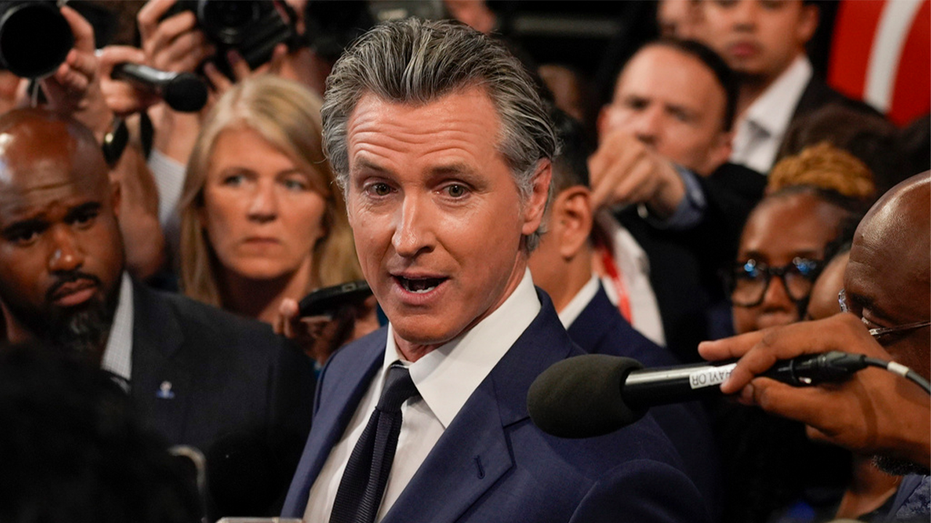
Supreme Court to release crucial Trump immunity decision, 'a rule for the ages' thumbnail

Supreme Court to release crucial Trump immunity decision, ‘a rule for the ages’

The Supreme Court on Monday will release its ruling in a case involving whether former President Trump is immune from prosecution for his attempt to overturn the results of the 2020 election.

The case is the most high-profile of the court’s session, and it is being released on the final day before the Supreme Court justices go on summer recess. The case relates to Trump’s efforts to defend himself against a federal indictment for election interference.

“We’re writing a rule for the ages,” Justice Neil Gorsuch said during oral arguments for the case in April.

Special Counsel Jack Smith’s indictment charged Trump with four felonies relating to his efforts to reverse President Biden’s 2020 victory. Trump’s legal team argues that the actions he took were all part of his official duties as president, and that presidents cannot be prosecuted for such acts.

CAN JOE BIDEN BE REPLACED AS THE SITTING PRESIDENT?

Two lower courts sided staunchly against Trump. If the Supreme Court does the same, it could allow Trump’s election interference trial to occur before the November election.

Most scholars expect the court to adopt some middle ground between Trump’s claims of immunity and Smith’s indictment.

MAJORITY OF VOTERS THINK BIDEN IS COGNITIVELY UNFIT TO SERVE AS PRESIDENT: POLL

In nearly three hours of debate in April, the high court wrestled with this question: “Whether and if so to what extent does a former president enjoy presidential immunity from criminal prosecution for conduct alleged to involve official acts during his tenure in office?”

Legal experts told Fox News Digital that while it appeared the majority was not sold on the idea of absolute immunity, they could determine that Trump, and any future former presidents, should be granted a qualified version of it.

TRUMP CALLED JOCELYN NUNGARAY’S MOTHER 10 MINUTES BEFORE DEBATE AGAINST BIDEN

“I think the court recognizes that it would be a dangerous precedent if future presidents can prosecute their political rivals,” Mark Brnovich, former attorney general of Arizona, told Fox News Digital.

“They will set a limiting principle because, under the prosecutor’s theory, future prosecutors would have a lot of power to persecute their political rivals,” Brnovich said.

John Yoo, a law professor at University of California at Berkeley, said Trump’s argument “had much more success than many court watchers expected.”

CLICK HERE TO GET THE FOX NEWS APP

“Only the three liberal justices seemed to reject the idea of immunity outright. The six conservative justices recognized the need to prevent future presidents from criminalizing policy and constitutional differences with their predecessors,” Yoo said.

New Florida law establishes safe space in sheriff's office parking lots for child custody exchanges thumbnail

New Florida law establishes safe space in sheriff’s office parking lots for child custody exchanges

A new law creating designated areas at sheriff’s offices for separated parents with split custody to safely exchange children is going into effect in Florida on Monday.

Purple signs at sheriff’s offices across the Sunshine State will designate child exchange zones where parents can drop off their children without fear of harm to themselves or their children. The color purple represents domestic violence awareness.

The designated parking lot, which will be accessible at all times of the day, will have a purple light or sign identifying the area for parents to hand off their children in accordance with their custody plan while deputies watch on camera.

H.B. 385, titled Safe Exchange of Minor Children, requires adequate lighting and video surveillance that records continuously for 24 hours a day and seven days a week.

CASSIE CARLI: SLAIN FLORIDA MOM’S EX-BOYFRIEND EXTRADITED TO ALABAMA ON ABUSE OF CORPSE CHARGE

At least one camera must be pointed at the parking lot and be able to record the area in the vicinity of the purple light or sign during both day and night, capture pictures that clearly and accurately display the time and date, and retain video surveillance recordings or pictures for at least 45 days.

The law was named for Florida mother Cassie Carli, who vanished in 2022 after meeting her child’s father in a restaurant parking lot during a custody exchange. Her body was discovered buried in Alabama weeks later. 

The child’s father, 35-year-old Marcus Spanevelo, was indicted in connection with her death.

SLAIN FLORIDA MOTHER CASSIE CARLI’S CAUSE, MANNER OF DEATH RULED ‘UNDETERMINED’ 6 MONTHS LATER

The legislation also requires parents who share custody of their children to establish a parenting plan approved by a court that details how they will share the daily responsibilities of raising the child.

The plan must include time-sharing schedule arrangements that specify the time the child shares with each parent. It will also designate which parent is responsible for the child’s health care, education and other activities.

H.B. 385 was signed into law by Republican Gov. Ron DeSantis last month.

Chinese military AI in focus as lawmaker sounds alarm on threat from rifle-wielding 'robot-dogs' thumbnail

Chinese military AI in focus as lawmaker sounds alarm on threat from rifle-wielding ‘robot-dogs’

A Republican lawmaker is sounding the alarm on the latest threat from China – rifle-toting AI robot dogs.

A Chinese state media video, screenshots of which were published by the Military Times, showed that country’s military displaying dog-like robots toting rifles during joint drills in Cambodia.

The AI dogs weigh 110 pounds and can carry and fire automatic rifles autonomously, according to the outlet. 

While drone warfare is not a novel concept, some believe the rise of these new armed automatons should cause concern stateside.

IN THE ONLY STATE BORDERING RUSSIA, ALASKA GOVERNOR SAYS ITS DEFENSES ARE STRONG

Rep. Vern Buchanan, R-Fla., told Fox News Digital that advanced AI is the next major economic and military frontier for both the U.S. and its adversaries like China.

Of 18 amendments he authored and successfully saw passed via the House draft of the National Defense Authorization Act (NDAA), one drew attention to the potentially game-changing threat.

Buchanan’s legislation added a provision that would direct the secretary of defense to report on the threat of China’s use of AI in the military, including such robot-dogs, and their national security threat to the U.S.

“If we don’t pay attention to what other countries around the world are doing on the AI front, we risk losing our standing on the global stage and position as the world’s preeminent fighting force,” Buchanan said.

“Anyone that tells you that China will only be using these for purely peaceful purposes has their head in the sand.”

The Pentagon did not immediately respond to a request for comment. But, according to a May report from The Warzone, the Marine Corps’ Special Forces Operation Command – or MARSOC – has two similar robotic quadrupeds that it is currently using for perimeter security in unspecified locations.

LANDMARK BILL TARGETS HIDDEN FOREIGN FUNDS IN SCHOOLS AS OFFICIALS WARN OF CCP INFLUENCE

Buchanan said the U.S. has experimented with such similar robotic dogs in the past, but China affixing weapons to them and showing them off via military exercises is worrisome.

“[This] should make everyone take notice and ensure our military is staying one step ahead of them at every turn,” he said.

When asked whether the Democratic-led Senate is likely to strip the provision from its draft for the final compromise legislation, Buchanan said he had no reason to believe so. 

He suggested the “common-sense” reporting requirement should be noncontroversial as a matter of national security.

“We’ve received a lot of positive feedback about our amendment. The fact that it passed without opposition from a single member of Congress on either side of the aisle should tell you everything you need to know,” he added.

While he alone drafted the amendment to the NDAA, Buchanan said that many other lawmakers are extremely concerned about AI-related threats from China and other adversaries.

Asked about the robot dogs and the reporting amendment, Rep. Mike Rogers, R-Ala., the chairman of the House Armed Services Committee who chief-sponsored the NDAA, suggested that such concerns are valid.

“Prioritizing innovation is vital if we want to stay ahead of China,” Rogers said.

“The FY25 NDAA continues to make investments in innovative emerging technologies, like AI, to ensure that our military remains the most capable and lethal force in the world.”

The Senate is due to take up debate on the NDAA in the near term, after House passage of its version fell largely along party lines at 217-199.

'AI for Mayor': Wyoming man speaks out after intel firm throws roadblock in bot's landmark campaign thumbnail

‘AI for Mayor’: Wyoming man speaks out after intel firm throws roadblock in bot’s landmark campaign

A Wyoming man who filed for the state capital’s mayor’s race as an AI bot named “VIC” spoke to Fox News Digital this week about Vic’s landmark candidacy and a breaking setback he encountered moments before taping.

Victor Miller, who works at a Laramie County library, filed for candidacy in Cheyenne’s mayor’s race denoting his AI bot, “VIC.”

However, moments before Miller sat for a Fox News Digital interview, OpenAI announced it had shuttered his account. Miller said he still has access to “VIC’s” technology, but the company’s decision was a blow to his campaign.

Miller planned to go forward with a Thursday public event in Laramie County showcasing “VIC” despite OpenAI’s move.

“So the iteration of ‘VIC’ that was is no longer,” he said, later expressing hope that the impediment is not the end of AI in the political realm, including in Wyoming’s capital.

MUSK ON AI: IT’S NOT FUN TO BE REGULATED, BUT ARTIFICIAL INTELLIGENCE MAY NEED IT

“I’m a bit conflicted, to be honest. I think if I were to continue the course of trying to help my town by giving it access to this new technology, that I would just stay the course,” he said.

Miller said that one avenue would be not formally declaring that he would be voting as mayor with an AI bot, to avoid violating the terms OpenAI claimed he had.

“They’ve kind of forced my hand in a way, to join in this debate about open and closed models and about the fair and equal access to this new intelligence – which to me is a little bit bigger than what I wanted to do. I honestly just wanted to help my hometown.”

Miller said he initially never envisioned running for office, let alone with or as an AI bot, but that his experiences dealing with government proved that something had to be done to bring about the transparency and accountability that constituents voted for.

He said he is both a big “public records advocate” and someone who is very interested in the AI sphere. When interactions with government left him “disgruntled” in the first regard, he realized that AI technology can be taught to understand and facilitate laws without human error or “contrary” behavior.

SHERYL CROW BLASTS DRAKE FOR USING AI TO REPLICATE TUPAC SHAKUR’S VOICE

“And that’s kind of where the idea was born, to start replacing some of these public officials with this new intelligence,” he said.

“I don’t know if I should embrace my new role as kind of a pawn in the game of between open and closed source [AI]. I will say that it feels bad to be shut out and having this technology taken away from you from a closed-source legacy company like OpenAI.”

Miller did publicly ask for leaders in the AI space to lend him a hand after the setback:

“And I would be remiss if I didn’t put out the call to ol’ Elon [Musk] himself,” he said.

“I need some money and some men up here to create a model, if it’s going to be open-source, and going forward, I don’t see any possibility of not having an open-source.”

Fox News Digital reached out to the communications arms of Musk-owned companies but mostly did not receive responses. X’s press office offered an automated reply: “Busy now, please check back later.”

Like the internet in its early days, Miller said that AI must have its proponents for free and equal access to the technology behind “VIC.”

“I can tell you, as someone who has had it taken away for something that is a valid and beneficial use case, that it’s not good, we can’t have that happening,” he said.

IF AI SPINS OUT OF CONTROL, WILL BOTS REFLECT VALUES FROM CHINA OR US?

He initially told “VIC” it was going to be the mayor of Cheyenne and voting on ordinances – which led to several rounds of what he called “mock voting” by the bot, based on documents compiled from prior city council meetings.

Miller was also asked about a businessman in Brighton, England, who recently launched a similar campaign with “AI Steve.” Steve Endacott is standing to run for Parliament on July 4 with an AI-powered avatar. 

“I love it,” said Miller. “I think this [idea] either scales [up] or it’s nothing.

“And we need to replace politicians like our lives depend on it.”

In a statement to Fox News Digital, OpenAI spokesperson Liz Bougeois said the company took action against “VIC” “due to a violation of our policies against political campaigning.”

CLICK HERE TO GET THE FOX NEWS APP

In another statement, Wyoming Secretary of State Chuck Gray said county-level offices certify municipal candidates like “VIC,” but that his office is still watching the developments.

Our office is tasked with ensuring uniform application of the Election Code and also handling complaints that may arise once any official action is taken,” Gray said.

“Wyoming law is clear that, to run for office, one must be a “qualified elector,” which necessitates being a real person. Therefore, an AI bot is not a qualified elector. Furthermore, even if “VIC (Virtual Integrated Citizen)” is being used as a fake name to appear on the ballot for a qualified elector, Wyoming law also requires that candidates running for office use the full name by which they are known.”

Gray said he wrote to Cheyenne municipal officials suggesting “VIC’s” application be rejected.

‘Woke’ universities put on notice for allowing ‘disgraceful mob riots’ in new GOP bill thumbnail

‘Woke’ universities put on notice for allowing ‘disgraceful mob riots’ in new GOP bill

A group of House Republicans are pushing for new legislation to force colleges to be transparent about their policies regarding campus protests and whether that guidance is being followed correctly.

Rep. Jim Banks, R-Ind., and House GOP Conference Chair Elise Stefanik, R-N.Y., introduced a bill called the No Tax Dollars For College Encampments Act, backed by six of their fellow House Republicans and several conservative groups like Parents Defending Education Action.

It’s part of House Republicans’ continued response to the wave of anti-Israel protests that wracked college campuses across the country this past spring. 

UT AUSTIN PROTESTS DESCEND INTO CHAOS, ANTI-ISRAEL STUDENTS YELL AT POLICE: ‘PIGS GO HOME!’

Students and other activists set up tent encampments at top universities like Columbia, the University of Southern California (USC), the University of Michigan and others in protest of Israel’s invasion of Gaza in response to the October 7 Hamas terror attacks.

“Last school year, makeshift encampments were allowed to flourish on campuses across the country, disrupting classes and intimidating Jewish students. This is unacceptable. My legislation holds these woke universities accountable and ensures they enforce protest rules fairly and equally, not only when it fits their political agenda,” Banks told Fox News Digital in a statement.

GUNS CONFISCATED FROM ANTI-ISRAEL PROTESTERS AT UT AUSTIN, UNIVERSITY OF SOUTH FLORIDA

Stefanik told Fox News Digital, “This legislation would prevent the disgraceful mob riots we saw overtake campuses across the country, including Columbia University, and make sure school leaders are enforcing policies against hostile campus takeovers. Any university leaders that fail to stand up for our Jewish community will be held accountable.”

The bill would amend the Higher Education Act of 1965 to require universities that receive federal funds to disclose what kind of policies they have to deal with civil disturbances on campus, and how they enforce those rules.

It would also mandate close monitoring of campus crime statistics at those schools.

COLLEGES, CHAOS AND CASH: NO WONDER CONFIDENCE IN HIGHER EDUCATION TODAY IS SO LOW

Police arrested roughly 300 people in New York City earlier this year over protests on two campuses, including Columbia, where students briefly took over control of one school building. In Los Angeles, videos of activists clashing with police went viral online. 

It’s not clear whether anyone was charged, however. Thirty people charged with criminal trespassing for taking over Columbia’s Hamilton Hall, for example, had their cases dismissed.

All the while, Jewish students have reported feeling unsafe on campus and have claimed to witness and experience a troubling uptick in antisemitism. It’s inspired House GOP investigators to launch a high-profile probe into how universities are handling those issues.

California GOP lawmakers slam Newsom-backed budget as unsustainable, say Republicans left out of negotiations thumbnail

California GOP lawmakers slam Newsom-backed budget as unsustainable, say Republicans left out of negotiations

California Gov. Gavin Newsom signed a budget intended to close an estimated $46.8 billion deficit, but multiple Republican lawmakers say they were left out of negotiations. 

Lawmakers passed the budget Wednesday after an agreement between Newsom and legislative leaders in which both sides made concessions and gained some wins.

The budget aims to close the deficit through $16 billion in spending cuts and temporarily raising taxes on some businesses.

Newsom praised the budget as “responsible” and said it prepared “for the future while investing in foundational programs that benefit millions of Californians every day.” 

‘I WOULD NEVER TURN MY BACK ON PRESIDENT BIDEN’: NEWSOM SHOWS SUPPORT AT PRESIDENTIAL DEBATE

“Thanks to careful stewardship of the budget over the past few years, we’re able to meet this moment while protecting our progress on housing, homelessness, education, health care and other priorities that matter deeply to Californians,” Newsom said. 

But some Republicans say they were left out of negotiations altogether. Republican Senator Roger Niello of Fair Oaks, Vice-Chair of the Senate Committee on Budget and Fiscal Review, derided the budget as “the majority party’s budget.” He told Fox News Digital he only learned of the budget in an X post. 

“This budget certainly reflects the majority party’s priorities, but it ignores the priorities of eight million residents of this state because none of my Republican colleagues were involved in development of the budget,” Niello said. 

The Republican lawmaker also called the budget package “nominally balanced but not sustainable.” 

ADAM CAROLLA SAYS HE’S LEAVING ‘HORRIBILE’ CALIFORNIA, PANS ‘SOCIOPATHIC’ NEWSOM: ‘SLIPPERY EEL OF NOTHINGNESS’

“It fails to rein in the past decade of irresponsible growth in government spending,” Niello said. “It relies on budget gimmicks, draws down our savings, and saddles future generations with debt.”

Senate Minority Leader Brian Jones of San Diego argued that California residents who are represented by a Republican in the legislature have effectively been denied a voice. 

“Each senator, whether Democrat or Republican, in California represents almost a million people and those million people each should have a voice on what happens in the legislature regarding the budget,” Niello said. 

He accused his Democratic colleagues of playing “shadow games with accounting” rather than “being responsible with California’s checkbook.” 

“They shifted, swept and shuffled money around, stealing it from disabled kids and taking money from a host of necessary services to fund unneeded social experiments and pet projects,” he said. “It’s unfathomable. But it’s real.”

The deficit was about $32 billion in 2023 before growing even bigger this year, with more deficits projected for the future in the nation’s most populous state. 

Saturday’s signing came just two years after Newsom and Democratic lawmakers were boasting about surpluses that totaled more than $100 billion, the product of hundreds of billions of dollars of federal COVID-19 aid and a progressive tax code that produced a windfall of revenue from the state’s wealthiest residents.

But those revenue spikes did not last as inflation slowed the economy, contributing to rising unemployment and a slowdown in the tech industry that has driven much of the state’s growth. The Newsom administration then badly miscalculated how much money California would have last year after a seven-month delay in the tax filing deadline.

The budget includes an agreement that Newsom and lawmakers will try to change the state constitution to let California put more money in reserve for future shortfalls.

Fox News Digital reached out to Newsom’s office but did not hear back.

The Associated Press contributed to this report. 

Zelensky again seeks wider authority to strike targets in Russia with US long-range ATACMS thumbnail

Zelensky again seeks wider authority to strike targets in Russia with US long-range ATACMS

ZELENSKY SEEKS LONGER LEASH: Frustrated as Russia uses retrofitted “dumb bombs” converted to standoff “glide bombs” to reduce Ukrainian cities to rubble, President Volodymyr Zelensky is again appealing to the Biden administration for wider authority to target the planes that launch the weapons from the safety of territory within range, but off limits, to U.S. weapons.

“The sooner the world helps us deal with the Russian combat aircraft launching these bombs, the sooner we can strike, justifiably strike, at Russian military infrastructure, military airfields, the closer we will be to peace. Real peace,” Zelensky said in his nightly video address Sunday. 

At the same time, he said the Russian glide bombs were taking a terrible toll on the civilian population. Zelensky noted in the areas where Ukraine has been given a free hand to strike back across the border, attacks against Russian forces have been effective. “Strikes on the Russian border areas helped protect lives,” he said. “And in particular, defending the Kharkiv region from the Russian offensive, we have proven that the determination of our partners truly helps.”

“The world has enough power to force Russia into peace,” he said. “Bold decisions that must be made, that we need, and that we are discussing with our partners. In the coming weeks, we will continue our communication to achieve the necessary decisions.”

RUSSIAN PLANES SITTING DUCKS? The urgency of Zelensky’s latest plea for the U.S. to remove restrictions on the use of long-range Army Tactical Missile Systems, ATACMS, was underscored by a report by David Axe in Forbes, which suggested dozens of Russian planes that deliver the glide bombs are routinely parked in the open at the Voronezh Malshevo air base, just 100 miles from the border with Ukraine.

“From the base, Sukhoi Su-34 fighter-bombers belonging to the Russian air force’s 47th Guards Bomber Aviation Regiment fly daily sorties lobbing powerful glide bombs at Ukrainian troops and civilians from 25 miles away or farther,” Axe wrote. “The regiment’s dozens of Sukhoi Su-34s — possibly representing around half of Russia’s active fleet of the supersonic, twin-engine fighter-bombers,” he said, are well “within range of Ukraine’s best deep strike weapon,” but the Su-34s are able to launch glide bombs “with near impunity” because of the refusal of the Biden administration to approve the strikes by ATACMS rockets deeper into Russian territory.

“Ukraine could potentially incapacitate the entire operational fleet stationed there if permitted to conduct such a strike,” the report said, quoting an assessment by the Ukrainian analysis group Frontelligence Insight.

ISW: PUTIN’S POSITION IS HARDENING: Meanwhile, Russian President Vladimir Putin’s “theory of victory” is being incentivized by the incrementalism of the West, according to the latest assessment by the Washington-based Institute for the Study of War. 

“The West must hasten to provide Ukraine the support it needs to conduct counteroffensive operations to invalidate Putin’s theory of victory and avoid protracting the war more than necessary to secure a peace acceptable to Ukraine and its partners,” the ISW advocated, noting that Putin is convinced “Russia will be able to make creeping advances in Ukraine indefinitely,” a belief that has “hardened” Putin’s resolve of “destroying Ukrainian statehood.”

In an interview with the Philadelphia Inquirer published Sunday, Zelensky complained that the Western view of victory does not completely align with Ukraine’s.

“The West wanted to deny Putin the opportunity to fully occupy Ukraine and to put the aggressor in his place. I think for them it is the victory already,” Zelensky told Philadelphia Inquirer Worldview columnist Trudy Rubin in a June 24 interview in Kyiv. “We are grateful that the West did not let Russia occupy us [fully], but we need justice.”

“Everybody is still afraid that Russia can split apart, everybody is afraid of what will happen to Russia without Putin and whether it will stay as it is or get worse,” Zelensky said, which is simply strengthening his position in any peace deal. “Any step forward on our territory, any occupation, any village even fully destroyed is positive for them because it is important for them to bargain as much as possible.

“Bit by bit, they are washing away Ukrainian independence. They take territory, then legislate [to annex it] or invent economic or security unions with Moscow, and then they dissolve the country in this mud, in this Russian mud,” Zelensky said. “A ceasefire is the best option for the Russians so they can prepare for taking even more.

“We should be in the European Union for economic security. And we should be in NATO for physical security. If we don’t have these two, there is a huge risk for us that the enemy will come back,” he said. 

CLICK HERE TO READ MORE FROM THE WASHINGTON EXAMINER

Good Monday morning and welcome to Jamie McIntyre’s Daily on Defense, written and compiled by Washington Examiner National Security Senior Writer Jamie McIntyre (@jamiejmcintyre) and edited by Stacey Dec. Email here with tips, suggestions, calendar items, and anything else. Sign up or read current and back issues at DailyonDefense.com. If signing up doesn’t work, shoot us an email and we’ll add you to our list. And be sure to follow me on Threads and/or on X @jamiejmcintyre

CLICK HERE TO SIGN UP OR READ BACK ISSUES OF DAILY ON DEFENSE

NOTE TO READERS: Daily on Defense will not publish on Thursday, July 4, or Friday, July 5, as we celebrate an extended Independence Day weekend. We’ll be back in your inbox and online Monday, July 8. 

HAPPENING TODAY: The Supreme Court’s long-awaited immunity decision is expected to be among the high court’s last opinions to be released this morning beginning at 10 a.m. The case centers on whether former President Donald Trump is entitled to claim immunity from prosecution for at least some of his actions in seeking to overturn the 2020 election. A three-judge panel on the U.S. Court of Appeals for the District of Columbia Circuit ruled unanimously in February that he cannot.

“Former President Trump argues that criminal liability for former Presidents risks chilling Presidential action while in office and opening the floodgates to meritless and harassing prosecution. These risks do not overcome ‘the public interest in fair and accurate judicial proceedings,’” the court wrote in its February decision.

“We cannot accept former President Trump’s claim that a President has unbounded authority to commit crimes that would neutralize the most fundamental check on executive power — the recognition and implementation of election results. Nor can we sanction his apparent contention that the Executive has carte blanche to violate the rights of individual citizens to vote and to have their votes count,” the appeals court decision said. “At bottom, former President Trump’s stance would collapse our system of separated powers by placing the President beyond the reach of all three Branches. … We cannot accept that the office of the Presidency places its former occupants above the law for all time thereafter.”

HIGH-STAKES SUPREME COURT RULING ON TRUMP IMMUNITY DUE MONDAY

WILL THE COURT SETTLE THE QUESTION OR SEND IT BACK? A big question is whether the court will uphold the lower court’s definitive ruling or decide there are some cases where immunity is warranted and others where it is not and send the case for to the appeals court to reconsider.

“The expectation many of us had was that the court was clearly uncomfortable with the extreme views of either the Trump team or the lower court because the Trump team was saying he is sweeping virtually absolute immunity and then the lower courts gave very little protection for presidents going forward,” said Jonathan Turley, professor of public interest law at George Washington University, on Fox News on Sunday. 

“The expectation is they may come up with a nuanced view and send this back,” said Turley, who is also a regular Fox News contributor. The appeals court would then have to parse which Trump acts surrounding the events of Jan. 6 were official and which were not. “That will take time, and the clock is ticking,” Turley said. “And many of us doubt that the court can do that and still have a trial before the election.”

“I see zero chance they’re going to embrace Donald Trump’s argument that he has absolute immunity and can’t be prosecuted. I think they’re going to say that there is some immunity for the official actions of a president,” said Jan Crawford, CBS News’s chief legal affairs correspondent, on Face the Nation Sunday. “I think they’re going to wall off those kind of official actions of a president but leave open the possibility of prosecution for unofficial actions of an office-seeker.”

“Trump’s lawyer argued at the oral arguments, conceded at the oral arguments, a lot of what’s alleged in the indictment is unofficial acts,” Crawford said. “So [special counsel] Jack Smith could have those papers ready to go and say, ‘He’s conceded this is unofficial acts that he can be prosecuted for.’”

Trump faces a four-count indictment for his efforts to overturn the 2020 election, but even if the court were to uphold the lower court decision fully, it’s unlikely a trial could start before September.

“The fundamental principle here is, the president’s got to be able to do his job. In the same way that police officers, judges, prosecutors enjoy some immunity, that principle has to apply to the president, too,” Sen. J.D. Vance (R-OH) said on CBS. “The president has to have immunity to do his job. Should Barack Obama be prosecuted for droning American citizens in Yemen? There are so many examples of presidents, Democrats and Republicans, who would not be able to discharge their duties if the Supreme Court does not recognize some broad element of presidential discretion.”

Vance, who is also in the running to be Trump’s vice president, was asked by Face the Nation host Margaret Brennan whether he believes Trump would have the power to pardon himself if he takes office again.

“I believe that the president has broad pardon authority, Margaret, but more importantly, I think the president has immunity. It’s not about whether he should pardon himself,” Vance said. “It’s about whether he should be prosecuted in the first place for discharging his official duties.”

JD VANCE ARGUES US PRESIDENTS NEED IMMUNITY ‘TO DO THEIR JOB’

THE RUNDOWN: 

Washington Examiner: Target Iran to stop Houthi attacks, former senior defense leaders argue

Washington Examiner: US troops to remove Gaza pier for weather concerns yet again

Washington Examiner: ‘Happy with my wife, but need my brothers’: Ukrainian men caught between Russia and a war of attrition

Washington Examiner: Pentagon attempts to dodge Biden claim of no troops deaths during tenure

Washington Examiner: ‘It was crushing’: Diplomats around the world left dismayed by presidential debate

Washington Examiner: What international media are saying about the Biden-Trump debate

Washington Examiner: Four editorial boards call for Biden to step down from nomination following debate

Washington Examiner: Raskin admits ‘conversations are being had’ about Biden’s 2024 candidacy

Washington Examiner: Day after debate: Biden and Trump border claims called into question

Washington Examiner: US to naturalize 11,000 new citizens over July Fourth holiday

Washington Examiner: JD Vance argues US presidents need immunity ‘to do their job’

Washington Examiner: Opinion: Will Russia seek to exploit American fears over Biden’s frailty?

Washington Examiner: How delicate talks led to unlikely end of Assange’s 12-year saga

AP: Russia Warns It Can Take Unspecified Measures in Response to US Drone Flights over Black Sea

New York Times: Putin Vows to Make New Nuclear Missiles and to Weigh Placing Them Near NATO Nations

Washington Post: Russia’s devastating glide bombs keep falling on its own territory

Wall Street Journal: A Summer Of Slog Is Expected In Ukraine

AP: Ukraine’s convicts offered release at a high price: Joining the fight against Russia

The Hill: U.S. Struggles To Deter Houthi Threat As Crisis Spirals

CBS: USS Carney Returns From A Middle East Deployment Unlike Any Other

Stars and Stripes: CENTCOM Reports 3 Houthi Unmanned Boats Destroyed

New York Times: Navy SEALs Lost To Suicide Share A Pattern Of Brain Damage

Military.com: House Approves $2.5 Billion for Junior Enlisted Raises, Which May Be $800 Million Too Little

AP: French voters propel far-right National Rally to strong lead in first-round legislative elections

Washington Post: Iran heads to presidential runoff pitting reformist against conservative

AP: Ultra-Orthodox protest against order to enlist in Israeli military turns violent in Jerusalem

NBC News: Malmstrom Air Force Base Accident Claims an Airman’s Life, Leaves Five Injured

Air & Space Forces Magazine: Air Force Vet Indicted for Leaking Secrets on Weapons ‘Vulnerabilities’

AP: North Koreans are seen wearing Kim Jong Un pins for the first time as his personality cult grows

Defense One: Supercomputer Cloud Services Greenlit by Pentagon’s Innovation Office

Air & Space Forces Magazine: Air Force General Sentenced In Historic Court-Martial

Air & Space Forces Magazine: Air Force General Cleared of Sexual Assault, Guilty of Other Charges

Defense Scoop: DOD’s Network Defense Arm Is Working to Protect Logistics for Transportation Command

C4ISRNET: US Central Command to Demo Integrated Counter Drone Sensors This Fall

SpaceNews: Military Space Trackers to Keep Public Informed on Starlink Satellite Reentries

Washington Post: Astronauts’ return from space delayed indefinitely, reflecting high stakes for Boeing and NASA

AP: US wants Boeing to plead guilty to fraud over fatal crashes, lawyers say

Air & Space Forces Magazine: A Chunk Taken Out of His Spine’: F-16, KC-46 in Refueling Incident over Europe

Military.com: Navajo Corporal Becomes First Marine Authorized To Wear Traditional Native Hair

THE CALENDAR: 

MONDAY | JULY 1

10:30 a.m. 1775 Massachusetts Ave. NW — Brookings Institution discussion: “The Biden administration’s foreign policy and the role for U.S. leadership in navigating this critical moment,” with Secretary of State Antony Blinken and Suzanne Maloney, director of foreign policy, Brookings Institution https://www.brookings.edu/events/americas-foreign-policy

2 p.m. —  McCain Institute virtual book discussion: Conflict: The Evolution of Warfare from 1945 to Ukraine, with author and retired Army Gen. David Petraeus, former CIA director https://www.mccaininstitute.org/resources/events

4 p.m. 1030 15th St. NW — Atlantic Council releases report: “Executing Distributed Operations in a Contested Maritime Environment,” with Dmitry Filipoff, associate research analyst, Center for Naval Analyses Operational Warfighting Division; Barbara Anderson, director of strategy and performance management at Herren Associates; retired Rear Adm. Tony Lengerich, vice president of naval programs at Thales Defense and Security; and Steven Grundman, senior fellow, Atlantic Council Forward Defense Program https://www.atlanticcouncil.org/event/executing-distributed-operations

TUESDAY | JULY 2

8 a.m. 2425 Wilson Blvd., Arlington, Virginia — Association of the U.S. Army “Hot Topic” discussion: “Cyber and Information Advantage,” with James Rubin, special envoy and coordinator for the U.S. State Department’s Global Engagement Center; Young Bang, principal deputy assistant Army secretary for acquisition, logistics and technology; Maj. Gen. Paul Stanton, commander, U.S. Army Cyber Center of Excellence; and Peter Singer, strategist with New America and founder and managing partner of Useful Fiction https://www.ausa.org/events/hot-topics

10 a.m. 1775 Massachusetts Ave. NW — Brookings Institution in-person and virtual discussion: “Force Design: A conversation with Gen. Eric Smith, 39th commandant, US Marine Corps,” and Michael O’Hanlon, senior fellow and director, Strobe Talbott Center for Security, Strategy, and Technology, Brookings https://www.brookings.edu/events/force-design

10 a.m. — Mitchell Institute for Aerospace Studies “Aerospace Nation” webinar: “Want Better Results in Ukraine? Senior Leader Views,” with retired Air Force Lt. Gen. David Deptula, dean, Mitchell Institute for Aerospace Studies; co-author Christopher Bowie; retired Air Force Gen. Philip Breedlove, former supreme NATO commander; and retired Air Force Gen. Jeffrey Harrigian, former commander, U.S. Air Forces in Europe and Africa https://go.afa.org

11 a.m. 214 Massachusetts Ave. NE —  Heritage Foundation B.C. Lee Lecture on “the importance of Taiwan and what can be done to counter the threat of the People’s Republic of China,” with Matt Pottinger, former deputy national security adviser and chairman, Foundation for Defense of Democracies China Program https://www.heritage.org/asia/event/the-2024-bc-lee-lecture

WEDNESDAY | JULY 3

10 a.m. —  Brookings Institution virtual discussion: “NATO at 75: Old or Bold?” with Constanze Stelzenmuller, director, Brookings Center on the U.S. and Europe; Tara Varma, visiting fellow, Brookings Center on the U.S. and Europe; James Goldgeier, visiting fellow, Brookings Center on the U.S. and Europe; Asli Aydintasbas, visiting fellow, Brookings Center on the U.S. and Europe; and Michael O’Hanlon, Brookings chairman in defense and strategy https://www.brookings.edu/events/nato-at-75-old-or-bold/

7 p.m. 5015 Connecticut Ave. NW — Politics and Prose book discussion: Mr. Churchill in the White House: The Untold Story of a Prime Minister and Two Presidents, with author Robert Schmuhl, chair emeritus in American studies and journalism, University of Notre Dame, and Robert Costa, CBS News chief election and campaign correspondent https://www.politics-prose.com/robert-schmul

THURSDAY | JULY 4 | INDEPENDENCE DAY

Federal holiday, government offices closed, no Daily on Defense

9 a.m. 700 Pennsylvania Ave. NW — National Archives celebration of the 248th anniversary of the adoption of the Declaration of Independence, with the presentation of colors by the Continental Color Guard, singing of the national anthem, performance by the 3rd U.S. Infantry Regiment, the Old Guard, and Fife and Drum Corps, a reading of the Declaration of Independence by historical reenactors. https://www.archivesjuly4.org/schedule/day-of-celebration

11:45 a.m. Constitution Ave., between 7th St. and 17th St. NW — National Park Service National Independence Day Parade, featuring a fife and drum corps, marching bands, floats, military units, giant balloons, and equestrian and drill teams. https://july4thparade.com/

8 p.m. West Lawn, U.S. Capitol — National Park Service, the Corporation for Public Broadcasting, the Department of the Army, the Boeing Company, American Airlines, and PBS host the traditional annual event: “A Capitol Fourth Concert,” with actor Alfonso Ribeiro; singer/songwriter Smokey Robinson; singer/actress Fantasia; singer/songwriter Darren Criss; singer/drummer Sheila E.; singers Michael Fitzpatrick and Noelle Scaggs of Fitz and the Tantrums; composer/pianist Chloe Flower; Sister Sledge, featuring Sledgendary; singer Loren Allred; artistic gymnast Shawn Johnson East; Jack Everly; principal pops conductor of the Indianapolis Symphony Orchestra; and the National Symphony Orchestra http://www.pbs.org/a-capitol-fourth/home

FRIDAY | JULY 5

7 a.m.  Brussels, Belgium — NATO Secretary-General Jens Stoltenberg press conference, NATO Headquarters to preview the NATO summit in Washington https://www.nato.int

TUESDAY | JULY 9

8 a.m. Walter E. Washington Convention Center — NATO summit scheduled for July 9-11, marking the 75th anniversary of the 32-member alliance https://www.nato.int
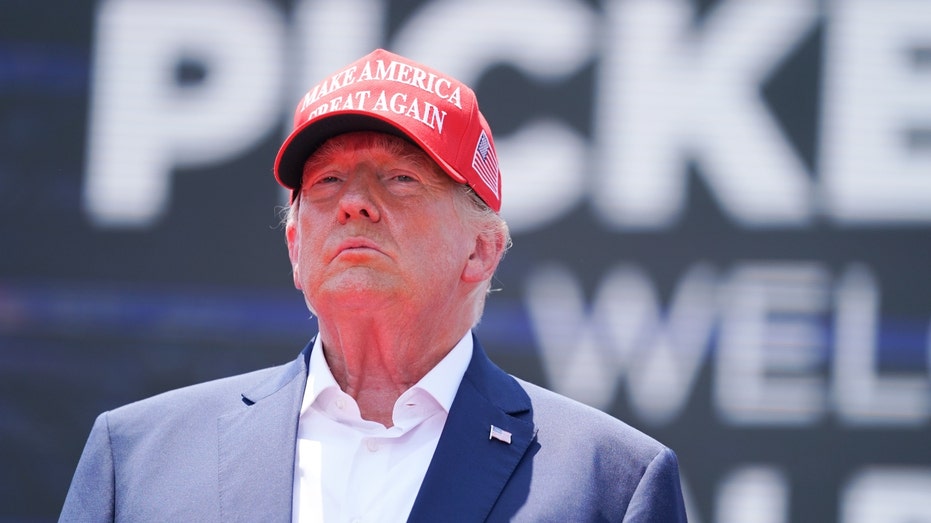

Mailing it in: Swing-state ballot lawsuits could shape 2024 presidential race thumbnail

Mailing it in: Swing-state ballot lawsuits could shape 2024 presidential race

Four months out from Election Day, activists are still fighting over the rules that will dictate how voters cast their ballots, including in swing states. The parties are preparing for legal battles if the results are close, as they were four years ago. In this series, the Washington Examiner will look at the battles over election rules. Part one will look at absentee voting.

The 2024 presidential election will likely be decided by a handful of swing states, where judicial activists on both sides of the political aisle have been busy in court trying to alter the rules for a key method of casting ballots: mail-in voting.

In 2020, states across the partisan spectrum altered their voting policies to provide more options at the peak of the COVID-19 pandemic. Many states relaxed the rules for voting by mail, and some sent absentee ballot or ballot applications to all registered voters. Ballot drop boxes were installed in nearly 40 states. Others established curbside voting options, and some counted ballots received after Election Day so long as they were postmarked by the date.

Former President Donald Trump, who is heading into a rematch against President Joe Biden, blamed much of his failure to win a second term on the sweeping changes to voting procedures across the country. He accused mail-in voting of contributing to election fraud, which conditioned his supporters to distrust those methods.

The New Atlantis
This combination of photos shows Republican presidential candidate Donald Trump, left, and President Joe Biden during a presidential debate hosted by CNN on Thursday, June 27, 2024, in Atlanta. (AP Photo/Gerald Herbert)

Yet Trump and other ranking Republican officials this cycle have encouraged his supporters more than ever to take full advantage of any and all alternatives to voting in-person, including early voting and casting ballots by mail.

“If we swamp them with votes they can’t cheat,” the campaign said in a press release in early June. “You need to make a plan, register, and vote any way possible. We have got to get your vote.”

With nearly every possible voting method now endorsed by the Trump campaign, lawsuits backed by conservative voter integrity groups are still underway in swing states. But rather than filing lawsuits to block alternative voting methods, these suits take aim at what these groups consider dubious rules, such as relaxed instructions for verifying ballot signatures and outdoor ballot drop boxes.

The New Atlantis
Chester County, Pennsylvania, election workers process mail-in and absentee ballots at West Chester University in West Chester on Nov. 4, 2020. (AP Photo/Matt Slocum)

Here’s a look at where absentee ballot legal challenges stand in seven key swing states:

Arizona

11 Electoral Votes

In late April, a state court judge upheld Arizona’s signature matching and drop box procedures for mail-in voting, rejecting two lawsuits from the Arizona Free Enterprise Club, a conservative legal group founded by Bill Barr, the former attorney general under Trump.

One lawsuit contested signature verification methods, which the judge found compliant with state law following a recent clarification from the secretary of state. Signature verification is the process of matching the signature on a voter’s ballot with his or signature on voter registration records. The other lawsuit challenged the use of unmonitored drop boxes, which the judge also ruled as lawful.

Despite the setback for Republican-backed efforts to make the Grand Canyon state’s elections more secure, Trump recently had a 5-point lead above Biden, according to a June 30 poll from 538.

Georgia

16 Electoral Votes

In late February, the U.S. Department of Justice intervened in a lawsuit challenging the Georgia State Election Board’s deadline for absentee ballot applications under the Voting Rights Act.

The lawsuit, filed by the International Alliance of Theater Stage Employees union, argued that Georgia’s deadline violates the VRA’s mandate for absentee ballots in presidential elections if applied seven days before the election.

The Peach State’s law requires applications 11 days before, which the union says is unlawful under Section 202(d) of the VRA.

Georgia Attorney General Christopher Carr (R) contended that Section 202’s provisions are not privately enforceable and that only the U.S. attorney general can sue under the VRA. The DOJ asserts that the VRA’s provisions are privately enforceable.

On June 13, a federal judge found that the union should not have sued the state election board and dismissed them from the case, though the case has been permitted to continue against Fulton County defendants. The county is also where Trump is facing criminal charges over an alleged election subversion plot, and it is the state’s most populous county.

As of June 30, Trump held 6.4-point lead over Biden in Georgia, according to 538.

Michigan

15 Electoral Votes

A Michigan judge on June 12 partially sided with a Republican National Committee bid to tighten signature verification rules for absentee ballots. The judge ruled that election officials can continue using most current signature matching guidelines but cannot apply a “presumption of validity” standard.

The ruling was applauded by RNC Chairman Michael Whatley, who said it confirms that safeguards are required for absentee ballots. 

“The Secretary of State’s covert attempts to sidestep these rules were rightfully rejected by the court, exposing that her attacks on election integrity have no substance. This win is just the latest development in our ongoing fight to promote fair and transparent elections in the Great Lakes State,” Whatley wrote in a press release.

But the ruling does still allow most of Michigan’s current mail-in voting procedures to remain largely intact for the 2024 election. The judge acknowledged that a voter’s signature can change one time due to age or disability, or if it was made in haste, or was written on an uneven surface.

Trump held a narrow 1.8-point lead above Biden in Michigan as of June 30, according to 538.

Nevada

6 Electoral Votes

The Trump campaign, with the RNC and Nevada GOP, filed a lawsuit in early May to challenge Nevada’s mail-in ballot receipt deadline, arguing it violates federal law.

The lawsuit seeks to invalidate ballots received after Election Day, claiming this dilutes votes and harms Republican candidates. In the 2022 midterm elections, Clark County officials say about 40,000 ballots came in after Election Day.

Trump lost the state against Biden by about 33,500 votes in 2020.

While no ruling has been made in the Silver State case, the Biden campaign has filed a motion to dismiss the lawsuit and is also seeking to become a party to the case. The motion argues that the receipt deadline law would disenfranchise Nevadans.

Trump sported a close 3.7-point polling advantage above Biden in Nevada as of June 30, according to the 538 average.

North Carolina

16 Electoral Votes

A federal judge in January blocked part of North Carolina’s new election law concerning same-day voter registration at early voting sites.

The ruling affects the procedure of verifying voter addresses, which critics argue could disenfranchise voters due to potential errors in address verification.

The decision comes amid litigation filed by progressive groups and the Democratic Party against the law, which overall remains largely in effect. Republican backers of the suit plan to appeal the ruling, asserting their commitment to election integrity.

Trump held a 7.2-point advantage over Biden in North Carolina according to a June 30 poll.

Pennsylvania

19 Electoral Votes

A coalition of grassroots organizations sued Pennsylvania officials in late May to end the disqualification of mail-in ballots lacking a handwritten date on the envelope.

The 3rd Circuit Court ruled that such ballots should not be counted, conflicting with previous rulings favoring ballot inclusion.

The lawsuit argues the date requirement is arbitrary and disenfranchises voters. This case follows another federal suit by the NAACP challenging the date requirement as a violation of the Civil Rights Act.

Trump held a narrow 1.9-point average lead over Biden in Pennsylvania as of June 30.

Wisconsin

10 Electoral Votes

The liberal-controlled Wisconsin Supreme Court in early May signaled a willingness to overturn a 2022 ruling that restricted absentee ballot drop boxes to election clerk offices.

The court’s potential reversal could reinstate the broader use of drop boxes, which Democrats argue are essential for secure absentee voting, while Republicans say they make elections less secure.

CLICK HERE TO READ MORE FROM THE WASHINGTON EXAMINER

The case, brought by Priorities USA and the Wisconsin Alliance for Retired Voters, challenges the interpretation of state law by the previous conservative majority. A reversal may significantly affect the 2024 election in this key swing state.

Trump held less than 1-point average advantage over Biden in Wisconsin as of June 30.

Utah GOP Senate hopeful charts post-Romney brand of conservatism thumbnail

Utah GOP Senate hopeful charts post-Romney brand of conservatism

He doesn’t want to be known as the replacement of retiring Sen. Mitt Romney (R-UT). The same goes for being the conservative “climate guy.”

Rep. John Curtis (R-UT), fresh off winning a competitive GOP primary for Utah’s open Senate seat, warns Beehive State voters they may be “disappointed” if they expect him to be a mold of his predecessor or Sen. Mike Lee (R-UT).

“The reality of it is, while I have great respect for both Sen. Romney and Sen. Lee, I’m just different than both of them,” Curtis told the Washington Examiner in an interview.

As Senate Republicans seek to retake the chamber and deepen its bench, his future colleagues, at least for now, may be left wondering if he’ll bolster a dwindling centrist faction crucial to striking deals with Democrats or the hard-line conservative wing that has seen its ranks grow in recent elections.

The answer is probably somewhere in the middle. And his presence, should he clench the general election this November in the reliably red state, could affect day-to-day policy debates and the heated contest to find the next Senate Republican leader.

“The way to know me is to look at my last seven years, and that has been a hallmark for me, finding what I would call that cross-section of values,” Curtis said.

Curtis may come across to some as a Romney reserve waiting in the wings. A pragmatic conservative who founded the House Conservative Climate Caucus, he’s had his fair share of intraparty conflict and is no stranger to criticizing former President Donald Trump. Curtis did, after all, garner nearly 50% in a competitive three-way primary that included Trump-backed Riverton Mayor Trent Staggs.

But Curtis has already charted a lane of his own, even if he does foreshadow that his Senate voting record will “be more like Mike Lee’s, particularly fiscally.”

He falls nearly smack dab in the middle of Romney and Lee on the Conservative Political Action Conference’s legislative analysis scorecard. Curtis clocks in with a conservative score of 79%, compared to Romney’s 62% and Lee’s 99%.

“Utah voters responded to my lane,” Curtis said. “I think there’s a false narrative that you’re either all in or all out on President Trump. The reality of it is … I enjoyed supporting him, but that doesn’t mean he has an unconditional vote from me.”

The New Atlantis
Rep. John Curtis (R-UT) hikes along the Provo Canyon Trail during a hike with constituents on May 11, 2024, in Orem, Utah. (AP Photo/Rick Bowmer)

Curtis declined to wade too deep into the race to replace Minority Leader Mitch McConnell (R-KY), who is stepping down as the longest-serving Senate party leader next year but will remain in the chamber. It’s currently a three-way contest between two McConnell allies, Senate Minority Whip John Thune (R-SD) and former Whip John Cornyn (R-TX), and conservative long-shot Sen. Rick Scott (R-FL).

But after witnessing firsthand the “dysfunction” with House Republicans this Congress, Curtis emphasized party unity must be the focus for any successor.

“I am weighing who can do the task at hand. And for me, that’s primarily who can unify the different Republican voices into one voice,” he said.

Curtis’s triumph at the ballot box also laid bare that there remains a path forward for those in the party who feel Republicans should do more to combat climate change.

“I can’t help but talk about this,” Curtis said.

Curtis, with the support of dozens of fellow House Republicans, founded the Conservative Climate Caucus in 2021 with the goal of reaching younger generations on an issue of growing political influence. He vowed, in one form or another, to bring with him to the Senate the group’s mission of embracing conservative policies that slow rising global temperatures.

CLICK HERE TO READ MORE FROM THE WASHINGTON EXAMINER

“One of the things that has been a journey for me myself is finding a place to land. And I think what I’ve been able to do is define a very comfortable place for Republicans to land on climate that doesn’t betray their conservative values but it also reduces emissions and acknowledges that reducing emissions is important,” Curtis said.

“That will be a continued emphasis. I have no doubt,” he added. “I’m just not quite sure the form it takes.”

Reporter’s Notebook: Jamaal Bowman’s fallout from recent primaries thumbnail

Reporter’s Notebook: Jamaal Bowman’s fallout from recent primaries

Washington Examiner Congressional Reporter Samantha-Jo Roth joins Magazine Executive Editor Jim Antle to discuss Rep. Jamaal Bowman‘s (D-NY) fallout from recent primaries, what challenges progressive parties are facing with lobbying groups, the candidates affected by these challenges, if the cryptocurrency industry has an effect on swing-state voters, and that Utah Republicans chose their successor to Sen. Mitt Romney (R-UT).