Despite its limited applications on paper, the Constitution’s commerce clause has given the federal government carte blanche to regulate whatever it wants. Congress’s power over interstate commerce, commerce between the states, has been greatly expanded to the point where it applies to almost anything of which the government can dream.
Apparently, those dreams can even include things that don’t involve more than one state and have no bearing on commerce, such as animals that live just in one state.
In our research at the Pacific Legal Foundation, we found that more than half, 56%, of the endangered and threatened animal species covered by the Endangered Species Act are purely intrastate, meaning they are found only within one U.S. state. Under any normal reading of the Constitution, these species would be beyond the scope of the federal government’s reach.
But they’re not. Just the possibility that these species could one day expand beyond the bounds of one state or somehow come to affect interstate commerce significantly is enough to justify the government’s loose reading of the Constitution. And the result is complete regulatory authority over property owners’ use of their land.
The ESA protects endangered and threatened species by prohibiting harassing, harming, pursuing, hunting, shooting, wounding, killing, trapping, capturing, or collecting a protected species or attempting to do any of these things. For protected animals, this prohibition applies to activities on one’s own property. And historically, the government has taken a broad view of “harming” to include merely altering the animal’s habitat, not just injuring it directly.
So, if the federal government determines that a protected species lives or could live on an individual’s property, it can restrict that person’s right to use their property if the activity, in the government’s opinion, would “harm” the animal. And this is all based on the government’s power to regulate interstate commerce, even if the animal in question is found solely within one state.
For example, when Mike Colosi tried building a house on his Florida property, his county imposed a $120,000 fee under its Habitat Conservation Plan because the Florida scrub jay, a threatened bird found only in Florida, could potentially nest on his land. Underlying the county’s Habitat Conservation Plan is the federal government’s regulation of the species under the ESA.
The bird wasn’t actually found on Colosi’s land. But theoretically, it could be one day. And that was enough for the government to act.
With PLF representing him, Colosi challenged the fee and the government’s overreach in regulating a purely intrastate species such as the scrub jay. The U.S. District Court for the Middle District of Florida denied the government’s motion to dismiss, allowing Colosi’s challenge to proceed.
There are many other local habitat conservation plans around the country that implement the federal government’s regulation of intrastate species. The penalties imposed by the federal government alone can be upwards of $63,000 for each violation.
RESTORING AMERICA: ENDANGERED SPECIES ACT OVERDUE FOR MAJOR OVERHAUL
The federal government has used the ESA, in the name of protecting species, to burden property owners based on a ridiculous reading of the Constitution. And sometimes it does so without evidence that the species is actively living on the property, instead relying on the hunch that it could.
The government has a long history of reading the regulation of interstate commerce as the regulation of all commerce. That somehow means intrastate animals, too. But the Constitution is supposed to limit the government’s power over individuals, not grant it unlimited power — no matter how well-intentioned its actions are.
Mitchell Scacchi is the strategic research manager for the separation of powers at Pacific Legal Foundation.
, 2025-12-12 21:24:00, 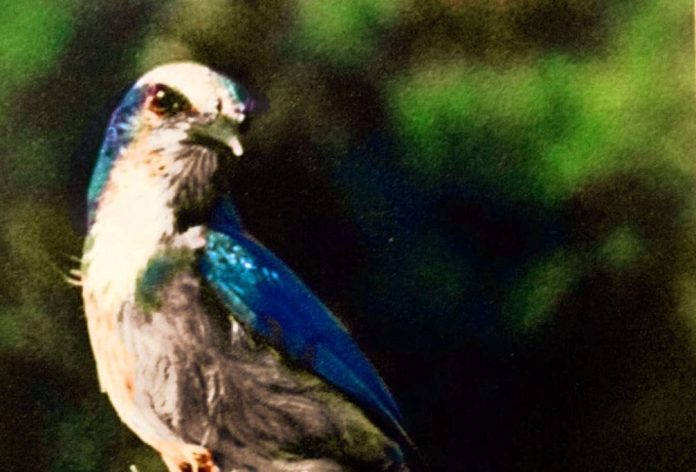 , Washington Examiner, %%https://www.washingtonexaminer.com/wp-content/uploads/2023/11/cropped-favicon.png?w=32, https://www.washingtonexaminer.com/feed/, Mitchell Scacchi
