Zelensky again seeks wider authority to strike targets in Russia with US long-range ATACMS thumbnail

Zelensky again seeks wider authority to strike targets in Russia with US long-range ATACMS

ZELENSKY SEEKS LONGER LEASH: Frustrated as Russia uses retrofitted “dumb bombs” converted to standoff “glide bombs” to reduce Ukrainian cities to rubble, President Volodymyr Zelensky is again appealing to the Biden administration for wider authority to target the planes that launch the weapons from the safety of territory within range, but off limits, to U.S. weapons.

“The sooner the world helps us deal with the Russian combat aircraft launching these bombs, the sooner we can strike, justifiably strike, at Russian military infrastructure, military airfields, the closer we will be to peace. Real peace,” Zelensky said in his nightly video address Sunday. 

At the same time, he said the Russian glide bombs were taking a terrible toll on the civilian population. Zelensky noted in the areas where Ukraine has been given a free hand to strike back across the border, attacks against Russian forces have been effective. “Strikes on the Russian border areas helped protect lives,” he said. “And in particular, defending the Kharkiv region from the Russian offensive, we have proven that the determination of our partners truly helps.”

“The world has enough power to force Russia into peace,” he said. “Bold decisions that must be made, that we need, and that we are discussing with our partners. In the coming weeks, we will continue our communication to achieve the necessary decisions.”

RUSSIAN PLANES SITTING DUCKS? The urgency of Zelensky’s latest plea for the U.S. to remove restrictions on the use of long-range Army Tactical Missile Systems, ATACMS, was underscored by a report by David Axe in Forbes, which suggested dozens of Russian planes that deliver the glide bombs are routinely parked in the open at the Voronezh Malshevo air base, just 100 miles from the border with Ukraine.

“From the base, Sukhoi Su-34 fighter-bombers belonging to the Russian air force’s 47th Guards Bomber Aviation Regiment fly daily sorties lobbing powerful glide bombs at Ukrainian troops and civilians from 25 miles away or farther,” Axe wrote. “The regiment’s dozens of Sukhoi Su-34s — possibly representing around half of Russia’s active fleet of the supersonic, twin-engine fighter-bombers,” he said, are well “within range of Ukraine’s best deep strike weapon,” but the Su-34s are able to launch glide bombs “with near impunity” because of the refusal of the Biden administration to approve the strikes by ATACMS rockets deeper into Russian territory.

“Ukraine could potentially incapacitate the entire operational fleet stationed there if permitted to conduct such a strike,” the report said, quoting an assessment by the Ukrainian analysis group Frontelligence Insight.

ISW: PUTIN’S POSITION IS HARDENING: Meanwhile, Russian President Vladimir Putin’s “theory of victory” is being incentivized by the incrementalism of the West, according to the latest assessment by the Washington-based Institute for the Study of War. 

“The West must hasten to provide Ukraine the support it needs to conduct counteroffensive operations to invalidate Putin’s theory of victory and avoid protracting the war more than necessary to secure a peace acceptable to Ukraine and its partners,” the ISW advocated, noting that Putin is convinced “Russia will be able to make creeping advances in Ukraine indefinitely,” a belief that has “hardened” Putin’s resolve of “destroying Ukrainian statehood.”

In an interview with the Philadelphia Inquirer published Sunday, Zelensky complained that the Western view of victory does not completely align with Ukraine’s.

“The West wanted to deny Putin the opportunity to fully occupy Ukraine and to put the aggressor in his place. I think for them it is the victory already,” Zelensky told Philadelphia Inquirer Worldview columnist Trudy Rubin in a June 24 interview in Kyiv. “We are grateful that the West did not let Russia occupy us [fully], but we need justice.”

“Everybody is still afraid that Russia can split apart, everybody is afraid of what will happen to Russia without Putin and whether it will stay as it is or get worse,” Zelensky said, which is simply strengthening his position in any peace deal. “Any step forward on our territory, any occupation, any village even fully destroyed is positive for them because it is important for them to bargain as much as possible.

“Bit by bit, they are washing away Ukrainian independence. They take territory, then legislate [to annex it] or invent economic or security unions with Moscow, and then they dissolve the country in this mud, in this Russian mud,” Zelensky said. “A ceasefire is the best option for the Russians so they can prepare for taking even more.

“We should be in the European Union for economic security. And we should be in NATO for physical security. If we don’t have these two, there is a huge risk for us that the enemy will come back,” he said. 

CLICK HERE TO READ MORE FROM THE WASHINGTON EXAMINER

Good Monday morning and welcome to Jamie McIntyre’s Daily on Defense, written and compiled by Washington Examiner National Security Senior Writer Jamie McIntyre (@jamiejmcintyre) and edited by Stacey Dec. Email here with tips, suggestions, calendar items, and anything else. Sign up or read current and back issues at DailyonDefense.com. If signing up doesn’t work, shoot us an email and we’ll add you to our list. And be sure to follow me on Threads and/or on X @jamiejmcintyre

CLICK HERE TO SIGN UP OR READ BACK ISSUES OF DAILY ON DEFENSE

NOTE TO READERS: Daily on Defense will not publish on Thursday, July 4, or Friday, July 5, as we celebrate an extended Independence Day weekend. We’ll be back in your inbox and online Monday, July 8. 

HAPPENING TODAY: The Supreme Court’s long-awaited immunity decision is expected to be among the high court’s last opinions to be released this morning beginning at 10 a.m. The case centers on whether former President Donald Trump is entitled to claim immunity from prosecution for at least some of his actions in seeking to overturn the 2020 election. A three-judge panel on the U.S. Court of Appeals for the District of Columbia Circuit ruled unanimously in February that he cannot.

“Former President Trump argues that criminal liability for former Presidents risks chilling Presidential action while in office and opening the floodgates to meritless and harassing prosecution. These risks do not overcome ‘the public interest in fair and accurate judicial proceedings,’” the court wrote in its February decision.

“We cannot accept former President Trump’s claim that a President has unbounded authority to commit crimes that would neutralize the most fundamental check on executive power — the recognition and implementation of election results. Nor can we sanction his apparent contention that the Executive has carte blanche to violate the rights of individual citizens to vote and to have their votes count,” the appeals court decision said. “At bottom, former President Trump’s stance would collapse our system of separated powers by placing the President beyond the reach of all three Branches. … We cannot accept that the office of the Presidency places its former occupants above the law for all time thereafter.”

HIGH-STAKES SUPREME COURT RULING ON TRUMP IMMUNITY DUE MONDAY

WILL THE COURT SETTLE THE QUESTION OR SEND IT BACK? A big question is whether the court will uphold the lower court’s definitive ruling or decide there are some cases where immunity is warranted and others where it is not and send the case for to the appeals court to reconsider.

“The expectation many of us had was that the court was clearly uncomfortable with the extreme views of either the Trump team or the lower court because the Trump team was saying he is sweeping virtually absolute immunity and then the lower courts gave very little protection for presidents going forward,” said Jonathan Turley, professor of public interest law at George Washington University, on Fox News on Sunday. 

“The expectation is they may come up with a nuanced view and send this back,” said Turley, who is also a regular Fox News contributor. The appeals court would then have to parse which Trump acts surrounding the events of Jan. 6 were official and which were not. “That will take time, and the clock is ticking,” Turley said. “And many of us doubt that the court can do that and still have a trial before the election.”

“I see zero chance they’re going to embrace Donald Trump’s argument that he has absolute immunity and can’t be prosecuted. I think they’re going to say that there is some immunity for the official actions of a president,” said Jan Crawford, CBS News’s chief legal affairs correspondent, on Face the Nation Sunday. “I think they’re going to wall off those kind of official actions of a president but leave open the possibility of prosecution for unofficial actions of an office-seeker.”

“Trump’s lawyer argued at the oral arguments, conceded at the oral arguments, a lot of what’s alleged in the indictment is unofficial acts,” Crawford said. “So [special counsel] Jack Smith could have those papers ready to go and say, ‘He’s conceded this is unofficial acts that he can be prosecuted for.’”

Trump faces a four-count indictment for his efforts to overturn the 2020 election, but even if the court were to uphold the lower court decision fully, it’s unlikely a trial could start before September.

“The fundamental principle here is, the president’s got to be able to do his job. In the same way that police officers, judges, prosecutors enjoy some immunity, that principle has to apply to the president, too,” Sen. J.D. Vance (R-OH) said on CBS. “The president has to have immunity to do his job. Should Barack Obama be prosecuted for droning American citizens in Yemen? There are so many examples of presidents, Democrats and Republicans, who would not be able to discharge their duties if the Supreme Court does not recognize some broad element of presidential discretion.”

Vance, who is also in the running to be Trump’s vice president, was asked by Face the Nation host Margaret Brennan whether he believes Trump would have the power to pardon himself if he takes office again.

“I believe that the president has broad pardon authority, Margaret, but more importantly, I think the president has immunity. It’s not about whether he should pardon himself,” Vance said. “It’s about whether he should be prosecuted in the first place for discharging his official duties.”

JD VANCE ARGUES US PRESIDENTS NEED IMMUNITY ‘TO DO THEIR JOB’

THE RUNDOWN: 

Washington Examiner: Target Iran to stop Houthi attacks, former senior defense leaders argue

Washington Examiner: US troops to remove Gaza pier for weather concerns yet again

Washington Examiner: ‘Happy with my wife, but need my brothers’: Ukrainian men caught between Russia and a war of attrition

Washington Examiner: Pentagon attempts to dodge Biden claim of no troops deaths during tenure

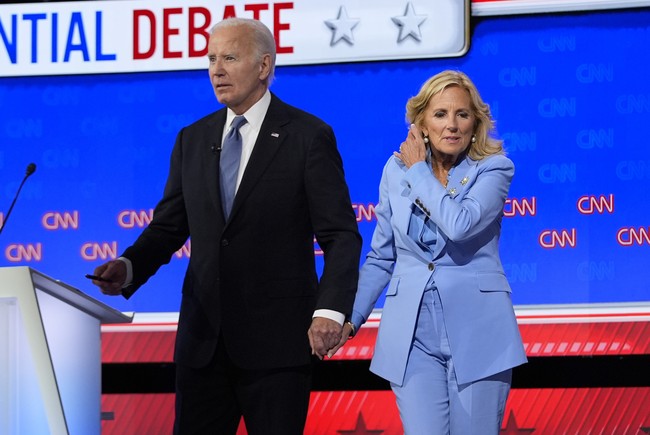
Washington Examiner: ‘It was crushing’: Diplomats around the world left dismayed by presidential debate

Washington Examiner: What international media are saying about the Biden-Trump debate

Washington Examiner: Four editorial boards call for Biden to step down from nomination following debate

Washington Examiner: Raskin admits ‘conversations are being had’ about Biden’s 2024 candidacy

Washington Examiner: Day after debate: Biden and Trump border claims called into question

Washington Examiner: US to naturalize 11,000 new citizens over July Fourth holiday

Washington Examiner: JD Vance argues US presidents need immunity ‘to do their job’

Washington Examiner: Opinion: Will Russia seek to exploit American fears over Biden’s frailty?

Washington Examiner: How delicate talks led to unlikely end of Assange’s 12-year saga

AP: Russia Warns It Can Take Unspecified Measures in Response to US Drone Flights over Black Sea

New York Times: Putin Vows to Make New Nuclear Missiles and to Weigh Placing Them Near NATO Nations

Washington Post: Russia’s devastating glide bombs keep falling on its own territory

Wall Street Journal: A Summer Of Slog Is Expected In Ukraine

AP: Ukraine’s convicts offered release at a high price: Joining the fight against Russia

The Hill: U.S. Struggles To Deter Houthi Threat As Crisis Spirals

CBS: USS Carney Returns From A Middle East Deployment Unlike Any Other

Stars and Stripes: CENTCOM Reports 3 Houthi Unmanned Boats Destroyed

New York Times: Navy SEALs Lost To Suicide Share A Pattern Of Brain Damage

Military.com: House Approves $2.5 Billion for Junior Enlisted Raises, Which May Be $800 Million Too Little

AP: French voters propel far-right National Rally to strong lead in first-round legislative elections

Washington Post: Iran heads to presidential runoff pitting reformist against conservative

AP: Ultra-Orthodox protest against order to enlist in Israeli military turns violent in Jerusalem

NBC News: Malmstrom Air Force Base Accident Claims an Airman’s Life, Leaves Five Injured

Air & Space Forces Magazine: Air Force Vet Indicted for Leaking Secrets on Weapons ‘Vulnerabilities’

AP: North Koreans are seen wearing Kim Jong Un pins for the first time as his personality cult grows

Defense One: Supercomputer Cloud Services Greenlit by Pentagon’s Innovation Office

Air & Space Forces Magazine: Air Force General Sentenced In Historic Court-Martial

Air & Space Forces Magazine: Air Force General Cleared of Sexual Assault, Guilty of Other Charges

Defense Scoop: DOD’s Network Defense Arm Is Working to Protect Logistics for Transportation Command

C4ISRNET: US Central Command to Demo Integrated Counter Drone Sensors This Fall

SpaceNews: Military Space Trackers to Keep Public Informed on Starlink Satellite Reentries

Washington Post: Astronauts’ return from space delayed indefinitely, reflecting high stakes for Boeing and NASA

AP: US wants Boeing to plead guilty to fraud over fatal crashes, lawyers say

Air & Space Forces Magazine: A Chunk Taken Out of His Spine’: F-16, KC-46 in Refueling Incident over Europe

Military.com: Navajo Corporal Becomes First Marine Authorized To Wear Traditional Native Hair

THE CALENDAR: 

MONDAY | JULY 1

10:30 a.m. 1775 Massachusetts Ave. NW — Brookings Institution discussion: “The Biden administration’s foreign policy and the role for U.S. leadership in navigating this critical moment,” with Secretary of State Antony Blinken and Suzanne Maloney, director of foreign policy, Brookings Institution https://www.brookings.edu/events/americas-foreign-policy

2 p.m. —  McCain Institute virtual book discussion: Conflict: The Evolution of Warfare from 1945 to Ukraine, with author and retired Army Gen. David Petraeus, former CIA director https://www.mccaininstitute.org/resources/events

4 p.m. 1030 15th St. NW — Atlantic Council releases report: “Executing Distributed Operations in a Contested Maritime Environment,” with Dmitry Filipoff, associate research analyst, Center for Naval Analyses Operational Warfighting Division; Barbara Anderson, director of strategy and performance management at Herren Associates; retired Rear Adm. Tony Lengerich, vice president of naval programs at Thales Defense and Security; and Steven Grundman, senior fellow, Atlantic Council Forward Defense Program https://www.atlanticcouncil.org/event/executing-distributed-operations

TUESDAY | JULY 2

8 a.m. 2425 Wilson Blvd., Arlington, Virginia — Association of the U.S. Army “Hot Topic” discussion: “Cyber and Information Advantage,” with James Rubin, special envoy and coordinator for the U.S. State Department’s Global Engagement Center; Young Bang, principal deputy assistant Army secretary for acquisition, logistics and technology; Maj. Gen. Paul Stanton, commander, U.S. Army Cyber Center of Excellence; and Peter Singer, strategist with New America and founder and managing partner of Useful Fiction https://www.ausa.org/events/hot-topics

10 a.m. 1775 Massachusetts Ave. NW — Brookings Institution in-person and virtual discussion: “Force Design: A conversation with Gen. Eric Smith, 39th commandant, US Marine Corps,” and Michael O’Hanlon, senior fellow and director, Strobe Talbott Center for Security, Strategy, and Technology, Brookings https://www.brookings.edu/events/force-design

10 a.m. — Mitchell Institute for Aerospace Studies “Aerospace Nation” webinar: “Want Better Results in Ukraine? Senior Leader Views,” with retired Air Force Lt. Gen. David Deptula, dean, Mitchell Institute for Aerospace Studies; co-author Christopher Bowie; retired Air Force Gen. Philip Breedlove, former supreme NATO commander; and retired Air Force Gen. Jeffrey Harrigian, former commander, U.S. Air Forces in Europe and Africa https://go.afa.org

11 a.m. 214 Massachusetts Ave. NE —  Heritage Foundation B.C. Lee Lecture on “the importance of Taiwan and what can be done to counter the threat of the People’s Republic of China,” with Matt Pottinger, former deputy national security adviser and chairman, Foundation for Defense of Democracies China Program https://www.heritage.org/asia/event/the-2024-bc-lee-lecture

WEDNESDAY | JULY 3

10 a.m. —  Brookings Institution virtual discussion: “NATO at 75: Old or Bold?” with Constanze Stelzenmuller, director, Brookings Center on the U.S. and Europe; Tara Varma, visiting fellow, Brookings Center on the U.S. and Europe; James Goldgeier, visiting fellow, Brookings Center on the U.S. and Europe; Asli Aydintasbas, visiting fellow, Brookings Center on the U.S. and Europe; and Michael O’Hanlon, Brookings chairman in defense and strategy https://www.brookings.edu/events/nato-at-75-old-or-bold/

7 p.m. 5015 Connecticut Ave. NW — Politics and Prose book discussion: Mr. Churchill in the White House: The Untold Story of a Prime Minister and Two Presidents, with author Robert Schmuhl, chair emeritus in American studies and journalism, University of Notre Dame, and Robert Costa, CBS News chief election and campaign correspondent https://www.politics-prose.com/robert-schmul

THURSDAY | JULY 4 | INDEPENDENCE DAY

Federal holiday, government offices closed, no Daily on Defense

9 a.m. 700 Pennsylvania Ave. NW — National Archives celebration of the 248th anniversary of the adoption of the Declaration of Independence, with the presentation of colors by the Continental Color Guard, singing of the national anthem, performance by the 3rd U.S. Infantry Regiment, the Old Guard, and Fife and Drum Corps, a reading of the Declaration of Independence by historical reenactors. https://www.archivesjuly4.org/schedule/day-of-celebration

11:45 a.m. Constitution Ave., between 7th St. and 17th St. NW — National Park Service National Independence Day Parade, featuring a fife and drum corps, marching bands, floats, military units, giant balloons, and equestrian and drill teams. https://july4thparade.com/

8 p.m. West Lawn, U.S. Capitol — National Park Service, the Corporation for Public Broadcasting, the Department of the Army, the Boeing Company, American Airlines, and PBS host the traditional annual event: “A Capitol Fourth Concert,” with actor Alfonso Ribeiro; singer/songwriter Smokey Robinson; singer/actress Fantasia; singer/songwriter Darren Criss; singer/drummer Sheila E.; singers Michael Fitzpatrick and Noelle Scaggs of Fitz and the Tantrums; composer/pianist Chloe Flower; Sister Sledge, featuring Sledgendary; singer Loren Allred; artistic gymnast Shawn Johnson East; Jack Everly; principal pops conductor of the Indianapolis Symphony Orchestra; and the National Symphony Orchestra http://www.pbs.org/a-capitol-fourth/home

FRIDAY | JULY 5

7 a.m.  Brussels, Belgium — NATO Secretary-General Jens Stoltenberg press conference, NATO Headquarters to preview the NATO summit in Washington https://www.nato.int

TUESDAY | JULY 9

8 a.m. Walter E. Washington Convention Center — NATO summit scheduled for July 9-11, marking the 75th anniversary of the 32-member alliance https://www.nato.int

Mailing it in: Swing-state ballot lawsuits could shape 2024 presidential race thumbnail

Mailing it in: Swing-state ballot lawsuits could shape 2024 presidential race

Four months out from Election Day, activists are still fighting over the rules that will dictate how voters cast their ballots, including in swing states. The parties are preparing for legal battles if the results are close, as they were four years ago. In this series, the Washington Examiner will look at the battles over election rules. Part one will look at absentee voting.

The 2024 presidential election will likely be decided by a handful of swing states, where judicial activists on both sides of the political aisle have been busy in court trying to alter the rules for a key method of casting ballots: mail-in voting.

In 2020, states across the partisan spectrum altered their voting policies to provide more options at the peak of the COVID-19 pandemic. Many states relaxed the rules for voting by mail, and some sent absentee ballot or ballot applications to all registered voters. Ballot drop boxes were installed in nearly 40 states. Others established curbside voting options, and some counted ballots received after Election Day so long as they were postmarked by the date.

Former President Donald Trump, who is heading into a rematch against President Joe Biden, blamed much of his failure to win a second term on the sweeping changes to voting procedures across the country. He accused mail-in voting of contributing to election fraud, which conditioned his supporters to distrust those methods.

The New Atlantis
This combination of photos shows Republican presidential candidate Donald Trump, left, and President Joe Biden during a presidential debate hosted by CNN on Thursday, June 27, 2024, in Atlanta. (AP Photo/Gerald Herbert)

Yet Trump and other ranking Republican officials this cycle have encouraged his supporters more than ever to take full advantage of any and all alternatives to voting in-person, including early voting and casting ballots by mail.

“If we swamp them with votes they can’t cheat,” the campaign said in a press release in early June. “You need to make a plan, register, and vote any way possible. We have got to get your vote.”

With nearly every possible voting method now endorsed by the Trump campaign, lawsuits backed by conservative voter integrity groups are still underway in swing states. But rather than filing lawsuits to block alternative voting methods, these suits take aim at what these groups consider dubious rules, such as relaxed instructions for verifying ballot signatures and outdoor ballot drop boxes.

The New Atlantis
Chester County, Pennsylvania, election workers process mail-in and absentee ballots at West Chester University in West Chester on Nov. 4, 2020. (AP Photo/Matt Slocum)

Here’s a look at where absentee ballot legal challenges stand in seven key swing states:

Arizona

11 Electoral Votes

In late April, a state court judge upheld Arizona’s signature matching and drop box procedures for mail-in voting, rejecting two lawsuits from the Arizona Free Enterprise Club, a conservative legal group founded by Bill Barr, the former attorney general under Trump.

One lawsuit contested signature verification methods, which the judge found compliant with state law following a recent clarification from the secretary of state. Signature verification is the process of matching the signature on a voter’s ballot with his or signature on voter registration records. The other lawsuit challenged the use of unmonitored drop boxes, which the judge also ruled as lawful.

Despite the setback for Republican-backed efforts to make the Grand Canyon state’s elections more secure, Trump recently had a 5-point lead above Biden, according to a June 30 poll from 538.

Georgia

16 Electoral Votes

In late February, the U.S. Department of Justice intervened in a lawsuit challenging the Georgia State Election Board’s deadline for absentee ballot applications under the Voting Rights Act.

The lawsuit, filed by the International Alliance of Theater Stage Employees union, argued that Georgia’s deadline violates the VRA’s mandate for absentee ballots in presidential elections if applied seven days before the election.

The Peach State’s law requires applications 11 days before, which the union says is unlawful under Section 202(d) of the VRA.

Georgia Attorney General Christopher Carr (R) contended that Section 202’s provisions are not privately enforceable and that only the U.S. attorney general can sue under the VRA. The DOJ asserts that the VRA’s provisions are privately enforceable.

On June 13, a federal judge found that the union should not have sued the state election board and dismissed them from the case, though the case has been permitted to continue against Fulton County defendants. The county is also where Trump is facing criminal charges over an alleged election subversion plot, and it is the state’s most populous county.

As of June 30, Trump held 6.4-point lead over Biden in Georgia, according to 538.

Michigan

15 Electoral Votes

A Michigan judge on June 12 partially sided with a Republican National Committee bid to tighten signature verification rules for absentee ballots. The judge ruled that election officials can continue using most current signature matching guidelines but cannot apply a “presumption of validity” standard.

The ruling was applauded by RNC Chairman Michael Whatley, who said it confirms that safeguards are required for absentee ballots. 

“The Secretary of State’s covert attempts to sidestep these rules were rightfully rejected by the court, exposing that her attacks on election integrity have no substance. This win is just the latest development in our ongoing fight to promote fair and transparent elections in the Great Lakes State,” Whatley wrote in a press release.

But the ruling does still allow most of Michigan’s current mail-in voting procedures to remain largely intact for the 2024 election. The judge acknowledged that a voter’s signature can change one time due to age or disability, or if it was made in haste, or was written on an uneven surface.

Trump held a narrow 1.8-point lead above Biden in Michigan as of June 30, according to 538.

Nevada

6 Electoral Votes

The Trump campaign, with the RNC and Nevada GOP, filed a lawsuit in early May to challenge Nevada’s mail-in ballot receipt deadline, arguing it violates federal law.

The lawsuit seeks to invalidate ballots received after Election Day, claiming this dilutes votes and harms Republican candidates. In the 2022 midterm elections, Clark County officials say about 40,000 ballots came in after Election Day.

Trump lost the state against Biden by about 33,500 votes in 2020.

While no ruling has been made in the Silver State case, the Biden campaign has filed a motion to dismiss the lawsuit and is also seeking to become a party to the case. The motion argues that the receipt deadline law would disenfranchise Nevadans.

Trump sported a close 3.7-point polling advantage above Biden in Nevada as of June 30, according to the 538 average.

North Carolina

16 Electoral Votes

A federal judge in January blocked part of North Carolina’s new election law concerning same-day voter registration at early voting sites.

The ruling affects the procedure of verifying voter addresses, which critics argue could disenfranchise voters due to potential errors in address verification.

The decision comes amid litigation filed by progressive groups and the Democratic Party against the law, which overall remains largely in effect. Republican backers of the suit plan to appeal the ruling, asserting their commitment to election integrity.

Trump held a 7.2-point advantage over Biden in North Carolina according to a June 30 poll.

Pennsylvania

19 Electoral Votes

A coalition of grassroots organizations sued Pennsylvania officials in late May to end the disqualification of mail-in ballots lacking a handwritten date on the envelope.

The 3rd Circuit Court ruled that such ballots should not be counted, conflicting with previous rulings favoring ballot inclusion.

The lawsuit argues the date requirement is arbitrary and disenfranchises voters. This case follows another federal suit by the NAACP challenging the date requirement as a violation of the Civil Rights Act.

Trump held a narrow 1.9-point average lead over Biden in Pennsylvania as of June 30.

Wisconsin

10 Electoral Votes

The liberal-controlled Wisconsin Supreme Court in early May signaled a willingness to overturn a 2022 ruling that restricted absentee ballot drop boxes to election clerk offices.

The court’s potential reversal could reinstate the broader use of drop boxes, which Democrats argue are essential for secure absentee voting, while Republicans say they make elections less secure.

CLICK HERE TO READ MORE FROM THE WASHINGTON EXAMINER

The case, brought by Priorities USA and the Wisconsin Alliance for Retired Voters, challenges the interpretation of state law by the previous conservative majority. A reversal may significantly affect the 2024 election in this key swing state.

Trump held less than 1-point average advantage over Biden in Wisconsin as of June 30.

Utah GOP Senate hopeful charts post-Romney brand of conservatism thumbnail

Utah GOP Senate hopeful charts post-Romney brand of conservatism

He doesn’t want to be known as the replacement of retiring Sen. Mitt Romney (R-UT). The same goes for being the conservative “climate guy.”

Rep. John Curtis (R-UT), fresh off winning a competitive GOP primary for Utah’s open Senate seat, warns Beehive State voters they may be “disappointed” if they expect him to be a mold of his predecessor or Sen. Mike Lee (R-UT).

“The reality of it is, while I have great respect for both Sen. Romney and Sen. Lee, I’m just different than both of them,” Curtis told the Washington Examiner in an interview.

As Senate Republicans seek to retake the chamber and deepen its bench, his future colleagues, at least for now, may be left wondering if he’ll bolster a dwindling centrist faction crucial to striking deals with Democrats or the hard-line conservative wing that has seen its ranks grow in recent elections.

The answer is probably somewhere in the middle. And his presence, should he clench the general election this November in the reliably red state, could affect day-to-day policy debates and the heated contest to find the next Senate Republican leader.

“The way to know me is to look at my last seven years, and that has been a hallmark for me, finding what I would call that cross-section of values,” Curtis said.

Curtis may come across to some as a Romney reserve waiting in the wings. A pragmatic conservative who founded the House Conservative Climate Caucus, he’s had his fair share of intraparty conflict and is no stranger to criticizing former President Donald Trump. Curtis did, after all, garner nearly 50% in a competitive three-way primary that included Trump-backed Riverton Mayor Trent Staggs.

But Curtis has already charted a lane of his own, even if he does foreshadow that his Senate voting record will “be more like Mike Lee’s, particularly fiscally.”

He falls nearly smack dab in the middle of Romney and Lee on the Conservative Political Action Conference’s legislative analysis scorecard. Curtis clocks in with a conservative score of 79%, compared to Romney’s 62% and Lee’s 99%.

“Utah voters responded to my lane,” Curtis said. “I think there’s a false narrative that you’re either all in or all out on President Trump. The reality of it is … I enjoyed supporting him, but that doesn’t mean he has an unconditional vote from me.”

The New Atlantis
Rep. John Curtis (R-UT) hikes along the Provo Canyon Trail during a hike with constituents on May 11, 2024, in Orem, Utah. (AP Photo/Rick Bowmer)

Curtis declined to wade too deep into the race to replace Minority Leader Mitch McConnell (R-KY), who is stepping down as the longest-serving Senate party leader next year but will remain in the chamber. It’s currently a three-way contest between two McConnell allies, Senate Minority Whip John Thune (R-SD) and former Whip John Cornyn (R-TX), and conservative long-shot Sen. Rick Scott (R-FL).

But after witnessing firsthand the “dysfunction” with House Republicans this Congress, Curtis emphasized party unity must be the focus for any successor.

“I am weighing who can do the task at hand. And for me, that’s primarily who can unify the different Republican voices into one voice,” he said.

Curtis’s triumph at the ballot box also laid bare that there remains a path forward for those in the party who feel Republicans should do more to combat climate change.

“I can’t help but talk about this,” Curtis said.

Curtis, with the support of dozens of fellow House Republicans, founded the Conservative Climate Caucus in 2021 with the goal of reaching younger generations on an issue of growing political influence. He vowed, in one form or another, to bring with him to the Senate the group’s mission of embracing conservative policies that slow rising global temperatures.

CLICK HERE TO READ MORE FROM THE WASHINGTON EXAMINER

“One of the things that has been a journey for me myself is finding a place to land. And I think what I’ve been able to do is define a very comfortable place for Republicans to land on climate that doesn’t betray their conservative values but it also reduces emissions and acknowledges that reducing emissions is important,” Curtis said.

“That will be a continued emphasis. I have no doubt,” he added. “I’m just not quite sure the form it takes.”

Reporter’s Notebook: Jamaal Bowman’s fallout from recent primaries thumbnail

Reporter’s Notebook: Jamaal Bowman’s fallout from recent primaries

Washington Examiner Congressional Reporter Samantha-Jo Roth joins Magazine Executive Editor Jim Antle to discuss Rep. Jamaal Bowman‘s (D-NY) fallout from recent primaries, what challenges progressive parties are facing with lobbying groups, the candidates affected by these challenges, if the cryptocurrency industry has an effect on swing-state voters, and that Utah Republicans chose their successor to Sen. Mitt Romney (R-UT).

Nevada’s Hispanic Americans pledge political independence: ‘Policies over personalities’ thumbnail

Nevada’s Hispanic Americans pledge political independence: ‘Policies over personalities’

In an election year where voters are transferring loyalties and an independent presidential candidate has attracted historic levels of support, Hispanic Americans are adding fuel to the fire in Nevada. The Latino community’s growing concern about the economy could spell trouble for President Joe Biden, but its political independence means they’re not in Republicans’ pocket either. Whoever they support, Nevada’s Hispanics will play a critical role in deciding who the country’s next president is this November. 

The GOP has made substantial inroads in gaining Hispanic support since former president Barack Obama won the voting bloc by overwhelming margins in 2012. In the battle between the Democratic president and Republican Mitt Romney, the GOP nominee took only 27% of the Hispanic vote. Just two presidential cycles later, Latino support for Republicans expanded by more than 10% nationwide, In 2020, former President Donald Trump claimed 38% of the nation’s Latino vote. 

The New Atlantis
Donald Trump speaks at a campaign rally June 9, 2024, in Las Vegas. (AP Photo/John Locher)

Peter Guzman, the President of the Latin Chamber of Commerce in Nevada, told the Washington Examiner he is seeing a political shift in Nevada’s Latino community. The leader of the most powerful Hispanic chamber in Nevada, boasting 2,000 Latino members, Guzman says he’s watching a movement “away from the Democrat Party.” 

While data surrounding the margin of GOP expansion is mixed, it is undeniable that Republicans are making inroads in the Silver State. After the 2016 election, a national exit poll conducted by Edison Research showed Trump captured 29% of the Latino vote in Nevada, a significant increase from Romney’s 24% in 2012. An analysis by the Nevada Independent showed wildly different results than the Edison survey. The newspaper claims that while Democratic presidential nominee Hilary Clinton did receive fewer Latino votes than the previous election cycle, Trump still only garnered 10% of the vote to Clinton’s 88%. 

Going by Edison’s data, Trump’s slice of Nevada’s Latino vote expanded at least 6% in 2020, with exit polls showing him at 35%. If 2016 was closer to the Nevada Independent’s claims, the GOP nominee expanded his lead by 25%. 

Michael Flores is a longtime Nevada government affairs and community outreach professional who serves as the vice president of Government and Community Engagement for the University of Nevada. Flores says the changes in his Hispanic community are real. “There is a shift, and I don’t think that’s just in the polls,” he told the Washington Examiner

 “Voters are doing a lot smarter,” Flores said, “We can’t just assume that a certain age group or certain demographics going to vote a certain way. I think every vote has to be earned.”

With Trump’s well-documented and oft-inflammatory rhetoric on illegal immigration, the former president’s inroads into the Latino community continue to surprise political pundits. A comment from Flores might explain Latinos’ lack of concern: “He’s not talking about me.” Flores says that’s what he hears from his Hispanic community when Trump’s immigration comments come up. Like Guzman, he reiterated that other issues, “like the economy” seem to be more important to Latinos he’s surrounded by in Nevada than the former president’s controversial comments. 

Both Guzman and Flores told the Washington Examiner the economy is the top issue for voters this election cycle, which would explain a pivot away from President Joe Biden. “At the end of the day, I believe people always think about what’s happening with their wallet,” Guzman said, calling the economy “the number one issue” for Latino voters.

Guzman said the Biden administration seems to be missing a golden opportunity to capture the Latino vote. The Hispanic leader lamented that Nevada Latinos aren’t hearing about the issues that matter most to them – the economy, and immigration. “I think all we really hear about is abortion,” Guzman said. 

In 2024, 38% of Nevada’s Latino voters cited combined concerns about inflation, the cost of living, jobs, and the economy as their top issues this election. That number is up from 33% in 2016, and down from a record high of 51% in 2020 during the pandemic. Polls show Trump enjoys wide support from Latino voters on economic issues, with 42% support to Biden’s 20%. Only 12% of Nevadan Hispanic voters chose immigration and the border as their top priority in 2024, down from 21% in 2020.

While the economy has overtaken immigration as the top issue for Hispanics, that’s not to say they aren’t frustrated with immigration policy. Nationwide, Trump holds a 7% lead over Biden with Latino support for immigration policy, but Flores and Guzman warned that Nevada Latinos are upset with both parties for failing to pass comprehensive immigration reform.

“There’s a lot of frustration,” Flores says about “the lack of action by Congress. And this is both sides, not just Democrats, but Republicans too. Because when Republicans propose something Democrats, when Democrats propose something, Republicans don’t like it.” 

The New Atlantis
Hispanic American Andres Ramirez, right, attends a Democratic organizational meeting in Las Vegas. (AP Photo/Isaac Brekken)

CLICK HERE TO READ MORE FROM THE WASHINGTON EXAMINER

At the end of the day, “Hispanics are looking at policies over personalities,” Guzman, who is a second-generation immigrant after his father fled Cuba 50 years ago, said.

Flores said that the traditionally Democratic voting bloc’s shift isn’t about “running to the Republican Party,” but embracing a more independent outlook on politics. 

Social Security update: July direct payments worth $943 go out today thumbnail

Social Security update: July direct payments worth $943 go out today

Millions of beneficiaries can expect to see their July Supplemental Security Income payment, worth up to $943, on July 1. 

The payments are given to those living with a serious debilitating disability that negatively affects their income, according to the Social Security Administration.

The maximum amount received depends on how one applies, with varying amounts being given to individual filers, joint filers, and essential persons who provide SSI recipients with needed care.

Those filing individually can receive a maximum of $943 per month, couples filing jointly can receive up to $1,415, and essential persons receive up to $472. These amounts have increased by 3.2% since last year due to inflation.

To be eligible, filers need to be at least partially blind or have a “physical or mental condition(s) that seriously limits their daily activities for a period of 12 months or more, or may be expected to result in death.”

CLICK HERE TO READ MORE FROM THE WASHINGTON EXAMINER

SSI payments are separate from regular Social Security benefits. Those who receive Social Security payments don’t automatically qualify for SSI payments.

Recipients can use a calculator from the SSA to figure out their payment total.

What to know about the UK elections thumbnail

What to know about the UK elections

The United Kingdom is holding elections for every seat in the House of Commons this week, with a major shift expected in British politics.

As the U.K. holds its first parliamentary election in nearly five years, here is what to know about the pivotal race that will determine the immediate future of one of the United States‘s closest allies.

When is the election?

British Prime Minister Rishi Sunak, a member of the Conservative Party, announced on May 22 that elections would be held on July 4 — the same day in 1776 that the U.S. declared independence from the U.K.

The last parliamentary election took place on Dec. 12, 2019, and the Electoral Commission had specified that an election was required to happen by Jan. 28, 2025 — 25 working days after the fifth anniversary of the current government’s first meeting.

What is at stake?

The election is the first since the U.K. left the European Union in early 2020 and since the coronavirus pandemic. Conservatives boosted their majority in the last election, which was done as a snap election after a lack of progress on a withdrawal agreement from the EU.

Dogged by low approval ratings, Conservatives pushed this election to nearly as late as was legally allowed, in a departure from the past several elections.

The winning party in the July election could be leading the U.K. for up to the next five years. Currently, the Conservatives hold 344 seats in the 650 seat chamber, with the Labour Party having the second-largest presence with 205 seats.

Who is expected to win?

The Labour Party, which has not been in the majority since 2010, is heavily favored to win a commanding majority in the election.

A forecast from the Economist released the week before the election predicts that Labour will get 429 seats, followed by the Conservatives with 117 seats, the Liberal Democrats getting 42 seats, and the Scottish National Party winning 23 seats.

The outlet also predicts that there is a 98% chance of Labour winning a majority – 326 seats – and a 2% chance of Labour being the largest party but not a majority, with less than a 1% chance of either the Conservatives holding onto the majority or being the largest party.

A victory by the Labour Party would likely see Keir Starmer become prime minister, and mark a leftward shift in the U.K.

CLICK HERE TO READ MORE FROM THE WASHINGTON EXAMINER

When is the next election?

The next election will be sometime before August 2029, but unlike in the U.S., there is no set date for the election. The U.K. election is scheduled for July 4.

Target Iran to stop Houthi attacks, former senior defense leaders argue thumbnail

Target Iran to stop Houthi attacks, former senior defense leaders argue

Multiple current and former leaders believe the United States needs to target Iran to stop the Houthi attacks targeting commercial vessels sailing in the previously highly trafficked waterways off Yemen’s coasts.

These attacks began on Nov. 19, 2023, and the Houthis have said they’re doing so in solidarity with Palestinians affected by the Israel-Hamas war in Gaza, and they have attacked or threatened U.S. Navy and commercial vessels 190 times from then until June 13, according to a U.S. defense official.

U.S. officials have long accused Iran of supplying the Houthis with weapons as one of Tehran’s proxy forces in the region. With the Houthi attacks ongoing and showing no sign of abating, former defense officials argue the department needs to focus on Iran to stop the Houthi attacks.

“We haven’t effectively put the pressure on Iran to stop this behavior, whether that means ratcheting up the pressure on them. I’m not necessarily suggesting we should be going downtown Tehran bombing, but there are some things we have to do to create pressure on them,” retired Gen. Joseph Votel told the Washington Examiner.

The U.S. has carried out several iterations of strikes targeting Houthi launchers and depots, though it has not been enough to either destroy the Houthis arsenal or deter them from continuing the attacks.

“Unfortunately, this has not gone deep enough,” the former U.S. Central Command commander added. “And what I mean by going deep enough is we haven’t really taken the steps to really cut off the supply that is coming from Iran, and maybe perhaps some other Iranian line groups here may be supporting this that have allowed them to be resourced over a long period of time.”

The Houthis have targeted more than 60 vessels in their campaign, which have killed a total of four sailors, and they have seized a ship and sank two others.

Similarly, Rep. Michael McCaul (R-TX), the chairman of the House Foreign Affairs Committee, told the Washington Examiner, “At some point we have to deal with the source, and that’s Iran.”

At least 29 major energy and shipping companies have altered their routes to avoid the Red Sea and Gulf of Aden, and as of mid-February, container shipping through the Red Sea had declined by approximately 90% since December 2023. They have their vessels sail around the southern tip of Africa instead of navigating through the Red Sea between Africa and the Middle East. The new route is about 11,000 nautical miles longer and adds one to two weeks of transit time and approximately $1 million in fuel costs for each voyage.

Shipping companies have had to reevaluate whether it should have vessels sail through the Red Sea given the threat from the Houthis. Prior to this ongoing situation, about 10-15% of international maritime trade travels through the body of water.

“The bigger issue, ultimately, goes back to Iran. It’s Iran that’s sustaining and supporting these groups. And we believe that certainly Iran is sustaining the Houthis with weapons, but we also believe that Iran is helping them with targeting and other things,” former Secretary of Defense Mark Esper told the Washington Examiner.

He also raised the issue of the resources being used by the U.S. military to thwart these attacks.

“This conflict has been going on for some time,” he said. “So, I have a bigger concern about the ability of our defense industrial base to produce the munitions we need for other fights in other places.”

“Well, the challenge is you can shoot a missile like an SM-3 and within a matter of seconds and minutes, it knocks down a target and completes its mission. But it takes well over 12 months or so to replace that missile, and if we get into a bigger conflict with a different adversary somewhere else, say in the Indo-Pacific, then those are fewer missiles that we have in our inventory. And that’s my concern,” he said.

Iran’s network of proxies have all acted against U.S. or Israeli interests since Hamas’s Oct. 7 terrorist attack in Israel that has proved to be a catalyst for instability in the region. Hamas, which is based in Gaza, gets Iranian support, as does Hezbollah, a more sophisticated terror group based in Lebanon that is engaged in a limited conflict with Israel.

The ongoing exchange of rocket and missile fire over their shared border in Israel’s north and Lebanon’s south has forced the evacuation of tens of thousands of civilians on both sides.

McCaul, who met with Israeli defense minister Yoav Gallant this week, said Gallant described Iran as “the octopus and the tentacles, are the Houthis, Hezbollah, and Hamas,” and the lawmaker added, “They’re getting very provocative and then even with our own military ships in the region, [the Houthis are] slowing down commercial activity in the Red Sea.”

CLICK HERE TO READ MORE FROM THE WASHINGTON EXAMINER

The possibility for a widened conflict between Israel and Hezbollah appears more likely than at any other point during the war given escalating rhetoric from the leaders of both. A major conflict between the two of them would be highly destructive and would likely include heavy casualties on both sides.

“The question is, what does Iran do, particularly if the fate of Hezbollah is threatened,” Esper said.