When Washington Spends, You’re on the Hook. You Deserve to Know For How Much.
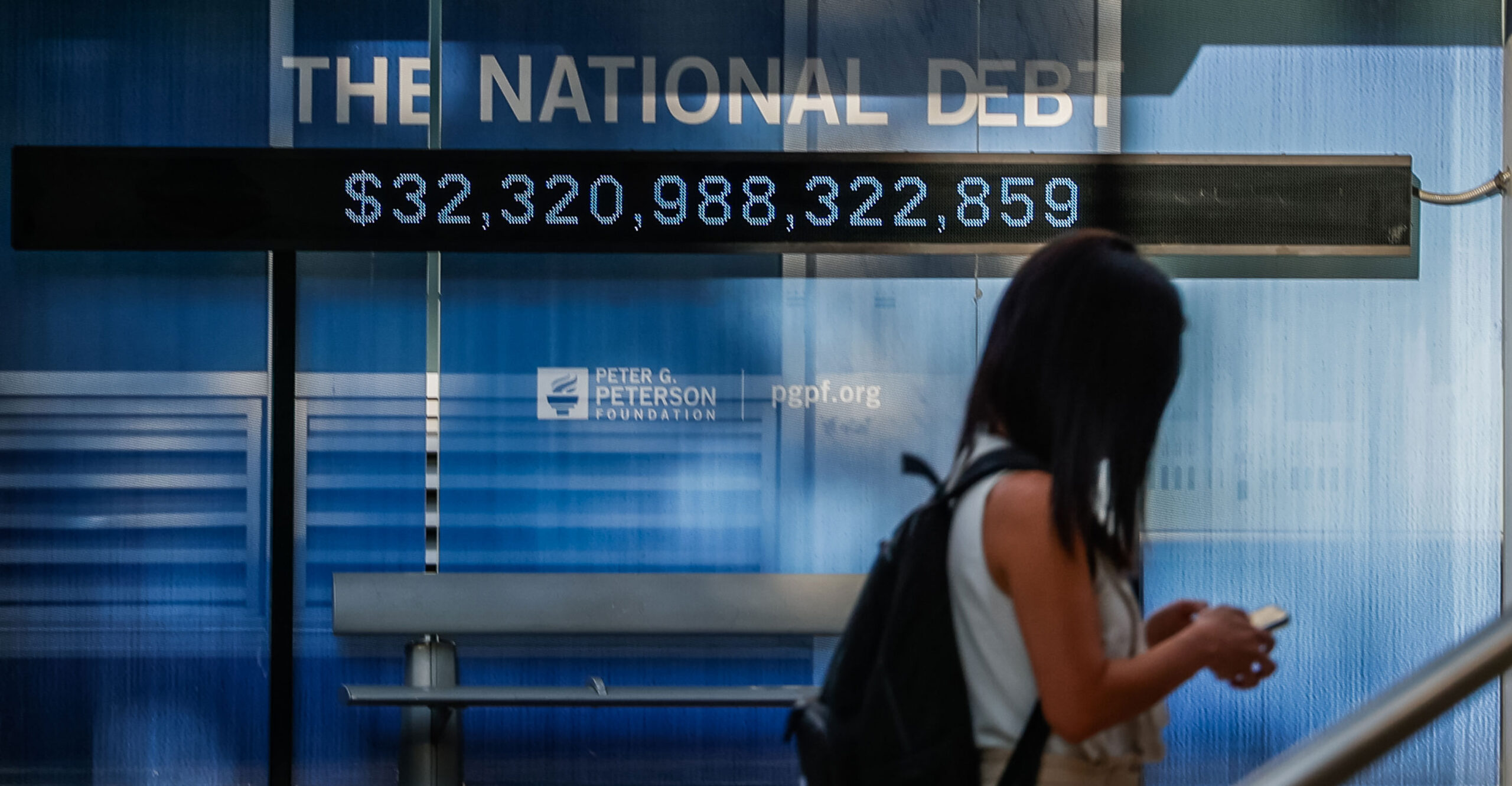
Maybe you’ve heard that our national debt has topped $34.7 trillion. But what does that really mean for you and your family? The number is… Read More
The post When Washington Spends, You’re on the Hook. You Deserve to Know For How Much. appeared first on The Daily Signal.

High-stakes Supreme Court ruling on Trump immunity due Monday
The Supreme Court is expected to rule Monday on Donald Trump‘s claim that he is immune from criminal prosecution surrounding his four-count indictment on an alleged attempt to overturn the 2020 election.
The strongest possibility that legal experts have suggested is that the case will be returned to a lower court, where a judge will wrestle over the facts of the case to determine which actions may be considered “public” conduct that is shielded by presidential immunity, and which acts constituted “private” conduct that may not be covered by immunity.

The case centers on whether Trump can challenge special counsel Jack Smith’s indictment for allegedly trying to subvert the 2020 election. Trump argues that former presidents should have full immunity for actions taken while in office and that a conviction should first require an impeachment, though the justices did not sound poised to grant full immunity based on their oral arguments in late April.
Lower Court Decisions and Supreme Court Deliberations
Two lower courts have ruled against Trump’s claim of broad immunity, which began with a ruling against Trump by U.S. District Judge Tanya Chutkan, an appointee of former President Barack Obama who is assigned to his cause.
However, Chief Justice John Roberts and Justice Brett Kavanaugh, two conservative justices who often vote together in consequential cases, suggested during April oral arguments that the U.S. Appeals Court for the District of Columbia Circuit may have erred in its approach.
At one point in the hearing, Kavanaugh pushed back on the special counsel’s position that there is no mention in the Constitution of immunity for former presidents.
“It’s not explicit in the Constitution, but also executive privilege is not explicit in the Constitution,” Kavanaugh said, referencing an established idea that presidents may withhold documents and information from the other branches of government.
Justice Elena Kagan pushed Trump’s attorney on just how far presidential immunity could extend, raising a hypothetical scenario of a military coup by a former president.
“How about if a president orders the military to stage a coup?” Kagan asked.
Former President Richard Nixon was a key historical figure that was leaned upon in the hearing. Trump in part rests his arguments on a 1982 Supreme Court decision that found former presidents are entitled to immunity from civil litigation for actions taken in office. Trump contends the same protection should apply to a former president for criminal charges as well, because the same concerns cited in the Nixon decision pertaining to “functioning of government” should apply.
Potential Outcomes
• Partial Immunity/ Sending the Case Back To Trial Judge
The Supreme Court might instruct lower courts to determine whether Trump’s actions on January 6 were official or private before deciding on immunity. This could delay the trial, which Trump has aimed to push beyond the 2024 election.
• No Immunity
The justices could conversely rule that Trump does not have any immunity from prosecution, allowing the trial to proceed as planned. This would align with lower court rulings that former presidents can face criminal charges for actions taken in office.
Timing and Implications
The Supreme Court’s decision to delay the ruling until July 1 has provided Trump with a temporary reprieve from seeing the case get to trial ahead of the 2024 presidential election. If the court sends the case back, it could delay the trial past the November 2024 election, aligning with Trump’s strategy. However, if the court rules against him, the trial could proceed swiftly, impacting the election.
Depending on the complexity of a potential public vs. private conduct test set by the court, Chutkan could get the case back on schedule ahead of the Nov. 5 election. However, legal experts have warned that the possible ambiguities of this test could result in another appeal by Trump or the prosecution if they contest the judge’s interpretations.
Broader Context
Trump pleaded not guilty in August to a four-count indictment related to election subversion.
Meanwhile, a high court decision in Fischer v. United States could affect whether Trump can still legally face two of the four charges pertaining to obstruction allegations.
Roberts wrote in the majority opinion that the law should not be interpreted broadly but instead dependent on language in the overarching statute, the Sarbanes-Oxley Act, which passed in 2002 after the Enron scandal. The act specified that obstruction meant destroying or manipulating documents that were part of an official proceeding.
Legal analysts at Just Security conceded that Friday’s decision dealt a “soft blow” to the government. They said, however, that “very few [Jan. 6] cases are likely to be materially affected” and that Trump’s case would be “materially unaffected.”
“The upshot is that the decision means little in terms of the pending charges against former President Donald Trump,” the analysts wrote, adding that the allegation Trump created “false evidence” in the election could be enough to satisfy the Supreme Court’s scope of the obstruction charge.
CLICK HERE TO READ MORE FROM THE WASHINGTON EXAMINER
Special counsel Jack Smith has said as much in court papers, a sign that Smith would argue he correctly applied the obstruction charges if Trump were to challenge them.
Ashley Oliver contributed to this report.
Even Liberal Reporters Are Wondering How Biden Can Win With a Poll Like This

Philadelphia newspaper calls for Donald Trump to drop out of the presidential election
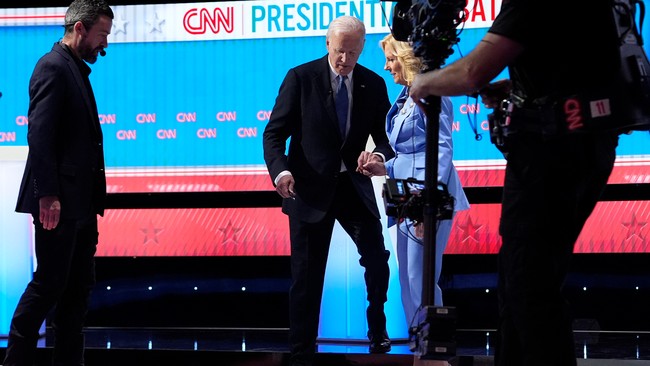
President Joe Biden’s performance in the presidential debate last Thursday has drawn much criticism. Many have claimed that he looked lost and confused. Others have suggested it revealed a decline in his abilities. With most polls showing he lost the debate to former President Donald Trump, a growing number of people have suggested that he should be replaced as the Democrat’s nominee. However, the Philadelphia Inquirer took an alternative position over the weekend and suggested that Trump, not Biden, should withdraw from the race.
“President Joe Biden’s debate performance was a disaster. His disjointed responses and dazed look sparked calls for him to drop out of the presidential race,” the Inquirer’s editorial read. “But lost in the hand wringing was Donald Trump’s usual bombastic litany of lies, hyperbole, bigotry, ignorance, and fear mongering. His performance demonstrated once again that he is a danger to democracy and unfit for office.”
The suggestion that Trump should step down from Philadelphia’s main newspaper comes after four major newspapers from around the country called for Biden to step down as the Democratic nominee. The Atlanta Journal-Constitution, Chicago Tribune, New York Times, and Wall Street Journal all suggested Biden should step down.
“At Thursday’s debate, the president needed to convince the American public that he was equal to the formidable demands of the office he is seeking to hold for another term. Voters, however, cannot be expected to ignore what was instead plain to see: Mr. Biden is not the man he was four years ago,” read the New York Times editorial.
“Mr. Trump at least looked vigorous and reminded voters of the pre-Covid economy. Mr. Biden looked like a feeble man no American should want going head to head with Mr. Putin or China’s Xi Jinping,” the Wall Street Journal wrote.
The Philadelphia Inquirer, however, disagreed. Despite briefly acknowledging Biden’s troubling performance, the publication considered Biden a lesser threat and provided a number of reasons why Trump should indeed leave the race.
“To build himself up, Trump constantly tears the country down. There is no shining city on the hill. It’s just mourning in America,” the Inquirer editorial board wrote. “Throughout the debate, Trump repeatedly said we are a ‘failing’ country. He called the United States a ‘third world nation.’ He said, ‘we’re living in hell’ and ‘very close to World War III.’
“Yes, Biden had a horrible night,” read the editorial. “He’s 81 and not as sharp as he used to be. But Biden on his worst day remains lightyears better than Trump on his best.”
CLICK HERE TO READ MORE FROM THE WASHINGTON EXAMINER
Philly’s newspaper’s editorial redundantly praised Biden and bashed Trump. It concluded with the idea that the country would be better off without Trump running for president.
“There was only one person at the debate who does not deserve to be running for president,” the Inquirer’s editorial proclaimed. “The sooner Trump exits the stage, the better off the country will be.”
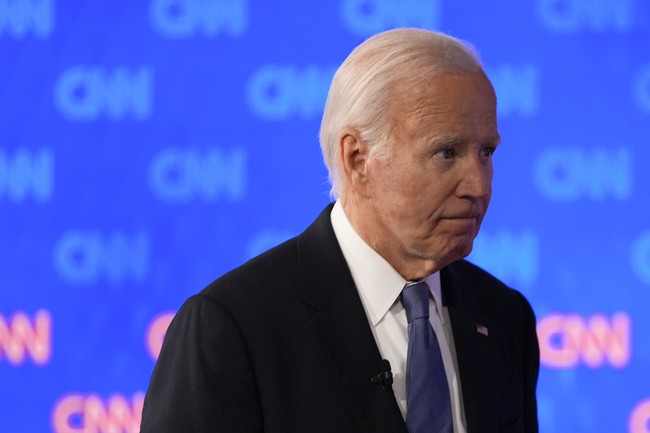
Ex-CNN Politics Editor: The Biden Team Knew the Debate Was Going to Be a Trainwreck
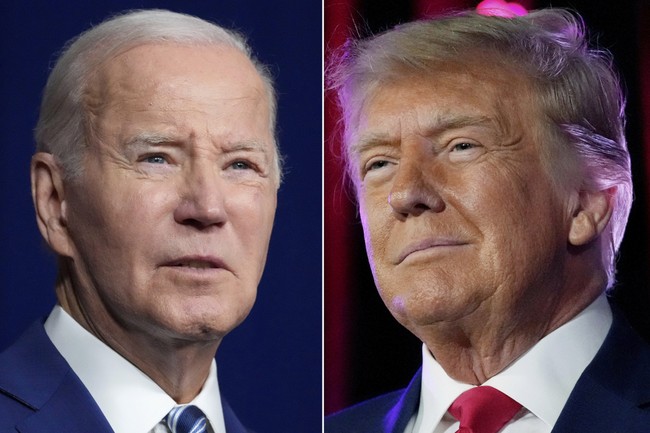
Here’s a Doozy of a Paragraph to Describe Biden Getting Annihilated by Trump in the First Debate
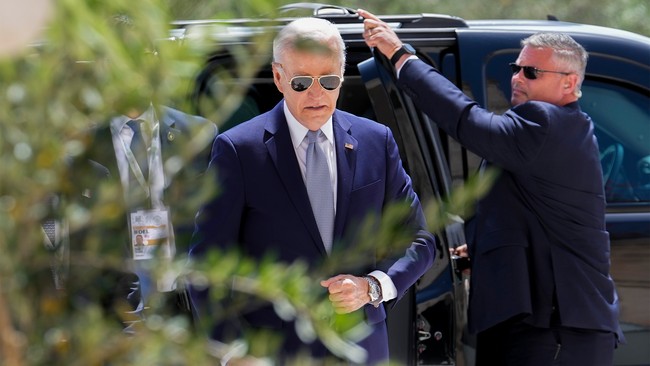
Biden’s Family Has Made Their Decision About Joe’s 2024 Prospects
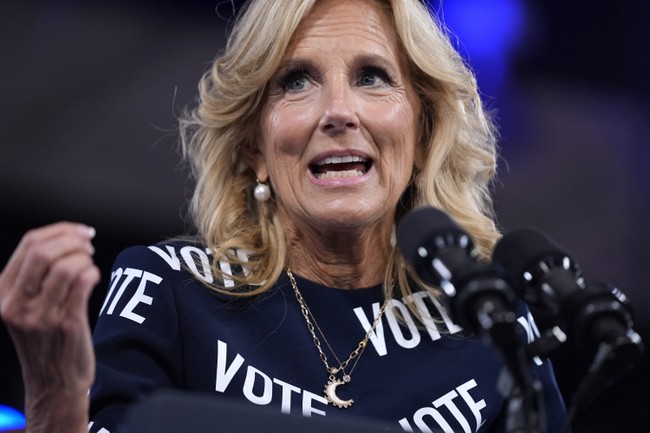
We Need to Talk About Jill Biden’s Insane Post-Debate Gathering