7-nation prisoner swap shows how diplomacy, not law, governs exchanges thumbnail

7-nation prisoner swap shows how diplomacy, not law, governs exchanges

Wall Street Journal reporter Evan Gershkovich and two other Americans were freed from Russia in a prisoner exchange on Aug. 1, 2024. In total, 24 prisoners, including 12 German nationals and eight Russians, as well as two children – who were not prisoners – were exchanged in Ankara, Turkey.

Described by The New York Times as “the most far-reaching exchange between Russia and the West in decades,” the deal was a complex agreement involving seven countries, including the United States, Slovenia, Turkey, Norway and Germany.

Some experts have called this kind of agreement “hostage diplomacy,” reflecting a growing trend of countries imprisoning foreigners on questionable grounds and using their potential release as political bargaining chips to achieve other goals.

What rules – informal or otherwise – help guide these sorts of delicate negotiations and eventual agreements? Amy Lieberman, a politics editor at The Conversation U.S., spoke with William Butler, a specialist in Russian and international law, to better understand this surprise prisoner release deal.

What stands out to you about this deal?

The scale is remarkable and is the largest ever U.S.-Russia prisoner swap.

Seven countries are involved and 26 people released, which is extremely unusual. Normally, there would be bilateral negotiations to release a small number of people.

It is important to understand that hostage and prisoner deals like this one are profoundly political exercises and not legal ones. There are no international treaties or international rules that determine how hostage and political prisoner releases should happen. All countries involved are at liberty to make the kind of deals they want to make, reflecting their own respective interests, on a case-by-case basis.

The real question is whether it would be better if there were some kind of international legal framework that would allow hostage and political prisoner releases to happen within a prescribed set of guidelines. In recent history, countries taking political prisoners and other foreigners hostage has become more common. A next step could be to set up international agreements that would institutionalize channels for hostage and prisoner release.

A  white man stands near a masked guard behind a glass enclosure.

U.S. journalist Evan Gershkovich appears before a Moscow Court on Sept. 19, 2023, to appeal Russian espionage charges. Natalia Kolesnikova/AFP/Getty Images

Some people released today had been detained in Russia for several years. Paul Whelan was imprisoned there for nearly four years. What factors can move these discussions along?

It is hard to know because these kinds of negotiations are done quietly, behind the scenes. People involved on all sides are under constraints about what can be disclosed.

Each case of a hostage or political prisoner exchange is a story of its own. There may be common political factors that are in play as countries get more experience with this issue and learn lessons about what to do and what to say or not.

Is there any other sort of informal playbook that countries might look to during these negotiations?

Each country has its own internal mechanism for dealing with this kind of negotiation. But because these discussions are highly political and secretive, they are not going to involve only junior or mid-level government officials. This is going to directly involve the heads of state agreeing to proceed with a particular decision.

On our end, that would mean the president, vice president and top people at the State Department would be involved in the negotiations.

The U.S. also has an internal mechanism set up so we can categorize U.S. citizens who have been “wrongly detained” by other countries. That is not making a judgment on our part as to guilt or innocence – that simply means that internally, as far as we are concerned, different government agencies and officials are involved in expediting the possibility of an exchange or release. For example, when basketball player Brittney Griner was detained, the first hurdle for supporters seeking her release was to persuade the U.S. government to classify her as “wrongly detained.”
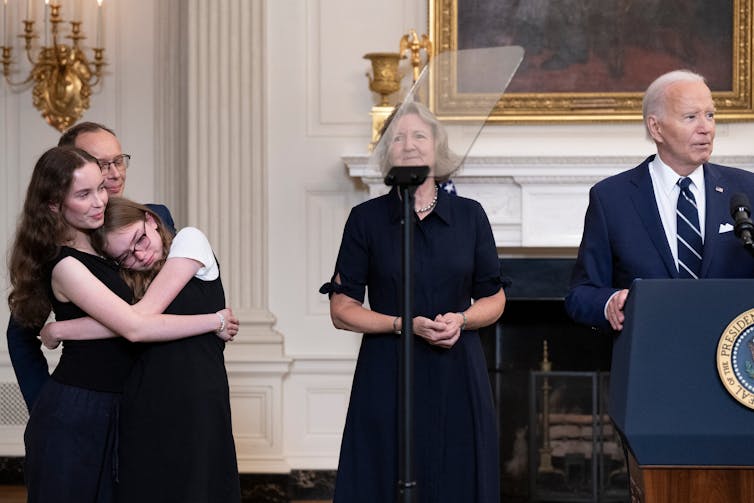
Two young women embrace each other and stand next to two other people in dark clothing, as well as a man with white hair and a blue suit who stands at a podium.

Family members of the Russian-American journalist Alsu Kurmasheva, who was released during the prisoner exchange on Aug. 1, 2024, stand with President Joe Biden at the White House as he speaks about the agreement. Brendan Śmiałowski/AFP via Getty Images

Could this deal’s timing have been influenced by other factors, like Russia’s war in Ukraine or the presidential elections in the U.S.?

The timing of a particular deal like this is always fair game for speculation. I was personally interested when I saw that the trial of Evan Gershkovich, a Wall Street Journal reporter, was moved up by the court in July. I thought that was unusual. Gershkovich was sentenced in July to 16 years in a penal colony, following espionage charges that the Russian government has not provided any public evidence for and which the U.S. government and Gershkovich’s team have denied were true.

The connection with Gershkovich’s conviction and release remains to be demonstrated, but the timing of the trial may have indicated that the outcome was important for the timing of the release deal.

Gershkovich’s case was trickier than that of Griner, whom Russian authorities arrested and then detained for smuggling narcotics in March 2022. She was incarcerated and sentenced in August 2022 to nine years in prison for smuggling drugs, before the U.S. reached a deal with Russia and she was released in December 2022. Griner pleaded guilty to carrying narcotics into Russia.

With Gershkovich, we don’t know the exact Russian criminal code he was convicted under.

Are there any similarities between Griner’s and Gershkovich’s cases?

There may be a perfectly legitimate procedural reason that Gershkovich’s lawyers asked to move his trial date forward. But the Russians have been categorical in recent times in insisting anyone who is being exchanged as part of a deal with another country must be convicted first, rather than released before a trial. There is no reason to exchange an innocent – that is an unconvicted – person. Griner was also convicted before she was released to the U.S. If the individual has not been convicted, then he or she should be free to go – there is no question of an exchange.

2024-08-01 19:09:00, http://s.wordpress.com/mshots/v1/https%3A%2F%2Ftheconversation.com%2F7-nation-prisoner-swap-shows-how-diplomacy-not-law-governs-exchanges-236009?w=600&h=450, Wall Street Journal reporter Evan Gershkovich and two other Americans were freed from Russia in a prisoner exchange on Aug. 1, 2024. In total, 24 prisoners, including 12 German nationals and eight Russians, as well as two children – who were not prisoners – were exchanged in Ankara, Turkey. Described by The New York Times,

Wall Street Journal reporter Evan Gershkovich and two other Americans were freed from Russia in a prisoner exchange on Aug. 1, 2024. In total, 24 prisoners, including 12 German nationals and eight Russians, as well as two children – who were not prisoners – were exchanged in Ankara, Turkey.

Described by The New York Times as “the most far-reaching exchange between Russia and the West in decades,” the deal was a complex agreement involving seven countries, including the United States, Slovenia, Turkey, Norway and Germany.

Some experts have called this kind of agreement “hostage diplomacy,” reflecting a growing trend of countries imprisoning foreigners on questionable grounds and using their potential release as political bargaining chips to achieve other goals.

What rules – informal or otherwise – help guide these sorts of delicate negotiations and eventual agreements? Amy Lieberman, a politics editor at The Conversation U.S., spoke with William Butler, a specialist in Russian and international law, to better understand this surprise prisoner release deal.

What stands out to you about this deal?

The scale is remarkable and is the largest ever U.S.-Russia prisoner swap.

Seven countries are involved and 26 people released, which is extremely unusual. Normally, there would be bilateral negotiations to release a small number of people.

It is important to understand that hostage and prisoner deals like this one are profoundly political exercises and not legal ones. There are no international treaties or international rules that determine how hostage and political prisoner releases should happen. All countries involved are at liberty to make the kind of deals they want to make, reflecting their own respective interests, on a case-by-case basis.

The real question is whether it would be better if there were some kind of international legal framework that would allow hostage and political prisoner releases to happen within a prescribed set of guidelines. In recent history, countries taking political prisoners and other foreigners hostage has become more common. A next step could be to set up international agreements that would institutionalize channels for hostage and prisoner release.

A  white man stands near a masked guard behind a glass enclosure.

U.S. journalist Evan Gershkovich appears before a Moscow Court on Sept. 19, 2023, to appeal Russian espionage charges. Natalia Kolesnikova/AFP/Getty Images

Some people released today had been detained in Russia for several years. Paul Whelan was imprisoned there for nearly four years. What factors can move these discussions along?

It is hard to know because these kinds of negotiations are done quietly, behind the scenes. People involved on all sides are under constraints about what can be disclosed.

Each case of a hostage or political prisoner exchange is a story of its own. There may be common political factors that are in play as countries get more experience with this issue and learn lessons about what to do and what to say or not.

Is there any other sort of informal playbook that countries might look to during these negotiations?

Each country has its own internal mechanism for dealing with this kind of negotiation. But because these discussions are highly political and secretive, they are not going to involve only junior or mid-level government officials. This is going to directly involve the heads of state agreeing to proceed with a particular decision.

On our end, that would mean the president, vice president and top people at the State Department would be involved in the negotiations.

The U.S. also has an internal mechanism set up so we can categorize U.S. citizens who have been “wrongly detained” by other countries. That is not making a judgment on our part as to guilt or innocence – that simply means that internally, as far as we are concerned, different government agencies and officials are involved in expediting the possibility of an exchange or release. For example, when basketball player Brittney Griner was detained, the first hurdle for supporters seeking her release was to persuade the U.S. government to classify her as “wrongly detained.”

Two young women embrace each other and stand next to two other people in dark clothing, as well as a man with white hair and a blue suit who stands at a podium.

Family members of the Russian-American journalist Alsu Kurmasheva, who was released during the prisoner exchange on Aug. 1, 2024, stand with President Joe Biden at the White House as he speaks about the agreement. Brendan Śmiałowski/AFP via Getty Images

Could this deal’s timing have been influenced by other factors, like Russia’s war in Ukraine or the presidential elections in the U.S.?

The timing of a particular deal like this is always fair game for speculation. I was personally interested when I saw that the trial of Evan Gershkovich, a Wall Street Journal reporter, was moved up by the court in July. I thought that was unusual. Gershkovich was sentenced in July to 16 years in a penal colony, following espionage charges that the Russian government has not provided any public evidence for and which the U.S. government and Gershkovich’s team have denied were true.

The connection with Gershkovich’s conviction and release remains to be demonstrated, but the timing of the trial may have indicated that the outcome was important for the timing of the release deal.

Gershkovich’s case was trickier than that of Griner, whom Russian authorities arrested and then detained for smuggling narcotics in March 2022. She was incarcerated and sentenced in August 2022 to nine years in prison for smuggling drugs, before the U.S. reached a deal with Russia and she was released in December 2022. Griner pleaded guilty to carrying narcotics into Russia.

With Gershkovich, we don’t know the exact Russian criminal code he was convicted under.

Are there any similarities between Griner’s and Gershkovich’s cases?

There may be a perfectly legitimate procedural reason that Gershkovich’s lawyers asked to move his trial date forward. But the Russians have been categorical in recent times in insisting anyone who is being exchanged as part of a deal with another country must be convicted first, rather than released before a trial. There is no reason to exchange an innocent – that is an unconvicted – person. Griner was also convicted before she was released to the U.S. If the individual has not been convicted, then he or she should be free to go – there is no question of an exchange.

, Wall Street Journal reporter Evan Gershkovich and two other Americans were freed from Russia in a prisoner exchange on Aug. 1, 2024. In total, 24 prisoners, including 12 German nationals and eight Russians, as well as two children – who were not prisoners – were exchanged in Ankara, Turkey. Described by The New York Times as “the most far-reaching exchange between Russia and the West in decades,” the deal was a complex agreement involving seven countries, including the United States, Slovenia, Turkey, Norway and Germany. Some experts have called this kind of agreement “hostage diplomacy,” reflecting a growing trend of countries imprisoning foreigners on questionable grounds and using their potential release as political bargaining chips to achieve other goals. What rules – informal or otherwise – help guide these sorts of delicate negotiations and eventual agreements? Amy Lieberman, a politics editor at The Conversation U.S., spoke with William Butler, a specialist in Russian and international law, to better understand this surprise prisoner release deal. What stands out to you about this deal? The scale is remarkable and is the largest ever U.S.-Russia prisoner swap. Seven countries are involved and 26 people released, which is extremely unusual. Normally, there would be bilateral negotiations to release a small number of people. It is important to understand that hostage and prisoner deals like this one are profoundly political exercises and not legal ones. There are no international treaties or international rules that determine how hostage and political prisoner releases should happen. All countries involved are at liberty to make the kind of deals they want to make, reflecting their own respective interests, on a case-by-case basis. The real question is whether it would be better if there were some kind of international legal framework that would allow hostage and political prisoner releases to happen within a prescribed set of guidelines. In recent history, countries taking political prisoners and other foreigners hostage has become more common. A next step could be to set up international agreements that would institutionalize channels for hostage and prisoner release. U.S. journalist Evan Gershkovich appears before a Moscow Court on Sept. 19, 2023, to appeal Russian espionage charges. Natalia Kolesnikova/AFP/Getty Images Some people released today had been detained in Russia for several years. Paul Whelan was imprisoned there for nearly four years. What factors can move these discussions along? It is hard to know because these kinds of negotiations are done quietly, behind the scenes. People involved on all sides are under constraints about what can be disclosed. Each case of a hostage or political prisoner exchange is a story of its own. There may be common political factors that are in play as countries get more experience with this issue and learn lessons about what to do and what to say or not. Is there any other sort of informal playbook that countries might look to during these negotiations? Each country has its own internal mechanism for dealing with this kind of negotiation. But because these discussions are highly political and secretive, they are not going to involve only junior or mid-level government officials. This is going to directly involve the heads of state agreeing to proceed with a particular decision. On our end, that would mean the president, vice president and top people at the State Department would be involved in the negotiations. The U.S. also has an internal mechanism set up so we can categorize U.S. citizens who have been “wrongly detained” by other countries. That is not making a judgment on our part as to guilt or innocence – that simply means that internally, as far as we are concerned, different government agencies and officials are involved in expediting the possibility of an exchange or release. For example, when basketball player Brittney Griner was detained, the first hurdle for supporters seeking her release was to persuade the U.S. government to classify her as “wrongly detained.” Family members of the Russian-American journalist Alsu Kurmasheva, who was released during the prisoner exchange on Aug. 1, 2024, stand with President Joe Biden at the White House as he speaks about the agreement. Brendan Śmiałowski/AFP via Getty Images Could this deal’s timing have been influenced by other factors, like Russia’s war in Ukraine or the presidential elections in the U.S.? The timing of a particular deal like this is always fair game for speculation. I was personally interested when I saw that the trial of Evan Gershkovich, a Wall Street Journal reporter, was moved up by the court in July. I thought that was unusual. Gershkovich was sentenced in July to 16 years in a penal colony, following espionage charges that the Russian government has not provided any public evidence for and which the U.S. government and Gershkovich’s team have denied were true. The connection with Gershkovich’s conviction and release remains to be demonstrated, but the timing of the trial may have indicated that the outcome was important for the timing of the release deal. Gershkovich’s case was trickier than that of Griner, whom Russian authorities arrested and then detained for smuggling narcotics in March 2022. She was incarcerated and sentenced in August 2022 to nine years in prison for smuggling drugs, before the U.S. reached a deal with Russia and she was released in December 2022. Griner pleaded guilty to carrying narcotics into Russia. With Gershkovich, we don’t know the exact Russian criminal code he was convicted under. Are there any similarities between Griner’s and Gershkovich’s cases? There may be a perfectly legitimate procedural reason that Gershkovich’s lawyers asked to move his trial date forward. But the Russians have been categorical in recent times in insisting anyone who is being exchanged as part of a deal with another country must be convicted first, rather than released before a trial. There is no reason to exchange an innocent – that is an unconvicted – person. Griner was also convicted before she was released to the U.S. If the individual has not been convicted, then he or she should be free to go – there is no question of an exchange., , 7-nation prisoner swap shows how diplomacy, not law, governs exchanges, https://images.theconversation.com/files/610939/original/file-20240801-17-mgc1xv.jpg?ixlib=rb-4.1.0&rect=51%2C60%2C5759%2C2879&q=45&auto=format&w=1356&h=668&fit=crop, Politics + Society – The Conversation, , , https://theconversation.com/us/politics/articles.atom, William E. Butler, Distinguished Professor of Law, Penn State,

Students gain confidence in US democracy by participating in elections and campaigns for their homework thumbnail

Students gain confidence in US democracy by participating in elections and campaigns for their homework

Text saying: Uncommon Courses, from The Conversation

Uncommon Courses is an occasional series from The Conversation U.S. highlighting unconventional approaches to teaching.

Title of course:

Campaigns and Elections, in Theory and Practice

What prompted the idea for the course?

I noticed many of my students, including those interested in political science, had never actually engaged in politics beyond voting. I also saw that many of the clubs and activities that helped me make friends when I was a college student seemed to have withered during the COVID-19 pandemic. I wanted students to have an opportunity to get to know each other, see how politics works in practice and get something useful on their resumes.

What does the course explore?

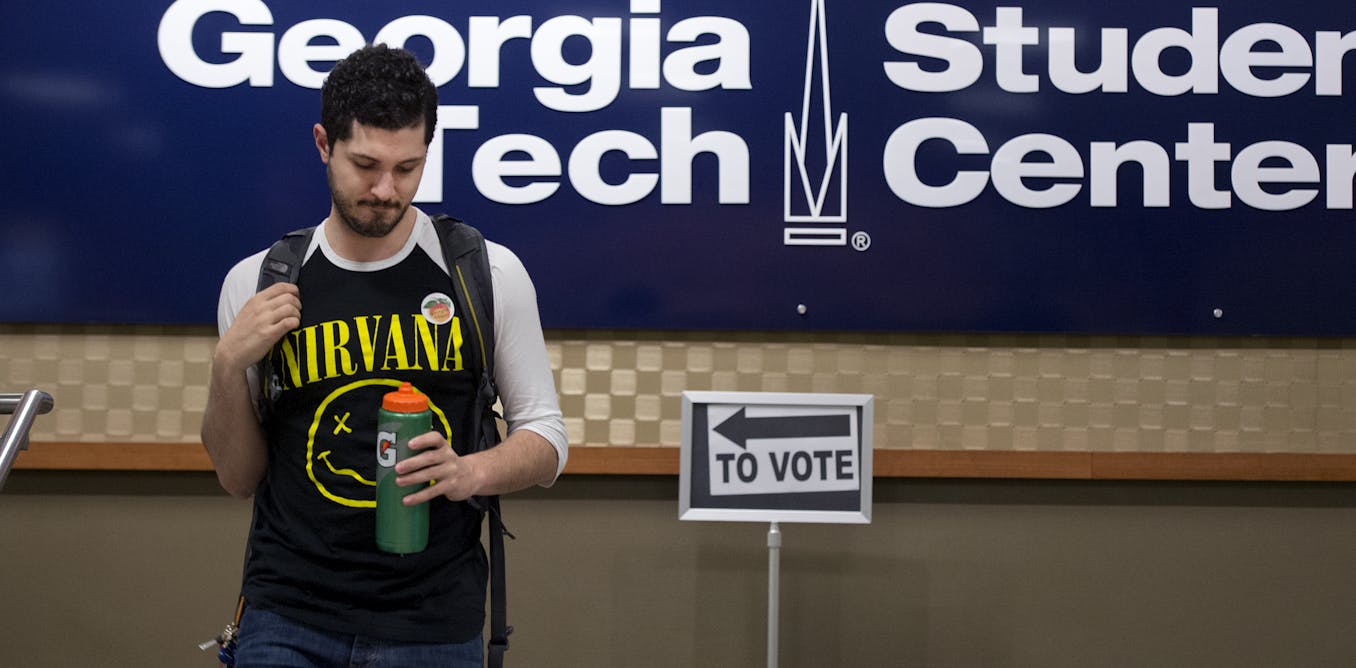
Every student participates in an election in some way. They can help register people to vote, volunteer for a campaign, be nonpartisan election workers or serve as poll watchers. They can volunteer for any kind of campaign, from the presidential election all the way down to local races, where students might be interacting directly with candidates. We’ll spend most of the class processing what is happening on the campaign trail: the good, the bad, the ugly and the absurd.

Why is this course relevant now?

Today’s students face serious headwinds. They’re inheriting historic political and social divisions that are compounded when people tell them not to trust anyone else. They’re also strikingly lonely. I think that the only way out of the cynicism and distrust is by engaging, participating and understanding how the system does and doesn’t work.

Young adults aren’t only eligible to vote. They can also organize campaigns and become strategists.

What’s a critical lesson from the course?

I want students to learn that they don’t have to be what gamers call NPCs – nonplayer characters – in politics. They’re just as capable of participating in democracy and leading their communities as the folks already running the show.

What materials does the course feature?

The only book for the course is “Campaigns and Elections” by Vanderbilt University political scientist John Sides and three of his colleagues. This great text is both practical and rooted in political science research about elections. As a group, we also select podcasts to listen to, news articles to read and videos to watch.

Because we’re in Texas, students will keep up with what’s going on here by reading The Texas Tribune and listening to the Texas Take, a political podcast from the Houston Chronicle. They’ll also learn the inside baseball of national politics through media outlets such as The Hill, Politico and Axios.

I also make sure they know about AllSides.com, a website that shows how different media outlets are covering the same story. I’ve found AllSides to be exactly what distrustful students have been looking for. During an election cycle, it helps them see what narratives campaigns are crafting from the news of the day.

What will the course prepare students to do?

I hope students take away two key lessons from this class that may seem contradictory. First, it’s easy to engage in and volunteer for campaigns. Second, it’s hard to set up a campaign or run an election well.

When you don’t know how things work, everything can look like a conspiracy. I hope that by seeing how the system works, students will gain confidence in the U.S. electoral system. It’s not perfect. But it’s full of mostly well-intentioned people trying to make things a little more perfect. And students have the opportunity and capacity to do the same.

2024-08-01 12:38:00, http://s.wordpress.com/mshots/v1/https%3A%2F%2Ftheconversation.com%2Fstudents-gain-confidence-in-us-democracy-by-participating-in-elections-and-campaigns-for-their-homework-234997?w=600&h=450, Uncommon Courses is an occasional series from The Conversation U.S. highlighting unconventional approaches to teaching. Title of course: Campaigns and Elections, in Theory and Practice What prompted the idea for the course? I noticed many of my students, including those interested in political science, had never actually engaged in politics beyond voting. I also saw,

Text saying: Uncommon Courses, from The Conversation

Uncommon Courses is an occasional series from The Conversation U.S. highlighting unconventional approaches to teaching.

Title of course:

Campaigns and Elections, in Theory and Practice

What prompted the idea for the course?

I noticed many of my students, including those interested in political science, had never actually engaged in politics beyond voting. I also saw that many of the clubs and activities that helped me make friends when I was a college student seemed to have withered during the COVID-19 pandemic. I wanted students to have an opportunity to get to know each other, see how politics works in practice and get something useful on their resumes.

What does the course explore?

Every student participates in an election in some way. They can help register people to vote, volunteer for a campaign, be nonpartisan election workers or serve as poll watchers. They can volunteer for any kind of campaign, from the presidential election all the way down to local races, where students might be interacting directly with candidates. We’ll spend most of the class processing what is happening on the campaign trail: the good, the bad, the ugly and the absurd.

Why is this course relevant now?

Today’s students face serious headwinds. They’re inheriting historic political and social divisions that are compounded when people tell them not to trust anyone else. They’re also strikingly lonely. I think that the only way out of the cynicism and distrust is by engaging, participating and understanding how the system does and doesn’t work.

Young adults aren’t only eligible to vote. They can also organize campaigns and become strategists.

What’s a critical lesson from the course?

I want students to learn that they don’t have to be what gamers call NPCs – nonplayer characters – in politics. They’re just as capable of participating in democracy and leading their communities as the folks already running the show.

What materials does the course feature?

The only book for the course is “Campaigns and Elections” by Vanderbilt University political scientist John Sides and three of his colleagues. This great text is both practical and rooted in political science research about elections. As a group, we also select podcasts to listen to, news articles to read and videos to watch.

Because we’re in Texas, students will keep up with what’s going on here by reading The Texas Tribune and listening to the Texas Take, a political podcast from the Houston Chronicle. They’ll also learn the inside baseball of national politics through media outlets such as The Hill, Politico and Axios.

I also make sure they know about AllSides.com, a website that shows how different media outlets are covering the same story. I’ve found AllSides to be exactly what distrustful students have been looking for. During an election cycle, it helps them see what narratives campaigns are crafting from the news of the day.

What will the course prepare students to do?

I hope students take away two key lessons from this class that may seem contradictory. First, it’s easy to engage in and volunteer for campaigns. Second, it’s hard to set up a campaign or run an election well.

When you don’t know how things work, everything can look like a conspiracy. I hope that by seeing how the system works, students will gain confidence in the U.S. electoral system. It’s not perfect. But it’s full of mostly well-intentioned people trying to make things a little more perfect. And students have the opportunity and capacity to do the same.

, Uncommon Courses is an occasional series from The Conversation U.S. highlighting unconventional approaches to teaching. Title of course: Campaigns and Elections, in Theory and Practice What prompted the idea for the course? I noticed many of my students, including those interested in political science, had never actually engaged in politics beyond voting. I also saw that many of the clubs and activities that helped me make friends when I was a college student seemed to have withered during the COVID-19 pandemic. I wanted students to have an opportunity to get to know each other, see how politics works in practice and get something useful on their resumes. What does the course explore? Every student participates in an election in some way. They can help register people to vote, volunteer for a campaign, be nonpartisan election workers or serve as poll watchers. They can volunteer for any kind of campaign, from the presidential election all the way down to local races, where students might be interacting directly with candidates. We’ll spend most of the class processing what is happening on the campaign trail: the good, the bad, the ugly and the absurd. Why is this course relevant now? Today’s students face serious headwinds. They’re inheriting historic political and social divisions that are compounded when people tell them not to trust anyone else. They’re also strikingly lonely. I think that the only way out of the cynicism and distrust is by engaging, participating and understanding how the system does and doesn’t work. Young adults aren’t only eligible to vote. They can also organize campaigns and become strategists. What’s a critical lesson from the course? I want students to learn that they don’t have to be what gamers call NPCs – nonplayer characters – in politics. They’re just as capable of participating in democracy and leading their communities as the folks already running the show. What materials does the course feature? The only book for the course is “Campaigns and Elections” by Vanderbilt University political scientist John Sides and three of his colleagues. This great text is both practical and rooted in political science research about elections. As a group, we also select podcasts to listen to, news articles to read and videos to watch. Because we’re in Texas, students will keep up with what’s going on here by reading The Texas Tribune and listening to the Texas Take, a political podcast from the Houston Chronicle. They’ll also learn the inside baseball of national politics through media outlets such as The Hill, Politico and Axios. I also make sure they know about AllSides.com, a website that shows how different media outlets are covering the same story. I’ve found AllSides to be exactly what distrustful students have been looking for. During an election cycle, it helps them see what narratives campaigns are crafting from the news of the day. What will the course prepare students to do? I hope students take away two key lessons from this class that may seem contradictory. First, it’s easy to engage in and volunteer for campaigns. Second, it’s hard to set up a campaign or run an election well. When you don’t know how things work, everything can look like a conspiracy. I hope that by seeing how the system works, students will gain confidence in the U.S. electoral system. It’s not perfect. But it’s full of mostly well-intentioned people trying to make things a little more perfect. And students have the opportunity and capacity to do the same., , Students gain confidence in US democracy by participating in elections and campaigns for their homework, https://images.theconversation.com/files/609731/original/file-20240727-21-7z6bqo.jpg?ixlib=rb-4.1.0&rect=0%2C567%2C4218%2C2105&q=45&auto=format&w=1356&h=668&fit=crop, Politics + Society – The Conversation, , , https://theconversation.com/us/politics/articles.atom, Mark C. Hand, Assistant Professor of Political Science, University of Texas at Arlington,

Who will win in Arizona in November? It’s a toss-up − like it has been for years thumbnail

Who will win in Arizona in November? It’s a toss-up − like it has been for years

Arizona is considered a crucial swing state that could help propel either Donald Trump or Kamala Harris to the White House in November 2024.

With the exception of Democrat Bill Clinton’s win there in 1996, Arizona has voted Republican in every presidential election from 1952 through 2016. Democrats won the presidential election there in 2020, but Joe Biden narrowly defeated Trump.

It wasn’t always this way. Before the 1950s, campaigning in Arizona was a relatively simple matter for candidates such as Carl Hayden, a Democrat who served as a U.S. senator from Arizona from 1927 to 1969.

“Oratory wasn’t a big thing. I just told them I was a Democrat,” Hayden said in 1971.

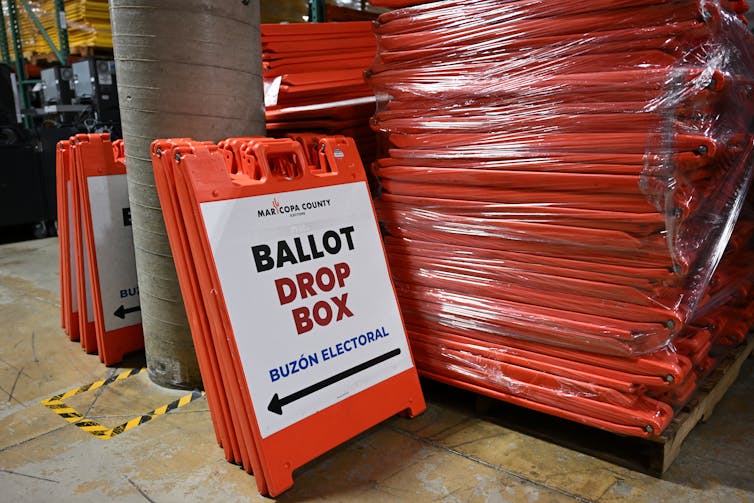
An orange and white sign says, 'Ballot drop box,' and is next to a stack of orange signs that are folded.

Stacks of ballot drop-box signs sit in storage in a Maricopa County election office in June 2024. Patrick T. Fallon/AFP via Getty Images

A 2-party state emerges

In the 1950s, the party balance in Arizona began to change for a number of reasons, including demographic shifts. This era ushered in a more competitive two-party system in Arizona, giving Republicans an upper hand.

During this decade, more Republicans moved from the Midwest to Arizona, disproportionately settling in the Phoenix area, in Maricopa County. Conservative Democrats in the more rural areas of Arizona also gravitated toward the Republican Party as the Democratic Party became more liberal and they felt more aligned with conservative Republicans.

Other factors were at play – such as the influence of the state’s leading newspapers, The Republic and The Gazette, which were led by newspaper publisher Eugene Pulliam in Phoenix. Pulliam wanted to create a two-party state, and the newspapers’ editorials reflected this by publicly endorsing Republican candidates.

Arizona’s Republican Party came to power as a business-friendly and reform-minded party, eager to reform the state’s tax structure and increase spending for education and other social programs. This mirrored the relatively moderate Main Street Republicans across the country at the time. The party, though, also had a conservative populist and fundamentalist religious faction, which would grow in subsequent years and become more influential.

Since 1966, Republicans have controlled the state’s House of Representatives and have lost control of the State Senate on only a few occasions. While Republican dominance in the state legislature has declined in recent years, Republicans continue to control both bodies. They also currently have six of the nine congressional seats.

Arizona’s governor, Katie Hobbs, is a Democrat but the first Democrat in several years to hold the office.

Arizona’s political scene today

Today, Republicans currently outnumber Democrats in terms of party registration in Arizona – 35% to 29%, with 34% classified as independents or unaffiliated voters and the rest listed as Libertarian or affiliated with the Green Party.

At the same time, Arizona qualifies as a swing state because Democrats have, indeed, done well in recent statewide elections, showing an increasing amount of strength, often, though not always, outdoing the Republicans. In 2018, Democrats won statewide races for U.S. senator, secretary of state, superintendent of public instruction and a seat on the public utility corporation commission.

In 2020, Arizona voters elected another Democrat to the U.S. Senate, Mark Kelly, following Sen. John McCain’s death in 2018. And Biden defeated Trump in the state.

In 2022, nearly all the candidates nominated by Republican voters for statewide office took the public – and false – position that the presidential election had been stolen from Trump. Some of these election deniers won their primaries with Trump’s endorsement and went into the general election with his backing.

But Republicans lost the important statewide offices of U.S. senator, governor, attorney general and secretary of state to the Democrats.

Two men look at each other on a dark night. One holds a sign that says in white paint, 'Stop the invasion.'

People attend an anti-immigration rally in February 2024 in Yuma, Ariz. Qian Weizhong/VCG via Getty Images

No single issue for Arizona voters

Democratic candidates in Arizona have done particularly well in recent years with women, minorities – including Latinos, Black people and Native Americans – young people and independents. They have also gained the support of some moderate Republicans who are unhappy with more extreme Republican candidates.

Democrats have also benefited from the migration of more liberal people from California over the past few decades, an increase in the size of the Latino vote and greater support from college-educated women in suburban areas.

There is no single issue driving these voters, who are concerned about everything from reproductive rights and immigration to education and the economy.

Democratic success has rested on votes in the largest urban counties of Maricopa and Pima, both of which have been growing. This is especially true of Maricopa, which has grown significantly over the past few decades.

Republican candidates have done well with rural voters. These voters tend to be more conservative on economic issues involving government taxing and spending and on social issues, where their views often reflect evangelical religious beliefs on matters such as abortion and LGBTQ+ rights.

Rural votes have been decisive in some elections, pushing Republicans to wins when urban voters have been badly divided on candidates and issues such as immigration.

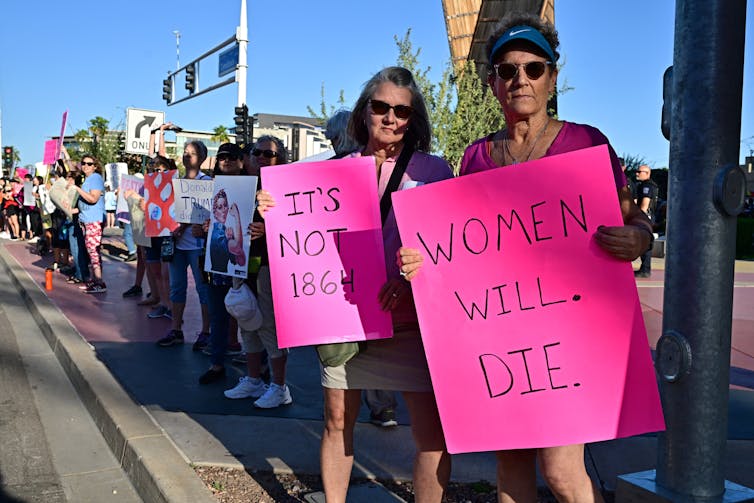
A crowd of people hold signs on a street, including two women who look at the camera and have pink signs that say 'It's not 1864' and 'Women will die.'

Abortion-rights demonstrators rally in Scottsdale, Ariz., in April 2024. Frederic J. Brown/AFP via Getty Images

Arizona can go either way in 2024

If Arizona can be considered a purple state, moving from Republican red to Democratic blue, it is largely because Maricopa County, where more than 60% of the state’s total votes come from, has a mix of Democrats and Republicans.

Change has been especially apparent in recent elections in suburban areas in the counties with wealthier and well-educated populations. Other important counties, including Pima, have not changed all that much in their partisan leanings over the past few decades.

Arizona has shown signs of changing from a Republican stronghold and may be properly ranked among those states most likely to qualify as a swing state. But this, in itself, tells little about how it is going to swing in any given election. Much will depend on the issues and personalities involved.

Democrats hope that an Arizona ballot measure on abortion that voters will decide on in November will generate voter turnout favorable to them. The measure would protect the right to have an abortion up until fetal viability, typically up until 23 to 24 weeks of pregnancy.

Republicans hope another ballot measure that would make it illegal, under state law, to cross the border without a visa could help win them votes.

Polls suggest Arizona voters are most concerned about jobs and the economy, immigration, and government taxing and spending. Compared to voters in other swing states, they appear especially concerned about immigration. Republicans seem particular fixated on these issues, while Democrats have a more diverse set of concerns, including, in 2024, abortion rights and preserving democracy.

In November, Trump is likely to do well in Arizona on the immigration issue but poorly on the abortion issue. For Harris, the opposite is true – though she has gotten the endorsement of some Republican mayors in Arizona border towns.

Putting Harris on the ballot in place of Biden has rejuvenated the Democrats. Polls suggest she has had greater appeal to women, young voters, independents and Latinos and could cut into Trump’s narrow lead.

Overall, there is the possibility of considerable change in voter sentiment as the election campaigns unfold. Arizona is a state that can go either way.

2024-08-01 12:38:00, http://s.wordpress.com/mshots/v1/https%3A%2F%2Ftheconversation.com%2Fwho-will-win-in-arizona-in-november-its-a-toss-up-like-it-has-been-for-years-233763?w=600&h=450, Arizona is considered a crucial swing state that could help propel either Donald Trump or Kamala Harris to the White House in November 2024. With the exception of Democrat Bill Clinton’s win there in 1996, Arizona has voted Republican in every presidential election from 1952 through 2016. Democrats won the presidential election there in 2020,

Arizona is considered a crucial swing state that could help propel either Donald Trump or Kamala Harris to the White House in November 2024.

With the exception of Democrat Bill Clinton’s win there in 1996, Arizona has voted Republican in every presidential election from 1952 through 2016. Democrats won the presidential election there in 2020, but Joe Biden narrowly defeated Trump.

It wasn’t always this way. Before the 1950s, campaigning in Arizona was a relatively simple matter for candidates such as Carl Hayden, a Democrat who served as a U.S. senator from Arizona from 1927 to 1969.

“Oratory wasn’t a big thing. I just told them I was a Democrat,” Hayden said in 1971.

An orange and white sign says, 'Ballot drop box,' and is next to a stack of orange signs that are folded.

Stacks of ballot drop-box signs sit in storage in a Maricopa County election office in June 2024. Patrick T. Fallon/AFP via Getty Images

A 2-party state emerges

In the 1950s, the party balance in Arizona began to change for a number of reasons, including demographic shifts. This era ushered in a more competitive two-party system in Arizona, giving Republicans an upper hand.

During this decade, more Republicans moved from the Midwest to Arizona, disproportionately settling in the Phoenix area, in Maricopa County. Conservative Democrats in the more rural areas of Arizona also gravitated toward the Republican Party as the Democratic Party became more liberal and they felt more aligned with conservative Republicans.

Other factors were at play – such as the influence of the state’s leading newspapers, The Republic and The Gazette, which were led by newspaper publisher Eugene Pulliam in Phoenix. Pulliam wanted to create a two-party state, and the newspapers’ editorials reflected this by publicly endorsing Republican candidates.

Arizona’s Republican Party came to power as a business-friendly and reform-minded party, eager to reform the state’s tax structure and increase spending for education and other social programs. This mirrored the relatively moderate Main Street Republicans across the country at the time. The party, though, also had a conservative populist and fundamentalist religious faction, which would grow in subsequent years and become more influential.

Since 1966, Republicans have controlled the state’s House of Representatives and have lost control of the State Senate on only a few occasions. While Republican dominance in the state legislature has declined in recent years, Republicans continue to control both bodies. They also currently have six of the nine congressional seats.

Arizona’s governor, Katie Hobbs, is a Democrat but the first Democrat in several years to hold the office.

Arizona’s political scene today

Today, Republicans currently outnumber Democrats in terms of party registration in Arizona – 35% to 29%, with 34% classified as independents or unaffiliated voters and the rest listed as Libertarian or affiliated with the Green Party.

At the same time, Arizona qualifies as a swing state because Democrats have, indeed, done well in recent statewide elections, showing an increasing amount of strength, often, though not always, outdoing the Republicans. In 2018, Democrats won statewide races for U.S. senator, secretary of state, superintendent of public instruction and a seat on the public utility corporation commission.

In 2020, Arizona voters elected another Democrat to the U.S. Senate, Mark Kelly, following Sen. John McCain’s death in 2018. And Biden defeated Trump in the state.

In 2022, nearly all the candidates nominated by Republican voters for statewide office took the public – and false – position that the presidential election had been stolen from Trump. Some of these election deniers won their primaries with Trump’s endorsement and went into the general election with his backing.

But Republicans lost the important statewide offices of U.S. senator, governor, attorney general and secretary of state to the Democrats.

Two men look at each other on a dark night. One holds a sign that says in white paint, 'Stop the invasion.'

People attend an anti-immigration rally in February 2024 in Yuma, Ariz. Qian Weizhong/VCG via Getty Images

No single issue for Arizona voters

Democratic candidates in Arizona have done particularly well in recent years with women, minorities – including Latinos, Black people and Native Americans – young people and independents. They have also gained the support of some moderate Republicans who are unhappy with more extreme Republican candidates.

Democrats have also benefited from the migration of more liberal people from California over the past few decades, an increase in the size of the Latino vote and greater support from college-educated women in suburban areas.

There is no single issue driving these voters, who are concerned about everything from reproductive rights and immigration to education and the economy.

Democratic success has rested on votes in the largest urban counties of Maricopa and Pima, both of which have been growing. This is especially true of Maricopa, which has grown significantly over the past few decades.

Republican candidates have done well with rural voters. These voters tend to be more conservative on economic issues involving government taxing and spending and on social issues, where their views often reflect evangelical religious beliefs on matters such as abortion and LGBTQ+ rights.

Rural votes have been decisive in some elections, pushing Republicans to wins when urban voters have been badly divided on candidates and issues such as immigration.

A crowd of people hold signs on a street, including two women who look at the camera and have pink signs that say 'It's not 1864' and 'Women will die.'

Abortion-rights demonstrators rally in Scottsdale, Ariz., in April 2024. Frederic J. Brown/AFP via Getty Images

Arizona can go either way in 2024

If Arizona can be considered a purple state, moving from Republican red to Democratic blue, it is largely because Maricopa County, where more than 60% of the state’s total votes come from, has a mix of Democrats and Republicans.

Change has been especially apparent in recent elections in suburban areas in the counties with wealthier and well-educated populations. Other important counties, including Pima, have not changed all that much in their partisan leanings over the past few decades.

Arizona has shown signs of changing from a Republican stronghold and may be properly ranked among those states most likely to qualify as a swing state. But this, in itself, tells little about how it is going to swing in any given election. Much will depend on the issues and personalities involved.

Democrats hope that an Arizona ballot measure on abortion that voters will decide on in November will generate voter turnout favorable to them. The measure would protect the right to have an abortion up until fetal viability, typically up until 23 to 24 weeks of pregnancy.

Republicans hope another ballot measure that would make it illegal, under state law, to cross the border without a visa could help win them votes.

Polls suggest Arizona voters are most concerned about jobs and the economy, immigration, and government taxing and spending. Compared to voters in other swing states, they appear especially concerned about immigration. Republicans seem particular fixated on these issues, while Democrats have a more diverse set of concerns, including, in 2024, abortion rights and preserving democracy.

In November, Trump is likely to do well in Arizona on the immigration issue but poorly on the abortion issue. For Harris, the opposite is true – though she has gotten the endorsement of some Republican mayors in Arizona border towns.

Putting Harris on the ballot in place of Biden has rejuvenated the Democrats. Polls suggest she has had greater appeal to women, young voters, independents and Latinos and could cut into Trump’s narrow lead.

Overall, there is the possibility of considerable change in voter sentiment as the election campaigns unfold. Arizona is a state that can go either way.

, Arizona is considered a crucial swing state that could help propel either Donald Trump or Kamala Harris to the White House in November 2024. With the exception of Democrat Bill Clinton’s win there in 1996, Arizona has voted Republican in every presidential election from 1952 through 2016. Democrats won the presidential election there in 2020, but Joe Biden narrowly defeated Trump. It wasn’t always this way. Before the 1950s, campaigning in Arizona was a relatively simple matter for candidates such as Carl Hayden, a Democrat who served as a U.S. senator from Arizona from 1927 to 1969. “Oratory wasn’t a big thing. I just told them I was a Democrat,” Hayden said in 1971. Stacks of ballot drop-box signs sit in storage in a Maricopa County election office in June 2024. Patrick T. Fallon/AFP via Getty Images A 2-party state emerges In the 1950s, the party balance in Arizona began to change for a number of reasons, including demographic shifts. This era ushered in a more competitive two-party system in Arizona, giving Republicans an upper hand. During this decade, more Republicans moved from the Midwest to Arizona, disproportionately settling in the Phoenix area, in Maricopa County. Conservative Democrats in the more rural areas of Arizona also gravitated toward the Republican Party as the Democratic Party became more liberal and they felt more aligned with conservative Republicans. Other factors were at play – such as the influence of the state’s leading newspapers, The Republic and The Gazette, which were led by newspaper publisher Eugene Pulliam in Phoenix. Pulliam wanted to create a two-party state, and the newspapers’ editorials reflected this by publicly endorsing Republican candidates. Arizona’s Republican Party came to power as a business-friendly and reform-minded party, eager to reform the state’s tax structure and increase spending for education and other social programs. This mirrored the relatively moderate Main Street Republicans across the country at the time. The party, though, also had a conservative populist and fundamentalist religious faction, which would grow in subsequent years and become more influential. Since 1966, Republicans have controlled the state’s House of Representatives and have lost control of the State Senate on only a few occasions. While Republican dominance in the state legislature has declined in recent years, Republicans continue to control both bodies. They also currently have six of the nine congressional seats. Arizona’s governor, Katie Hobbs, is a Democrat but the first Democrat in several years to hold the office. Arizona’s political scene today Today, Republicans currently outnumber Democrats in terms of party registration in Arizona – 35% to 29%, with 34% classified as independents or unaffiliated voters and the rest listed as Libertarian or affiliated with the Green Party. At the same time, Arizona qualifies as a swing state because Democrats have, indeed, done well in recent statewide elections, showing an increasing amount of strength, often, though not always, outdoing the Republicans. In 2018, Democrats won statewide races for U.S. senator, secretary of state, superintendent of public instruction and a seat on the public utility corporation commission. In 2020, Arizona voters elected another Democrat to the U.S. Senate, Mark Kelly, following Sen. John McCain’s death in 2018. And Biden defeated Trump in the state. In 2022, nearly all the candidates nominated by Republican voters for statewide office took the public – and false – position that the presidential election had been stolen from Trump. Some of these election deniers won their primaries with Trump’s endorsement and went into the general election with his backing. But Republicans lost the important statewide offices of U.S. senator, governor, attorney general and secretary of state to the Democrats. People attend an anti-immigration rally in February 2024 in Yuma, Ariz. Qian Weizhong/VCG via Getty Images No single issue for Arizona voters Democratic candidates in Arizona have done particularly well in recent years with women, minorities – including Latinos, Black people and Native Americans – young people and independents. They have also gained the support of some moderate Republicans who are unhappy with more extreme Republican candidates. Democrats have also benefited from the migration of more liberal people from California over the past few decades, an increase in the size of the Latino vote and greater support from college-educated women in suburban areas. There is no single issue driving these voters, who are concerned about everything from reproductive rights and immigration to education and the economy. Democratic success has rested on votes in the largest urban counties of Maricopa and Pima, both of which have been growing. This is especially true of Maricopa, which has grown significantly over the past few decades. Republican candidates have done well with rural voters. These voters tend to be more conservative on economic issues involving government taxing and spending and on social issues, where their views often reflect evangelical religious beliefs on matters such as abortion and LGBTQ+ rights. Rural votes have been decisive in some elections, pushing Republicans to wins when urban voters have been badly divided on candidates and issues such as immigration. Abortion-rights demonstrators rally in Scottsdale, Ariz., in April 2024. Frederic J. Brown/AFP via Getty Images Arizona can go either way in 2024 If Arizona can be considered a purple state, moving from Republican red to Democratic blue, it is largely because Maricopa County, where more than 60% of the state’s total votes come from, has a mix of Democrats and Republicans. Change has been especially apparent in recent elections in suburban areas in the counties with wealthier and well-educated populations. Other important counties, including Pima, have not changed all that much in their partisan leanings over the past few decades. Arizona has shown signs of changing from a Republican stronghold and may be properly ranked among those states most likely to qualify as a swing state. But this, in itself, tells little about how it is going to swing in any given election. Much will depend on the issues and personalities involved. Democrats hope that an Arizona ballot measure on abortion that voters will decide on in November will generate voter turnout favorable to them. The measure would protect the right to have an abortion up until fetal viability, typically up until 23 to 24 weeks of pregnancy. Republicans hope another ballot measure that would make it illegal, under state law, to cross the border without a visa could help win them votes. Polls suggest Arizona voters are most concerned about jobs and the economy, immigration, and government taxing and spending. Compared to voters in other swing states, they appear especially concerned about immigration. Republicans seem particular fixated on these issues, while Democrats have a more diverse set of concerns, including, in 2024, abortion rights and preserving democracy. In November, Trump is likely to do well in Arizona on the immigration issue but poorly on the abortion issue. For Harris, the opposite is true – though she has gotten the endorsement of some Republican mayors in Arizona border towns. Putting Harris on the ballot in place of Biden has rejuvenated the Democrats. Polls suggest she has had greater appeal to women, young voters, independents and Latinos and could cut into Trump’s narrow lead. Overall, there is the possibility of considerable change in voter sentiment as the election campaigns unfold. Arizona is a state that can go either way., , Who will win in Arizona in November? It’s a toss-up − like it has been for years, https://images.theconversation.com/files/610629/original/file-20240731-18-c82hnn.jpg?ixlib=rb-4.1.0&rect=0%2C471%2C4256%2C2128&q=45&auto=format&w=1356&h=668&fit=crop, Politics + Society – The Conversation, , , https://theconversation.com/us/politics/articles.atom, David R. Berman, Professor Emeritus of Political Science, Arizona State University,

How Do We Stop Americans From Being Taken by 'Abductor States'? Just Wait Until You Hear Biden's Answer. thumbnail

How Do We Stop Americans From Being Taken by ‘Abductor States’? Just Wait Until You Hear Biden’s Answer.

2024-08-01 17:00:00, http://s.wordpress.com/mshots/v1/https%3A%2F%2Ftownhall.com%2Ftipsheet%2Fmadelineleesman%2F2024%2F08%2F01%2Fbiden-remarks-n2642845?w=600&h=450, , , , , How Do We Stop Americans From Being Taken by 'Abductor States'? Just Wait Until You Hear Biden's Answer., https://media.townhall.com/cdn/hodl/2024/197/f4be9857-95ea-4b0b-ad8e-5031c4bd801c.jpg, Townhall, Townhall is the leading source for conservative news, political cartoons, breaking stories, election analysis and commentary on politics and the media culture. An information hub for conservatives, republicans, libertarians, and liberty-loving Americans., , https://townhall.com/feed, ,

Remember Those Jordanians Who Tried to Breach Quantico Marine Base? Well... thumbnail

Remember Those Jordanians Who Tried to Breach Quantico Marine Base? Well…

2024-08-01 16:30:00, http://s.wordpress.com/mshots/v1/https%3A%2F%2Ftownhall.com%2Ftipsheet%2Fmadelineleesman%2F2024%2F08%2F01%2Fremember-those-jordanians-who-tried-to-breach-quantico-marine-base-well-n2642831?w=600&h=450, , , , , Remember Those Jordanians Who Tried to Breach Quantico Marine Base? Well..., https://media.townhall.com/cdn/hodl/2024/141/e19bd8b0-dd90-454c-ab30-08545209d17e.jpeg, Townhall, Townhall is the leading source for conservative news, political cartoons, breaking stories, election analysis and commentary on politics and the media culture. An information hub for conservatives, republicans, libertarians, and liberty-loving Americans., , https://townhall.com/feed, ,

Sure Enough, There’s Pushback on a Potential Shapiro VP Pick thumbnail

Sure Enough, There’s Pushback on a Potential Shapiro VP Pick

2024-08-01 15:45:00, http://s.wordpress.com/mshots/v1/https%3A%2F%2Ftownhall.com%2Ftipsheet%2Frebeccadowns%2F2024%2F08%2F01%2Fsure-enough-theres-pushback-on-a-shapiro-vp-pick-n2642837?w=600&h=450, , , , , Sure Enough, There’s Pushback on a Potential Shapiro VP Pick, https://media.townhall.com/cdn/hodl/2024/214/56c5a166-434c-49fd-bbc0-35cfed975464.jpg, Townhall, Townhall is the leading source for conservative news, political cartoons, breaking stories, election analysis and commentary on politics and the media culture. An information hub for conservatives, republicans, libertarians, and liberty-loving Americans., , https://townhall.com/feed, ,

Raffensperger Sets the Record Straight After What Stacey Abrams Claimed on CNN thumbnail

Raffensperger Sets the Record Straight After What Stacey Abrams Claimed on CNN

2024-08-01 15:30:00, http://s.wordpress.com/mshots/v1/https%3A%2F%2Ftownhall.com%2Ftipsheet%2Fleahbarkoukis%2F2024%2F08%2F01%2Fstacey-abrams-called-out-after-claiming-cnn-anchor-spread-disinformation-about-her-n2642829?w=600&h=450, , , , , Raffensperger Sets the Record Straight After What Stacey Abrams Claimed on CNN, https://media.townhall.com/cdn/hodl/2022/304/f2addb58-b718-488e-b134-376b66b8ff82.png, Townhall, Townhall is the leading source for conservative news, political cartoons, breaking stories, election analysis and commentary on politics and the media culture. An information hub for conservatives, republicans, libertarians, and liberty-loving Americans., , https://townhall.com/feed, ,

Second Amendment Victory: Judge Rules This State's Ban on AR-15 Rifles Is Unconstitutional thumbnail

Second Amendment Victory: Judge Rules This State’s Ban on AR-15 Rifles Is Unconstitutional

2024-08-01 14:30:00, http://s.wordpress.com/mshots/v1/https%3A%2F%2Ftownhall.com%2Ftipsheet%2Fmadelineleesman%2F2024%2F08%2F01%2Far15-new-jersey-ruling-n2642787?w=600&h=450, , , , , Second Amendment Victory: Judge Rules This State's Ban on AR-15 Rifles Is Unconstitutional, https://media.townhall.com/cdn/hodl/2020/351/f8248865-02c0-40ed-98bf-c1503c1aed25.jpg, Townhall, Townhall is the leading source for conservative news, political cartoons, breaking stories, election analysis and commentary on politics and the media culture. An information hub for conservatives, republicans, libertarians, and liberty-loving Americans., , https://townhall.com/feed, ,

What Is Kamala Harris' Biggest Accomplishment As Vice President? thumbnail

What Is Kamala Harris’ Biggest Accomplishment As Vice President?

2024-08-01 14:05:00, http://s.wordpress.com/mshots/v1/https%3A%2F%2Ftownhall.com%2Ftipsheet%2Fguybenson%2F2024%2F08%2F01%2Fwhat-is-kamala-harris-greatest-accomplishment-as-vice-president-n2642671?w=600&h=450, , , , , What Is Kamala Harris' Biggest Accomplishment As Vice President?, https://media.townhall.com/cdn/hodl/2023/207/62e0cb49-eae5-43fa-9bf8-94c2423cb8a2.jpg, Townhall, Townhall is the leading source for conservative news, political cartoons, breaking stories, election analysis and commentary on politics and the media culture. An information hub for conservatives, republicans, libertarians, and liberty-loving Americans., , https://townhall.com/feed, ,

BREAKING: American Captives to Be Freed in Prisoner Swap With Russia thumbnail

BREAKING: American Captives to Be Freed in Prisoner Swap With Russia

2024-08-01 13:45:00, http://s.wordpress.com/mshots/v1/https%3A%2F%2Ftownhall.com%2Ftipsheet%2Fleahbarkoukis%2F2024%2F08%2F01%2Fbreaking-wsj-reporter-evan-gershkovich-paul-whelan-to-be-freed-in-prisoner-swap-n2642835?w=600&h=450, , , , , BREAKING: American Captives to Be Freed in Prisoner Swap With Russia, https://media.townhall.com/cdn/hodl/2023/163/a5c1374e-20b0-4889-a188-8ec61898d276.jpg, Townhall, Townhall is the leading source for conservative news, political cartoons, breaking stories, election analysis and commentary on politics and the media culture. An information hub for conservatives, republicans, libertarians, and liberty-loving Americans., , https://townhall.com/feed, ,