The exit polls for the recent elections in New Jersey and Virginia revealed that, for voters, economic issues and electricity costs were top of mind at the ballot box.
And in some races, voters apparently viewed data centers, centralized facilities for servers, storage, and other devices that help run the digital economy, as the root cause of their energy affordability woes. Yet, in many areas of the country, smart data center policy is helping to keep consumer and taxpayer costs manageable, or better.
For nearly two decades, U.S. electricity demand remained relatively flat, a phenomenon that the Energy Information Administration chalks up to a range of factors, including efficiency upgrades and an increasingly service-based economy. This dynamic started to change in 2020, however, as more manufacturing facilities, data centers, and industrial investments materialized. Electricity consumption increased steadily.
MUSK PLANS SAUDI DATA CENTER AS PART OF TRUMP STRATEGY TO DOMINATE AI
Does this mean residential ratepayers must bear the burden of plugging these businesses into the grid? Not at all. According to a comprehensive new analysis from Lawrence Berkeley National Laboratory, states experiencing the highest demand growth often benefit from lower energy prices. That’s because all electricity grids face certain fixed costs for maintenance and operation. Data centers and other large load customers may impose new demands on those grids, but they also shoulder a bigger share of the underlying infrastructure and transmission upgrades that residential and smaller ratepayers would otherwise have to bear on their own, regardless of newcomers to the local area.
But it would be a mistake to attribute any regionalized rises in energy costs to data centers. As the study authors conclude, there is a “complex and evolving mix of factors influencing retail electricity prices.”
Georgia Power has specifically pointed to data centers’ downward pressure on electricity rates as a key factor in helping the utility work with regulators to freeze base rates for the next three years.
In one of Northern Virginia’s biggest counties, numerous data centers’ contributions to the local economy have been credited with helping, not hurting, taxpayers. Loudoun County’s government explains that data centers “have added new jobs and revenue streams to the county over the past 14 years that have helped to keep real property tax rates relatively low.”
It hasn’t gone perfectly across the country. Increasing power needs, 50-year-old infrastructure, and a crowded web of local, state, and federal authorities can lead to policy mistakes. Lingering issues have afflicted regional grid operators and regulatory bodies for years, including premature power plant closures, green energy mandates, and faulty demand forecasts. Throw in overeager local economic development schemes that, if done wrong, play dangerous games with taxpayer subsidies.
Fortunately, utilities, technology firms, and policymakers are forging collaborative solutions to avoid such failures. In states such as Indiana and West Virginia, stakeholders are agreeing to multibillion-dollar investments that boost their economies while protecting taxpayers from footing the bill for infrastructure upgrades needed to service large load customers — and, at the same time, protecting residents from liabilities for stranded power assets.
In the past year alone, hyper-scalers have worked with manufacturers to deploy grid-enhancing technologies — conductors that squeeze more power from existing transmission facilities — and signed agreements to bring back mothballed nuclear stations and colocate power plants next to their data center operations. We have even seen grid operators increasingly turn to the artificial intelligence tools powered by these data centers to help cut through the backlog of energy projects and get new generation through the interconnection queue.
RESTORING AMERICA: AI’S DYSTOPIAN INVASIONS OF PRIVACY ARE JUST BEGINNING
At all levels of government, smart policies that welcome investment from all types and sizes of businesses (including tech), as well as rightsized regulations, have fueled broad-based economic growth and can continue to do so.
All of these efforts demonstrate that, if done responsibly, taxpayers need not choose between affordable energy and economic growth. Policymakers should revisit how data centers fit into their respective energy agendas and harness the innovation and progress that is already underway to reduce energy bills before voters head back to the polls.
Pete Sepp is President of the National Taxpayers Union.
, 2025-12-10 10:00:00, 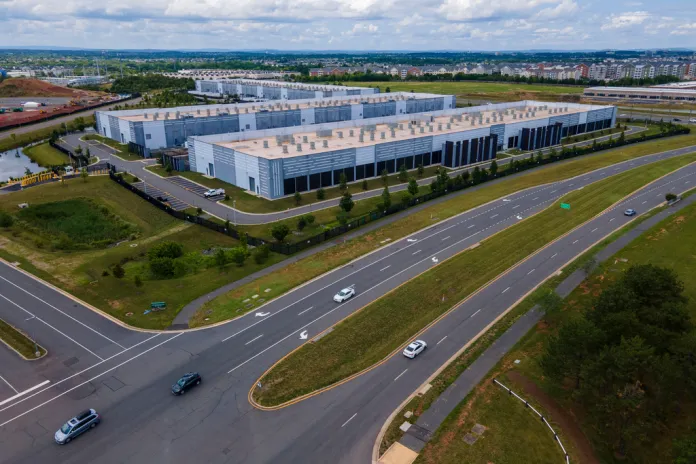 , Washington Examiner, %%https://www.washingtonexaminer.com/wp-content/uploads/2023/11/cropped-favicon.png?w=32, https://www.washingtonexaminer.com/feed/, Pete Sepp
