Voter accuracy program going statewide in Ohio thumbnail

Voter accuracy program going statewide in Ohio

(The Center Square) – A pilot program targeting the accuracy of voter rolls in Ohio is now going statewide.

Secretary of State Frank LaRose recently announced a new voter data integrity program that began in six counties and is now going statewide. The program uses county-specific digital dashboards to help identify voter registration discrepancies.

“These data entry discrepancies are not commonly indicative of fraud or irregularities, but they must be resolved in order to comply with our shared statutory responsibility to maintain the accuracy of the statewide voter registration database,” LaRose said.

As previously reported by The Center Square, LaRose spokesman Ben Kindel told The Center Square the dashboard is another tool local officials will use during regular list maintenance processes, which happen daily and weekly. Before the dashboard was created, local boards managed their systems.

Kindel also said most voter registration errors come when officials mistakenly hit the wrong keyboard stroke when updating forms or improper transcriptions from hand-filled registration forms.

The dashboards give county boards of election access to dashboards that show the number of registration records flagged for potential errors, such as illegal characters in name fields, placeholder birth dates, unreasonably high ages and improper birth/registration date combinations.

Mistakes were often made because information was manually entered into the state’s database from handwritten forms over the years.

“Many of Ohio’s registration records have been manually entered into the system from a handwritten form, which can sometimes lead to data entry errors,” LaRose said. “This innovative tool will help every county election office to clear up these issues more effectively, and I look forward to building on the success of the pilot program as we get ready for the November election.”

With the new dashboards, election officials are now required to review and fix errors that include prohibited name characters, placeholder birth dates, registration before birth and registration under 17 years old.

IRS: 36,000 taxpayers earning $3.7 billion moved to Arizona in 2022 thumbnail

IRS: 36,000 taxpayers earning $3.7 billion moved to Arizona in 2022

(The Center Square) – Arizona continues to benefit economically from more people moving to the state. 

Arizona gained a net of 36,841 people, adding $3.7 billion in gross income from those newcomers from tax years 2021 to 2022, based on new Internal Revenue Service data. Data from the IRS is typically delayed and compares filings done between states. 

The biggest loser in the equation? The Golden State, as Arizona gained 57,857 people who came from California, compared with 25,677 moving from Arizona to California. 

Those who came from California brought in more than double the gross income of those who left. Even though the Golden State has the nation’s highest population, it only recently rebounded from significant population drops it experienced during the COVID-19 pandemic, according to the Associated Press

Danny Seiden, President and CEO of the Arizona Chamber of Commerce and Industry, praised the new numbers. 

“These numbers reflect Arizona’s growing appeal as a prime destination for individuals seeking economic opportunity and a better quality of life,” Seiden told The Center Square in a statement on Monday. “It’s no surprise that the majority of these newcomers are ditching California in favor of a state that’s known for a welcoming business climate, lower taxes, and a higher quality of life. These migration trends show that our policies are paying off, making Arizona a magnet for talent and investment.”

Arizona is one of the largest gaining states when it comes to population by numeric growth, according to 2022-2023 numbers from the United States Census Bureau. In terms of jobs, local developments in the manufacturing, health care and defense sectors are often touted as some of the biggest drivers of jobs to the state.

When it comes to businesses leaving California, Arizona often finds itself in competition with Texas, which garners many of the relocations, The Center Square reported.

Restoring America’s military industrial base thumbnail

Restoring America’s military industrial base

Determined to subjugate Taiwan under Chinese Communist Party rule, China is building warships and weapons at a vast pace and scale. Our military — and economy — simply is not ready.

If Taiwan falls, the American alliance structure in the Pacific will suffer a potentially deadly blow. China will be able to compel the political obedience of Japan and the Philippines by holding their trade flows at risk. Both those countries are U.S. treaty defense allies. Taiwan’s fall will mean the destruction of the world’s most advanced semiconductor chip manufacturer, TSMC, or, even worse, China’s assumed control over that manufacturing behemoth and the critical international export industry it provides.

It’s clear that Chinese President Xi Jinping is deeply serious about securing Taiwan sooner rather than later. He has told the People’s Liberation Army to be ready to effect a successful invasion of the island democracy by 2030. Xi views that objective as the most critical test of his leadership and a matter of destiny for the CCP.

The United States is not prepared for this fight. Too few are willing to admit this truth and prepare for it. But others, such as the Marine Corps and Air Force Secretary Frank Kendall, have greater courage.

Speaking last September, Kendall posited, “If we were asked tomorrow to go to war against a great power, either Russia or China, would we be really ready to do that? And I think the answer is not as much as we could be, by a significant margin. And we’ve got to start spending a lot of time thinking about that and figuring out what we’re going to do about it.”

The inadequacy of the defense industrial base looms large. The problem here isn’t simply America’s present incapacity to build enough of what is needed but an incapacity to do so efficiently and on budget. Any serious agenda to restore America’s economic strength and prosperity must address this industry’s failures.

Take shipbuilding. In 2024, the U.S. Navy’s combatant surface and submarine forces are too small. And with China in mind, the problem is getting worse. As the Center for Strategic and International Studies notes, “The [People’s Liberation Army Navy] operates 23 destroyers launched in the past 10 years compared with 11 operational U.S. destroyers. … China’s productive advantage is reflected in the relative ages of active Chinese and U.S. ships. About 70% of Chinese warships were launched after 2010, while only about 25% of the U.S. Navy’s were.”

Some of these PLA warships, such as the Type 055 air defense cruiser, are highly capable and able to rival their U.S. counterparts. Chinese anti-ship ballistic missile platforms are also highly advanced, able to force U.S. carrier strike groups to operate far further from Taiwan than would be ideal. Put simply, the U.S. needs more destroyers, submarines, and long-range anti-ship/land attack missiles — and it needs them now.

The central U.S. challenge in fixing this growing imbalance is the need to bolster the defense industrial base. Today, just about every surface warship and submarine under construction is delayed. Costs are also exceeding estimates, sometimes very significantly. In addition, a shortage of construction facilities and skilled workers means that certain vessels are having to be prioritized to the detrimental delivery time frame of others. But there are also insufficient penalties imposed upon defense manufacturers that exceed budgets while failing to deliver on time. All of this must be addressed.

For starters, Congress should appropriate funds to construct new shipyards. Congress should also authorize grant programs providing college/education tuition relief to engineers and machinists who work in the defense industrial space for at least five years. The president and Congress should also provide legal cover to allow for nonunion labor in shipbuilding construction. These reforms would help to address the shortage of skilled workers and the incapacity to build more ships.

The Biden administration or a second Trump administration should also ramp up bulk purchases of Joint Air-to-Surface Standoff Missile-Extended Range and Long Range Anti-Ship Missiles and Powered Joint Direct Attack Munition bombs. Current inventories of these crucially valuable weapons would likely last only one week of war with China.

Finally, the U.S. should entertain naval construction contracts from close allies such as Japan and South Korea, which have shown themselves able to do what we cannot and build excellent warships on time and on budget.

Accountability also matters. Where admirals and generals in charge of procurement decisions and construction efforts fail to deliver, they should be relieved. Too often, these officers and civilian Pentagon officials are reluctant to impose consequences on powerful defense contractors for their cost overruns and delays. Sometimes this reluctance is informed by a desire to take up lucrative positions with those same companies on retirement. Other times it is a result of congressional cronyism. But the importance of organizations such as Naval Sea Systems Command (responsible for overseeing warship construction) cannot be overstated.

So also must political leaders be held accountable by the media and voters. We need far less legislation of the kind offered by Sen. Tammy Baldwin (D-WI), for example, which makes it harder and more expensive for the Navy to buy critical shipbuilding materials at lower costs.

CLICK HERE TO READ MORE FROM RESTORING AMERICA

We also need less cronyism in defense procurement decisions. Too many otherwise defense-knowledgeable members of Congress such as Reps. Rob Wittman (R-VA) and Kay Granger (R-TX) support the retention of worse-than-useless warships because doing so helps their local economies. This prevents the military from diverting resources to programs that might actually help defeat China in any future war.

Top line: If America wants to be ready to fight and win a war with China over Taiwan, we better start acting in that pursuit. If not, we better mentally prepare ourselves to lose the most politically defining war of the 21st century.

Social Security is in worse shape than it looks thumbnail

Social Security is in worse shape than it looks

The rot runs deeper than we thought. 

In May, the public received another update from the Social Security trustees confirming that the Social Security Trust Fund will be insolvent in nine years. But buried in the data was the alarming statistic that the total cost of Social Security insolvency has ballooned to $615 trillion in nominal dollars — yes, trillion. That’s a nearly $100 trillion increase in debt from three years ago. We cannot afford to wait and see how much higher that number will go.

That $615 trillion accounts for the cost of paying benefits and interest on the debt the United States would accrue if we allow Social Security to go insolvent and deficit-spend to keep it afloat over the next 75 years. This underscores both the severity of the problem and the need to stop burying our heads in the sand.

When the Social Security Trust Fund is depleted in nine years, current law dictates an automatic 21% benefit cut for all current and future retirees. Congress can avoid this cut by deficit spending, but it should pursue a strategy to make the program sustainable and fairer. We need a comprehensive plan that avoids massive benefit cuts or tax hikes and avoids putting us on the road toward $615 trillion in additional debt. 

A Senate working group I’m leading has a proposal that accomplishes both. Our “Big Idea” creates a new fund separate and independent of the Social Security Trust Fund. This new fund would invest $1.5 trillion in financial markets, just like a normal pension fund, and hold it and all dividends in escrow for nearly 75 years. 

Assuming historically average market return, our “Big Idea” covers about two-thirds of Social Security’s shortfall, including the borrowing costs. The remainder can be addressed without raising taxes on seniors or decreasing their benefits. 

CLICK HERE TO READ MORE FROM THE WASHINGTON EXAMINER

In addition to this, our proposal would repeal the Windfall Elimination Provision and Government Pension Offset, create work incentives, and even evergreen the Social Security Trust Fund. 

Fixing Social Security is a math problem that will take political will to tackle. We know the longer we wait, the less favorable the math becomes and the more painful it will be to fix. This isn’t hyperbole —we’re seeing the effect in real time. Investing now may save our country, and taxpayers, $615 trillion in debt down the line. That seems like a worthwhile investment for almost any reasonable American. 

Bill Cassidy is a U.S. senator for Louisiana and serves on the Health, Education, Labor, and Pensions Committee.

Dark clouds on US industrial policy horizon thumbnail

Dark clouds on US industrial policy horizon

Industrial policy is back in Washington, D.C., and its supporters are already crediting it with an American manufacturing “boom.” 

In one narrow sense, they have a point: Shortly after Congress and the Biden administration authorized trillions of dollars in federal subsidies for renewable energy and semiconductors under the Inflation Reduction Act and the CHIPS and Science Act, U.S. manufacturing investment and construction increased significantly.  

Two other matters, however, show why these trends are less promising than they appear and why people should worry that the subsidies, and protectionism, supposedly fueling a U.S. manufacturing renaissance will repeat America’s long history of industrial policy failure.

First, the recent increase in U.S. manufacturing investment must be put into context. Before the CHIPS Act and Inflation Reduction Act were enacted in 2022, market factors had pushed companies to reconsider semiconductor supply chains. Private demand for, and investment in, green energy was soaring. And several major U.S. projects had also been announced. It’s thus unclear how much manufacturing spending has been caused by, instead of just coincident with, new U.S. industrial policies.

Furthermore, recent increases in industrial spending are still a relatively small percentage of total private investment, making up just 3.6% of private investment in the first quarter of 2024, and 0.6% of the United States’s GDP. The spending might still be important, but it’s not currently the economic game changer it is often made out to be.

Indeed, actual U.S. manufacturing performance — employment, output, orders, and capacity utilization — has been flat since mid-2022. Private surveys have been pessimistic, and 2024 projections are now softening. Maybe a “boom” eventually arrives, but it is just as likely we’re again seeing what critics of targeted tax credits, subsidies, and tariffs have long cautioned: They don’t generate sustainable, long-term growth but instead redistribute existing resources to favored companies at a net loss to the U.S. economy.

Second, we must also consider the actual return on these investments. 

When the government showers preferred companies with trade restrictions and trillions of taxpayer dollars, the policies will inevitably produce something. The real question is what, exactly, all that government support is getting us.

Is it generating dozens of innovative and globally competitive American factories and a strong U.S. economy? Or will it produce a few narrow successes and many other failures — not just unfinished projects but entire industries dependent on government support, plus unintended and unseen costs elsewhere?

Today, it is too early to say, but there are already warning signs here and abroad — ones we’ve seen before.

Here at home, the cost of building, staffing, and starting production at subsidized facilities has skyrocketed thanks in large part to supply-side barriers, such as environmental permitting regulations, tariffs, Buy American Act restrictions, and immigration backlogs. High costs and other unforeseen problems have also now delayed or canceled many semiconductor, electric vehicle, and solar projects, even some in which construction had begun. 

Just as worrying are initial signs that factories eventually completed in the U.S. will not produce cutting-edge technologies that compete globally without open-ended government help. Solar panels, for example, still cost more in the U.S. than they do abroad, even with billions in subsidies and multiple rounds of tariffs. The industry’s solution? It’s seeking even more tariffs.

Finally, politics is again distorting industrial policies’ implementation. Social policies such as free child care and diversity initiatives have been attached to CHIPS subsidies. Inflation Reduction Act dollars have been disproportionately funneled to swing states. Companies have openly complained about slow and complicated bureaucracy, and investment uncertainty has increased in the run-up to the 2024 presidential election.

These and other matters remind us there’s a huge chasm between celebrated investment announcements and actual, productive factories. They also show the risk that today’s industrial policies produce small benefits at a massive cost — both the usual budgetary overruns and the diversion of finite taxpayer and private resources away from better targets.

There are also concerns abroad because subsidies here have prodded the European Union, Japan, South Korea, Taiwan, India, China, and others to offer subsidies of their own — thousands of new industrial policy measures, likely worth trillions of dollars. If history is any guide, this uncoordinated and predictable “global subsidy race” could generate gluts and trade wars that would undermine the very domestic investments U.S. industrial policies are trying to encourage. In the end, almost everyone would be worse off, especially developing countries that can’t afford big subsidies and, in the case of “green” goods, the environment itself.

CLICK HERE TO READ MORE FROM THE WASHINGTON EXAMINER

In sum, American industrial policy has long faced challenges that limit its effectiveness and inflict unintended economic and geopolitical damage. It’s too soon to conclude that we’re following the same path today, but signs do point in that direction. This doesn’t mean that Congress should just sit back and watch things unfold, simply hoping its trillion-dollar gamble pays off. Instead, it should repeal the industrial policies and implement the long list of proven tax, trade, regulatory, immigration, and other reforms that free marketers have long recommended to boost strategic industries and address strategic challenges.  

Subsidies and protectionism, however, still aren’t on that list.

Scott Lincicome is the vice president of general economics and Cato’s Herbert A. Stiefel Center for Trade Policy Studies.

Biden lies too thumbnail

Biden lies too

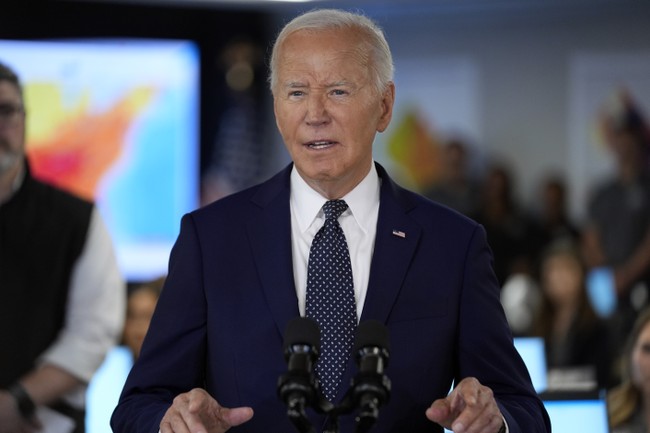
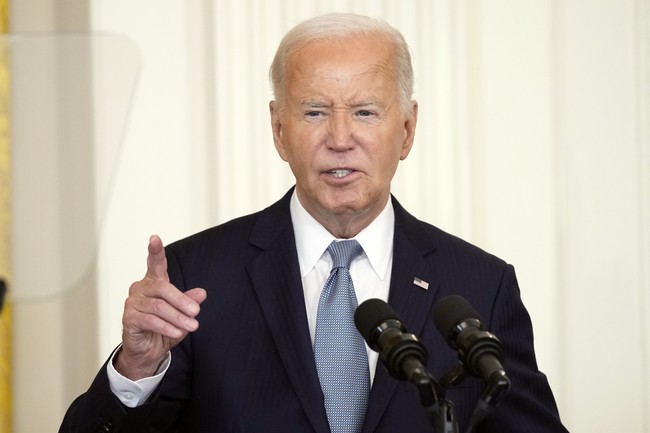
Listen to any Democrat spinning President Joe Biden’s disastrous debate performance last week, and one of the lines you’ll hear is, “Yes, Biden had a bad night, but Donald Trump repeatedly lied.” To be fair, falsehoods poured from Trump much as usual, but the dichotomy Democrats wish to suggest is a false one. Biden was just as dishonest. He lied constantly, as he always does. Biden has a long history of not telling the truth, going all the way back to his first failed presidential campaign in 1987.

Before we address Biden’s debate claims, it is only equitable to note some of Trump’s worst falsehoods. He did not, as he claimed, deliver the biggest tax cut in American history (that honor still belongs to President Ronald Reagan), it was not Speaker Nancy Pelosi (D-CA) who turned down National Guard protection before Jan. 6 (that was the House and Senate sergeants-at-arms), and illegal immigrants are not destroying Social Security and Medicare (although they are a huge burden to state and local governments that have to house, clothe, feed, and educate them, they do not qualify for Medicare or Social Security benefits).

Now consider Biden. He claimed early in the debate that he is the “only president this century that doesn’t have any troops dying anywhere in the world.” This statement was a huge surprise and insult to the families of the 13 American servicemen and women who died during Biden’s reckless and negligent withdrawal from Afghanistan. The three service members killed by a drone in Jordan this January also apparently escaped Biden’s memory.

Biden then fantastically claimed that we’re now “in a situation where there are 40% fewer people coming across the border illegally. It’s better than when he left office.” Border crossings are down from this December’s record-high 301,983 migrants arrested for illegally crossing the border, but that was a 300% increase from Trump’s last month in office. In total, over 7 million illegal immigrants have been arrested illegally crossing the southern border under Biden, and the president has released millions of them into the country. Far, far more than Trump ever did.

Relatedly, Biden claimed he had been endorsed by the Border Patrol union, a claim the union itself quickly denied, posting on X that night, “To be clear, we never have and never will endorse Biden.”

Biden said “the vast majority of constitutional scholars supported Roe,” which should have been surprising to Biden himself, who said in 1986, “there is an overwhelming universal criticism by proponents of pro-choice and opponents of pro-choice that Roe v. Wade wasn’t very well-reasoned.” Maybe he just forgot that too. 

Biden claimed that unemployment was 15% when he came into office, and that “there were no jobs. … It was terrible.” In reality, the economy was already rapidly recovering under Trump, adding 1.4 million jobs a month with a 6.4% unemployment rate when Biden was sworn into office. Since Biden became president, job growth has slowed to 400,000 jobs a month.

As important as all these Biden lies are, however, they don’t break but extend the record of falsehood he has achieved in the past. During his first presidential campaign, Biden falsely claimed he was the first in his family to go to college, falsely claimed he finished in the top half of his law school class, and was forced to exit the 1988 Democratic primary after being exposed for plagiarizing a campaign speech.

CLICK HERE TO READ MORE FROM THE WASHINGTON EXAMINER

But the biggest lie of all is the one Biden is still telling right now: that he is mentally competent to be president of the United States until the age of 86. For months, the White House has attacked those who claimed Biden has lost even a step mentally. Now, after last Thursday’s debate performance, everyone knows the truth. Biden is a shadow of even his unimpressive former self, unable to complete sentences and finish a train of thought.

There are many contrasts between Biden and Trump, but honesty is not one of them.