, http://s.wordpress.com/mshots/v1/https%3A%2F%2Fwww.dailysignal.com%2F2024%2F12%2F23%2Fchristmas-tale-1919%2F?w=600&h=450, Editor’s note: This true story about my family was first published by The Wall Street Journal in 2008. It has now been 105 years since my… Read More The post A Christmas Tale, 1919 appeared first on The Daily Signal.,
Editor’s note: This true story about my family was first published by The Wall Street Journal in 2008. It has now been 105 years since my… Read More
, Editor’s note: This true story about my family was first published by The Wall Street Journal in 2008. It has now been 105 years since my… Read More The post A Christmas Tale, 1919 appeared first on The Daily Signal., , , https://www.dailysignal.com/wp-content/uploads/2024/12/20241213_19thCenturyXMAS-scaled.jpg, The Daily Signal, Policy News, Conservative Analysis and Opinion, , https://www.dailysignal.com/rss, ,
Prominent politicians have recently increased their attacks on workplace programs that promote diversity, equity and inclusion, or DEI. They claim that initiatives that seek to be inclusive are divisive and lack merit.
President-elect Donald Trump has vowed to ban DEI from federal offices. And Vice President-elect JD Vance, an Ohio senator, in June 2024 introduced the “Dismantle DEI Act” to eliminate all DEI programs from the federal government. He argued, in part, that DEI “breeds hatred and racial division.”
DEI critics are increasingly using the term “diversity hire” as an insult. As a scholar focused on gender and exclusion, I recognize that these attacks are often rooted in anti-Black racism.
For example, despite Kamala Harris’ achievements as vice president and California attorney general, some Republicans targeted her as a “DEI hire” during her recent presidential run. And after the Francis Scott Key bridge collapse in Baltimore in March 2024, Utah State Representative Phil Lyman blamed Wes Moore, Maryland’s first Black governor, for prioritizing DEI over security.
The DEI backlash has hit corporate America, too. Companies like spirits-maker Brown-Forman and the farm equipment manufacturer John Deere have reversed the DEI commitments they made following the 2020 murder of George Floyd by a white police officer.
I believe all these attacks, both political and corporate, promote a distorted and incomplete story about DEI.
The empirical evidence is clear
There is no one-size-fits-all approach to advancing DEI initiatives. The common goal is to create spaces within an institution where everyone feels valued and respected and can thrive.
A 2020 Gallup poll found that 24% of Black and Latino employees have experienced discrimination at work, compared with 15% of white employees.
DEI efforts to identify and solve such issues include surveys, employee interviews and comparing practices across different organizations. They also entail assessments of systems, policies and research, and developing initiatives to address areas that need improvement.
Employee and student surveys, for example, can measure the sense of belonging within an organization and help leaders identify areas in need of improvement.
Evidence suggests that successfully implementing DEI is central to professional and societal well-being and success in a multicultural society.
After the Francis Scott Key bridge collapse in Baltimore in March 2024, a Republican lawmaker from Utah blamed Maryland Gov. Wes Moore, center, for prioritizing diversity over security.AP Photo/Mark Schiefelbein
Recent research by the author Melinda Epler, for example, shows a clear connection between employees’ sense of safety, belonging and satisfaction and how much their employer prioritizes DEI. Scientists also find that diversity is key to creative, productive and efficient scientific teams.
And other research indicates that employees are more innovative and work harder when teams are made up of people with different experiences. This is why many employers value employees who can solve problems while working with people who have diverse backgrounds in terms of race, gender, religion, age and other factors.
The outcome can be lucrative for companies: On U.S. and global executive staffs, studies show, efforts to improve DEI result in increased profits. Companies with at least one woman on their board, for example, financially outperform those with only men on their boards.
Diversity standards
Despite the many ways leaders of an organization can work to cultivate an inclusive and respectful culture, DEI critics tend to portray this work in simplistic terms.
For example, two Stanford University academics misrepresented DEI efforts recently. In an August 2024 op-ed in The New York Times, they presented DEI as mainly consisting of one-time trainings that divide groups into oppressors and the oppressed.
Narrowly defining DEI in such simplistic ways ignores the bridge-building involved in DEI efforts and makes it easier to repeat the single story that DEI has failed.
In her 2009 TED Talk on the danger of the “single story,” novelist Chimamanda Adichie said single stories, or narratives that only present one perspective, are based on stereotypes and incomplete information. They result in false assumptions and generalizations.
“To create a single story is to show a people as one thing, as only one thing, over and over again,” Adichie said. “And that is what they become.”
Adichie’s warnings about the single story sheds light on the effects of attacks on DEI. Reducing DEI to simplistic “us vs. them” approaches or to a focus on “oppressor vs. oppressed” misses much of the work.
Yet the more societal problems Republicans in power blame DEI for – from racism to inflation – the more believable the story of DEI failure becomes. The absence of quick, easy solutions for historical racial and socioeconomic inequities are presented as further proof of DEI’s failure.
Teaching a fuller story
DEI is not easy to do well. But as a DEI practitioner and scholar, I find working to create inclusive spaces through curiosity, learning and dialogue can be transformative.
The more institutions do to support welcoming, supportive spaces – where people’s differences are respected – the healthier and more successful everyone is as individuals and organizations.
In 2022, my team in the Office of Transformational and Inclusive Excellence developed a Religious Observances and Inclusive Scheduling calendar. We did so to recognize religious pluralism in our university community.
Research shows that employees are more innovative and work harder when teams are made up of people with different experiences.FG Trade Latin/Gerry Images
We followed up with educational posters in 2023. The next year, we launched an educational video series featuring students discussing their religious practices. We partnered with the university’s communications office and athletics office to create and show these videos at university athletic events, such as football and basketball games.
In January 2024, the office I lead at Miami University partnered with several other departments to launch what we called a Constructive Dialogue Initiative. The goal of this new project is to provide all students with concrete skills and opportunities to communicate across social and cultural differences and to decrease polarization. Students first engage with short online modules from the Constructive Dialogue Institute. They then apply strategies learned online to facilitate in-person, peer-to-peer dialogues.
Our pilot program showed very positive results. Among the nearly 100 student leaders who participated, 78% felt less polarized.
This work is important for universities, where research shows retention and graduation rates are tied to students’ sense of belonging.
Collaboration and communication across differences are central to successful DEI efforts.
This is why we launched the DEI in Leadership Certificate in 2022. That same year, the project won an international Telly Award, which recognizes excellence in video.
Those who have participated in the certificate have included leaders and employees in the health, legal, human resources, criminal justice and nonprofit sectors across the U.S.
The narrow, single story of DEI failure promoted by critics makes it very difficult to recognize the value of these efforts.
Simplistic single stories can be appealing. They do not reflect reality, though. The fuller story presents a much more useful way to advance shared goals — as a society that is deserving of systems in which everyone can be included and valued.
2024-12-18 13:17:00, http://s.wordpress.com/mshots/v1/https%3A%2F%2Ftheconversation.com%2Fassault-on-dei-critics-use-simplistic-terms-to-attack-the-programs-but-they-are-key-to-uprooting-workplace-bias-243011?w=600&h=450, Prominent politicians have recently increased their attacks on workplace programs that promote diversity, equity and inclusion, or DEI. They claim that initiatives that seek to be inclusive are divisive and lack merit. President-elect Donald Trump has vowed to ban DEI from federal offices. And Vice President-elect JD Vance, an Ohio senator, in June 2024 introduced,
Prominent politicians have recently increased their attacks on workplace programs that promote diversity, equity and inclusion, or DEI. They claim that initiatives that seek to be inclusive are divisive and lack merit.
President-elect Donald Trump has vowed to ban DEI from federal offices. And Vice President-elect JD Vance, an Ohio senator, in June 2024 introduced the “Dismantle DEI Act” to eliminate all DEI programs from the federal government. He argued, in part, that DEI “breeds hatred and racial division.”
DEI critics are increasingly using the term “diversity hire” as an insult. As a scholar focused on gender and exclusion, I recognize that these attacks are often rooted in anti-Black racism.
For example, despite Kamala Harris’ achievements as vice president and California attorney general, some Republicans targeted her as a “DEI hire” during her recent presidential run. And after the Francis Scott Key bridge collapse in Baltimore in March 2024, Utah State Representative Phil Lyman blamed Wes Moore, Maryland’s first Black governor, for prioritizing DEI over security.
The DEI backlash has hit corporate America, too. Companies like spirits-maker Brown-Forman and the farm equipment manufacturer John Deere have reversed the DEI commitments they made following the 2020 murder of George Floyd by a white police officer.
I believe all these attacks, both political and corporate, promote a distorted and incomplete story about DEI.
The empirical evidence is clear
There is no one-size-fits-all approach to advancing DEI initiatives. The common goal is to create spaces within an institution where everyone feels valued and respected and can thrive.
A 2020 Gallup poll found that 24% of Black and Latino employees have experienced discrimination at work, compared with 15% of white employees.
DEI efforts to identify and solve such issues include surveys, employee interviews and comparing practices across different organizations. They also entail assessments of systems, policies and research, and developing initiatives to address areas that need improvement.
Employee and student surveys, for example, can measure the sense of belonging within an organization and help leaders identify areas in need of improvement.
Evidence suggests that successfully implementing DEI is central to professional and societal well-being and success in a multicultural society.
After the Francis Scott Key bridge collapse in Baltimore in March 2024, a Republican lawmaker from Utah blamed Maryland Gov. Wes Moore, center, for prioritizing diversity over security.AP Photo/Mark Schiefelbein
Recent research by the author Melinda Epler, for example, shows a clear connection between employees’ sense of safety, belonging and satisfaction and how much their employer prioritizes DEI. Scientists also find that diversity is key to creative, productive and efficient scientific teams.
And other research indicates that employees are more innovative and work harder when teams are made up of people with different experiences. This is why many employers value employees who can solve problems while working with people who have diverse backgrounds in terms of race, gender, religion, age and other factors.
The outcome can be lucrative for companies: On U.S. and global executive staffs, studies show, efforts to improve DEI result in increased profits. Companies with at least one woman on their board, for example, financially outperform those with only men on their boards.
Diversity standards
Despite the many ways leaders of an organization can work to cultivate an inclusive and respectful culture, DEI critics tend to portray this work in simplistic terms.
For example, two Stanford University academics misrepresented DEI efforts recently. In an August 2024 op-ed in The New York Times, they presented DEI as mainly consisting of one-time trainings that divide groups into oppressors and the oppressed.
Narrowly defining DEI in such simplistic ways ignores the bridge-building involved in DEI efforts and makes it easier to repeat the single story that DEI has failed.
In her 2009 TED Talk on the danger of the “single story,” novelist Chimamanda Adichie said single stories, or narratives that only present one perspective, are based on stereotypes and incomplete information. They result in false assumptions and generalizations.
“To create a single story is to show a people as one thing, as only one thing, over and over again,” Adichie said. “And that is what they become.”
Adichie’s warnings about the single story sheds light on the effects of attacks on DEI. Reducing DEI to simplistic “us vs. them” approaches or to a focus on “oppressor vs. oppressed” misses much of the work.
Yet the more societal problems Republicans in power blame DEI for – from racism to inflation – the more believable the story of DEI failure becomes. The absence of quick, easy solutions for historical racial and socioeconomic inequities are presented as further proof of DEI’s failure.
Teaching a fuller story
DEI is not easy to do well. But as a DEI practitioner and scholar, I find working to create inclusive spaces through curiosity, learning and dialogue can be transformative.
The more institutions do to support welcoming, supportive spaces – where people’s differences are respected – the healthier and more successful everyone is as individuals and organizations.
In 2022, my team in the Office of Transformational and Inclusive Excellence developed a Religious Observances and Inclusive Scheduling calendar. We did so to recognize religious pluralism in our university community.
Research shows that employees are more innovative and work harder when teams are made up of people with different experiences.FG Trade Latin/Gerry Images
We followed up with educational posters in 2023. The next year, we launched an educational video series featuring students discussing their religious practices. We partnered with the university’s communications office and athletics office to create and show these videos at university athletic events, such as football and basketball games.
In January 2024, the office I lead at Miami University partnered with several other departments to launch what we called a Constructive Dialogue Initiative. The goal of this new project is to provide all students with concrete skills and opportunities to communicate across social and cultural differences and to decrease polarization. Students first engage with short online modules from the Constructive Dialogue Institute. They then apply strategies learned online to facilitate in-person, peer-to-peer dialogues.
Our pilot program showed very positive results. Among the nearly 100 student leaders who participated, 78% felt less polarized.
This work is important for universities, where research shows retention and graduation rates are tied to students’ sense of belonging.
Collaboration and communication across differences are central to successful DEI efforts.
This is why we launched the DEI in Leadership Certificate in 2022. That same year, the project won an international Telly Award, which recognizes excellence in video.
Those who have participated in the certificate have included leaders and employees in the health, legal, human resources, criminal justice and nonprofit sectors across the U.S.
The narrow, single story of DEI failure promoted by critics makes it very difficult to recognize the value of these efforts.
Simplistic single stories can be appealing. They do not reflect reality, though. The fuller story presents a much more useful way to advance shared goals — as a society that is deserving of systems in which everyone can be included and valued.
, Prominent politicians have recently increased their attacks on workplace programs that promote diversity, equity and inclusion, or DEI. They claim that initiatives that seek to be inclusive are divisive and lack merit. President-elect Donald Trump has vowed to ban DEI from federal offices. And Vice President-elect JD Vance, an Ohio senator, in June 2024 introduced the “Dismantle DEI Act” to eliminate all DEI programs from the federal government. He argued, in part, that DEI “breeds hatred and racial division.” DEI critics are increasingly using the term “diversity hire” as an insult. As a scholar focused on gender and exclusion, I recognize that these attacks are often rooted in anti-Black racism. For example, despite Kamala Harris’ achievements as vice president and California attorney general, some Republicans targeted her as a “DEI hire” during her recent presidential run. And after the Francis Scott Key bridge collapse in Baltimore in March 2024, Utah State Representative Phil Lyman blamed Wes Moore, Maryland’s first Black governor, for prioritizing DEI over security. The DEI backlash has hit corporate America, too. Companies like spirits-maker Brown-Forman and the farm equipment manufacturer John Deere have reversed the DEI commitments they made following the 2020 murder of George Floyd by a white police officer. I believe all these attacks, both political and corporate, promote a distorted and incomplete story about DEI. The empirical evidence is clear There is no one-size-fits-all approach to advancing DEI initiatives. The common goal is to create spaces within an institution where everyone feels valued and respected and can thrive. A 2020 Gallup poll found that 24% of Black and Latino employees have experienced discrimination at work, compared with 15% of white employees. DEI efforts to identify and solve such issues include surveys, employee interviews and comparing practices across different organizations. They also entail assessments of systems, policies and research, and developing initiatives to address areas that need improvement. Employee and student surveys, for example, can measure the sense of belonging within an organization and help leaders identify areas in need of improvement. Evidence suggests that successfully implementing DEI is central to professional and societal well-being and success in a multicultural society. After the Francis Scott Key bridge collapse in Baltimore in March 2024, a Republican lawmaker from Utah blamed Maryland Gov. Wes Moore, center, for prioritizing diversity over security. AP Photo/Mark Schiefelbein Recent research by the author Melinda Epler, for example, shows a clear connection between employees’ sense of safety, belonging and satisfaction and how much their employer prioritizes DEI. Scientists also find that diversity is key to creative, productive and efficient scientific teams. And other research indicates that employees are more innovative and work harder when teams are made up of people with different experiences. This is why many employers value employees who can solve problems while working with people who have diverse backgrounds in terms of race, gender, religion, age and other factors. The outcome can be lucrative for companies: On U.S. and global executive staffs, studies show, efforts to improve DEI result in increased profits. Companies with at least one woman on their board, for example, financially outperform those with only men on their boards. Diversity standards Despite the many ways leaders of an organization can work to cultivate an inclusive and respectful culture, DEI critics tend to portray this work in simplistic terms. For example, two Stanford University academics misrepresented DEI efforts recently. In an August 2024 op-ed in The New York Times, they presented DEI as mainly consisting of one-time trainings that divide groups into oppressors and the oppressed. Narrowly defining DEI in such simplistic ways ignores the bridge-building involved in DEI efforts and makes it easier to repeat the single story that DEI has failed. In her 2009 TED Talk on the danger of the “single story,” novelist Chimamanda Adichie said single stories, or narratives that only present one perspective, are based on stereotypes and incomplete information. They result in false assumptions and generalizations. “To create a single story is to show a people as one thing, as only one thing, over and over again,” Adichie said. “And that is what they become.” Adichie’s warnings about the single story sheds light on the effects of attacks on DEI. Reducing DEI to simplistic “us vs. them” approaches or to a focus on “oppressor vs. oppressed” misses much of the work. Yet the more societal problems Republicans in power blame DEI for – from racism to inflation – the more believable the story of DEI failure becomes. The absence of quick, easy solutions for historical racial and socioeconomic inequities are presented as further proof of DEI’s failure. Teaching a fuller story DEI is not easy to do well. But as a DEI practitioner and scholar, I find working to create inclusive spaces through curiosity, learning and dialogue can be transformative. The more institutions do to support welcoming, supportive spaces – where people’s differences are respected – the healthier and more successful everyone is as individuals and organizations. In 2022, my team in the Office of Transformational and Inclusive Excellence developed a Religious Observances and Inclusive Scheduling calendar. We did so to recognize religious pluralism in our university community. Research shows that employees are more innovative and work harder when teams are made up of people with different experiences. FG Trade Latin/Gerry Images We followed up with educational posters in 2023. The next year, we launched an educational video series featuring students discussing their religious practices. We partnered with the university’s communications office and athletics office to create and show these videos at university athletic events, such as football and basketball games. In January 2024, the office I lead at Miami University partnered with several other departments to launch what we called a Constructive Dialogue Initiative. The goal of this new project is to provide all students with concrete skills and opportunities to communicate across social and cultural differences and to decrease polarization. Students first engage with short online modules from the Constructive Dialogue Institute. They then apply strategies learned online to facilitate in-person, peer-to-peer dialogues. Our pilot program showed very positive results. Among the nearly 100 student leaders who participated, 78% felt less polarized. This work is important for universities, where research shows retention and graduation rates are tied to students’ sense of belonging. Collaboration and communication across differences are central to successful DEI efforts. This is why we launched the DEI in Leadership Certificate in 2022. That same year, the project won an international Telly Award, which recognizes excellence in video. Those who have participated in the certificate have included leaders and employees in the health, legal, human resources, criminal justice and nonprofit sectors across the U.S. The narrow, single story of DEI failure promoted by critics makes it very difficult to recognize the value of these efforts. Simplistic single stories can be appealing. They do not reflect reality, though. The fuller story presents a much more useful way to advance shared goals — as a society that is deserving of systems in which everyone can be included and valued., , , https://images.theconversation.com/files/636866/original/file-20241206-15-bvilma.jpg?ixlib=rb-4.1.0&rect=119%2C622%2C7868%2C3928&q=45&auto=format&w=1356&h=668&fit=crop, Politics + Society – The Conversation, , , https://theconversation.com/us/politics/articles.atom, M. Cristina Alcalde, Vice President for Transformational and Inclusive Excellence, Miami University,
Mention the FBI, and many older Americans will likely think of a time when the agency was run by J. Edgar Hoover, who spent much of his nearly half-century tenure at the agency harassing political dissidents and abusing his power. But as former FBI counterterrorism expert Javed Ali explains, the role of both the FBI and its leader have dramatically shifted over time. The Conversation’s politics editor Naomi Schalit asked Ali, who now teaches courses in national security and intelligence at the University of Michigan, to explain just what a modern FBI director does as President-elect Donald Trump aims to name his own director to replace current FBI head Christopher Wray, whom Trump appointed in 2017. Wray has said he will resign in January 2025.
Let’s start with FBI 101. What does the agency do?
The FBI began as the country’s lead federal criminal investigative agency in 1909, then named the Bureau of Investigation, or BOI. Previously, organizations like the Secret Service and the U.S. Marshall’s Service had responsibility for investigating federal crimes, but the introduction of the BOI began the tenure for what became the Federal Bureau of Investigation in 1935 to now.
Over this 100-plus-year stretch, the FBI has focused on investigating federal crimes on matters like racketeering, fraud, public corruption, illegal financial schemes and organized crime, to name a few. But despite the general public perceptions of the FBI as the nation’s premier crime-fighting organization, as revealed in the iconic FBI badge, logo and early depictions of “G-men,” the FBI has always focused on national security threats to the nation. That focus was evident as early as the 1910s – before World War I – as the FBI investigated suspected saboteurs and spies.
J. Edgar Hoover, director of the Federal Bureau of Investigation, in Washington, D.C., on July 15, 1964.AP Photo/Washington Star
During the 1930s and 1940s, the FBI focused on individuals linked to the Axis powers of Germany, Italy and Japan, and communists and Bolsheviks as the Soviet Union grew in power. During the Cold War, in the FBI’s zeal to root out and prevent Soviet influence in the United States, it began arguably the darkest chapter in the organization’s history.
Beginning in the mid-1950s and called COINTELPRO, these efforts through the 1960s included domestic surveillance, intelligence collection and disinformation campaigns without court-ordered approvals against Americans suspected of receiving money or other forms of support from the Soviet Union – even though the factual bases for these concerns were often flimsy, at best.
The FBI’s focus on terrorists and spies continued for decades after and intensified in the 1990s with the emergence of jihadist threats in the United States and abroad. Despite the warning signs of attacks in the run-up to 9/11, a number of gaps and challenges remained within the FBI, which contributed to those attacks and led to major reforms within the organization. While counterterrorism and counterintelligence have remained significant priorities since 9/11, the FBI also increased its efforts on cybersecurity, demonstrating the continuing evolution of the organization’s national security focus as new threats emerge and legacy threats recede.
What is the role of the head of the FBI?
The FBI director is presidentially appointed and Senate-confirmed, but is not a member of the cabinet. The FBI is a subagency within the Department of Justice, whose head, the attorney general, is a cabinet member. The FBI director is appointed to serve a full 10-year term that theoretically insulates the director from political pressure.
There’s no one-size-fits-all background for the FBI director. Some have been chosen because of their familiarity and knowledge of federal law enforcement from the legal side or from the eyes of an agent.
After Hoover, some have been former judges like William Webster, or former prosecutors or Department of Justice attorneys like James Comey, Robert Mueller, Christopher Wray or President Trump’s current nominee-designate, Kash Patel. One – Louis Freeh – was a former FBI special agent.
President Donald Trump sits with FBI Director Christopher Wray during the FBI National Academy graduation ceremony on Dec. 15, 2017, in Quantico, Va.AP Photo/Evan Vucci, File
You were at the FBI working in the headquarters between 2007 and 2010. During this time, Robert Mueller was the director, and you worked closely enough that you were able to see how he ran the organization. What are the actual tasks that an FBI director undertakes?
Mueller was very much focused on pulling the FBI as an organization into a different mindset, but also organizationally and bureaucratically, to face the terrorist threat landscape that the country was confronting after 9/11.
Part of that entailed transforming the FBI into an intelligence-driven organization that used information to prevent national security threats from occurring, or disrupt them, rather than responding to and investigating crimes after they occurred.
At times he would stay at the 50,000-foot level and think big picture thoughts and try to make sure that the bureau was moving in the direction that he had set forth, or doing what Congress and the White House wanted him to do.
On the flip side, there were moments when Director Mueller would dive into the details of specific counterterrorism investigations and cases, and ask questions of his senior team in order to ensure he had a good understanding of what was happening in the field.
These were the kind of questions any FBI director would ask of his staff about such investigations, such as: how many FBI resources were involved in conducting a particular operation, the value of any intelligence being collected, the ability of an individual or group under investigation to carry out an attack, and what, if any, legal basis existed to conduct an arrest on a federal criminal charge to prevent an attack from occurring.
These kinds of high-stakes deliberations happened on a routine basis, underscoring the depth of the responsibilities an FBI director carries with the position.
And knowing what is happening in the field is important, since the FBI is not just a Washington, D.C.-based organization. There are 55 field offices throughout the United States and Puerto Rico, and the bulk of the FBI workforce is distributed across those – with Washington, D.C., New York City and Los Angeles the three biggest – in addition to FBI personnel posted overseas as part of the legal attache program or on temporary assignments around the world.
In a 2013 hearing, FBI Director Robert Mueller was questioned by U.S. Sen. Dick Durbin about the agency’s technological abilities.
Who sets the agenda of the FBI?
The FBI director has to manage multiple relationships in order to carry out the duties of the position effectively. The director reports both to the attorney general and the president, is overseen by judiciary and intelligence committees in Congress, and likewise has to maintain the trust and confidence of the American people to investigate crimes and prevent national security threats.
In some administrations, the relationship between the president and the FBI director has been lukewarm. In those cases, the attorney general is the one setting the course for the FBI. That’s where the president or other senior White House staff, for the most part, either have confidence in the FBI director and the attorney general and what they’re doing or it’s just not as much of a priority for them.
And then there are other times where the president really wants to know what the FBI director is doing, making sure that they are moving on the priorities that the president sets. But again, that has to be confined to staying within the Constitution and staying within the FBI internal guidelines.
This story is part of a series of profiles of Cabinet and high-level administration positions.
2024-12-13 18:37:00, http://s.wordpress.com/mshots/v1/https%3A%2F%2Ftheconversation.com%2Ffbi-director-guides-the-agency-in-confronting-complex-international-threats-investigating-federal-crimes-and-running-55-field-offices-245506?w=600&h=450, Mention the FBI, and many older Americans will likely think of a time when the agency was run by J. Edgar Hoover, who spent much of his nearly half-century tenure at the agency harassing political dissidents and abusing his power. But as former FBI counterterrorism expert Javed Ali explains, the role of both the FBI,
Mention the FBI, and many older Americans will likely think of a time when the agency was run by J. Edgar Hoover, who spent much of his nearly half-century tenure at the agency harassing political dissidents and abusing his power. But as former FBI counterterrorism expert Javed Ali explains, the role of both the FBI and its leader have dramatically shifted over time. The Conversation’s politics editor Naomi Schalit asked Ali, who now teaches courses in national security and intelligence at the University of Michigan, to explain just what a modern FBI director does as President-elect Donald Trump aims to name his own director to replace current FBI head Christopher Wray, whom Trump appointed in 2017. Wray has said he will resign in January 2025.
Let’s start with FBI 101. What does the agency do?
The FBI began as the country’s lead federal criminal investigative agency in 1909, then named the Bureau of Investigation, or BOI. Previously, organizations like the Secret Service and the U.S. Marshall’s Service had responsibility for investigating federal crimes, but the introduction of the BOI began the tenure for what became the Federal Bureau of Investigation in 1935 to now.
Over this 100-plus-year stretch, the FBI has focused on investigating federal crimes on matters like racketeering, fraud, public corruption, illegal financial schemes and organized crime, to name a few. But despite the general public perceptions of the FBI as the nation’s premier crime-fighting organization, as revealed in the iconic FBI badge, logo and early depictions of “G-men,” the FBI has always focused on national security threats to the nation. That focus was evident as early as the 1910s – before World War I – as the FBI investigated suspected saboteurs and spies.
J. Edgar Hoover, director of the Federal Bureau of Investigation, in Washington, D.C., on July 15, 1964.AP Photo/Washington Star
During the 1930s and 1940s, the FBI focused on individuals linked to the Axis powers of Germany, Italy and Japan, and communists and Bolsheviks as the Soviet Union grew in power. During the Cold War, in the FBI’s zeal to root out and prevent Soviet influence in the United States, it began arguably the darkest chapter in the organization’s history.
Beginning in the mid-1950s and called COINTELPRO, these efforts through the 1960s included domestic surveillance, intelligence collection and disinformation campaigns without court-ordered approvals against Americans suspected of receiving money or other forms of support from the Soviet Union – even though the factual bases for these concerns were often flimsy, at best.
The FBI’s focus on terrorists and spies continued for decades after and intensified in the 1990s with the emergence of jihadist threats in the United States and abroad. Despite the warning signs of attacks in the run-up to 9/11, a number of gaps and challenges remained within the FBI, which contributed to those attacks and led to major reforms within the organization. While counterterrorism and counterintelligence have remained significant priorities since 9/11, the FBI also increased its efforts on cybersecurity, demonstrating the continuing evolution of the organization’s national security focus as new threats emerge and legacy threats recede.
What is the role of the head of the FBI?
The FBI director is presidentially appointed and Senate-confirmed, but is not a member of the cabinet. The FBI is a subagency within the Department of Justice, whose head, the attorney general, is a cabinet member. The FBI director is appointed to serve a full 10-year term that theoretically insulates the director from political pressure.
There’s no one-size-fits-all background for the FBI director. Some have been chosen because of their familiarity and knowledge of federal law enforcement from the legal side or from the eyes of an agent.
After Hoover, some have been former judges like William Webster, or former prosecutors or Department of Justice attorneys like James Comey, Robert Mueller, Christopher Wray or President Trump’s current nominee-designate, Kash Patel. One – Louis Freeh – was a former FBI special agent.
President Donald Trump sits with FBI Director Christopher Wray during the FBI National Academy graduation ceremony on Dec. 15, 2017, in Quantico, Va.AP Photo/Evan Vucci, File
You were at the FBI working in the headquarters between 2007 and 2010. During this time, Robert Mueller was the director, and you worked closely enough that you were able to see how he ran the organization. What are the actual tasks that an FBI director undertakes?
Mueller was very much focused on pulling the FBI as an organization into a different mindset, but also organizationally and bureaucratically, to face the terrorist threat landscape that the country was confronting after 9/11.
Part of that entailed transforming the FBI into an intelligence-driven organization that used information to prevent national security threats from occurring, or disrupt them, rather than responding to and investigating crimes after they occurred.
At times he would stay at the 50,000-foot level and think big picture thoughts and try to make sure that the bureau was moving in the direction that he had set forth, or doing what Congress and the White House wanted him to do.
On the flip side, there were moments when Director Mueller would dive into the details of specific counterterrorism investigations and cases, and ask questions of his senior team in order to ensure he had a good understanding of what was happening in the field.
These were the kind of questions any FBI director would ask of his staff about such investigations, such as: how many FBI resources were involved in conducting a particular operation, the value of any intelligence being collected, the ability of an individual or group under investigation to carry out an attack, and what, if any, legal basis existed to conduct an arrest on a federal criminal charge to prevent an attack from occurring.
These kinds of high-stakes deliberations happened on a routine basis, underscoring the depth of the responsibilities an FBI director carries with the position.
And knowing what is happening in the field is important, since the FBI is not just a Washington, D.C.-based organization. There are 55 field offices throughout the United States and Puerto Rico, and the bulk of the FBI workforce is distributed across those – with Washington, D.C., New York City and Los Angeles the three biggest – in addition to FBI personnel posted overseas as part of the legal attache program or on temporary assignments around the world.
In a 2013 hearing, FBI Director Robert Mueller was questioned by U.S. Sen. Dick Durbin about the agency’s technological abilities.
Who sets the agenda of the FBI?
The FBI director has to manage multiple relationships in order to carry out the duties of the position effectively. The director reports both to the attorney general and the president, is overseen by judiciary and intelligence committees in Congress, and likewise has to maintain the trust and confidence of the American people to investigate crimes and prevent national security threats.
In some administrations, the relationship between the president and the FBI director has been lukewarm. In those cases, the attorney general is the one setting the course for the FBI. That’s where the president or other senior White House staff, for the most part, either have confidence in the FBI director and the attorney general and what they’re doing or it’s just not as much of a priority for them.
And then there are other times where the president really wants to know what the FBI director is doing, making sure that they are moving on the priorities that the president sets. But again, that has to be confined to staying within the Constitution and staying within the FBI internal guidelines.
This story is part of a series of profiles of Cabinet and high-level administration positions.
, Mention the FBI, and many older Americans will likely think of a time when the agency was run by J. Edgar Hoover, who spent much of his nearly half-century tenure at the agency harassing political dissidents and abusing his power. But as former FBI counterterrorism expert Javed Ali explains, the role of both the FBI and its leader have dramatically shifted over time. The Conversation’s politics editor Naomi Schalit asked Ali, who now teaches courses in national security and intelligence at the University of Michigan, to explain just what a modern FBI director does as President-elect Donald Trump aims to name his own director to replace current FBI head Christopher Wray, whom Trump appointed in 2017. Wray has said he will resign in January 2025. Let’s start with FBI 101. What does the agency do? The FBI began as the country’s lead federal criminal investigative agency in 1909, then named the Bureau of Investigation, or BOI. Previously, organizations like the Secret Service and the U.S. Marshall’s Service had responsibility for investigating federal crimes, but the introduction of the BOI began the tenure for what became the Federal Bureau of Investigation in 1935 to now. Over this 100-plus-year stretch, the FBI has focused on investigating federal crimes on matters like racketeering, fraud, public corruption, illegal financial schemes and organized crime, to name a few. But despite the general public perceptions of the FBI as the nation’s premier crime-fighting organization, as revealed in the iconic FBI badge, logo and early depictions of “G-men,” the FBI has always focused on national security threats to the nation. That focus was evident as early as the 1910s – before World War I – as the FBI investigated suspected saboteurs and spies. J. Edgar Hoover, director of the Federal Bureau of Investigation, in Washington, D.C., on July 15, 1964. AP Photo/Washington Star During the 1930s and 1940s, the FBI focused on individuals linked to the Axis powers of Germany, Italy and Japan, and communists and Bolsheviks as the Soviet Union grew in power. During the Cold War, in the FBI’s zeal to root out and prevent Soviet influence in the United States, it began arguably the darkest chapter in the organization’s history. Beginning in the mid-1950s and called COINTELPRO, these efforts through the 1960s included domestic surveillance, intelligence collection and disinformation campaigns without court-ordered approvals against Americans suspected of receiving money or other forms of support from the Soviet Union – even though the factual bases for these concerns were often flimsy, at best. The FBI’s focus on terrorists and spies continued for decades after and intensified in the 1990s with the emergence of jihadist threats in the United States and abroad. Despite the warning signs of attacks in the run-up to 9/11, a number of gaps and challenges remained within the FBI, which contributed to those attacks and led to major reforms within the organization. While counterterrorism and counterintelligence have remained significant priorities since 9/11, the FBI also increased its efforts on cybersecurity, demonstrating the continuing evolution of the organization’s national security focus as new threats emerge and legacy threats recede. What is the role of the head of the FBI? The FBI director is presidentially appointed and Senate-confirmed, but is not a member of the cabinet. The FBI is a subagency within the Department of Justice, whose head, the attorney general, is a cabinet member. The FBI director is appointed to serve a full 10-year term that theoretically insulates the director from political pressure. There’s no one-size-fits-all background for the FBI director. Some have been chosen because of their familiarity and knowledge of federal law enforcement from the legal side or from the eyes of an agent. After Hoover, some have been former judges like William Webster, or former prosecutors or Department of Justice attorneys like James Comey, Robert Mueller, Christopher Wray or President Trump’s current nominee-designate, Kash Patel. One – Louis Freeh – was a former FBI special agent. President Donald Trump sits with FBI Director Christopher Wray during the FBI National Academy graduation ceremony on Dec. 15, 2017, in Quantico, Va. AP Photo/Evan Vucci, File You were at the FBI working in the headquarters between 2007 and 2010. During this time, Robert Mueller was the director, and you worked closely enough that you were able to see how he ran the organization. What are the actual tasks that an FBI director undertakes? Mueller was very much focused on pulling the FBI as an organization into a different mindset, but also organizationally and bureaucratically, to face the terrorist threat landscape that the country was confronting after 9/11. Part of that entailed transforming the FBI into an intelligence-driven organization that used information to prevent national security threats from occurring, or disrupt them, rather than responding to and investigating crimes after they occurred. At times he would stay at the 50,000-foot level and think big picture thoughts and try to make sure that the bureau was moving in the direction that he had set forth, or doing what Congress and the White House wanted him to do. On the flip side, there were moments when Director Mueller would dive into the details of specific counterterrorism investigations and cases, and ask questions of his senior team in order to ensure he had a good understanding of what was happening in the field. These were the kind of questions any FBI director would ask of his staff about such investigations, such as: how many FBI resources were involved in conducting a particular operation, the value of any intelligence being collected, the ability of an individual or group under investigation to carry out an attack, and what, if any, legal basis existed to conduct an arrest on a federal criminal charge to prevent an attack from occurring. These kinds of high-stakes deliberations happened on a routine basis, underscoring the depth of the responsibilities an FBI director carries with the position. And knowing what is happening in the field is important, since the FBI is not just a Washington, D.C.-based organization. There are 55 field offices throughout the United States and Puerto Rico, and the bulk of the FBI workforce is distributed across those – with Washington, D.C., New York City and Los Angeles the three biggest – in addition to FBI personnel posted overseas as part of the legal attache program or on temporary assignments around the world. In a 2013 hearing, FBI Director Robert Mueller was questioned by U.S. Sen. Dick Durbin about the agency’s technological abilities. Who sets the agenda of the FBI? The FBI director has to manage multiple relationships in order to carry out the duties of the position effectively. The director reports both to the attorney general and the president, is overseen by judiciary and intelligence committees in Congress, and likewise has to maintain the trust and confidence of the American people to investigate crimes and prevent national security threats. In some administrations, the relationship between the president and the FBI director has been lukewarm. In those cases, the attorney general is the one setting the course for the FBI. That’s where the president or other senior White House staff, for the most part, either have confidence in the FBI director and the attorney general and what they’re doing or it’s just not as much of a priority for them. And then there are other times where the president really wants to know what the FBI director is doing, making sure that they are moving on the priorities that the president sets. But again, that has to be confined to staying within the Constitution and staying within the FBI internal guidelines. This story is part of a series of profiles of Cabinet and high-level administration positions., , , https://images.theconversation.com/files/638335/original/file-20241212-15-v2hzkt.jpg?ixlib=rb-4.1.0&rect=22%2C22%2C4931%2C2465&q=45&auto=format&w=1356&h=668&fit=crop, Politics + Society – The Conversation, , , https://theconversation.com/us/politics/articles.atom, Javed Ali, Associate Professor of Practice of Public Policy, University of Michigan,
When President Joe Biden pardoned his son Hunter, who was convicted of three felony charges, the pardon was startling because Biden repeatedly pledged before the election that he would respect the federal jury’s conviction.
As the news broke of the president’s decision, liberal political analyst Molly Jong-Fast was asked on live television for a “fast and furious” reaction to the pardon of Hunter Biden.
Jong-Fast paused for a moment, then said, “I just heard it. I have to process it. I don’t have a take. I’m sorry.”
That became a story. Several news outlets adopted the Fox News headline that a prominent liberal commentator was rendered “speechless,” “gobsmacked” by the pardon. The next day, conservative commentator Megyn Kelly featured the clip on her Sirius XM program as a “very fun example” of liberal hypocrisy.
But Jong-Fast wasn’t speechless. She said she hadn’t yet formulated a response and needed time to do so. This is a responsible position to take in the midst of breaking news.
Yet it was treated as a political failing.
The negative reaction to Jong-Fast’s caution reveals a troubling trend in American democracy. People are captivated by the “hot take,” the “call out,” the “clap back,” the immediate verdict. That makes for shallow analysis that largely repeats familiar ideas.
But responsible political judgment requires reflection, and reflection takes time.
When Molly Jong-Fast was asked what she thought of President Biden’s pardon of his son Hunter, she said she needed time to think about an answer.
Engage reflexes; suppress judgment
As I argue in my new book “Civic Solitude: Why Democracy Needs Distance,” the trouble is that our social environments are primed to short-circuit our thinking. They engage our reflexes while suppressing our judgment.
Here’s how. We humans are all subject to a cognitive dynamic known as belief polarization. This is the tendency for individuals to adopt more extreme perspectives as a result of their interactions with like-minded peers. When we shift toward more radical views, we become more inclined to dismiss anyone who does not agree with us as ignorant, irrational and devious.
But that’s not all. Our more extreme selves are also more “groupish” – that is, more conformist, more eager to fit in with our peers.
In other words, as we become more polarized in our beliefs, we become more invested in asserting our status within our group. We become hardliners and thus less tolerant of deviation among our allies.
As belief polarization escalates, we feel more pressure to conform. Hesitation begins to look like disloyalty. Even a momentary reluctance to affirm the party line signals to allies that our commitment to the group is wavering. Accordingly, we become more inclined simply to adopt the opinions that are popular among our peers – we decide what to think by mimicking our allies.
Opinions based on groupish dynamics
Meanwhile, our associates are subject to the same dynamics. The result is groupthink, where a network of like-minded people come to express opinions that have their source in groupish dynamics rather than facts and evidence.
Add to this that our everyday social environments are increasingly segregated along partisan lines. It is no exaggeration to say that in the United States today, opposing partisans live in different social worlds.
For example, liberals and conservatives live in different kinds of neighborhoods, shop at different stores, purchase different products, drive different vehicles, express different aesthetic preferences, work in different occupations and form different kinds of family groups. They eat different foods. They understand words differently, and even exhibit different patterns of pronunciation.
The familiar narrative of “red” and “blue” states goes far deeper than geography. In the United States today, political affiliation is more of a lifestyle than an outlook on the purposes of government.
Americans are primed to act in conformity with group expectations and are less disposed to step back and think.IconicBestiary/iStock via Getty Images Plus
Wanted: Thoughtful, reflective citizens
Our day-to-day lives are saturated with triggers of our partisan group loyalties. These conditions then trigger the groupish dynamics of belief polarization. This in turn means that we’re primed to act quickly in conformity with perceived group expectations, while also being less disposed to step back and think for ourselves.
To be clear, as a philosopher who focuses on democracy and civic ethics, I know that democracy needs engaged citizens. It is our duty to be civically vigilant, to be involved in the processes that shape political circumstances.
No doubt, the free press plays a central role in democracy. Reporters, pundits and analysts keep us informed while also providing their various perspectives on political matters.
However, it is possible to overemphasize the active elements of democracy. The demand for fast and furious judgment is a call for democracy conducted by partisan talking points and scripted taglines. It’s as if all of life were to be conducted in a spin room.
No less crucial for the democratic project is a citizenry that is thoughtful and reflective. This means that we cannot always rely on our familiar partisan reflexes. Especially when dealing with an unexpected political development, we need to step back and revise our stance.
But thought and reflection take time. Our current modes of politics allow for neither.
Jong-Fast’s reaction was no democratic failure. It was an affirmation of one of democracy’s most important civic values: reasoned judgment.
2024-12-13 13:46:00, http://s.wordpress.com/mshots/v1/https%3A%2F%2Ftheconversation.com%2Fstop-and-think-an-undervalued-approach-in-a-world-that-short-circuits-thoughtful-political-judgment-245332?w=600&h=450, When’s the last time you saw a pundit pause? When President Joe Biden pardoned his son Hunter, who was convicted of three felony charges, the pardon was startling because Biden repeatedly pledged before the election that he would respect the federal jury’s conviction. As the news broke of the president’s decision, liberal political analyst Molly,
When’s the last time you saw a pundit pause?
When President Joe Biden pardoned his son Hunter, who was convicted of three felony charges, the pardon was startling because Biden repeatedly pledged before the election that he would respect the federal jury’s conviction.
As the news broke of the president’s decision, liberal political analyst Molly Jong-Fast was asked on live television for a “fast and furious” reaction to the pardon of Hunter Biden.
Jong-Fast paused for a moment, then said, “I just heard it. I have to process it. I don’t have a take. I’m sorry.”
That became a story. Several news outlets adopted the Fox News headline that a prominent liberal commentator was rendered “speechless,” “gobsmacked” by the pardon. The next day, conservative commentator Megyn Kelly featured the clip on her Sirius XM program as a “very fun example” of liberal hypocrisy.
But Jong-Fast wasn’t speechless. She said she hadn’t yet formulated a response and needed time to do so. This is a responsible position to take in the midst of breaking news.
Yet it was treated as a political failing.
The negative reaction to Jong-Fast’s caution reveals a troubling trend in American democracy. People are captivated by the “hot take,” the “call out,” the “clap back,” the immediate verdict. That makes for shallow analysis that largely repeats familiar ideas.
But responsible political judgment requires reflection, and reflection takes time.
When Molly Jong-Fast was asked what she thought of President Biden’s pardon of his son Hunter, she said she needed time to think about an answer.
Engage reflexes; suppress judgment
As I argue in my new book “Civic Solitude: Why Democracy Needs Distance,” the trouble is that our social environments are primed to short-circuit our thinking. They engage our reflexes while suppressing our judgment.
Here’s how. We humans are all subject to a cognitive dynamic known as belief polarization. This is the tendency for individuals to adopt more extreme perspectives as a result of their interactions with like-minded peers. When we shift toward more radical views, we become more inclined to dismiss anyone who does not agree with us as ignorant, irrational and devious.
But that’s not all. Our more extreme selves are also more “groupish” – that is, more conformist, more eager to fit in with our peers.
In other words, as we become more polarized in our beliefs, we become more invested in asserting our status within our group. We become hardliners and thus less tolerant of deviation among our allies.
As belief polarization escalates, we feel more pressure to conform. Hesitation begins to look like disloyalty. Even a momentary reluctance to affirm the party line signals to allies that our commitment to the group is wavering. Accordingly, we become more inclined simply to adopt the opinions that are popular among our peers – we decide what to think by mimicking our allies.
Opinions based on groupish dynamics
Meanwhile, our associates are subject to the same dynamics. The result is groupthink, where a network of like-minded people come to express opinions that have their source in groupish dynamics rather than facts and evidence.
Add to this that our everyday social environments are increasingly segregated along partisan lines. It is no exaggeration to say that in the United States today, opposing partisans live in different social worlds.
For example, liberals and conservatives live in different kinds of neighborhoods, shop at different stores, purchase different products, drive different vehicles, express different aesthetic preferences, work in different occupations and form different kinds of family groups. They eat different foods. They understand words differently, and even exhibit different patterns of pronunciation.
The familiar narrative of “red” and “blue” states goes far deeper than geography. In the United States today, political affiliation is more of a lifestyle than an outlook on the purposes of government.
Americans are primed to act in conformity with group expectations and are less disposed to step back and think.IconicBestiary/iStock via Getty Images Plus
Wanted: Thoughtful, reflective citizens
Our day-to-day lives are saturated with triggers of our partisan group loyalties. These conditions then trigger the groupish dynamics of belief polarization. This in turn means that we’re primed to act quickly in conformity with perceived group expectations, while also being less disposed to step back and think for ourselves.
To be clear, as a philosopher who focuses on democracy and civic ethics, I know that democracy needs engaged citizens. It is our duty to be civically vigilant, to be involved in the processes that shape political circumstances.
No doubt, the free press plays a central role in democracy. Reporters, pundits and analysts keep us informed while also providing their various perspectives on political matters.
However, it is possible to overemphasize the active elements of democracy. The demand for fast and furious judgment is a call for democracy conducted by partisan talking points and scripted taglines. It’s as if all of life were to be conducted in a spin room.
No less crucial for the democratic project is a citizenry that is thoughtful and reflective. This means that we cannot always rely on our familiar partisan reflexes. Especially when dealing with an unexpected political development, we need to step back and revise our stance.
But thought and reflection take time. Our current modes of politics allow for neither.
Jong-Fast’s reaction was no democratic failure. It was an affirmation of one of democracy’s most important civic values: reasoned judgment.
, When’s the last time you saw a pundit pause? When President Joe Biden pardoned his son Hunter, who was convicted of three felony charges, the pardon was startling because Biden repeatedly pledged before the election that he would respect the federal jury’s conviction. As the news broke of the president’s decision, liberal political analyst Molly Jong-Fast was asked on live television for a “fast and furious” reaction to the pardon of Hunter Biden. Jong-Fast paused for a moment, then said, “I just heard it. I have to process it. I don’t have a take. I’m sorry.” That became a story. Several news outlets adopted the Fox News headline that a prominent liberal commentator was rendered “speechless,” “gobsmacked” by the pardon. The next day, conservative commentator Megyn Kelly featured the clip on her Sirius XM program as a “very fun example” of liberal hypocrisy. But Jong-Fast wasn’t speechless. She said she hadn’t yet formulated a response and needed time to do so. This is a responsible position to take in the midst of breaking news. Yet it was treated as a political failing. The negative reaction to Jong-Fast’s caution reveals a troubling trend in American democracy. People are captivated by the “hot take,” the “call out,” the “clap back,” the immediate verdict. That makes for shallow analysis that largely repeats familiar ideas. But responsible political judgment requires reflection, and reflection takes time. When Molly Jong-Fast was asked what she thought of President Biden’s pardon of his son Hunter, she said she needed time to think about an answer. Engage reflexes; suppress judgment As I argue in my new book “Civic Solitude: Why Democracy Needs Distance,” the trouble is that our social environments are primed to short-circuit our thinking. They engage our reflexes while suppressing our judgment. Here’s how. We humans are all subject to a cognitive dynamic known as belief polarization. This is the tendency for individuals to adopt more extreme perspectives as a result of their interactions with like-minded peers. When we shift toward more radical views, we become more inclined to dismiss anyone who does not agree with us as ignorant, irrational and devious. But that’s not all. Our more extreme selves are also more “groupish” – that is, more conformist, more eager to fit in with our peers. In other words, as we become more polarized in our beliefs, we become more invested in asserting our status within our group. We become hardliners and thus less tolerant of deviation among our allies. As belief polarization escalates, we feel more pressure to conform. Hesitation begins to look like disloyalty. Even a momentary reluctance to affirm the party line signals to allies that our commitment to the group is wavering. Accordingly, we become more inclined simply to adopt the opinions that are popular among our peers – we decide what to think by mimicking our allies. Opinions based on groupish dynamics Meanwhile, our associates are subject to the same dynamics. The result is groupthink, where a network of like-minded people come to express opinions that have their source in groupish dynamics rather than facts and evidence. Add to this that our everyday social environments are increasingly segregated along partisan lines. It is no exaggeration to say that in the United States today, opposing partisans live in different social worlds. For example, liberals and conservatives live in different kinds of neighborhoods, shop at different stores, purchase different products, drive different vehicles, express different aesthetic preferences, work in different occupations and form different kinds of family groups. They eat different foods. They understand words differently, and even exhibit different patterns of pronunciation. The familiar narrative of “red” and “blue” states goes far deeper than geography. In the United States today, political affiliation is more of a lifestyle than an outlook on the purposes of government. Americans are primed to act in conformity with group expectations and are less disposed to step back and think. IconicBestiary/iStock via Getty Images Plus Wanted: Thoughtful, reflective citizens Our day-to-day lives are saturated with triggers of our partisan group loyalties. These conditions then trigger the groupish dynamics of belief polarization. This in turn means that we’re primed to act quickly in conformity with perceived group expectations, while also being less disposed to step back and think for ourselves. To be clear, as a philosopher who focuses on democracy and civic ethics, I know that democracy needs engaged citizens. It is our duty to be civically vigilant, to be involved in the processes that shape political circumstances. No doubt, the free press plays a central role in democracy. Reporters, pundits and analysts keep us informed while also providing their various perspectives on political matters. However, it is possible to overemphasize the active elements of democracy. The demand for fast and furious judgment is a call for democracy conducted by partisan talking points and scripted taglines. It’s as if all of life were to be conducted in a spin room. No less crucial for the democratic project is a citizenry that is thoughtful and reflective. This means that we cannot always rely on our familiar partisan reflexes. Especially when dealing with an unexpected political development, we need to step back and revise our stance. But thought and reflection take time. Our current modes of politics allow for neither. Jong-Fast’s reaction was no democratic failure. It was an affirmation of one of democracy’s most important civic values: reasoned judgment., , , https://images.theconversation.com/files/638170/original/file-20241212-15-guckzt.jpg?ixlib=rb-4.1.0&rect=0%2C653%2C6202%2C3101&q=45&auto=format&w=1356&h=668&fit=crop, Politics + Society – The Conversation, , , https://theconversation.com/us/politics/articles.atom, Robert B. Talisse, W. Alton Jones Professor of Philosophy, Vanderbilt University,
A case recently argued in the U.S. Supreme Court will likely determine for the foreseeable future how difficult it will be for trans people to win constitutional challenges to laws that discriminate against them.
The case, United States v. Skrmetti, concerns whether a Tennessee law banning gender-affirming medical care for trans youth violates the equal protection clause of the U.S. Constitution’s 14th Amendment.
As a constitutional law scholar, I see United States v. Skrmetti, which was argued before the justices on Dec. 4, 2024, as a very important case. This is because the court’s decision in Skrmetti requires the justices to determine how strongly the equal protection clause protects trans people.
The equal protection clause is one of the key parts of the U.S. Constitution used to protect civil rights. The court decisions declaring school segregation unconstitutional and legalizing gay marriage both invoked the equal protection clause.
Tennessee legislators, meeting in the state Capitol, left, passed a law banning gender-affirming medical care for trans youth that is being challenged in the U.S. Supreme Court.DenisTangneyJr/E+ via Getty Images
‘Encouraging minors to appreciate their sex’
In 2023, Tennessee Gov. Bill Lee signed into law Tennessee Senate Bill 1, known as SB1. SB1 bans gender-affirming medical care for trans people under the age of 18.
It does this by prohibiting health care providers from offering medical care designed to help minors identify with a gender that differs from the one they were assigned at birth. It also prohibits certain forms of medical care designed to treat gender dysphoria – the discomfort or distress due to having a gender identity that differs from one’s sex assigned at birth or one’s sex-related physical characteristics.
The Tennessee law prohibits anyone from providing puberty blockers or hormones such as estrogen or testosterone to trans youth for these purposes. But the law still allows the provision of puberty blockers and sex hormones for other medical purposes, such as treating congenital defects, early puberty or physical injury.
The Tennessee legislature claims in the text of the law that “this state has a legitimate, substantial, and compelling interest in encouraging minors to appreciate their sex” and in protecting the ability of minors to grow into adults “who can create children of their own.”
Shortly after SB1 was passed, the American Civil Liberties Union sued Tennessee on behalf of various trans youth and their parents. They claimed that the law discriminated based on sex in violation of the equal protection clause of the U.S. Constitution.
A district court judge granted the the ACLU’s request for a preliminary injunction. This temporarily stopped the enforcement of SB1. But a divided panel of federal judges later reversed the district court’s judgment, allowing the law to go into effect.
The ACLU and the Biden administration then appealed to the Supreme Court, which agreed to review the case.
‘Equal protection of the laws’
The equal protection clause forbids U.S. states from denying “to any person within its jurisdiction the equal protection of the laws.” This provision prevents states from creating unjust differences in how the law is applied to different people.
The most famous equal protection case is likely the Supreme Court’s 1954 decision in Brown v. Board of Education. There, the Supreme Court held that racial segregation in schools violated the equal protection clause, declaring, “Segregation of white and colored children in public schools has a detrimental effect upon the colored children. The impact is greater when it has the sanction of the law.”
A key question in all equal protection clause cases is whether the law being challenged relies on what is referred to in constitutional law as a “suspect” or “quasi-suspect” classification. This may seem like a technical aspect of the Skrmetti case, but it has profound implications.
Suspect classifications include race, religion, national origin and ancestry. Quasi-suspect classifications include sex and whether one’s parents were married at their time of birth.
The basic idea – and reason for the word “suspect” in the name – is that courts are extra suspicious of laws that take these features into account. This is because judges generally think that a person’s characteristics such as race, religion and, to a lesser degree, sex should not be relevant to how the law applies to them.
If a court determines that a law is based on a suspect or quasi-suspect classification, then it will assess the law using tests that make it difficult for the law to pass constitutional muster.
But if a court determines that a law is not based on a suspect or quasi-suspect classification, then it will assess the law using a test that is highly deferential to the legislators who passed the law. This test makes it relatively easy for a court to conclude that a law is constitutional.
Thus, it is a crucially important legal issue to determine whether SB1 relies on a suspect or quasi-suspect classification. Tennessee argues that it does not, while the ACLU and the U.S. argue that it does. The court will decide.
The Tennessee case is about more than the ability of health care providers to prescribe puberty blockers or hormones to trans youth.Mutlu Kurtbas/E+ via Getty Images
Sex discrimination
The U.S. and ACLU argue that SB1 discriminates based on sex, and thus it is based on a quasi-suspect classification. Tennessee rejects this claim.
Here, in brief, is how the argument that SB1 discriminates based on sex goes.
Under SB1, the only minors prohibited from getting feminizing sex hormones such as estrogen are minors who are assigned male at birth. Similarly, the only minors prohibited from getting masculinizing sex hormones such as testosterone are minors who are assigned female at birth.
Thus, whether a minor is prevented from being able to get the treatment depends on the minor’s sex. Similar arguments can be made about use of puberty blockers. That, the U.S. and ACLU claim, is sex-based discrimination.
Tennessee advocates a different understanding of whether sex-based discrimination is at work in the law. It argues that all youth, no matter their sex, are prohibited from taking hormones or puberty blockers that would help them identify with a sex other than the one they were assigned at birth. In this way, they argue, the law is not about sex.
In the Supreme Court’s 2020 decision Bostock v. Clayton County, Justice Neil Gorsuch and Chief Justice John Roberts sided with the court’s liberals in holding that discrimination based on sex under Title VII of the Civil Rights Act of 1964 included discrimination based on gender identity and sexual orientation. This decision provided LGBTQ people with nationwide protection against employment discrimination.
The U.S. and ACLU offer a similar argument in Skrmetti to the one in Bostock. But in Bostock, the court was interpreting the text of a law that explicitly mentioned discrimination based on sex. In this case, the court is interpreting the equal protection clause, which doesn’t make explicit reference to sex discrimination. Thus, the justices may not think the same kind of reasoning applies.
The court faces questions in Skrmetti other than whether the law discriminates based on sex. The parties also disagree about how good the evidence is that gender-affirming care is safe and effective. The court could rule on that question too, or it could require the lower court to resolve that issue.
The court could also address whether gender identity should be recognized as a new suspect or quasi-suspect classification, although recent history suggests it is unlikely to do this.
What’s next?
The court will likely issue its decision by the end of June 2025. In the meantime, SB1 remains in effect. There are similar laws in half of all states that are part of other legal battles.
If the court concludes that SB1 is a case of sex discrimination, this would establish a precedent that would make it easier for others to challenge laws prohibiting or restricting gender-affirming care. It might also help trans people litigate other kinds of cases, such as challenges to laws restricting which restrooms trans people can use.
But if the court concludes that SB1 does not discriminate based on sex, that would make it harder for trans people to win in future cases in which they claim that a law discriminates against them.
2024-12-12 13:43:00, http://s.wordpress.com/mshots/v1/https%3A%2F%2Ftheconversation.com%2Fwhat-the-us-supreme-court-will-consider-when-it-rules-on-gender-affirming-care-for-trans-children-245635?w=600&h=450, A case recently argued in the U.S. Supreme Court will likely determine for the foreseeable future how difficult it will be for trans people to win constitutional challenges to laws that discriminate against them. The case, United States v. Skrmetti, concerns whether a Tennessee law banning gender-affirming medical care for trans youth violates the equal,
A case recently argued in the U.S. Supreme Court will likely determine for the foreseeable future how difficult it will be for trans people to win constitutional challenges to laws that discriminate against them.
The case, United States v. Skrmetti, concerns whether a Tennessee law banning gender-affirming medical care for trans youth violates the equal protection clause of the U.S. Constitution’s 14th Amendment.
As a constitutional law scholar, I see United States v. Skrmetti, which was argued before the justices on Dec. 4, 2024, as a very important case. This is because the court’s decision in Skrmetti requires the justices to determine how strongly the equal protection clause protects trans people.
The equal protection clause is one of the key parts of the U.S. Constitution used to protect civil rights. The court decisions declaring school segregation unconstitutional and legalizing gay marriage both invoked the equal protection clause.
Tennessee legislators, meeting in the state Capitol, left, passed a law banning gender-affirming medical care for trans youth that is being challenged in the U.S. Supreme Court.DenisTangneyJr/E+ via Getty Images
‘Encouraging minors to appreciate their sex’
In 2023, Tennessee Gov. Bill Lee signed into law Tennessee Senate Bill 1, known as SB1. SB1 bans gender-affirming medical care for trans people under the age of 18.
It does this by prohibiting health care providers from offering medical care designed to help minors identify with a gender that differs from the one they were assigned at birth. It also prohibits certain forms of medical care designed to treat gender dysphoria – the discomfort or distress due to having a gender identity that differs from one’s sex assigned at birth or one’s sex-related physical characteristics.
The Tennessee law prohibits anyone from providing puberty blockers or hormones such as estrogen or testosterone to trans youth for these purposes. But the law still allows the provision of puberty blockers and sex hormones for other medical purposes, such as treating congenital defects, early puberty or physical injury.
The Tennessee legislature claims in the text of the law that “this state has a legitimate, substantial, and compelling interest in encouraging minors to appreciate their sex” and in protecting the ability of minors to grow into adults “who can create children of their own.”
Shortly after SB1 was passed, the American Civil Liberties Union sued Tennessee on behalf of various trans youth and their parents. They claimed that the law discriminated based on sex in violation of the equal protection clause of the U.S. Constitution.
A district court judge granted the the ACLU’s request for a preliminary injunction. This temporarily stopped the enforcement of SB1. But a divided panel of federal judges later reversed the district court’s judgment, allowing the law to go into effect.
The ACLU and the Biden administration then appealed to the Supreme Court, which agreed to review the case.
‘Equal protection of the laws’
The equal protection clause forbids U.S. states from denying “to any person within its jurisdiction the equal protection of the laws.” This provision prevents states from creating unjust differences in how the law is applied to different people.
The most famous equal protection case is likely the Supreme Court’s 1954 decision in Brown v. Board of Education. There, the Supreme Court held that racial segregation in schools violated the equal protection clause, declaring, “Segregation of white and colored children in public schools has a detrimental effect upon the colored children. The impact is greater when it has the sanction of the law.”
A key question in all equal protection clause cases is whether the law being challenged relies on what is referred to in constitutional law as a “suspect” or “quasi-suspect” classification. This may seem like a technical aspect of the Skrmetti case, but it has profound implications.
Suspect classifications include race, religion, national origin and ancestry. Quasi-suspect classifications include sex and whether one’s parents were married at their time of birth.
The basic idea – and reason for the word “suspect” in the name – is that courts are extra suspicious of laws that take these features into account. This is because judges generally think that a person’s characteristics such as race, religion and, to a lesser degree, sex should not be relevant to how the law applies to them.
If a court determines that a law is based on a suspect or quasi-suspect classification, then it will assess the law using tests that make it difficult for the law to pass constitutional muster.
But if a court determines that a law is not based on a suspect or quasi-suspect classification, then it will assess the law using a test that is highly deferential to the legislators who passed the law. This test makes it relatively easy for a court to conclude that a law is constitutional.
Thus, it is a crucially important legal issue to determine whether SB1 relies on a suspect or quasi-suspect classification. Tennessee argues that it does not, while the ACLU and the U.S. argue that it does. The court will decide.
The Tennessee case is about more than the ability of health care providers to prescribe puberty blockers or hormones to trans youth.Mutlu Kurtbas/E+ via Getty Images
Sex discrimination
The U.S. and ACLU argue that SB1 discriminates based on sex, and thus it is based on a quasi-suspect classification. Tennessee rejects this claim.
Here, in brief, is how the argument that SB1 discriminates based on sex goes.
Under SB1, the only minors prohibited from getting feminizing sex hormones such as estrogen are minors who are assigned male at birth. Similarly, the only minors prohibited from getting masculinizing sex hormones such as testosterone are minors who are assigned female at birth.
Thus, whether a minor is prevented from being able to get the treatment depends on the minor’s sex. Similar arguments can be made about use of puberty blockers. That, the U.S. and ACLU claim, is sex-based discrimination.
Tennessee advocates a different understanding of whether sex-based discrimination is at work in the law. It argues that all youth, no matter their sex, are prohibited from taking hormones or puberty blockers that would help them identify with a sex other than the one they were assigned at birth. In this way, they argue, the law is not about sex.
In the Supreme Court’s 2020 decision Bostock v. Clayton County, Justice Neil Gorsuch and Chief Justice John Roberts sided with the court’s liberals in holding that discrimination based on sex under Title VII of the Civil Rights Act of 1964 included discrimination based on gender identity and sexual orientation. This decision provided LGBTQ people with nationwide protection against employment discrimination.
The U.S. and ACLU offer a similar argument in Skrmetti to the one in Bostock. But in Bostock, the court was interpreting the text of a law that explicitly mentioned discrimination based on sex. In this case, the court is interpreting the equal protection clause, which doesn’t make explicit reference to sex discrimination. Thus, the justices may not think the same kind of reasoning applies.
The court faces questions in Skrmetti other than whether the law discriminates based on sex. The parties also disagree about how good the evidence is that gender-affirming care is safe and effective. The court could rule on that question too, or it could require the lower court to resolve that issue.
The court could also address whether gender identity should be recognized as a new suspect or quasi-suspect classification, although recent history suggests it is unlikely to do this.
What’s next?
The court will likely issue its decision by the end of June 2025. In the meantime, SB1 remains in effect. There are similar laws in half of all states that are part of other legal battles.
If the court concludes that SB1 is a case of sex discrimination, this would establish a precedent that would make it easier for others to challenge laws prohibiting or restricting gender-affirming care. It might also help trans people litigate other kinds of cases, such as challenges to laws restricting which restrooms trans people can use.
But if the court concludes that SB1 does not discriminate based on sex, that would make it harder for trans people to win in future cases in which they claim that a law discriminates against them.
, A case recently argued in the U.S. Supreme Court will likely determine for the foreseeable future how difficult it will be for trans people to win constitutional challenges to laws that discriminate against them. The case, United States v. Skrmetti, concerns whether a Tennessee law banning gender-affirming medical care for trans youth violates the equal protection clause of the U.S. Constitution’s 14th Amendment. As a constitutional law scholar, I see United States v. Skrmetti, which was argued before the justices on Dec. 4, 2024, as a very important case. This is because the court’s decision in Skrmetti requires the justices to determine how strongly the equal protection clause protects trans people. The equal protection clause is one of the key parts of the U.S. Constitution used to protect civil rights. The court decisions declaring school segregation unconstitutional and legalizing gay marriage both invoked the equal protection clause. Tennessee legislators, meeting in the state Capitol, left, passed a law banning gender-affirming medical care for trans youth that is being challenged in the U.S. Supreme Court. DenisTangneyJr/E+ via Getty Images ‘Encouraging minors to appreciate their sex’ In 2023, Tennessee Gov. Bill Lee signed into law Tennessee Senate Bill 1, known as SB1. SB1 bans gender-affirming medical care for trans people under the age of 18. It does this by prohibiting health care providers from offering medical care designed to help minors identify with a gender that differs from the one they were assigned at birth. It also prohibits certain forms of medical care designed to treat gender dysphoria – the discomfort or distress due to having a gender identity that differs from one’s sex assigned at birth or one’s sex-related physical characteristics. The Tennessee law prohibits anyone from providing puberty blockers or hormones such as estrogen or testosterone to trans youth for these purposes. But the law still allows the provision of puberty blockers and sex hormones for other medical purposes, such as treating congenital defects, early puberty or physical injury. The Tennessee legislature claims in the text of the law that “this state has a legitimate, substantial, and compelling interest in encouraging minors to appreciate their sex” and in protecting the ability of minors to grow into adults “who can create children of their own.” Shortly after SB1 was passed, the American Civil Liberties Union sued Tennessee on behalf of various trans youth and their parents. They claimed that the law discriminated based on sex in violation of the equal protection clause of the U.S. Constitution. A district court judge granted the the ACLU’s request for a preliminary injunction. This temporarily stopped the enforcement of SB1. But a divided panel of federal judges later reversed the district court’s judgment, allowing the law to go into effect. The ACLU and the Biden administration then appealed to the Supreme Court, which agreed to review the case. ‘Equal protection of the laws’ The equal protection clause forbids U.S. states from denying “to any person within its jurisdiction the equal protection of the laws.” This provision prevents states from creating unjust differences in how the law is applied to different people. The most famous equal protection case is likely the Supreme Court’s 1954 decision in Brown v. Board of Education. There, the Supreme Court held that racial segregation in schools violated the equal protection clause, declaring, “Segregation of white and colored children in public schools has a detrimental effect upon the colored children. The impact is greater when it has the sanction of the law.” A key question in all equal protection clause cases is whether the law being challenged relies on what is referred to in constitutional law as a “suspect” or “quasi-suspect” classification. This may seem like a technical aspect of the Skrmetti case, but it has profound implications. Suspect classifications include race, religion, national origin and ancestry. Quasi-suspect classifications include sex and whether one’s parents were married at their time of birth. The basic idea – and reason for the word “suspect” in the name – is that courts are extra suspicious of laws that take these features into account. This is because judges generally think that a person’s characteristics such as race, religion and, to a lesser degree, sex should not be relevant to how the law applies to them. If a court determines that a law is based on a suspect or quasi-suspect classification, then it will assess the law using tests that make it difficult for the law to pass constitutional muster. But if a court determines that a law is not based on a suspect or quasi-suspect classification, then it will assess the law using a test that is highly deferential to the legislators who passed the law. This test makes it relatively easy for a court to conclude that a law is constitutional. Thus, it is a crucially important legal issue to determine whether SB1 relies on a suspect or quasi-suspect classification. Tennessee argues that it does not, while the ACLU and the U.S. argue that it does. The court will decide. The Tennessee case is about more than the ability of health care providers to prescribe puberty blockers or hormones to trans youth. Mutlu Kurtbas/E+ via Getty Images Sex discrimination The U.S. and ACLU argue that SB1 discriminates based on sex, and thus it is based on a quasi-suspect classification. Tennessee rejects this claim. Here, in brief, is how the argument that SB1 discriminates based on sex goes. Under SB1, the only minors prohibited from getting feminizing sex hormones such as estrogen are minors who are assigned male at birth. Similarly, the only minors prohibited from getting masculinizing sex hormones such as testosterone are minors who are assigned female at birth. Thus, whether a minor is prevented from being able to get the treatment depends on the minor’s sex. Similar arguments can be made about use of puberty blockers. That, the U.S. and ACLU claim, is sex-based discrimination. Tennessee advocates a different understanding of whether sex-based discrimination is at work in the law. It argues that all youth, no matter their sex, are prohibited from taking hormones or puberty blockers that would help them identify with a sex other than the one they were assigned at birth. In this way, they argue, the law is not about sex. In the Supreme Court’s 2020 decision Bostock v. Clayton County, Justice Neil Gorsuch and Chief Justice John Roberts sided with the court’s liberals in holding that discrimination based on sex under Title VII of the Civil Rights Act of 1964 included discrimination based on gender identity and sexual orientation. This decision provided LGBTQ people with nationwide protection against employment discrimination. The U.S. and ACLU offer a similar argument in Skrmetti to the one in Bostock. But in Bostock, the court was interpreting the text of a law that explicitly mentioned discrimination based on sex. In this case, the court is interpreting the equal protection clause, which doesn’t make explicit reference to sex discrimination. Thus, the justices may not think the same kind of reasoning applies. The court faces questions in Skrmetti other than whether the law discriminates based on sex. The parties also disagree about how good the evidence is that gender-affirming care is safe and effective. The court could rule on that question too, or it could require the lower court to resolve that issue. The court could also address whether gender identity should be recognized as a new suspect or quasi-suspect classification, although recent history suggests it is unlikely to do this. What’s next? The court will likely issue its decision by the end of June 2025. In the meantime, SB1 remains in effect. There are similar laws in half of all states that are part of other legal battles. If the court concludes that SB1 is a case of sex discrimination, this would establish a precedent that would make it easier for others to challenge laws prohibiting or restricting gender-affirming care. It might also help trans people litigate other kinds of cases, such as challenges to laws restricting which restrooms trans people can use. But if the court concludes that SB1 does not discriminate based on sex, that would make it harder for trans people to win in future cases in which they claim that a law discriminates against them., , , https://images.theconversation.com/files/637856/original/file-20241211-15-tjj0g7.jpg?ixlib=rb-4.1.0&rect=23%2C948%2C5205%2C2602&q=45&auto=format&w=1356&h=668&fit=crop, Politics + Society – The Conversation, , , https://theconversation.com/us/politics/articles.atom, Mark Satta, Associate Professor of Philosophy and Law, Wayne State University,
Retiring U.S. Rep. Annie Kuster (D-NH) claimed that President-elect Donald Trump tried to have her “killed” by objecting to the results of the 2020 Election results in a bizarre exit interview with Capitol Hill news outlet Roll Call.
Kuster, who opted to retire after representing New Hampshire’s Second Congressional District for 12 years, pointed to the January 6 Capitol protests as a major factor in her decision to step aside.
“I’ve always said I wasn’t going to stay forever. Congress, by being so focused on seniority, tends to cater to a much older population. I think the Democratic caucus can learn from the experience of the Republican caucus that if you have higher turnover, you bring in more people, you’ll be more effective,” she said when asked why she decided to walk away.
Photo: @RepAnnieKuster via X
“And then there is a part of it related to Donald Trump coming back. I was one of the last members of Congress in the gallery on Jan. 6, and as it turns out, we have the security footage that shows it was only 30 seconds from when I was able to evacuate that the insurrectionists were in that hallway hunting for us with zip ties and bear mace and who knows what else. I just felt like, he tried to kill me once. I’m not available for it again,” she added.
Despite the retiring congresswoman’s incendiary claims, Trump explicitly called on his supporters to “peacefully and patriotically” protest outside the Capitol Building while dozens of Republican representatives and senators were objecting to the results inside. Then-President Trump further called on supporters to refrain from violence after chaos unfolded, saying “we have to go home now.”
“I’m not prepared to be the gladiator, if you will, again for him, with his attack on women and undermining the social fabric. I’ve worked very hard on mental health and addiction treatment and on the environment,” Rep. Kuster added. “I’ve done a lot of work on tackling sexual assault and the whole ‘Me Too’ era of protecting women in the military and in the workplace, and it appears his approach is to tear that all down.”
Elsewhere in the interview, the outgoing congresswoman predicted that Trump’s policies will cause a “swing-back” to the Democrats in 2026 and 2028. “So I’m going to stay involved, but not on the ballot. I’m going to stay involved in the work I’ve done this cycle with the New Democrat Coalition Action Fund and raising resources, along with a group we call Elect Democratic Women — that’s a PAC that I was one of the founders of — and win back the majority,” she said.
2024-12-27 00:34:00, http://s.wordpress.com/mshots/v1/https%3A%2F%2Ftrendingpoliticsnews.com%2Fnew-retiring-democrat-says-trump-tried-to-kill-her-in-bizarre-statement-cmc%2F?w=600&h=450, Retiring U.S. Rep. Annie Kuster (D-NH) claimed that President-elect Donald Trump tried to have her “killed” by objecting to the results of the 2020 Election results in a bizarre exit interview with Capitol Hill news outlet Roll Call. Kuster, who opted to retire after representing New Hampshire’s Second Congressional District for 12 years, pointed to,
Retiring U.S. Rep. Annie Kuster (D-NH) claimed that President-elect Donald Trump tried to have her “killed” by objecting to the results of the 2020 Election results in a bizarre exit interview with Capitol Hill news outlet Roll Call.
Kuster, who opted to retire after representing New Hampshire’s Second Congressional District for 12 years, pointed to the January 6 Capitol protests as a major factor in her decision to step aside.
“I’ve always said I wasn’t going to stay forever. Congress, by being so focused on seniority, tends to cater to a much older population. I think the Democratic caucus can learn from the experience of the Republican caucus that if you have higher turnover, you bring in more people, you’ll be more effective,” she said when asked why she decided to walk away.
Photo: @RepAnnieKuster via X
“And then there is a part of it related to Donald Trump coming back. I was one of the last members of Congress in the gallery on Jan. 6, and as it turns out, we have the security footage that shows it was only 30 seconds from when I was able to evacuate that the insurrectionists were in that hallway hunting for us with zip ties and bear mace and who knows what else. I just felt like, he tried to kill me once. I’m not available for it again,” she added.
Despite the retiring congresswoman’s incendiary claims, Trump explicitly called on his supporters to “peacefully and patriotically” protest outside the Capitol Building while dozens of Republican representatives and senators were objecting to the results inside. Then-President Trump further called on supporters to refrain from violence after chaos unfolded, saying “we have to go home now.”
“I’m not prepared to be the gladiator, if you will, again for him, with his attack on women and undermining the social fabric. I’ve worked very hard on mental health and addiction treatment and on the environment,” Rep. Kuster added. “I’ve done a lot of work on tackling sexual assault and the whole ‘Me Too’ era of protecting women in the military and in the workplace, and it appears his approach is to tear that all down.”
Elsewhere in the interview, the outgoing congresswoman predicted that Trump’s policies will cause a “swing-back” to the Democrats in 2026 and 2028. “So I’m going to stay involved, but not on the ballot. I’m going to stay involved in the work I’ve done this cycle with the New Democrat Coalition Action Fund and raising resources, along with a group we call Elect Democratic Women — that’s a PAC that I was one of the founders of — and win back the majority,” she said.
, Retiring U.S. Rep. Annie Kuster (D-NH) claimed that President-elect Donald Trump tried to have her “killed” by objecting to the results of the 2020 Election results in a bizarre exit interview with Capitol Hill news outlet Roll Call. Kuster, who opted to retire after representing New Hampshire’s Second Congressional District for 12 years, pointed to the January 6 Capitol protests as a major factor in her decision to step aside. (POLL: Should Pelosi Be Banned From Trading Stocks?) “I’ve always said I wasn’t going to stay forever. Congress, by being so focused on seniority, tends to cater to a much older population. I think the Democratic caucus can learn from the experience of the Republican caucus that if you have higher turnover, you bring in more people, you’ll be more effective,” she said when asked why she decided to walk away. Photo: @RepAnnieKuster via X “And then there is a part of it related to Donald Trump coming back. I was one of the last members of Congress in the gallery on Jan. 6, and as it turns out, we have the security footage that shows it was only 30 seconds from when I was able to evacuate that the insurrectionists were in that hallway hunting for us with zip ties and bear mace and who knows what else. I just felt like, he tried to kill me once. I’m not available for it again,” she added. Despite the retiring congresswoman’s incendiary claims, Trump explicitly called on his supporters to “peacefully and patriotically” protest outside the Capitol Building while dozens of Republican representatives and senators were objecting to the results inside. Then-President Trump further called on supporters to refrain from violence after chaos unfolded, saying “we have to go home now.” “I’m not prepared to be the gladiator, if you will, again for him, with his attack on women and undermining the social fabric. I’ve worked very hard on mental health and addiction treatment and on the environment,” Rep. Kuster added. “I’ve done a lot of work on tackling sexual assault and the whole ‘Me Too’ era of protecting women in the military and in the workplace, and it appears his approach is to tear that all down.” Elsewhere in the interview, the outgoing congresswoman predicted that Trump’s policies will cause a “swing-back” to the Democrats in 2026 and 2028. “So I’m going to stay involved, but not on the ballot. I’m going to stay involved in the work I’ve done this cycle with the New Democrat Coalition Action Fund and raising resources, along with a group we call Elect Democratic Women — that’s a PAC that I was one of the founders of — and win back the majority,” she said. (FREE GUIDE: Trump’s Secret New “IRS Loophole” Has Democrats Panicking), , , https://trendingpoliticsnews.com/wp-content/uploads/2024/12/Annie_Kuster_SNHU_2016-1000×600.jpg, Trending Politics Conservative Breaking News and Commentary, , https://trendingpoliticsnews.com/wp-content/uploads/2024/10/cropped-tp-fav-2-32×32.png, https://trendingpoliticsnews.com/feed/, Cullen McCue,
Russian President Vladimir V. Putin said on Tuesday that he is “ready” for potential talks with President-elect Donald Trump, a statement that could pave the way for a high-profile meeting between the two leaders as the world watches closely. Speaking at his year-end news conference, Putin emphasized his willingness to engage in dialogue with the incoming U.S. administration, signaling a potential shift in U.S.-Russia relations after years of escalating tensions.
“You asked what we can offer, or what I can offer to the newly elected President Trump when we meet,” Putin responded to NBC’s Keir Simmons. “First of all, I don’t know when we will meet. Because he hasn’t said anything about it. I haven’t spoken to him at all in over four years. Of course, I am ready for this at any time, and I will be ready for a meeting if he wants it,” he said according to CNN, addressing the uncertainty and readiness for dialogue with Trump.
When questioned if Russia’s recent difficulties in the Middle East and Ukraine might weaken its position in negotiations, Putin countered, “You said that this conversation will take place in a situation when I am in some weakened state… And you, and those people who pay your salaries in the US, would very much like Russia to be in a weakened position.”
Tashkent, Uzbekistan, 27 may, 2024. Russian President Vladimir Putin during his visit to Uzbekistan
“I adhere to a different point of view,” Putin continued. “I believe that Russia has become much stronger over the past two or three years. Why? Because we are becoming a truly sovereign country, we are already hardly dependent on anyone.”
Responding to a question about the progress of what Moscow calls the “special military operation” in Ukraine, Putin noted that the “situation is changing dramatically” as the conflict nears its third year. “Movement is going on along the entire front line, every day,” he elaborated. “And as I already said, we are not talking about advancing 100-200-300 meters. Our fighters are taking and returning territory in square kilometers. I want to emphasize – every day.”
Putin with President of the United States Donald Trump. June 2019
Putin refrained from providing a specific timeline for when Russia would regain full control of the region but assured that it would occur. “I cannot and do not want to name a specific date when they will push [the Ukrainian Armed Forces out of the Kursk region]. Our guys are fighting, there is a battle going on right now, and serious battles. It is unclear why, there was no military sense in the Ukrainian Armed Forces entering the Kursk region, or holding on there now as they are doing, throwing their best units there to be slaughtered. But nevertheless, it is happening.”
The relationship between Trump and Putin has been a source of considerable interest over the years, both during Trump’s presidency (2017–2021) and in the time since. “President Putin said that he wants to meet with me as soon as possible,” Trump said during his speech at Turning Point’s AmericaFest convention on Sunday. “So we have to wait for this, but we have to end that war. That war is horrible, horrible.”
“The number of soldiers being killed, it’s a flat plane, and the bullets are going and there’s powerful bullets, powerful guns, and the only thing that’s going to stop them is a human body.”
2024-12-26 23:40:00, http://s.wordpress.com/mshots/v1/https%3A%2F%2Ftrendingpoliticsnews.com%2Fputin-signals-openness-to-talks-with-trump-mace%2F?w=600&h=450, Russian President Vladimir V. Putin said on Tuesday that he is “ready” for potential talks with President-elect Donald Trump, a statement that could pave the way for a high-profile meeting between the two leaders as the world watches closely. Speaking at his year-end news conference, Putin emphasized his willingness to engage in dialogue with the,
Russian President Vladimir V. Putin said on Tuesday that he is “ready” for potential talks with President-elect Donald Trump, a statement that could pave the way for a high-profile meeting between the two leaders as the world watches closely. Speaking at his year-end news conference, Putin emphasized his willingness to engage in dialogue with the incoming U.S. administration, signaling a potential shift in U.S.-Russia relations after years of escalating tensions.
“You asked what we can offer, or what I can offer to the newly elected President Trump when we meet,” Putin responded to NBC’s Keir Simmons. “First of all, I don’t know when we will meet. Because he hasn’t said anything about it. I haven’t spoken to him at all in over four years. Of course, I am ready for this at any time, and I will be ready for a meeting if he wants it,” he said according to CNN, addressing the uncertainty and readiness for dialogue with Trump.
When questioned if Russia’s recent difficulties in the Middle East and Ukraine might weaken its position in negotiations, Putin countered, “You said that this conversation will take place in a situation when I am in some weakened state… And you, and those people who pay your salaries in the US, would very much like Russia to be in a weakened position.”
Tashkent, Uzbekistan, 27 may, 2024. Russian President Vladimir Putin during his visit to Uzbekistan
“I adhere to a different point of view,” Putin continued. “I believe that Russia has become much stronger over the past two or three years. Why? Because we are becoming a truly sovereign country, we are already hardly dependent on anyone.”
Responding to a question about the progress of what Moscow calls the “special military operation” in Ukraine, Putin noted that the “situation is changing dramatically” as the conflict nears its third year. “Movement is going on along the entire front line, every day,” he elaborated. “And as I already said, we are not talking about advancing 100-200-300 meters. Our fighters are taking and returning territory in square kilometers. I want to emphasize – every day.”
Putin with President of the United States Donald Trump. June 2019
Putin refrained from providing a specific timeline for when Russia would regain full control of the region but assured that it would occur. “I cannot and do not want to name a specific date when they will push [the Ukrainian Armed Forces out of the Kursk region]. Our guys are fighting, there is a battle going on right now, and serious battles. It is unclear why, there was no military sense in the Ukrainian Armed Forces entering the Kursk region, or holding on there now as they are doing, throwing their best units there to be slaughtered. But nevertheless, it is happening.”
The relationship between Trump and Putin has been a source of considerable interest over the years, both during Trump’s presidency (2017–2021) and in the time since. “President Putin said that he wants to meet with me as soon as possible,” Trump said during his speech at Turning Point’s AmericaFest convention on Sunday. “So we have to wait for this, but we have to end that war. That war is horrible, horrible.”
“The number of soldiers being killed, it’s a flat plane, and the bullets are going and there’s powerful bullets, powerful guns, and the only thing that’s going to stop them is a human body.”
, Russian President Vladimir V. Putin said on Tuesday that he is “ready” for potential talks with President-elect Donald Trump, a statement that could pave the way for a high-profile meeting between the two leaders as the world watches closely. Speaking at his year-end news conference, Putin emphasized his willingness to engage in dialogue with the incoming U.S. administration, signaling a potential shift in U.S.-Russia relations after years of escalating tensions. “You asked what we can offer, or what I can offer to the newly elected President Trump when we meet,” Putin responded to NBC’s Keir Simmons. “First of all, I don’t know when we will meet. Because he hasn’t said anything about it. I haven’t spoken to him at all in over four years. Of course, I am ready for this at any time, and I will be ready for a meeting if he wants it,” he said according to CNN, addressing the uncertainty and readiness for dialogue with Trump. When questioned if Russia’s recent difficulties in the Middle East and Ukraine might weaken its position in negotiations, Putin countered, “You said that this conversation will take place in a situation when I am in some weakened state… And you, and those people who pay your salaries in the US, would very much like Russia to be in a weakened position.” Tashkent, Uzbekistan, 27 may, 2024. Russian President Vladimir Putin during his visit to Uzbekistan “I adhere to a different point of view,” Putin continued. “I believe that Russia has become much stronger over the past two or three years. Why? Because we are becoming a truly sovereign country, we are already hardly dependent on anyone.” Responding to a question about the progress of what Moscow calls the “special military operation” in Ukraine, Putin noted that the “situation is changing dramatically” as the conflict nears its third year. “Movement is going on along the entire front line, every day,” he elaborated. “And as I already said, we are not talking about advancing 100-200-300 meters. Our fighters are taking and returning territory in square kilometers. I want to emphasize – every day.” Putin with President of the United States Donald Trump. June 2019 Putin refrained from providing a specific timeline for when Russia would regain full control of the region but assured that it would occur. “I cannot and do not want to name a specific date when they will push [the Ukrainian Armed Forces out of the Kursk region]. Our guys are fighting, there is a battle going on right now, and serious battles. It is unclear why, there was no military sense in the Ukrainian Armed Forces entering the Kursk region, or holding on there now as they are doing, throwing their best units there to be slaughtered. But nevertheless, it is happening.” The relationship between Trump and Putin has been a source of considerable interest over the years, both during Trump’s presidency (2017–2021) and in the time since. “President Putin said that he wants to meet with me as soon as possible,” Trump said during his speech at Turning Point’s AmericaFest convention on Sunday. “So we have to wait for this, but we have to end that war. That war is horrible, horrible.” “The number of soldiers being killed, it’s a flat plane, and the bullets are going and there’s powerful bullets, powerful guns, and the only thing that’s going to stop them is a human body.” YOURS FREE: Claim Your ‘Trump Victory’ Coin NOW!, , , https://trendingpoliticsnews.com/wp-content/uploads/2024/12/Screenshot-2024-12-26-at-3.37.51 PM-1000×600.png, Trending Politics Conservative Breaking News and Commentary, , https://trendingpoliticsnews.com/wp-content/uploads/2024/10/cropped-tp-fav-2-32×32.png, https://trendingpoliticsnews.com/feed/, Chris Powell,
Two of Fox News Channel’s most recognizable faces are making headlines for reasons outside the newsroom.
Sean Hannity, 62, and Ainsley Earhardt, 48, the co-host of Fox & Friends, have confirmed their engagement, bringing an end to months of speculation about their relationship. The couple, who recently got engaged, have received their children’s blessings and support, who shared they “couldn’t be happier,” the couple told Fox News.
“We are overjoyed and so thankful to our families for all of their love and support during this wonderful time in our lives,” they said in a statement. The two who have consistently prioritized their faith in their relationship, chose their home church as the setting for their proposal, describing it as the “perfect place” for the occasion, the couple said. Following their engagement, they met with their minister to celebrate this milestone.
via Ainsley Earhardt Instagram
Despite their preference for privacy, Earhardt and Hannity have successfully managed their long-distance relationship by traveling between New York, where Earhardt lives, and Florida, where Hannity is based, for weekend visits. They maintain a mutual respect for each other’s professional commitments, with both having secured long-term contracts with Fox News. Earhardt will continue her role as co-host of “FOX & Friends” in New York, while Hannity will remain the host of his namesake show, “Hannity,” broadcast from Florida.
via Ainsley Earhardt Instagram
Both were previously married, still maintain good relationships with their ex-spouses. “We actually made them aware this was happening ahead of time,” the couple explained. Earhardt and her former husband also share a harmonious relationship in co-parenting their daughter, which they describe as “works seamlessly.” While neither Hannity nor Earhardt had publicly confirmed their rumored romantic relationship until now, the two have been seen together at events and maintained a high level of privacy about their personal lives.
Hannity is best known for hosting Hannity on Fox News and The Sean Hannity Show. His early radio career began in the late 1980s, and he gained prominence in Atlanta and Huntsville, Alabama, before joining Fox News in 1996 to co-host Hannity & Colmes. After Alan Colmes left in 2009, Hannity continued with a solo program. Hannity was married to Jill Rhodes for over 20 years before their divorce in 2019, and they have two children. A hard-working and influential figure in conservative media, Hannity has been a mainstay in Fox News’ primetime lineup for decades.
Meanwhile Earhardt is co-host of Fox News’ morning show Fox & Friends. She began her career as a local news reporter in South Carolina before joining Fox News in 2007, eventually becoming a co-host on Fox & Friends, a favorite show of former President Trump. Earhardt is also a published author, with works like The Light Within Me, a memoir focused on her faith journey, as well as children’s books Take Heart, My Child and Through Your Eyes. Known for her strong Christian faith, she often incorporates spiritual themes into her work. Earhardt has been married twice, with her second marriage to Will Proctor ending in 2019. She has one daughter, Hayden, who is a central focus of her life and public discussions.
2024-12-26 23:04:00, http://s.wordpress.com/mshots/v1/https%3A%2F%2Ftrendingpoliticsnews.com%2Fnew-fox-news-stars-announce-engagement-after-months-of-speculation-mace%2F?w=600&h=450, Two of Fox News Channel’s most recognizable faces are making headlines for reasons outside the newsroom. Sean Hannity, 62, and Ainsley Earhardt, 48, the co-host of Fox & Friends, have confirmed their engagement, bringing an end to months of speculation about their relationship. The couple, who recently got engaged, have received their children’s blessings and,
Two of Fox News Channel’s most recognizable faces are making headlines for reasons outside the newsroom.
Sean Hannity, 62, and Ainsley Earhardt, 48, the co-host of Fox & Friends, have confirmed their engagement, bringing an end to months of speculation about their relationship. The couple, who recently got engaged, have received their children’s blessings and support, who shared they “couldn’t be happier,” the couple told Fox News.
“We are overjoyed and so thankful to our families for all of their love and support during this wonderful time in our lives,” they said in a statement. The two who have consistently prioritized their faith in their relationship, chose their home church as the setting for their proposal, describing it as the “perfect place” for the occasion, the couple said. Following their engagement, they met with their minister to celebrate this milestone.
via Ainsley Earhardt Instagram
Despite their preference for privacy, Earhardt and Hannity have successfully managed their long-distance relationship by traveling between New York, where Earhardt lives, and Florida, where Hannity is based, for weekend visits. They maintain a mutual respect for each other’s professional commitments, with both having secured long-term contracts with Fox News. Earhardt will continue her role as co-host of “FOX & Friends” in New York, while Hannity will remain the host of his namesake show, “Hannity,” broadcast from Florida.
via Ainsley Earhardt Instagram
Both were previously married, still maintain good relationships with their ex-spouses. “We actually made them aware this was happening ahead of time,” the couple explained. Earhardt and her former husband also share a harmonious relationship in co-parenting their daughter, which they describe as “works seamlessly.” While neither Hannity nor Earhardt had publicly confirmed their rumored romantic relationship until now, the two have been seen together at events and maintained a high level of privacy about their personal lives.
Hannity is best known for hosting Hannity on Fox News and The Sean Hannity Show. His early radio career began in the late 1980s, and he gained prominence in Atlanta and Huntsville, Alabama, before joining Fox News in 1996 to co-host Hannity & Colmes. After Alan Colmes left in 2009, Hannity continued with a solo program. Hannity was married to Jill Rhodes for over 20 years before their divorce in 2019, and they have two children. A hard-working and influential figure in conservative media, Hannity has been a mainstay in Fox News’ primetime lineup for decades.
Meanwhile Earhardt is co-host of Fox News’ morning show Fox & Friends. She began her career as a local news reporter in South Carolina before joining Fox News in 2007, eventually becoming a co-host on Fox & Friends, a favorite show of former President Trump. Earhardt is also a published author, with works like The Light Within Me, a memoir focused on her faith journey, as well as children’s books Take Heart, My Child and Through Your Eyes. Known for her strong Christian faith, she often incorporates spiritual themes into her work. Earhardt has been married twice, with her second marriage to Will Proctor ending in 2019. She has one daughter, Hayden, who is a central focus of her life and public discussions.
, Two of Fox News Channel’s most recognizable faces are making headlines for reasons outside the newsroom. Sean Hannity, 62, and Ainsley Earhardt, 48, the co-host of Fox & Friends, have confirmed their engagement, bringing an end to months of speculation about their relationship. The couple, who recently got engaged, have received their children’s blessings and support, who shared they “couldn’t be happier,” the couple told Fox News. “We are overjoyed and so thankful to our families for all of their love and support during this wonderful time in our lives,” they said in a statement. The two who have consistently prioritized their faith in their relationship, chose their home church as the setting for their proposal, describing it as the “perfect place” for the occasion, the couple said. Following their engagement, they met with their minister to celebrate this milestone. via Ainsley Earhardt Instagram Despite their preference for privacy, Earhardt and Hannity have successfully managed their long-distance relationship by traveling between New York, where Earhardt lives, and Florida, where Hannity is based, for weekend visits. They maintain a mutual respect for each other’s professional commitments, with both having secured long-term contracts with Fox News. Earhardt will continue her role as co-host of “FOX & Friends” in New York, while Hannity will remain the host of his namesake show, “Hannity,” broadcast from Florida. via Ainsley Earhardt Instagram Both were previously married, still maintain good relationships with their ex-spouses. “We actually made them aware this was happening ahead of time,” the couple explained. Earhardt and her former husband also share a harmonious relationship in co-parenting their daughter, which they describe as “works seamlessly.” While neither Hannity nor Earhardt had publicly confirmed their rumored romantic relationship until now, the two have been seen together at events and maintained a high level of privacy about their personal lives. View this post on Instagram A post shared by Ainsley Earhardt (@aearhardt) Hannity is best known for hosting Hannity on Fox News and The Sean Hannity Show. His early radio career began in the late 1980s, and he gained prominence in Atlanta and Huntsville, Alabama, before joining Fox News in 1996 to co-host Hannity & Colmes. After Alan Colmes left in 2009, Hannity continued with a solo program. Hannity was married to Jill Rhodes for over 20 years before their divorce in 2019, and they have two children. A hard-working and influential figure in conservative media, Hannity has been a mainstay in Fox News’ primetime lineup for decades. Meanwhile Earhardt is co-host of Fox News’ morning show Fox & Friends. She began her career as a local news reporter in South Carolina before joining Fox News in 2007, eventually becoming a co-host on Fox & Friends, a favorite show of former President Trump. Earhardt is also a published author, with works like The Light Within Me, a memoir focused on her faith journey, as well as children’s books Take Heart, My Child and Through Your Eyes. Known for her strong Christian faith, she often incorporates spiritual themes into her work. Earhardt has been married twice, with her second marriage to Will Proctor ending in 2019. She has one daughter, Hayden, who is a central focus of her life and public discussions. YOURS FREE: Claim Your ‘Trump Victory’ Coin NOW!, , , https://trendingpoliticsnews.com/wp-content/uploads/2024/12/Screenshot-2024-12-26-at-2.56.53 PM-1000×600.png, Trending Politics Conservative Breaking News and Commentary, , https://trendingpoliticsnews.com/wp-content/uploads/2024/10/cropped-tp-fav-2-32×32.png, https://trendingpoliticsnews.com/feed/, Chris Powell,
Legendary sports commentator Stephen A. Smith is expressing regret over voting for Vice President Kamala Harris in the 2024 presidential election.
The ESPN host, who has never been shy about his political opinions, was highly critical of the Democratic Party in the lead-up to Election Day. Smith criticized the handling of the Biden Department of Justice’s prosecutions of their political rival and took issue with Harris’ use of big-name celebrities to make her rallies appear larger than they were.
During a recent appearance on Fox News’ “Life, Liberty and Levin,” Smith was asked hypothetically by host Mark Levin whether he would consider changing his vote to President-elect Trump.
“Quite possibly. I’m not going to sit up there and dismiss that anymore. I think we’re beyond that. He would have to prove a lot, Mark. And I’m not talking about policy now,” the longtime “First Take” host answered.
“What concerned me about Donald Trump and the reason I voted against him and voted for Kamala Harris was because I felt that he would be divisive, that he would create chaos because he demands such a level of loyalty and fealty to him. And that would take priority over governing our nation. That was my concern. And so I’m looking for both sides to work across the aisle from one another,” he continued, adding that he agrees with a number of Trump’s positions on the economy and border security.
While conceding that he did ultimately vote Democrat in the last election, the ESPN host stated that he is beginning to wish he didn’t. “I voted Democrat, and I got to tell you something right now. I don’t like the fact that I did. I don’t like what I’m seeing,” Smith said.
He went on to say that he is tired of lectures from the Democratic Party about Trump’s rhetoric and how they should vote against something rather than in favor of policies and candidates they prefer.
“Nobody’s above the law. But then you go out and you’re pardoning your son, and you try to blame everybody else for it. I don’t want to hear about defund the police. I don’t want to hear about, you know, what there should be open borders. I don’t want to hear this stuff. And I don’t think most of the American people want to hear that.”
2024-12-26 22:24:00, http://s.wordpress.com/mshots/v1/https%3A%2F%2Ftrendingpoliticsnews.com%2Fstephen-a-smith-kamala-harris-cmc%2F?w=600&h=450, Legendary sports commentator Stephen A. Smith is expressing regret over voting for Vice President Kamala Harris in the 2024 presidential election. The ESPN host, who has never been shy about his political opinions, was highly critical of the Democratic Party in the lead-up to Election Day. Smith criticized the handling of the Biden Department of,
Legendary sports commentator Stephen A. Smith is expressing regret over voting for Vice President Kamala Harris in the 2024 presidential election.
The ESPN host, who has never been shy about his political opinions, was highly critical of the Democratic Party in the lead-up to Election Day. Smith criticized the handling of the Biden Department of Justice’s prosecutions of their political rival and took issue with Harris’ use of big-name celebrities to make her rallies appear larger than they were.
During a recent appearance on Fox News’ “Life, Liberty and Levin,” Smith was asked hypothetically by host Mark Levin whether he would consider changing his vote to President-elect Trump.
“Quite possibly. I’m not going to sit up there and dismiss that anymore. I think we’re beyond that. He would have to prove a lot, Mark. And I’m not talking about policy now,” the longtime “First Take” host answered.
“What concerned me about Donald Trump and the reason I voted against him and voted for Kamala Harris was because I felt that he would be divisive, that he would create chaos because he demands such a level of loyalty and fealty to him. And that would take priority over governing our nation. That was my concern. And so I’m looking for both sides to work across the aisle from one another,” he continued, adding that he agrees with a number of Trump’s positions on the economy and border security.
While conceding that he did ultimately vote Democrat in the last election, the ESPN host stated that he is beginning to wish he didn’t. “I voted Democrat, and I got to tell you something right now. I don’t like the fact that I did. I don’t like what I’m seeing,” Smith said.
He went on to say that he is tired of lectures from the Democratic Party about Trump’s rhetoric and how they should vote against something rather than in favor of policies and candidates they prefer.
“Nobody’s above the law. But then you go out and you’re pardoning your son, and you try to blame everybody else for it. I don’t want to hear about defund the police. I don’t want to hear about, you know, what there should be open borders. I don’t want to hear this stuff. And I don’t think most of the American people want to hear that.”
, Legendary sports commentator Stephen A. Smith is expressing regret over voting for Vice President Kamala Harris in the 2024 presidential election. The ESPN host, who has never been shy about his political opinions, was highly critical of the Democratic Party in the lead-up to Election Day. Smith criticized the handling of the Biden Department of Justice’s prosecutions of their political rival and took issue with Harris’ use of big-name celebrities to make her rallies appear larger than they were. (VOTE: Should JD Vance Run For President In 2028?) During a recent appearance on Fox News’ “Life, Liberty and Levin,” Smith was asked hypothetically by host Mark Levin whether he would consider changing his vote to President-elect Trump. “Quite possibly. I’m not going to sit up there and dismiss that anymore. I think we’re beyond that. He would have to prove a lot, Mark. And I’m not talking about policy now,” the longtime “First Take” host answered. “What concerned me about Donald Trump and the reason I voted against him and voted for Kamala Harris was because I felt that he would be divisive, that he would create chaos because he demands such a level of loyalty and fealty to him. And that would take priority over governing our nation. That was my concern. And so I’m looking for both sides to work across the aisle from one another,” he continued, adding that he agrees with a number of Trump’s positions on the economy and border security. While conceding that he did ultimately vote Democrat in the last election, the ESPN host stated that he is beginning to wish he didn’t. “I voted Democrat, and I got to tell you something right now. I don’t like the fact that I did. I don’t like what I’m seeing,” Smith said. He went on to say that he is tired of lectures from the Democratic Party about Trump’s rhetoric and how they should vote against something rather than in favor of policies and candidates they prefer. “Nobody’s above the law. But then you go out and you’re pardoning your son, and you try to blame everybody else for it. I don’t want to hear about defund the police. I don’t want to hear about, you know, what there should be open borders. I don’t want to hear this stuff. And I don’t think most of the American people want to hear that.” (FREE GUIDE: Trump’s Secret New “IRS Loophole” Has Democrats Panicking) , , , https://trendingpoliticsnews.com/wp-content/uploads/2024/12/D6RXfwOg-1920-1000×600.jpg, Trending Politics Conservative Breaking News and Commentary, , https://trendingpoliticsnews.com/wp-content/uploads/2024/10/cropped-tp-fav-2-32×32.png, https://trendingpoliticsnews.com/feed/, Cullen McCue,
In a desperate attempt to prevent President-elect Donald Trump from taking office, liberal lawyers are urging Congress to invoke a rarely used provision of the 14th Amendment to disqualify him from the presidency.
According to an op-ed published in The Hill, lawyers Evan Davis and David Schulte argue that Trump’s alleged involvement in the January 6th Capitol breach and his attempts to overturn the 2020 election results constitute an “insurrection” against the Constitution, making him ineligible to hold public office. Davis was editor in chief of the Columbia Law Review and Schulte was editor in chief of the Yale Law Journal.
“Disqualification is based on insurrection against the Constitution and not the government. The evidence of Donald Trump’s engaging in such insurrection is overwhelming,” they wrote in their op-ed. “The matter has been decided in three separate forums, two of which were fully contested with the active participation of Trump’s counsel.”
The authors cite Section 3 of the 14th Amendment, which states that anyone who has engaged in insurrection or rebellion against the United States or given aid or comfort to its enemies is disqualified from holding federal or state office. They claim that Trump’s actions meet this criteria and that Congress has the power to block him from taking office.
“The second contested proceeding was the Colorado five-day judicial due process hearing where the court ‘found by clear and convincing evidence that President Trump engaged in insurrection as those terms are used in Section Three,’” they claimed. “The Colorado Supreme Court affirmed. On further appeal to the U.S. Supreme Court, the court held that states lack power to disqualify candidates for federal office and that federal legislation was required to enforce Section 3. The court did not address the finding that Trump had engaged in insurrection.”
“Finally, there is the bipartisan inquiry of the House Select Committee to Investigate the January 6th attack on the United States Capitol. More than half of the witnesses whose testimony was displayed at its nine public hearings were Republicans, including members of the Trump administration.”
Davis and Schulte finished, “To make an objection under the Count Act requires a petition signed by 20 percent of the members of each House. If the objection is sustained by majority vote in each house, the vote is not counted and the number of votes required to be elected is reduced by the number of disqualified votes. If all votes for Trump were not counted, Kamala Harris would be elected president.”
However, the drastic measure is being met with fierce resistance from conservatives, who argue that it is a blatant attempt to undermine the democratic process and overturn the will of the American people.
“The media has Morning Insurrection,” wrote former Congressman Matt Gaetz.
Others took to social media to express their outrage, with many accusing The Hill of endorsing insurrection and attempting to block the inauguration of a president who won the popular vote and the electoral college.
Sounds like @thehill is endorsing insurrection. Yes, try blocking the inauguration of a President who won the popular vote and the electoral college. Let’s see how that goes for y’all. https://t.co/6pLTcvvlYC
“Sounds like @thehill is endorsing insurrection,” tweeted Robby Starbuck. “Yes, try blocking the inauguration of a President who won the popular vote and the electoral college. Let’s see how that goes for y’all.”
Trump won the popular vote, every swing state, and the electoral college
The Hill is now plotting an insurrection to stop him
Disbar the authors of this article and send the FBI into their offices
2024-12-26 20:27:00, http://s.wordpress.com/mshots/v1/https%3A%2F%2Ftrendingpoliticsnews.com%2Fliberal-lawyers-urge-desperate-nuclear-option-to-prevent-trump-from-taking-office-mace%2F?w=600&h=450, In a desperate attempt to prevent President-elect Donald Trump from taking office, liberal lawyers are urging Congress to invoke a rarely used provision of the 14th Amendment to disqualify him from the presidency. According to an op-ed published in The Hill, lawyers Evan Davis and David Schulte argue that Trump’s alleged involvement in the January,
In a desperate attempt to prevent President-elect Donald Trump from taking office, liberal lawyers are urging Congress to invoke a rarely used provision of the 14th Amendment to disqualify him from the presidency.
According to an op-ed published in The Hill, lawyers Evan Davis and David Schulte argue that Trump’s alleged involvement in the January 6th Capitol breach and his attempts to overturn the 2020 election results constitute an “insurrection” against the Constitution, making him ineligible to hold public office. Davis was editor in chief of the Columbia Law Review and Schulte was editor in chief of the Yale Law Journal.
“Disqualification is based on insurrection against the Constitution and not the government. The evidence of Donald Trump’s engaging in such insurrection is overwhelming,” they wrote in their op-ed. “The matter has been decided in three separate forums, two of which were fully contested with the active participation of Trump’s counsel.”
The authors cite Section 3 of the 14th Amendment, which states that anyone who has engaged in insurrection or rebellion against the United States or given aid or comfort to its enemies is disqualified from holding federal or state office. They claim that Trump’s actions meet this criteria and that Congress has the power to block him from taking office.
“The second contested proceeding was the Colorado five-day judicial due process hearing where the court ‘found by clear and convincing evidence that President Trump engaged in insurrection as those terms are used in Section Three,’” they claimed. “The Colorado Supreme Court affirmed. On further appeal to the U.S. Supreme Court, the court held that states lack power to disqualify candidates for federal office and that federal legislation was required to enforce Section 3. The court did not address the finding that Trump had engaged in insurrection.”
“Finally, there is the bipartisan inquiry of the House Select Committee to Investigate the January 6th attack on the United States Capitol. More than half of the witnesses whose testimony was displayed at its nine public hearings were Republicans, including members of the Trump administration.”
Davis and Schulte finished, “To make an objection under the Count Act requires a petition signed by 20 percent of the members of each House. If the objection is sustained by majority vote in each house, the vote is not counted and the number of votes required to be elected is reduced by the number of disqualified votes. If all votes for Trump were not counted, Kamala Harris would be elected president.”
However, the drastic measure is being met with fierce resistance from conservatives, who argue that it is a blatant attempt to undermine the democratic process and overturn the will of the American people.
“The media has Morning Insurrection,” wrote former Congressman Matt Gaetz.
Others took to social media to express their outrage, with many accusing The Hill of endorsing insurrection and attempting to block the inauguration of a president who won the popular vote and the electoral college.
Sounds like @thehill is endorsing insurrection. Yes, try blocking the inauguration of a President who won the popular vote and the electoral college. Let’s see how that goes for y’all. https://t.co/6pLTcvvlYC
“Sounds like @thehill is endorsing insurrection,” tweeted Robby Starbuck. “Yes, try blocking the inauguration of a President who won the popular vote and the electoral college. Let’s see how that goes for y’all.”
Trump won the popular vote, every swing state, and the electoral college
The Hill is now plotting an insurrection to stop him
Disbar the authors of this article and send the FBI into their offices
, In a desperate attempt to prevent President-elect Donald Trump from taking office, liberal lawyers are urging Congress to invoke a rarely used provision of the 14th Amendment to disqualify him from the presidency. According to an op-ed published in The Hill, lawyers Evan Davis and David Schulte argue that Trump’s alleged involvement in the January 6th Capitol breach and his attempts to overturn the 2020 election results constitute an “insurrection” against the Constitution, making him ineligible to hold public office. Davis was editor in chief of the Columbia Law Review and Schulte was editor in chief of the Yale Law Journal. “Disqualification is based on insurrection against the Constitution and not the government. The evidence of Donald Trump’s engaging in such insurrection is overwhelming,” they wrote in their op-ed. “The matter has been decided in three separate forums, two of which were fully contested with the active participation of Trump’s counsel.” The authors cite Section 3 of the 14th Amendment, which states that anyone who has engaged in insurrection or rebellion against the United States or given aid or comfort to its enemies is disqualified from holding federal or state office. They claim that Trump’s actions meet this criteria and that Congress has the power to block him from taking office. You people are sick https://t.co/u2GOCp1mfQ — Eric Trump (@EricTrump) December 26, 2024 “The second contested proceeding was the Colorado five-day judicial due process hearing where the court ‘found by clear and convincing evidence that President Trump engaged in insurrection as those terms are used in Section Three,’” they claimed. “The Colorado Supreme Court affirmed. On further appeal to the U.S. Supreme Court, the court held that states lack power to disqualify candidates for federal office and that federal legislation was required to enforce Section 3. The court did not address the finding that Trump had engaged in insurrection.” “Finally, there is the bipartisan inquiry of the House Select Committee to Investigate the January 6th attack on the United States Capitol. More than half of the witnesses whose testimony was displayed at its nine public hearings were Republicans, including members of the Trump administration.” Davis and Schulte finished, “To make an objection under the Count Act requires a petition signed by 20 percent of the members of each House. If the objection is sustained by majority vote in each house, the vote is not counted and the number of votes required to be elected is reduced by the number of disqualified votes. If all votes for Trump were not counted, Kamala Harris would be elected president.” However, the drastic measure is being met with fierce resistance from conservatives, who argue that it is a blatant attempt to undermine the democratic process and overturn the will of the American people. “The media has Morning Insurrection,” wrote former Congressman Matt Gaetz. The media has Morning Insurrection https://t.co/HSnskqSk8t — Matt Gaetz (@mattgaetz) December 26, 2024 Others took to social media to express their outrage, with many accusing The Hill of endorsing insurrection and attempting to block the inauguration of a president who won the popular vote and the electoral college. Sounds like @thehill is endorsing insurrection. Yes, try blocking the inauguration of a President who won the popular vote and the electoral college. Let’s see how that goes for y’all. https://t.co/6pLTcvvlYC — Robby Starbuck (@robbystarbuck) December 26, 2024 “Sounds like @thehill is endorsing insurrection,” tweeted Robby Starbuck. “Yes, try blocking the inauguration of a President who won the popular vote and the electoral college. Let’s see how that goes for y’all.” Trump won the popular vote, every swing state, and the electoral college The Hill is now plotting an insurrection to stop him Disbar the authors of this article and send the FBI into their offices That’s how it works right? pic.twitter.com/Oo5JqYbWRx — DC_Draino (@DC_Draino) December 26, 2024 (VOTE: Should JD Vance Run For President In 2028?), , , https://trendingpoliticsnews.com/wp-content/uploads/2024/12/shutterstock_2560791443-1000×600.jpg, Trending Politics Conservative Breaking News and Commentary, , https://trendingpoliticsnews.com/wp-content/uploads/2024/10/cropped-tp-fav-2-32×32.png, https://trendingpoliticsnews.com/feed/, Chris Powell,
 , https://www.dailysignal.com/wp-content/uploads/2024/12/20241213_19thCenturyXMAS-scaled.jpg, The Daily Signal, Policy News, Conservative Analysis and Opinion, , https://www.dailysignal.com/rss, ,
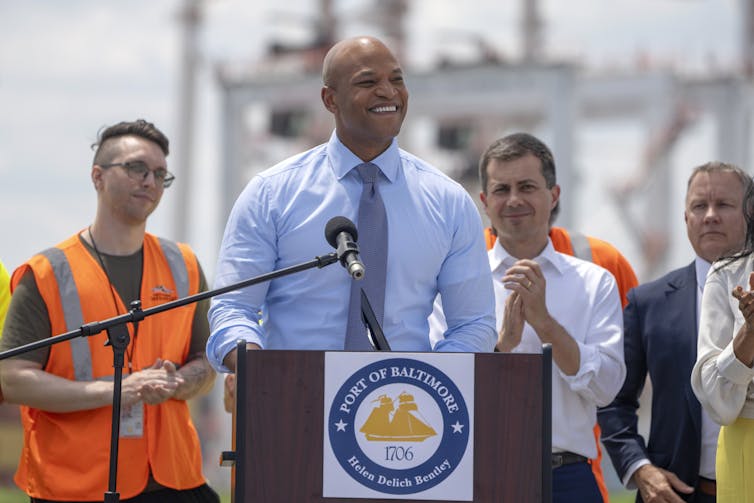

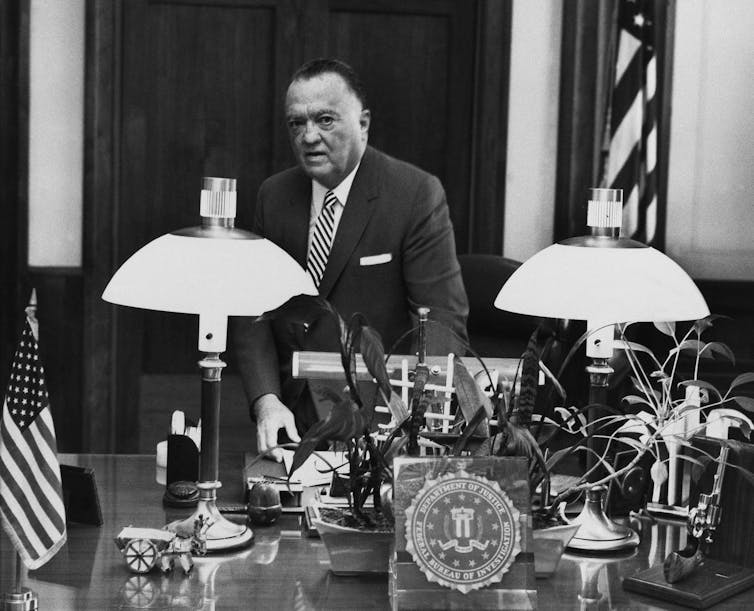
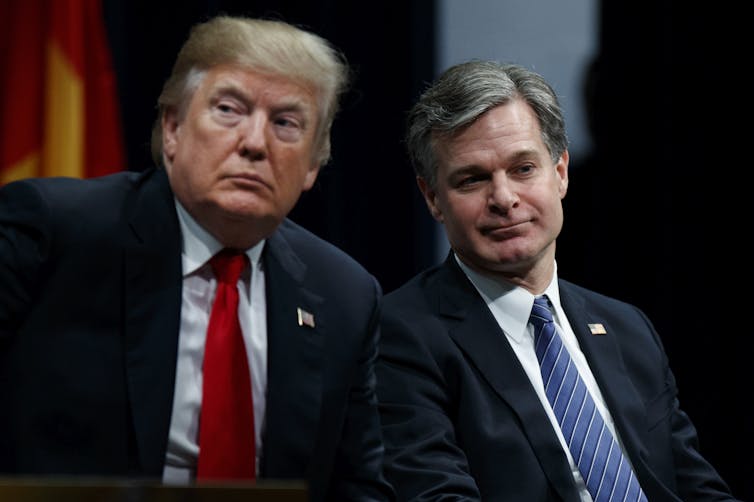










 , https://trendingpoliticsnews.com/wp-content/uploads/2024/12/Screenshot-2024-12-26-at-3.37.51 PM-1000×600.png, Trending Politics Conservative Breaking News and Commentary, , https://trendingpoliticsnews.com/wp-content/uploads/2024/10/cropped-tp-fav-2-32×32.png, https://trendingpoliticsnews.com/feed/, Chris Powell,


 , https://trendingpoliticsnews.com/wp-content/uploads/2024/12/Screenshot-2024-12-26-at-2.56.53 PM-1000×600.png, Trending Politics Conservative Breaking News and Commentary, , https://trendingpoliticsnews.com/wp-content/uploads/2024/10/cropped-tp-fav-2-32×32.png, https://trendingpoliticsnews.com/feed/, Chris Powell,