It’s easy to grow desensitized to the threat of gender ideology in schools. It seems every day there is a fresh new outrage about kindergarteners… Read More
, http://s.wordpress.com/mshots/v1/https%3A%2F%2Fwww.dailysignal.com%2F2024%2F12%2F26%2Fgender-indoctrination-16-states-force-transgender-lessons-kids%2F?w=600&h=450, It’s easy to grow desensitized to the threat of gender ideology in schools. It seems every day there is a fresh new outrage about kindergarteners… Read More The post GENDER INDOCTRINATION: 16 States That Force Transgender Lessons on Kids appeared first on The Daily Signal.,
It’s easy to grow desensitized to the threat of gender ideology in schools. It seems every day there is a fresh new outrage about kindergarteners… Read More
, It’s easy to grow desensitized to the threat of gender ideology in schools. It seems every day there is a fresh new outrage about kindergarteners… Read More The post GENDER INDOCTRINATION: 16 States That Force Transgender Lessons on Kids appeared first on The Daily Signal., , , https://www.dailysignal.com/wp-content/uploads/2024/12/Transgender-protest-young.jpg, The Daily Signal, Policy News, Conservative Analysis and Opinion, , https://www.dailysignal.com/rss, ,
Sen. Rand Paul released a report on Monday outlining more than $1 trillion in government waste from the past year. The 2024 “Festivus” report highlighted various instances… Read More
, http://s.wordpress.com/mshots/v1/https%3A%2F%2Fwww.dailysignal.com%2F2024%2F12%2F26%2Frand-pauls-report-details-1-trillion-govt-waste-here-are-worst-offenders%2F?w=600&h=450, Sen. Rand Paul released a report on Monday outlining more than $1 trillion in government waste from the past year. The 2024 “Festivus” report highlighted various instances… Read More The post Rand Paul’s Report Details $1 Trillion in Gov’t Waste. Here Are the Worst Offenders. appeared first on The Daily Signal.,
Sen. Rand Paul released a report on Monday outlining more than $1 trillion in government waste from the past year. The 2024 “Festivus” report highlighted various instances… Read More
, Sen. Rand Paul released a report on Monday outlining more than $1 trillion in government waste from the past year. The 2024 “Festivus” report highlighted various instances… Read More The post Rand Paul’s Report Details $1 Trillion in Gov’t Waste. Here Are the Worst Offenders. appeared first on The Daily Signal., , , https://www.dailysignal.com/wp-content/uploads/2024/12/20241226_RandPaulWasteReport-scaled.jpg, The Daily Signal, Policy News, Conservative Analysis and Opinion, , https://www.dailysignal.com/rss, ,
Is anything worth saving from the State Department’s new but vast diversity, equity, inclusion, and accessibility apparatus? Executive summary: No. As the summer 2020 high… Read More
, http://s.wordpress.com/mshots/v1/https%3A%2F%2Fwww.dailysignal.com%2F2024%2F12%2F26%2Fis-dei-worth-saving%2F?w=600&h=450, Is anything worth saving from the State Department’s new but vast diversity, equity, inclusion, and accessibility apparatus? Executive summary: No. As the summer 2020 high… Read More The post Is DEI Worth Saving? appeared first on The Daily Signal.,
Is anything worth saving from the State Department’s new but vast diversity, equity, inclusion, and accessibility apparatus? Executive summary: No. As the summer 2020 high… Read More
, Is anything worth saving from the State Department’s new but vast diversity, equity, inclusion, and accessibility apparatus? Executive summary: No. As the summer 2020 high… Read More The post Is DEI Worth Saving? appeared first on The Daily Signal., , , https://www.dailysignal.com/wp-content/uploads/2024/12/Department-of-State01.jpg, The Daily Signal, Policy News, Conservative Analysis and Opinion, , https://www.dailysignal.com/rss, ,
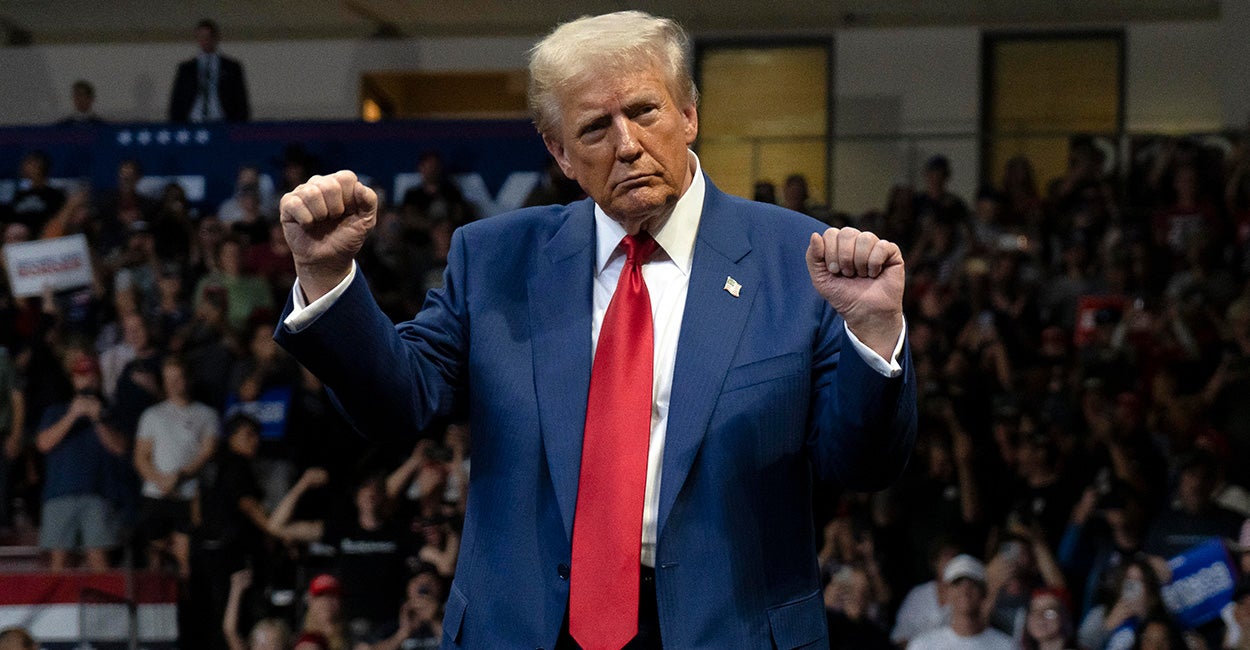
Don’t call PolitiFact an “independent fact-checker.” When they assemble to select their “Lie of the Year,” they’ve singled out Donald Trump in 2015, 2016, 2017,… Read More
, http://s.wordpress.com/mshots/v1/https%3A%2F%2Fwww.dailysignal.com%2F2024%2F12%2F26%2Fshocker-politifact-tags-trump-lie-year-7th-time%2F?w=600&h=450, Don’t call PolitiFact an “independent fact-checker.” When they assemble to select their “Lie of the Year,” they’ve singled out Donald Trump in 2015, 2016, 2017,… Read More The post SHOCKER!: PolitiFact Tags Trump for ‘Lie of the Year’ for Seventh Time appeared first on The Daily Signal.,
Don’t call PolitiFact an “independent fact-checker.” When they assemble to select their “Lie of the Year,” they’ve singled out Donald Trump in 2015, 2016, 2017,… Read More
, Don’t call PolitiFact an “independent fact-checker.” When they assemble to select their “Lie of the Year,” they’ve singled out Donald Trump in 2015, 2016, 2017,… Read More The post SHOCKER!: PolitiFact Tags Trump for ‘Lie of the Year’ for Seventh Time appeared first on The Daily Signal., , , https://www.dailysignal.com/wp-content/uploads/2024/12/trumpdance.jpg, The Daily Signal, Policy News, Conservative Analysis and Opinion, , https://www.dailysignal.com/rss, ,
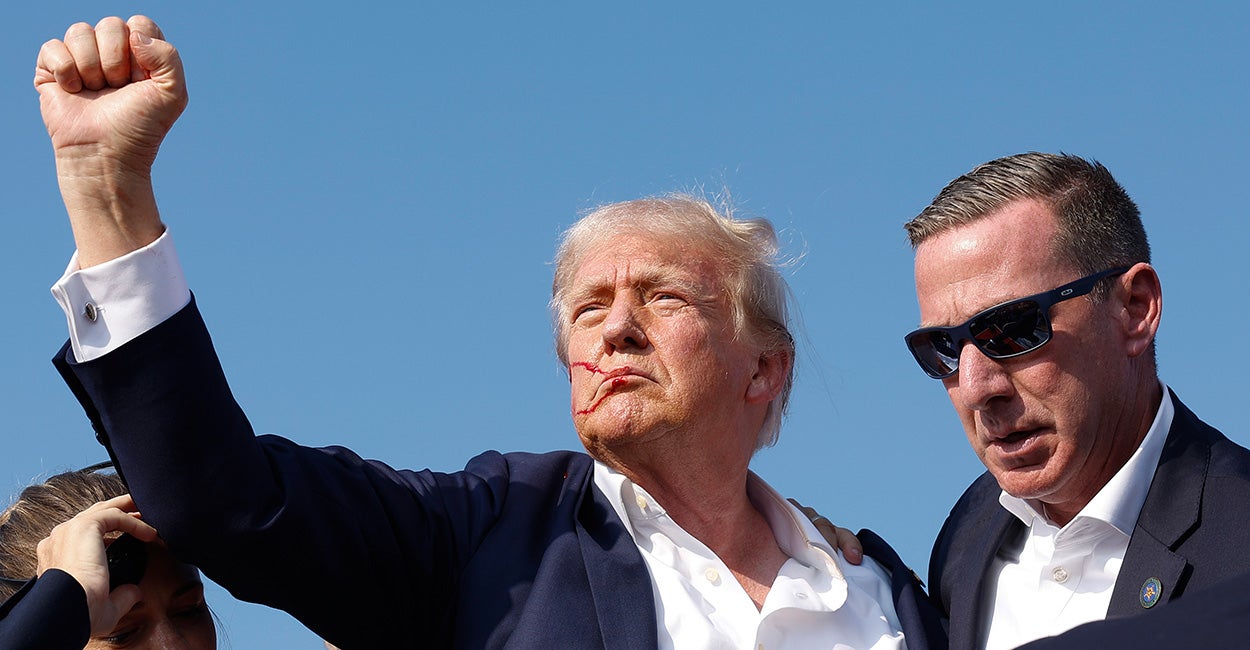
In the weeks before his 2016 Electoral College victory, Donald Trump was polling between 35% and 40%. He would average only about 41% approval over… Read More
, http://s.wordpress.com/mshots/v1/https%3A%2F%2Fwww.dailysignal.com%2F2024%2F12%2F26%2Fvictor-davis-hanson-different-trumps-election%2F?w=600&h=450, In the weeks before his 2016 Electoral College victory, Donald Trump was polling between 35% and 40%. He would average only about 41% approval over… Read More The post What Was So Different This Time About Trump’s Election? appeared first on The Daily Signal.,
In the weeks before his 2016 Electoral College victory, Donald Trump was polling between 35% and 40%. He would average only about 41% approval over… Read More
, In the weeks before his 2016 Electoral College victory, Donald Trump was polling between 35% and 40%. He would average only about 41% approval over… Read More The post What Was So Different This Time About Trump’s Election? appeared first on The Daily Signal., , , https://www.dailysignal.com/wp-content/uploads/2024/12/trumpfist.jpg, The Daily Signal, Policy News, Conservative Analysis and Opinion, , https://www.dailysignal.com/rss, ,
The coming 12 months can’t promise the bumper crop of elections we saw during 2024, when countries home to about half the world’s population headed to the polls. Still, voters will cast ballots in several important elections throughout the year – and many of the themes persist: the impact of inflation, the rise of the populist right and the fallout of war in Europe and the Middle East.
Only a fool or charlatan will pretend to predict the future, so it’s usually best to avoid election forecasting. So instead, The Conversation asked experts on five countries – Canada, Germany, Chile, Belarus and the Philippines – to explain what is at stake as those nations go to the ballot.
Belarus (Jan.26)
– Tatsiana Kulakevich, associate professor of instruction, School of Interdisciplinary Global Studies, the University of South Florida
Alexander Lukashenko, Europe’s longest-serving authoritarian ruler, will run for his seventh term on Jan. 26, 2025 – and he is not expected to lose.
No real opposition will participate in the upcoming elections against Lukashenko, who has run the country since 1994.
Four other persons seeking nomination include the head of the Liberal Democratic Party, Aleh Haidukevich, who ran in the 2020 elections, but withdrew his candidacy then in favor of Lukashenko; Hanna Kanapatskaya, a former member of parliament, entrepreneur and candidate in the 2020 Belarusian presidential election; Aliaksandr Khizhnyak, the chairman of the Republican Party of Labor and Justice; and Siarhei Syrankou, first secretary of the Central Committee of the Communist Party of Belarus. But all have expressed their support for Lukashenko and his key policies.
Current conditions in Belarus do not allow for free and fair elections. Belarusians living abroad will not be able to vote. After the mass protests in 2020’s election, the Belarusian authorities stopped setting up polling stations at diplomatic missions.
That year, protesters claimed widespread election fraud in favor of Lukashenko and argued that most people actually supported Sviatlana Tsikhanouskaya, his main opposition rival, who now leads the opposition in exile from Lithuania.
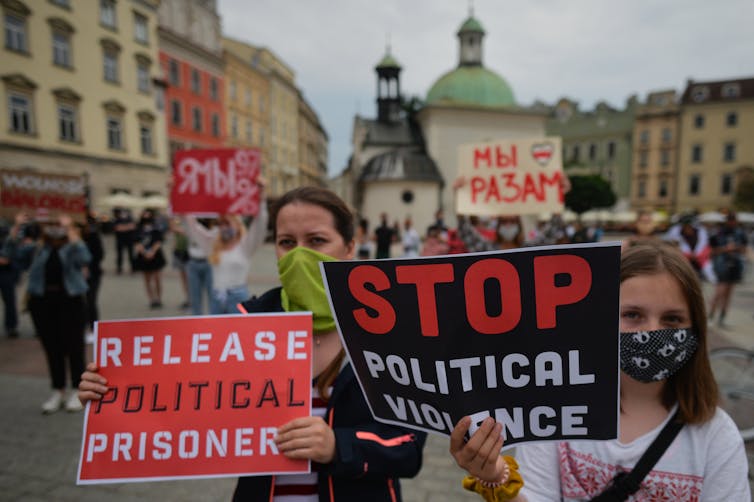
2020 elections resulted in mass protests in Belarus.Artur Widak/NurPhoto via Getty Images
Repression continues in the wake of the 2020 protests, with over 1,200 political prisoners currently detained. Meanwhile, hundreds of thousands of Belarusians have fled the country.
If Lukashenko wins the 2025 presidential election, Belarus will likely continue to serve as a key ally of Russia, hosting Russian nuclear weapons and providing a launchpad for military operations, as seen in the 2022 full-scale invasion of Ukraine.
Germany (Feb. 23)
– Garret Martin, Hurst senior professorial lecturer of foreign policy and global security, American University
The German public knew that it would be called upon to vote in a federal election in 2025. But the recent collapse of the German coalition government means that the vote will happen on Feb. 23 – seven months ahead of the anticipated schedule.
Indeed, after weeks of fighting over the budget, Chancellor Olaf Scholz fired Finance Minister Christian Lindner in early November. As a result, Lindner’s Free Democratics party left the coalition, meaning that the two remaining parties – Scholz’s Social Democrats, or SPD, and the Greens – no longer command a majority in the German parliament. This left the chancellor with little choice but to look for snap elections. And after losing the confidence vote on Dec. 16, Scholz got that outcome.
The February election will take place in a particularly challenging global context for Germany. Besides the ongoing war in Ukraine straining Berlin’s diplomatic and economic position in Europe, Germany is also sandwiched between the continued industrial competition from China and the prospect of Donald Trump launching a trade war. All of this is adding to Germany’s ingrained woes.
Its economy has been stuck since COVID-19 hit, and the country is facing a second year of recession.
Domestically, the various parties will joust over the hot-button topics of migration and funding greater investment at home. But spending more will be politically fraught – Germany’s constitutional “debt brake” currently forces the government to keep a balanced budget.
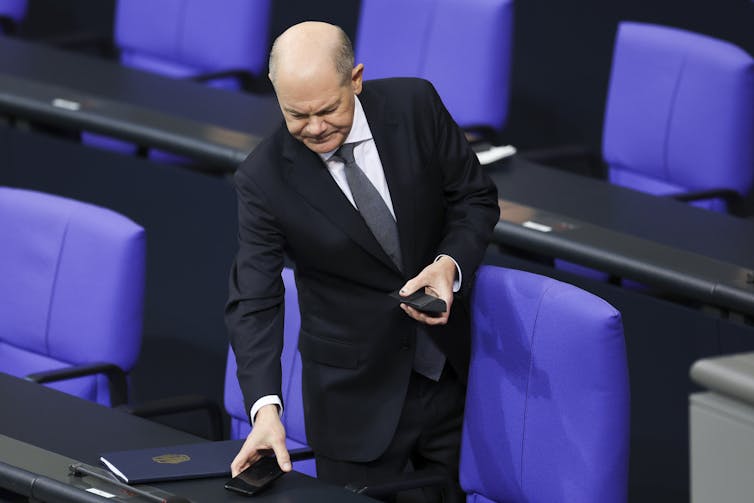
German Chancellor Olaf Scholz lost a vote of confidence on Dec. 16, 2024.Maja Hitij/Getty Images
Polls suggest that Scholz faces a major challenge to stay on as chancellor. His approval rating has been dismal, and his party is polling well behind the center-right Christian Democratic Union and its Christian Social Union sister party. The SPD is in a tight race for second place with the far-right Alternative for Germany, which is hoping to capitalize on its recent successes in state elections.
Barring a major surprise, Friedrich Merz, the leader of the Christian Democratic Union, will become the next chancellor. But forming a stable coalition that can command a majority could prove challenging.
Philippines (May 12)
– Lisandro E. Claudio, associate professor of Southeast Asian studies, University of California, Berkeley
Since the end of the dictatorship of President Ferdinand Marcos in 1986, Philippine presidents have been restricted to single six-year terms but face midterm elections in which Filipinos elect local officials, district representatives to the lower house and 12 nationally elected senators – 2025 is one such year.
On paper, these senatorial races amount to a referendum on the sitting president. But it’s more accurate to think of them as displays of the incumbent’s awesome control over political machines. Most senatorial candidates who win have the president’s backing.
And there’s no reason to think this dynamic won’t prevail in the May 2025 election. Surveys, which have tended to be more accurate in the Philippines than in the U.S. in recent years, show President Ferdinand Marcos Jr.’s senatorial bets could win as many as nine or 10 of the 12 open positions.
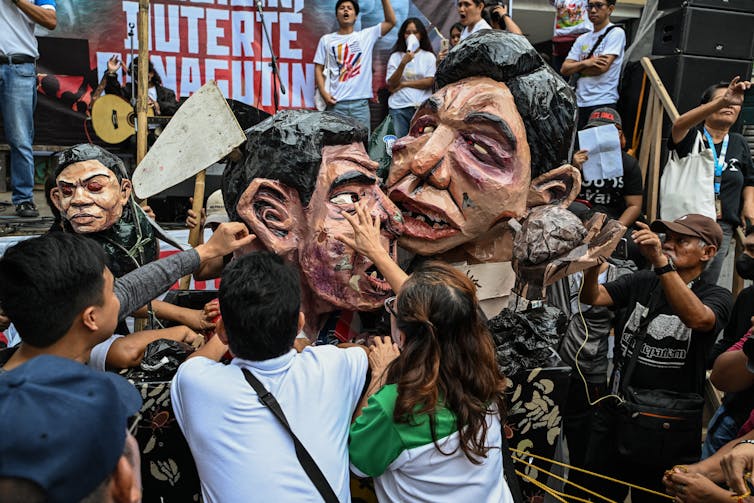
Protesters destroy an effigy of former Philippine President Rodrigo Duterte and current President Ferdinand Marcos Jr. in Manila on Dec. 10, 2024.Jam Sta Rosa/AFP via Getty Images
This will be important for Marcos Jr., who needs to consolidate his power amid a feud with Vice President Sara Duterte, the daughter of Rodrigo Duterte, the previous occupant of the presidential palace who presided over a ruthless and bloody drugs crackdown. Though she ran as Marcos’ ally – vice presidents are elected separately – in 2022, the marriage of convenience quickly fell apart once it became clear that Marcos didn’t have Duterte in mind as his successor.
A Marcos-dominated senate would increase the likelihood of a conviction should Duterte undergo an impeachment trial for alleged mismanagement of confidential funds.
Not only would a conviction remove her from office, it would also bar her from running for president in 2028. And a restoration of vindictive Duterte power could mean trouble for the Marcoses – one of Asia’s most corrupt families, with many skeletons in its closet.
Marcos Jr. must bury the Duterte dynasty while he still can. In a place like the Philippines, where voters are often asked to choose between the lesser of two evils, such a resolution would be welcome to many.
Canada (Before Oct. 20)
– Patrick James, dean’s professor emeritus of political science and international relations, USC Dornsife
It is looking increasingly likely that a federal election in Canada will take place well ahead of the constitutionally mandated deadline of Oct. 20, 2025.
Prime Minister Justin Trudeau, well down in the polls even before a series of jarring events, now faces the possible – or even likely – fall of his fragile coalition government.
Trudeau, recently taunted by U.S. President-elect Donald Trump as the “governor” of Canada and threatened with a 25% tariff, experienced another shock on Dec. 16: Finance Minister Chrystia Freeland resigned over irrevocable differences on key policy issues.
Trudeau may become the latest political casualty among global leaders committed to the priorities of the contemporary left rather than the populist right.
The Liberal leader is a long-standing champion of the cultural left and advocate of strong action over the threat of climate change. The result has been massive levels of government spending and soaring deficits.
Conservative leader Pierre Poilievre, Trudeau’s likely chief rival in the 2025 election, has built a huge lead in the polls that appears based on public anger over high inflation and other material shortcomings.
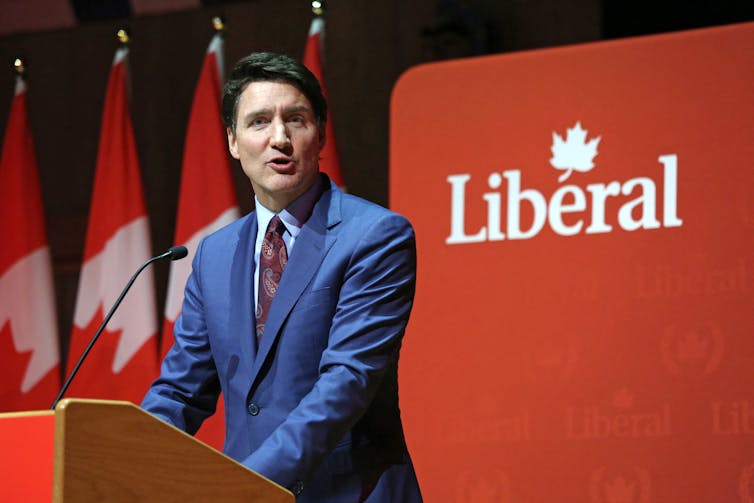
The end of the road for Justin Trudeau’s brand of liberalism?Dave Chan/AFP via Getty Images
Trudeau is embattled both from within and beyond Canada. Trump demands that Canada move away from what he has called exploitation of the U.S. in trade and calls on Canada to step up border security in particular and defense spending in general.
Poilievre calls for a shift back toward Canada’s abundant fossil fuels to improve the economy – a direct threat to Trudeau’s climate change agenda.
The coming election may even be about the identity of Canada itself. Will Trudeau somehow hold onto power and continue to implement a socialist agenda after the election? Or will Poilievre win and shift the country toward a more conservative populism? Or, again, will another coalition government come into place, with a set of policies that end up pleasing no one?
Pressure on Trudeau to resign, at this time of writing, seems to be approaching an overwhelming level. Time will tell – and maybe very soon.
Chile (Nov. 16)
– Jorge Heine, professor of global studies, Boston University
Chile’s presidential election is due to take place on Nov. 16, 2025. Given its ballotage system – meaning that candidates need 50% plus one of the votes to be elected, something which no presidential candidate has managed to do in the first round since 1993 – a runoff will likely take place on Dec. 14. That will be between the top two candidates.
The incumbent president, Gabriel Boric, is barred from running for a second consecutive term. Elected in 2021 at the age of 35 – making him Chile’s youngest-ever president – Boric has had great difficulty enacting the program of his Broad Front, a left-wing coalition with a platform of sweeping political, social and economic changes. This is in large part due to the coalition’s lack of a parliamentary majority.
In fact, Chile under Boric has the dubious distinction of being the only country to have rejected not one but two different constitutional texts submitted to the electorate – one for being too left-wing, the other for being too right-wing – placing Chile in a constitutional cul-de-sac.
Yet, after several years of upheaval that started with a 2019 social uprising – the most serious in Chile’s two centuries of independent history – and continued into the COVID-19 pandemic, which hit Chile badly, the country has now regained a modicum of political and economic normalcy. Foreign investment is up, but so is crime, which has become a major concern to voters.
Chilean President Gabriel Boric is unable to run again.Cristobal Basaure Araya/SOPA Images/LightRocket via Getty Images
In keeping with a Latin American – and worldwide – trend, most polls point to a likely 2025 win for the opposition, the right-wing coalition Chile Vamos, led by the former mayor of Providencia, Evelyn Matthei, who ran for the presidency and lost in 2013 against Michelle Bachelet.
The ruling coalition has found it difficult to come up with a strong candidate to face Matthei. Two of the likeliest ones – Bachelet herself and Tomás Vodanovic, the mayor of Maipú, a Santiago suburb – have indicated they are not interested, and a third one, Home Affairs Minister Carolina Tohá, is hampered by perceived difficulties in bringing the law-and-order situation under control.
That said, the ruling coalition did better than expected in the October 2024 local and regional elections, and an opposition win in 2025 is by no means a done deal.
2024-12-26 14:00:00, http://s.wordpress.com/mshots/v1/https%3A%2F%2Ftheconversation.com%2F5-elections-to-watch-in-2025-246194?w=600&h=450, The coming 12 months can’t promise the bumper crop of elections we saw during 2024, when countries home to about half the world’s population headed to the polls. Still, voters will cast ballots in several important elections throughout the year – and many of the themes persist: the impact of inflation, the rise of the,
The coming 12 months can’t promise the bumper crop of elections we saw during 2024, when countries home to about half the world’s population headed to the polls. Still, voters will cast ballots in several important elections throughout the year – and many of the themes persist: the impact of inflation, the rise of the populist right and the fallout of war in Europe and the Middle East.
Only a fool or charlatan will pretend to predict the future, so it’s usually best to avoid election forecasting. So instead, The Conversation asked experts on five countries – Canada, Germany, Chile, Belarus and the Philippines – to explain what is at stake as those nations go to the ballot.
Belarus (Jan.26)
– Tatsiana Kulakevich, associate professor of instruction, School of Interdisciplinary Global Studies, the University of South Florida
Alexander Lukashenko, Europe’s longest-serving authoritarian ruler, will run for his seventh term on Jan. 26, 2025 – and he is not expected to lose.
No real opposition will participate in the upcoming elections against Lukashenko, who has run the country since 1994.
Four other persons seeking nomination include the head of the Liberal Democratic Party, Aleh Haidukevich, who ran in the 2020 elections, but withdrew his candidacy then in favor of Lukashenko; Hanna Kanapatskaya, a former member of parliament, entrepreneur and candidate in the 2020 Belarusian presidential election; Aliaksandr Khizhnyak, the chairman of the Republican Party of Labor and Justice; and Siarhei Syrankou, first secretary of the Central Committee of the Communist Party of Belarus. But all have expressed their support for Lukashenko and his key policies.
Current conditions in Belarus do not allow for free and fair elections. Belarusians living abroad will not be able to vote. After the mass protests in 2020’s election, the Belarusian authorities stopped setting up polling stations at diplomatic missions.
That year, protesters claimed widespread election fraud in favor of Lukashenko and argued that most people actually supported Sviatlana Tsikhanouskaya, his main opposition rival, who now leads the opposition in exile from Lithuania.
2020 elections resulted in mass protests in Belarus.Artur Widak/NurPhoto via Getty Images
Repression continues in the wake of the 2020 protests, with over 1,200 political prisoners currently detained. Meanwhile, hundreds of thousands of Belarusians have fled the country.
If Lukashenko wins the 2025 presidential election, Belarus will likely continue to serve as a key ally of Russia, hosting Russian nuclear weapons and providing a launchpad for military operations, as seen in the 2022 full-scale invasion of Ukraine.
Germany (Feb. 23)
– Garret Martin, Hurst senior professorial lecturer of foreign policy and global security, American University
The German public knew that it would be called upon to vote in a federal election in 2025. But the recent collapse of the German coalition government means that the vote will happen on Feb. 23 – seven months ahead of the anticipated schedule.
Indeed, after weeks of fighting over the budget, Chancellor Olaf Scholz fired Finance Minister Christian Lindner in early November. As a result, Lindner’s Free Democratics party left the coalition, meaning that the two remaining parties – Scholz’s Social Democrats, or SPD, and the Greens – no longer command a majority in the German parliament. This left the chancellor with little choice but to look for snap elections. And after losing the confidence vote on Dec. 16, Scholz got that outcome.
The February election will take place in a particularly challenging global context for Germany. Besides the ongoing war in Ukraine straining Berlin’s diplomatic and economic position in Europe, Germany is also sandwiched between the continued industrial competition from China and the prospect of Donald Trump launching a trade war. All of this is adding to Germany’s ingrained woes.
Its economy has been stuck since COVID-19 hit, and the country is facing a second year of recession.
Domestically, the various parties will joust over the hot-button topics of migration and funding greater investment at home. But spending more will be politically fraught – Germany’s constitutional “debt brake” currently forces the government to keep a balanced budget.
German Chancellor Olaf Scholz lost a vote of confidence on Dec. 16, 2024.Maja Hitij/Getty Images
Polls suggest that Scholz faces a major challenge to stay on as chancellor. His approval rating has been dismal, and his party is polling well behind the center-right Christian Democratic Union and its Christian Social Union sister party. The SPD is in a tight race for second place with the far-right Alternative for Germany, which is hoping to capitalize on its recent successes in state elections.
Barring a major surprise, Friedrich Merz, the leader of the Christian Democratic Union, will become the next chancellor. But forming a stable coalition that can command a majority could prove challenging.
Philippines (May 12)
– Lisandro E. Claudio, associate professor of Southeast Asian studies, University of California, Berkeley
Since the end of the dictatorship of President Ferdinand Marcos in 1986, Philippine presidents have been restricted to single six-year terms but face midterm elections in which Filipinos elect local officials, district representatives to the lower house and 12 nationally elected senators – 2025 is one such year.
On paper, these senatorial races amount to a referendum on the sitting president. But it’s more accurate to think of them as displays of the incumbent’s awesome control over political machines. Most senatorial candidates who win have the president’s backing.
And there’s no reason to think this dynamic won’t prevail in the May 2025 election. Surveys, which have tended to be more accurate in the Philippines than in the U.S. in recent years, show President Ferdinand Marcos Jr.’s senatorial bets could win as many as nine or 10 of the 12 open positions.
Protesters destroy an effigy of former Philippine President Rodrigo Duterte and current President Ferdinand Marcos Jr. in Manila on Dec. 10, 2024.Jam Sta Rosa/AFP via Getty Images
This will be important for Marcos Jr., who needs to consolidate his power amid a feud with Vice President Sara Duterte, the daughter of Rodrigo Duterte, the previous occupant of the presidential palace who presided over a ruthless and bloody drugs crackdown. Though she ran as Marcos’ ally – vice presidents are elected separately – in 2022, the marriage of convenience quickly fell apart once it became clear that Marcos didn’t have Duterte in mind as his successor.
A Marcos-dominated senate would increase the likelihood of a conviction should Duterte undergo an impeachment trial for alleged mismanagement of confidential funds.
Not only would a conviction remove her from office, it would also bar her from running for president in 2028. And a restoration of vindictive Duterte power could mean trouble for the Marcoses – one of Asia’s most corrupt families, with many skeletons in its closet.
Marcos Jr. must bury the Duterte dynasty while he still can. In a place like the Philippines, where voters are often asked to choose between the lesser of two evils, such a resolution would be welcome to many.
Canada (Before Oct. 20)
– Patrick James, dean’s professor emeritus of political science and international relations, USC Dornsife
It is looking increasingly likely that a federal election in Canada will take place well ahead of the constitutionally mandated deadline of Oct. 20, 2025.
Prime Minister Justin Trudeau, well down in the polls even before a series of jarring events, now faces the possible – or even likely – fall of his fragile coalition government.
Trudeau, recently taunted by U.S. President-elect Donald Trump as the “governor” of Canada and threatened with a 25% tariff, experienced another shock on Dec. 16: Finance Minister Chrystia Freeland resigned over irrevocable differences on key policy issues.
Trudeau may become the latest political casualty among global leaders committed to the priorities of the contemporary left rather than the populist right.
The Liberal leader is a long-standing champion of the cultural left and advocate of strong action over the threat of climate change. The result has been massive levels of government spending and soaring deficits.
Conservative leader Pierre Poilievre, Trudeau’s likely chief rival in the 2025 election, has built a huge lead in the polls that appears based on public anger over high inflation and other material shortcomings.
The end of the road for Justin Trudeau’s brand of liberalism?Dave Chan/AFP via Getty Images
Trudeau is embattled both from within and beyond Canada. Trump demands that Canada move away from what he has called exploitation of the U.S. in trade and calls on Canada to step up border security in particular and defense spending in general.
Poilievre calls for a shift back toward Canada’s abundant fossil fuels to improve the economy – a direct threat to Trudeau’s climate change agenda.
The coming election may even be about the identity of Canada itself. Will Trudeau somehow hold onto power and continue to implement a socialist agenda after the election? Or will Poilievre win and shift the country toward a more conservative populism? Or, again, will another coalition government come into place, with a set of policies that end up pleasing no one?
Pressure on Trudeau to resign, at this time of writing, seems to be approaching an overwhelming level. Time will tell – and maybe very soon.
Chile (Nov. 16)
– Jorge Heine, professor of global studies, Boston University
Chile’s presidential election is due to take place on Nov. 16, 2025. Given its ballotage system – meaning that candidates need 50% plus one of the votes to be elected, something which no presidential candidate has managed to do in the first round since 1993 – a runoff will likely take place on Dec. 14. That will be between the top two candidates.
The incumbent president, Gabriel Boric, is barred from running for a second consecutive term. Elected in 2021 at the age of 35 – making him Chile’s youngest-ever president – Boric has had great difficulty enacting the program of his Broad Front, a left-wing coalition with a platform of sweeping political, social and economic changes. This is in large part due to the coalition’s lack of a parliamentary majority.
In fact, Chile under Boric has the dubious distinction of being the only country to have rejected not one but two different constitutional texts submitted to the electorate – one for being too left-wing, the other for being too right-wing – placing Chile in a constitutional cul-de-sac.
Yet, after several years of upheaval that started with a 2019 social uprising – the most serious in Chile’s two centuries of independent history – and continued into the COVID-19 pandemic, which hit Chile badly, the country has now regained a modicum of political and economic normalcy. Foreign investment is up, but so is crime, which has become a major concern to voters.
Chilean President Gabriel Boric is unable to run again.Cristobal Basaure Araya/SOPA Images/LightRocket via Getty Images
In keeping with a Latin American – and worldwide – trend, most polls point to a likely 2025 win for the opposition, the right-wing coalition Chile Vamos, led by the former mayor of Providencia, Evelyn Matthei, who ran for the presidency and lost in 2013 against Michelle Bachelet.
The ruling coalition has found it difficult to come up with a strong candidate to face Matthei. Two of the likeliest ones – Bachelet herself and Tomás Vodanovic, the mayor of Maipú, a Santiago suburb – have indicated they are not interested, and a third one, Home Affairs Minister Carolina Tohá, is hampered by perceived difficulties in bringing the law-and-order situation under control.
That said, the ruling coalition did better than expected in the October 2024 local and regional elections, and an opposition win in 2025 is by no means a done deal.
, The coming 12 months can’t promise the bumper crop of elections we saw during 2024, when countries home to about half the world’s population headed to the polls. Still, voters will cast ballots in several important elections throughout the year – and many of the themes persist: the impact of inflation, the rise of the populist right and the fallout of war in Europe and the Middle East. Only a fool or charlatan will pretend to predict the future, so it’s usually best to avoid election forecasting. So instead, The Conversation asked experts on five countries – Canada, Germany, Chile, Belarus and the Philippines – to explain what is at stake as those nations go to the ballot. Belarus (Jan.26) – Tatsiana Kulakevich, associate professor of instruction, School of Interdisciplinary Global Studies, the University of South Florida Alexander Lukashenko, Europe’s longest-serving authoritarian ruler, will run for his seventh term on Jan. 26, 2025 – and he is not expected to lose. No real opposition will participate in the upcoming elections against Lukashenko, who has run the country since 1994. Four other persons seeking nomination include the head of the Liberal Democratic Party, Aleh Haidukevich, who ran in the 2020 elections, but withdrew his candidacy then in favor of Lukashenko; Hanna Kanapatskaya, a former member of parliament, entrepreneur and candidate in the 2020 Belarusian presidential election; Aliaksandr Khizhnyak, the chairman of the Republican Party of Labor and Justice; and Siarhei Syrankou, first secretary of the Central Committee of the Communist Party of Belarus. But all have expressed their support for Lukashenko and his key policies. Current conditions in Belarus do not allow for free and fair elections. Belarusians living abroad will not be able to vote. After the mass protests in 2020’s election, the Belarusian authorities stopped setting up polling stations at diplomatic missions. That year, protesters claimed widespread election fraud in favor of Lukashenko and argued that most people actually supported Sviatlana Tsikhanouskaya, his main opposition rival, who now leads the opposition in exile from Lithuania. 2020 elections resulted in mass protests in Belarus. Artur Widak/NurPhoto via Getty Images Repression continues in the wake of the 2020 protests, with over 1,200 political prisoners currently detained. Meanwhile, hundreds of thousands of Belarusians have fled the country. If Lukashenko wins the 2025 presidential election, Belarus will likely continue to serve as a key ally of Russia, hosting Russian nuclear weapons and providing a launchpad for military operations, as seen in the 2022 full-scale invasion of Ukraine. Germany (Feb. 23) – Garret Martin, Hurst senior professorial lecturer of foreign policy and global security, American University The German public knew that it would be called upon to vote in a federal election in 2025. But the recent collapse of the German coalition government means that the vote will happen on Feb. 23 – seven months ahead of the anticipated schedule. Indeed, after weeks of fighting over the budget, Chancellor Olaf Scholz fired Finance Minister Christian Lindner in early November. As a result, Lindner’s Free Democratics party left the coalition, meaning that the two remaining parties – Scholz’s Social Democrats, or SPD, and the Greens – no longer command a majority in the German parliament. This left the chancellor with little choice but to look for snap elections. And after losing the confidence vote on Dec. 16, Scholz got that outcome. The February election will take place in a particularly challenging global context for Germany. Besides the ongoing war in Ukraine straining Berlin’s diplomatic and economic position in Europe, Germany is also sandwiched between the continued industrial competition from China and the prospect of Donald Trump launching a trade war. All of this is adding to Germany’s ingrained woes. Its economy has been stuck since COVID-19 hit, and the country is facing a second year of recession. Domestically, the various parties will joust over the hot-button topics of migration and funding greater investment at home. But spending more will be politically fraught – Germany’s constitutional “debt brake” currently forces the government to keep a balanced budget. German Chancellor Olaf Scholz lost a vote of confidence on Dec. 16, 2024. Maja Hitij/Getty Images Polls suggest that Scholz faces a major challenge to stay on as chancellor. His approval rating has been dismal, and his party is polling well behind the center-right Christian Democratic Union and its Christian Social Union sister party. The SPD is in a tight race for second place with the far-right Alternative for Germany, which is hoping to capitalize on its recent successes in state elections. Barring a major surprise, Friedrich Merz, the leader of the Christian Democratic Union, will become the next chancellor. But forming a stable coalition that can command a majority could prove challenging. Philippines (May 12) – Lisandro E. Claudio, associate professor of Southeast Asian studies, University of California, Berkeley Since the end of the dictatorship of President Ferdinand Marcos in 1986, Philippine presidents have been restricted to single six-year terms but face midterm elections in which Filipinos elect local officials, district representatives to the lower house and 12 nationally elected senators – 2025 is one such year. On paper, these senatorial races amount to a referendum on the sitting president. But it’s more accurate to think of them as displays of the incumbent’s awesome control over political machines. Most senatorial candidates who win have the president’s backing. And there’s no reason to think this dynamic won’t prevail in the May 2025 election. Surveys, which have tended to be more accurate in the Philippines than in the U.S. in recent years, show President Ferdinand Marcos Jr.’s senatorial bets could win as many as nine or 10 of the 12 open positions. Protesters destroy an effigy of former Philippine President Rodrigo Duterte and current President Ferdinand Marcos Jr. in Manila on Dec. 10, 2024. Jam Sta Rosa/AFP via Getty Images This will be important for Marcos Jr., who needs to consolidate his power amid a feud with Vice President Sara Duterte, the daughter of Rodrigo Duterte, the previous occupant of the presidential palace who presided over a ruthless and bloody drugs crackdown. Though she ran as Marcos’ ally – vice presidents are elected separately – in 2022, the marriage of convenience quickly fell apart once it became clear that Marcos didn’t have Duterte in mind as his successor. A Marcos-dominated senate would increase the likelihood of a conviction should Duterte undergo an impeachment trial for alleged mismanagement of confidential funds. Not only would a conviction remove her from office, it would also bar her from running for president in 2028. And a restoration of vindictive Duterte power could mean trouble for the Marcoses – one of Asia’s most corrupt families, with many skeletons in its closet. Marcos Jr. must bury the Duterte dynasty while he still can. In a place like the Philippines, where voters are often asked to choose between the lesser of two evils, such a resolution would be welcome to many. Canada (Before Oct. 20) – Patrick James, dean’s professor emeritus of political science and international relations, USC Dornsife It is looking increasingly likely that a federal election in Canada will take place well ahead of the constitutionally mandated deadline of Oct. 20, 2025. Prime Minister Justin Trudeau, well down in the polls even before a series of jarring events, now faces the possible – or even likely – fall of his fragile coalition government. Trudeau, recently taunted by U.S. President-elect Donald Trump as the “governor” of Canada and threatened with a 25% tariff, experienced another shock on Dec. 16: Finance Minister Chrystia Freeland resigned over irrevocable differences on key policy issues. Trudeau may become the latest political casualty among global leaders committed to the priorities of the contemporary left rather than the populist right. The Liberal leader is a long-standing champion of the cultural left and advocate of strong action over the threat of climate change. The result has been massive levels of government spending and soaring deficits. Conservative leader Pierre Poilievre, Trudeau’s likely chief rival in the 2025 election, has built a huge lead in the polls that appears based on public anger over high inflation and other material shortcomings. The end of the road for Justin Trudeau’s brand of liberalism? Dave Chan/AFP via Getty Images Trudeau is embattled both from within and beyond Canada. Trump demands that Canada move away from what he has called exploitation of the U.S. in trade and calls on Canada to step up border security in particular and defense spending in general. Poilievre calls for a shift back toward Canada’s abundant fossil fuels to improve the economy – a direct threat to Trudeau’s climate change agenda. The coming election may even be about the identity of Canada itself. Will Trudeau somehow hold onto power and continue to implement a socialist agenda after the election? Or will Poilievre win and shift the country toward a more conservative populism? Or, again, will another coalition government come into place, with a set of policies that end up pleasing no one? Pressure on Trudeau to resign, at this time of writing, seems to be approaching an overwhelming level. Time will tell – and maybe very soon. Chile (Nov. 16) – Jorge Heine, professor of global studies, Boston University Chile’s presidential election is due to take place on Nov. 16, 2025. Given its ballotage system – meaning that candidates need 50% plus one of the votes to be elected, something which no presidential candidate has managed to do in the first round since 1993 – a runoff will likely take place on Dec. 14. That will be between the top two candidates. The incumbent president, Gabriel Boric, is barred from running for a second consecutive term. Elected in 2021 at the age of 35 – making him Chile’s youngest-ever president – Boric has had great difficulty enacting the program of his Broad Front, a left-wing coalition with a platform of sweeping political, social and economic changes. This is in large part due to the coalition’s lack of a parliamentary majority. In fact, Chile under Boric has the dubious distinction of being the only country to have rejected not one but two different constitutional texts submitted to the electorate – one for being too left-wing, the other for being too right-wing – placing Chile in a constitutional cul-de-sac. Yet, after several years of upheaval that started with a 2019 social uprising – the most serious in Chile’s two centuries of independent history – and continued into the COVID-19 pandemic, which hit Chile badly, the country has now regained a modicum of political and economic normalcy. Foreign investment is up, but so is crime, which has become a major concern to voters. Chilean President Gabriel Boric is unable to run again. Cristobal Basaure Araya/SOPA Images/LightRocket via Getty Images In keeping with a Latin American – and worldwide – trend, most polls point to a likely 2025 win for the opposition, the right-wing coalition Chile Vamos, led by the former mayor of Providencia, Evelyn Matthei, who ran for the presidency and lost in 2013 against Michelle Bachelet. The ruling coalition has found it difficult to come up with a strong candidate to face Matthei. Two of the likeliest ones – Bachelet herself and Tomás Vodanovic, the mayor of Maipú, a Santiago suburb – have indicated they are not interested, and a third one, Home Affairs Minister Carolina Tohá, is hampered by perceived difficulties in bringing the law-and-order situation under control. That said, the ruling coalition did better than expected in the October 2024 local and regional elections, and an opposition win in 2025 is by no means a done deal., , , https://images.theconversation.com/files/639850/original/file-20241219-15-jwpxgc.jpg?ixlib=rb-4.1.0&rect=79%2C530%2C8850%2C4418&q=45&auto=format&w=1356&h=668&fit=crop, Politics + Society – The Conversation, , , https://theconversation.com/us/politics/articles.atom, Lisandro Claudio, Associate Professor of Southeast Asian Studies, University of California, Berkeley,
Police investigating the shooting of UnitedHealthcare CEO Brian Thompson on Dec. 4, 2024, have announced that the suspected assailant had used a 3D-printed gun. Several high-profile crimes in recent years have involved this kind of homemade, or partially homemade, weapon.
Often called “ghost guns” because they can be hard to trace, these firearms can be either partially or completely made with components that have been produced in metal or plastic on commercially available 3D printers. The U.S. Supreme Court is considering the legality of current federal restrictions on these firearms.
The first known criminal case involving a 3D-printed gun resulted in the arrest of a U.K. man in 2013. But since then, police worldwide have reported finding increasing numbers of these weapons.
My research focuses on the economic and social effects of advanced digital technologies, including 3D printing. I see that the use of 3D-printed guns in criminal and violent activities is likely to continue to increase. And it will likely prove ever harder for governments and police to regulate these firearms.
Surge in arrests and seizures
Arrests and seizures connected to 3D-printed guns are escalating quickly. Between 2017 and 2021, U.S. law enforcement agencies seized and reported nearly 38,000 suspected ghost guns, according to a 2024 report from the U.S. Bureau of Alcohol, Tobacco, Firearms and Explosives. In 2021 alone, 19,273 suspected ghost guns were traced, a significant increase from 8,504 in 2020. The number of seized 3D-printed guns in New York state alone surged dramatically, from 100 in 2019 to 637 in 2022.
Arrests linked to 3D-printed guns are also rising. The world recorded 108 arrests in the first half of 2023, compared to 66 arrests in all 2022.
North America leads in 3D-printed gun-related arrests, with 166 cases from 2013 to June 2023. Europe followed with 48 arrests, while Oceania ranked third with 24 arrests.
The U.S. is a particular hot spot, with 36% of total global arrests related to 3D-printed firearms in 2023. But Canada is close behind, with 34%. The U.K. had 10%, and Australia had 8%.
Growing global security threat
Police and media reports indicate that many efforts to acquire or manufacture 3D-printed firearms were connected to plans for violent actions.
These guns have been used by diverse groups including far-right extremists, ethno-separatists, jihadists, left-wing anarchists, organized crime groups in Europe and pro-democracy rebels in Myanmar.
From 2019 to mid-2022, there were at least nine documented cases in Europe and Australia of extremists, terrorists or paramilitary groups either producing or attempting to produce firearms using 3D-printing technology. An analysis of 165 cases of 3D-printed firearms from 2013 to mid-2024 reveals that 15% were linked to terrorism. Far-right groups appear to be the most frequent users among terrorism-related cases.
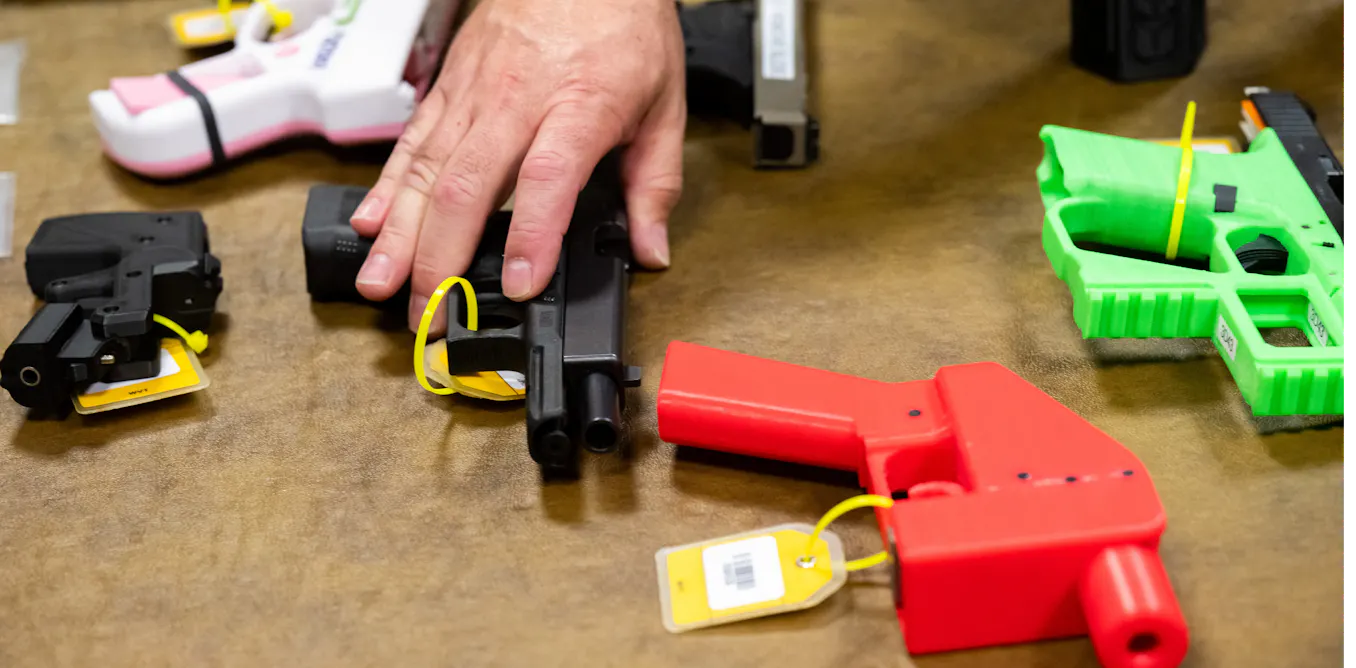
The ‘Liberator’ was the first widely available plan for 3D-printing a firearm.Kelly West/AFP via Getty Images
A widely varied legal landscape
Often, 3D-printed guns are homemade firearms without serial numbers. This lack of identification makes them attractive to criminals because it is harder for law enforcement to link specific guns to particular crimes or suspects. Different countries take very different approaches to regulating these weapons.
Japan enforces stringent laws governing the manufacture, possession and sales of firearms. Its legal system strictly prohibits unauthorized firearm production, including 3D-printed guns. In 2014, a 28-year-old Japanese man was sentenced to two years in prison for producing plastic 3D-printed firearms.
In 2023, Canada effectively banned ghost guns. It is illegal to possess or manufacture them without a license from the government.
In Australia, making a 3D-printed firearm is illegal, and in some states, possessing a digital blueprint to create one is also an offense. In the state of New South Wales, a person convicted of possessing blueprints can face up to 14 years in prison. In Tasmania state, the punishment can be even more severe – up to 21 years in prison.
Across the European Union, making or owning homemade firearms, including 3D-printed ones, is broadly prohibited. However, laws and penalties vary, with some nations criminalizing even the possession of digital files or blueprints related to 3D-printing guns.
In the U.K., where firearms are very restricted, 3D-printed guns have been considered illegal. But in November 2022, the government updated the laws to specifically ban possessing, buying or producing parts for 3D-printed guns. The proposal aims to explicitly ban 3D-printed guns, addressing their unique challenges directly, rather than relying on existing laws designed for traditional firearms. The U.K. National Crime Agency has called for a ban on possessing blueprints as well, and Parliament is currently considering two bills proposing such a ban.
An NBC News investigation describes how easy it is to build a ghost gun.
Federal rules in the US
The U.S. Constitution poses some unique challenges to regulating ghost guns, especially for the federal government, but also for states.
For regular firearms – that is, those not produced by 3D printing – U.S. federal law requires that a key component, called the lower receiver, bear a unique serial number. Purchasing a lower receiver requires a federal background check and conducting the transaction through a merchant who holds a Federal Firearms License.
The situation is more complicated when it comes to 3D printing weapons. The First Amendment to the Constitution protects freedom of expression, which includes sharing digital files that could contain firearm designs. And the Second Amendment protects citizens’ right to bear arms.
In the U.S., selling 3D-printed firearms requires a federal license. But producing or owning homemade firearms for personal use is allowed. That includes 3D-printing the lower receiver component, and assembling the rest of the weapon with unregulated parts.
Current federal law, under review by the Supreme Court, also requires 3D-printed guns meet specific guidelines, even if they do not contain any currently regulated firearms components. Under the rule, makers of ghost gun kits must obtain a federal license, conduct background checks, record information about their customers and add serial numbers to their products.
The type of weapon also matters when determining the legality of a 3D-printed firearm. Automatic weapons, or machine guns, can continue to fire ammunition as long as the user holds the trigger down. These weapons have been heavily regulated by federal law for almost 90 years.
Criminals have used 3D printers to produce “Glock switches” or auto-sears, which convert semi-automatic firearms into fully automatic machine guns. That turns those items into machine guns under federal law, making them illegal. Owning this kind of 3D-printed conversion device can lead to a maximum of 10 years in federal prison and a $250,000 fine.
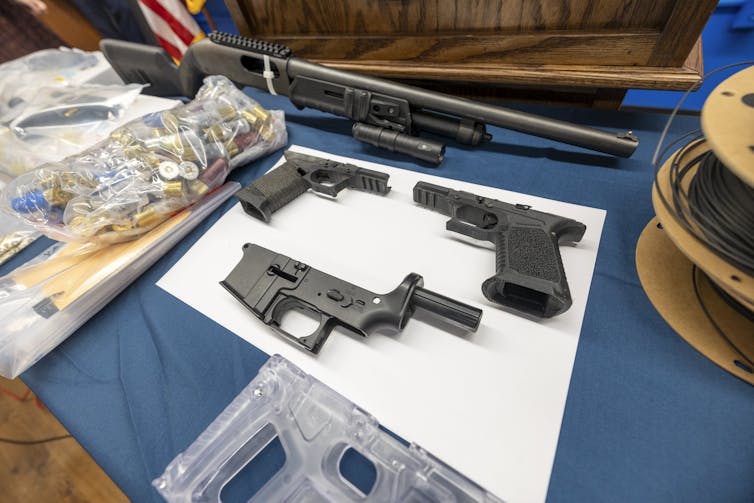
3D-printed gun components seized by police in Mineola, N.Y., Dec. 10, 2024.Howard Schnapp/Newsday RM via Getty Images
In the states
The states can also regulate firearms, and many are trying to get control of 3D-printed guns.
By November 2024, 15 U.S. states had established regulations on ghost guns, though exact requirements vary. The rules typically require a serial number, background checks for firearm component purchases and reporting to authorities that a person is producing 3D-printed guns.
For instance, in New Jersey, a 2019 law mandates that all ghost guns have a serial number and be registered. Under current New York law, possession or distribution of a 3D-printed gun is classified as a misdemeanor. However, a proposed law seeks to elevate the manufacturing of firearms using 3D-printing technology to a felony offense.
As technology advances and rules evolve, criminals who use 3D-printed firearms will continue to pose threats to public safety and security, and governments will continue playing catch-up to effectively regulate these weapons.
2024-12-19 17:56:00, http://s.wordpress.com/mshots/v1/https%3A%2F%2Ftheconversation.com%2F3d-printed-guns-like-the-one-allegedly-used-to-kill-a-health-care-ceo-are-a-growing-threat-in-the-us-and-around-the-world-246220?w=600&h=450, Police investigating the shooting of UnitedHealthcare CEO Brian Thompson on Dec. 4, 2024, have announced that the suspected assailant had used a 3D-printed gun. Several high-profile crimes in recent years have involved this kind of homemade, or partially homemade, weapon. Often called “ghost guns” because they can be hard to trace, these firearms can be,
Police investigating the shooting of UnitedHealthcare CEO Brian Thompson on Dec. 4, 2024, have announced that the suspected assailant had used a 3D-printed gun. Several high-profile crimes in recent years have involved this kind of homemade, or partially homemade, weapon.
Often called “ghost guns” because they can be hard to trace, these firearms can be either partially or completely made with components that have been produced in metal or plastic on commercially available 3D printers. The U.S. Supreme Court is considering the legality of current federal restrictions on these firearms.
The first known criminal case involving a 3D-printed gun resulted in the arrest of a U.K. man in 2013. But since then, police worldwide have reported finding increasing numbers of these weapons.
My research focuses on the economic and social effects of advanced digital technologies, including 3D printing. I see that the use of 3D-printed guns in criminal and violent activities is likely to continue to increase. And it will likely prove ever harder for governments and police to regulate these firearms.
Surge in arrests and seizures
Arrests and seizures connected to 3D-printed guns are escalating quickly. Between 2017 and 2021, U.S. law enforcement agencies seized and reported nearly 38,000 suspected ghost guns, according to a 2024 report from the U.S. Bureau of Alcohol, Tobacco, Firearms and Explosives. In 2021 alone, 19,273 suspected ghost guns were traced, a significant increase from 8,504 in 2020. The number of seized 3D-printed guns in New York state alone surged dramatically, from 100 in 2019 to 637 in 2022.
Arrests linked to 3D-printed guns are also rising. The world recorded 108 arrests in the first half of 2023, compared to 66 arrests in all 2022.
North America leads in 3D-printed gun-related arrests, with 166 cases from 2013 to June 2023. Europe followed with 48 arrests, while Oceania ranked third with 24 arrests.
The U.S. is a particular hot spot, with 36% of total global arrests related to 3D-printed firearms in 2023. But Canada is close behind, with 34%. The U.K. had 10%, and Australia had 8%.
Growing global security threat
Police and media reports indicate that many efforts to acquire or manufacture 3D-printed firearms were connected to plans for violent actions.
These guns have been used by diverse groups including far-right extremists, ethno-separatists, jihadists, left-wing anarchists, organized crime groups in Europe and pro-democracy rebels in Myanmar.
From 2019 to mid-2022, there were at least nine documented cases in Europe and Australia of extremists, terrorists or paramilitary groups either producing or attempting to produce firearms using 3D-printing technology. An analysis of 165 cases of 3D-printed firearms from 2013 to mid-2024 reveals that 15% were linked to terrorism. Far-right groups appear to be the most frequent users among terrorism-related cases.
The ‘Liberator’ was the first widely available plan for 3D-printing a firearm.Kelly West/AFP via Getty Images
A widely varied legal landscape
Often, 3D-printed guns are homemade firearms without serial numbers. This lack of identification makes them attractive to criminals because it is harder for law enforcement to link specific guns to particular crimes or suspects. Different countries take very different approaches to regulating these weapons.
Japan enforces stringent laws governing the manufacture, possession and sales of firearms. Its legal system strictly prohibits unauthorized firearm production, including 3D-printed guns. In 2014, a 28-year-old Japanese man was sentenced to two years in prison for producing plastic 3D-printed firearms.
In 2023, Canada effectively banned ghost guns. It is illegal to possess or manufacture them without a license from the government.
In Australia, making a 3D-printed firearm is illegal, and in some states, possessing a digital blueprint to create one is also an offense. In the state of New South Wales, a person convicted of possessing blueprints can face up to 14 years in prison. In Tasmania state, the punishment can be even more severe – up to 21 years in prison.
Across the European Union, making or owning homemade firearms, including 3D-printed ones, is broadly prohibited. However, laws and penalties vary, with some nations criminalizing even the possession of digital files or blueprints related to 3D-printing guns.
In the U.K., where firearms are very restricted, 3D-printed guns have been considered illegal. But in November 2022, the government updated the laws to specifically ban possessing, buying or producing parts for 3D-printed guns. The proposal aims to explicitly ban 3D-printed guns, addressing their unique challenges directly, rather than relying on existing laws designed for traditional firearms. The U.K. National Crime Agency has called for a ban on possessing blueprints as well, and Parliament is currently considering two bills proposing such a ban.
An NBC News investigation describes how easy it is to build a ghost gun.
Federal rules in the US
The U.S. Constitution poses some unique challenges to regulating ghost guns, especially for the federal government, but also for states.
For regular firearms – that is, those not produced by 3D printing – U.S. federal law requires that a key component, called the lower receiver, bear a unique serial number. Purchasing a lower receiver requires a federal background check and conducting the transaction through a merchant who holds a Federal Firearms License.
The situation is more complicated when it comes to 3D printing weapons. The First Amendment to the Constitution protects freedom of expression, which includes sharing digital files that could contain firearm designs. And the Second Amendment protects citizens’ right to bear arms.
In the U.S., selling 3D-printed firearms requires a federal license. But producing or owning homemade firearms for personal use is allowed. That includes 3D-printing the lower receiver component, and assembling the rest of the weapon with unregulated parts.
Current federal law, under review by the Supreme Court, also requires 3D-printed guns meet specific guidelines, even if they do not contain any currently regulated firearms components. Under the rule, makers of ghost gun kits must obtain a federal license, conduct background checks, record information about their customers and add serial numbers to their products.
The type of weapon also matters when determining the legality of a 3D-printed firearm. Automatic weapons, or machine guns, can continue to fire ammunition as long as the user holds the trigger down. These weapons have been heavily regulated by federal law for almost 90 years.
Criminals have used 3D printers to produce “Glock switches” or auto-sears, which convert semi-automatic firearms into fully automatic machine guns. That turns those items into machine guns under federal law, making them illegal. Owning this kind of 3D-printed conversion device can lead to a maximum of 10 years in federal prison and a $250,000 fine.
3D-printed gun components seized by police in Mineola, N.Y., Dec. 10, 2024.Howard Schnapp/Newsday RM via Getty Images
In the states
The states can also regulate firearms, and many are trying to get control of 3D-printed guns.
By November 2024, 15 U.S. states had established regulations on ghost guns, though exact requirements vary. The rules typically require a serial number, background checks for firearm component purchases and reporting to authorities that a person is producing 3D-printed guns.
For instance, in New Jersey, a 2019 law mandates that all ghost guns have a serial number and be registered. Under current New York law, possession or distribution of a 3D-printed gun is classified as a misdemeanor. However, a proposed law seeks to elevate the manufacturing of firearms using 3D-printing technology to a felony offense.
As technology advances and rules evolve, criminals who use 3D-printed firearms will continue to pose threats to public safety and security, and governments will continue playing catch-up to effectively regulate these weapons.
, Police investigating the shooting of UnitedHealthcare CEO Brian Thompson on Dec. 4, 2024, have announced that the suspected assailant had used a 3D-printed gun. Several high-profile crimes in recent years have involved this kind of homemade, or partially homemade, weapon. Often called “ghost guns” because they can be hard to trace, these firearms can be either partially or completely made with components that have been produced in metal or plastic on commercially available 3D printers. The U.S. Supreme Court is considering the legality of current federal restrictions on these firearms. The first known criminal case involving a 3D-printed gun resulted in the arrest of a U.K. man in 2013. But since then, police worldwide have reported finding increasing numbers of these weapons. My research focuses on the economic and social effects of advanced digital technologies, including 3D printing. I see that the use of 3D-printed guns in criminal and violent activities is likely to continue to increase. And it will likely prove ever harder for governments and police to regulate these firearms. Surge in arrests and seizures Arrests and seizures connected to 3D-printed guns are escalating quickly. Between 2017 and 2021, U.S. law enforcement agencies seized and reported nearly 38,000 suspected ghost guns, according to a 2024 report from the U.S. Bureau of Alcohol, Tobacco, Firearms and Explosives. In 2021 alone, 19,273 suspected ghost guns were traced, a significant increase from 8,504 in 2020. The number of seized 3D-printed guns in New York state alone surged dramatically, from 100 in 2019 to 637 in 2022. Arrests linked to 3D-printed guns are also rising. The world recorded 108 arrests in the first half of 2023, compared to 66 arrests in all 2022. North America leads in 3D-printed gun-related arrests, with 166 cases from 2013 to June 2023. Europe followed with 48 arrests, while Oceania ranked third with 24 arrests. The U.S. is a particular hot spot, with 36% of total global arrests related to 3D-printed firearms in 2023. But Canada is close behind, with 34%. The U.K. had 10%, and Australia had 8%. Growing global security threat Police and media reports indicate that many efforts to acquire or manufacture 3D-printed firearms were connected to plans for violent actions. These guns have been used by diverse groups including far-right extremists, ethno-separatists, jihadists, left-wing anarchists, organized crime groups in Europe and pro-democracy rebels in Myanmar. From 2019 to mid-2022, there were at least nine documented cases in Europe and Australia of extremists, terrorists or paramilitary groups either producing or attempting to produce firearms using 3D-printing technology. An analysis of 165 cases of 3D-printed firearms from 2013 to mid-2024 reveals that 15% were linked to terrorism. Far-right groups appear to be the most frequent users among terrorism-related cases. The ‘Liberator’ was the first widely available plan for 3D-printing a firearm. Kelly West/AFP via Getty Images A widely varied legal landscape Often, 3D-printed guns are homemade firearms without serial numbers. This lack of identification makes them attractive to criminals because it is harder for law enforcement to link specific guns to particular crimes or suspects. Different countries take very different approaches to regulating these weapons. Japan enforces stringent laws governing the manufacture, possession and sales of firearms. Its legal system strictly prohibits unauthorized firearm production, including 3D-printed guns. In 2014, a 28-year-old Japanese man was sentenced to two years in prison for producing plastic 3D-printed firearms. In 2023, Canada effectively banned ghost guns. It is illegal to possess or manufacture them without a license from the government. In Australia, making a 3D-printed firearm is illegal, and in some states, possessing a digital blueprint to create one is also an offense. In the state of New South Wales, a person convicted of possessing blueprints can face up to 14 years in prison. In Tasmania state, the punishment can be even more severe – up to 21 years in prison. Across the European Union, making or owning homemade firearms, including 3D-printed ones, is broadly prohibited. However, laws and penalties vary, with some nations criminalizing even the possession of digital files or blueprints related to 3D-printing guns. In the U.K., where firearms are very restricted, 3D-printed guns have been considered illegal. But in November 2022, the government updated the laws to specifically ban possessing, buying or producing parts for 3D-printed guns. The proposal aims to explicitly ban 3D-printed guns, addressing their unique challenges directly, rather than relying on existing laws designed for traditional firearms. The U.K. National Crime Agency has called for a ban on possessing blueprints as well, and Parliament is currently considering two bills proposing such a ban. An NBC News investigation describes how easy it is to build a ghost gun. Federal rules in the US The U.S. Constitution poses some unique challenges to regulating ghost guns, especially for the federal government, but also for states. For regular firearms – that is, those not produced by 3D printing – U.S. federal law requires that a key component, called the lower receiver, bear a unique serial number. Purchasing a lower receiver requires a federal background check and conducting the transaction through a merchant who holds a Federal Firearms License. The situation is more complicated when it comes to 3D printing weapons. The First Amendment to the Constitution protects freedom of expression, which includes sharing digital files that could contain firearm designs. And the Second Amendment protects citizens’ right to bear arms. In the U.S., selling 3D-printed firearms requires a federal license. But producing or owning homemade firearms for personal use is allowed. That includes 3D-printing the lower receiver component, and assembling the rest of the weapon with unregulated parts. Current federal law, under review by the Supreme Court, also requires 3D-printed guns meet specific guidelines, even if they do not contain any currently regulated firearms components. Under the rule, makers of ghost gun kits must obtain a federal license, conduct background checks, record information about their customers and add serial numbers to their products. The type of weapon also matters when determining the legality of a 3D-printed firearm. Automatic weapons, or machine guns, can continue to fire ammunition as long as the user holds the trigger down. These weapons have been heavily regulated by federal law for almost 90 years. Criminals have used 3D printers to produce “Glock switches” or auto-sears, which convert semi-automatic firearms into fully automatic machine guns. That turns those items into machine guns under federal law, making them illegal. Owning this kind of 3D-printed conversion device can lead to a maximum of 10 years in federal prison and a $250,000 fine. 3D-printed gun components seized by police in Mineola, N.Y., Dec. 10, 2024. Howard Schnapp/Newsday RM via Getty Images In the states The states can also regulate firearms, and many are trying to get control of 3D-printed guns. By November 2024, 15 U.S. states had established regulations on ghost guns, though exact requirements vary. The rules typically require a serial number, background checks for firearm component purchases and reporting to authorities that a person is producing 3D-printed guns. For instance, in New Jersey, a 2019 law mandates that all ghost guns have a serial number and be registered. Under current New York law, possession or distribution of a 3D-printed gun is classified as a misdemeanor. However, a proposed law seeks to elevate the manufacturing of firearms using 3D-printing technology to a felony offense. As technology advances and rules evolve, criminals who use 3D-printed firearms will continue to pose threats to public safety and security, and governments will continue playing catch-up to effectively regulate these weapons., , , https://images.theconversation.com/files/639495/original/file-20241218-16-yzte80.jpg?ixlib=rb-4.1.0&rect=74%2C1371%2C8256%2C4128&q=45&auto=format&w=1356&h=668&fit=crop, Politics + Society – The Conversation, , , https://theconversation.com/us/politics/articles.atom, Nir Kshetri, Professor of Management, University of North Carolina – Greensboro,
Shortly after former Florida Rep. Matt Gaetz withdrew from consideration to serve as U.S. attorney general, President-elect Donald Trump announced he would nominate Pam Bondi for the position. A former Florida attorney general, Bondi also worked for Trump as a defense lawyer during the first of his two impeachment trials.
While much recent attention has focused on who the next attorney general might be, there has been less attention on what the attorney general actually does.
The attorney general is the lawyer appointed by the president and confirmed by the Senate to lead the Department of Justice, known as the DOJ. Because the attorney general’s expansive responsibilities place the office at the forefront of both politics and the law, the position is one of the most important in the federal executive branch.
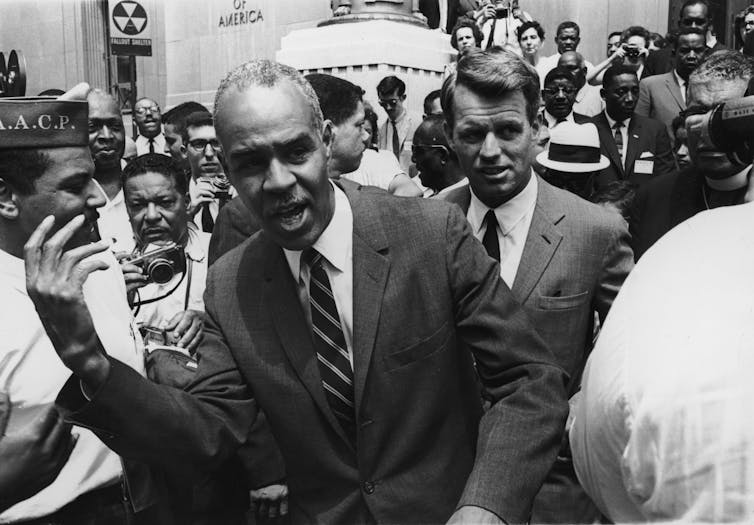
NAACP leader Roy Wilkins walks in front of U.S. Attorney General Robert Kennedy during an NAACP march on June 24, 1964, in Washington, protesting the disappearance of three civil rights workers in Mississippi.Washington Bureau/Getty Images
File lawsuits, give advice
Congress created the position of attorney general in 1789 so the national government had a designated lawyer to conduct federal lawsuits for crimes against the United States such as counterfeiting, piracy or treason, and to give legal advice to the president and cabinet officials, such as the secretary of the Treasury.
Initially, the attorney general served part time. Indeed, for the first few decades of U.S. history, most attorneys general maintained private law practices and even lived away from the capital. But as the federal government began to do more, the role of the attorney general grew and became a full-time job.
Today’s attorney general largely performs the same jobs as the first one, Edmund Jennings Randolph, did.
The attorney general represents the United States in all legal matters. In doing so, the attorney general supervises federal prosecutions by the 93 U.S. attorneys who live and work across the United States to enforce federal laws. The attorney general also supervises almost all legal actions involving federal agencies – from the Department of Homeland Security and the Environmental Protection Agency to the Social Security Administration.
For example, in the past few months, DOJ lawyers supervised by the attorney general have successfully prosecuted a man for conspiring to send to China trade secrets belonging to a leading electric vehicle company; worked with the city of Baltimore to adopt police reforms after DOJ opened a comprehensive investigation into the 2015 death of Freddie Gray; and found that Arizona’s Department of Child Safety discriminates against parents and children with disabilities.
Additionally, the attorney general gives legal advice to the president and heads of the cabinet departments. This includes providing recommendations to the president on whom he should appoint as federal judges and prosecutors.
In combination, these two aspects of the job, representing the U.S. and advising the cabinet departments, mean that the attorney general plays a key role in helping the president perform his constitutional duty to take care that the laws of the United States are faithfully executed.
115,000 employees
Since 1870, attorneys general have had an entire executive department – the Department of Justice – to help them execute their duties.
Today’s department contains over 70 distinct offices, initiatives and task forces, all of which the attorney general supervises. There are currently 115,000 employees in the department.
The DOJ contains litigation units divided by subject matter like antitrust, civil rights, tax, and national security. Each of these units conducts investigations and participates in federal lawsuits related to its expertise.
The Justice Department also has several law enforcement agencies that help ensure the safety and health of people who live in the United States. The most well-known of these agencies include the FBI, the Drug Enforcement Administration and the U.S. branch of the International Criminal Police Organization, known as Interpol.
Additionally, the DOJ contains corrections agencies like the Federal Bureau of Prisons and the U.S. Parole Commission. These agencies work to ensure consistent and centralized coordination of federal prisons and offenders.
Finally, the department manages several grant administration agencies. These agencies, such as Community Oriented Policing Services, the Office of Justice Programs and the Office of Sex Offender Sentencing, Monitoring, Apprehending, Registering, and Tracking (SMART), provide financial assistance, training and advice to state, local, tribal and territorial governments as they work to enforce the law in their own communities.
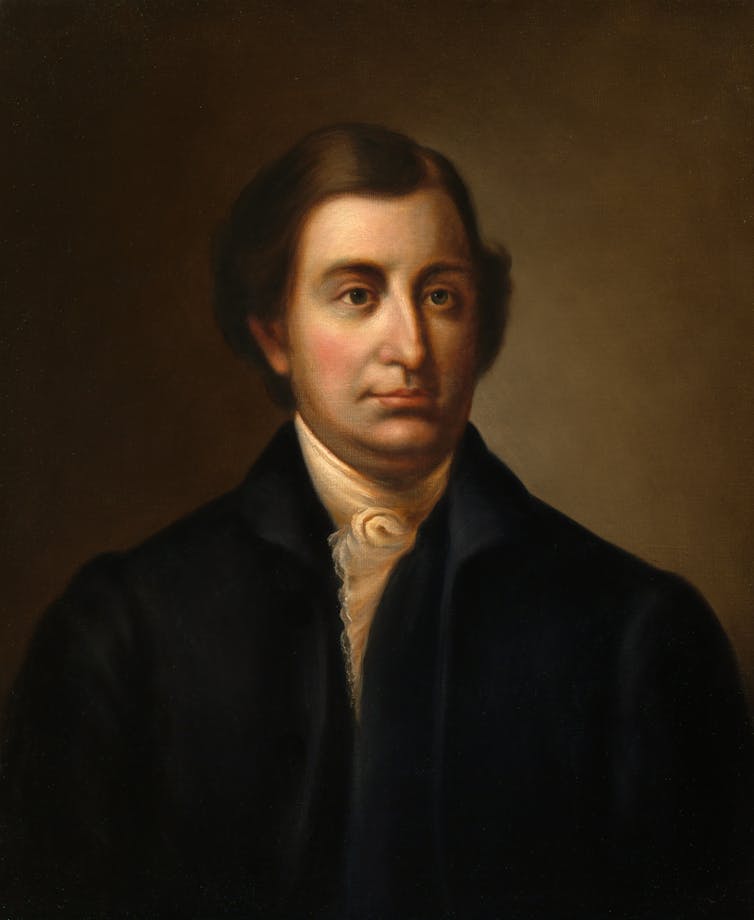
Edmund Jennings Randolph, appointed by President George Washington as the nation’s first attorney general in 1789 and then, in 1794, secretary of state.The Diplomatic Reception Rooms, U.S. Department of State, Washington, D.C.
Separating politics from law
Given all the attorney general’s responsibilities, the role is both political and legal. As such, attorneys general historically have a difficult task in separating their jobs as policy adviser from their duties as chief legal officer of the United States.
For example, President George W. Bush’s attorney general, Roberto Gonzales, resigned from office amid accusations of the DOJ’s politicized firing of U.S. attorneys and misuse of terrorist surveillance programs. And Loretta Lynch, President Barack Obama’s attorney general, was criticized for meeting privately with former President Bill Clinton while former Secretary of State Hillary Clinton was under investigation by the DOJ.
The attorney general’s job is complicated by the fact that the president has the constitutional power to fire them for political reasons.
During his first term, Trump replaced Attorney General Jeff Sessions after Sessions angered Trump by recusing himself – removing himself – from overseeing the Mueller investigation into Russian interference in the 2016 election.
Given the attorney general’s connection to the president and the attorney general’s position as the head of the DOJ, critics see Trump’s nomination of Pam Bondi as a key part of his plan to control the department’s agenda, including through the use of the FBI to pursue his perceived enemies.
There is good reason for critics to question the relationship between the president and attorney general. As Kristine Olson, former U.S. attorney for the District of Oregon, wrote in the Yale Law and Policy Review, “The President’s power to appoint the Attorney General of the United States as a member of the Cabinet subject to dismissal contains the seeds of a fundamental rule of law crisis in the politicization of the U.S. Department of Justice.” In the past six presidential administrations, Olson writes, many attorneys general have yielded to presidential and political pressure when performing their jobs.
But some have not. For example, in large part because of her reputation for high ethical standards when navigating the job, Janet Reno – President Clinton’s attorney general – was the longest-serving attorney general in the 20th century.
Whether the Senate will confirm Bondi or someone else as the next attorney general puts the fate of the nation’s top law enforcement official in the hands of politicians.
This story is part of a series of profiles explaining Cabinet and high-level administration positions.
2024-12-19 17:56:00, http://s.wordpress.com/mshots/v1/https%3A%2F%2Ftheconversation.com%2Fwhat-does-the-us-attorney-general-actually-do-a-law-professor-explains-245117?w=600&h=450, Shortly after former Florida Rep. Matt Gaetz withdrew from consideration to serve as U.S. attorney general, President-elect Donald Trump announced he would nominate Pam Bondi for the position. A former Florida attorney general, Bondi also worked for Trump as a defense lawyer during the first of his two impeachment trials. While much recent attention has,
Shortly after former Florida Rep. Matt Gaetz withdrew from consideration to serve as U.S. attorney general, President-elect Donald Trump announced he would nominate Pam Bondi for the position. A former Florida attorney general, Bondi also worked for Trump as a defense lawyer during the first of his two impeachment trials.
While much recent attention has focused on who the next attorney general might be, there has been less attention on what the attorney general actually does.
The attorney general is the lawyer appointed by the president and confirmed by the Senate to lead the Department of Justice, known as the DOJ. Because the attorney general’s expansive responsibilities place the office at the forefront of both politics and the law, the position is one of the most important in the federal executive branch.
NAACP leader Roy Wilkins walks in front of U.S. Attorney General Robert Kennedy during an NAACP march on June 24, 1964, in Washington, protesting the disappearance of three civil rights workers in Mississippi.Washington Bureau/Getty Images
File lawsuits, give advice
Congress created the position of attorney general in 1789 so the national government had a designated lawyer to conduct federal lawsuits for crimes against the United States such as counterfeiting, piracy or treason, and to give legal advice to the president and cabinet officials, such as the secretary of the Treasury.
Initially, the attorney general served part time. Indeed, for the first few decades of U.S. history, most attorneys general maintained private law practices and even lived away from the capital. But as the federal government began to do more, the role of the attorney general grew and became a full-time job.
Today’s attorney general largely performs the same jobs as the first one, Edmund Jennings Randolph, did.
The attorney general represents the United States in all legal matters. In doing so, the attorney general supervises federal prosecutions by the 93 U.S. attorneys who live and work across the United States to enforce federal laws. The attorney general also supervises almost all legal actions involving federal agencies – from the Department of Homeland Security and the Environmental Protection Agency to the Social Security Administration.
For example, in the past few months, DOJ lawyers supervised by the attorney general have successfully prosecuted a man for conspiring to send to China trade secrets belonging to a leading electric vehicle company; worked with the city of Baltimore to adopt police reforms after DOJ opened a comprehensive investigation into the 2015 death of Freddie Gray; and found that Arizona’s Department of Child Safety discriminates against parents and children with disabilities.
Additionally, the attorney general gives legal advice to the president and heads of the cabinet departments. This includes providing recommendations to the president on whom he should appoint as federal judges and prosecutors.
In combination, these two aspects of the job, representing the U.S. and advising the cabinet departments, mean that the attorney general plays a key role in helping the president perform his constitutional duty to take care that the laws of the United States are faithfully executed.
115,000 employees
Since 1870, attorneys general have had an entire executive department – the Department of Justice – to help them execute their duties.
Today’s department contains over 70 distinct offices, initiatives and task forces, all of which the attorney general supervises. There are currently 115,000 employees in the department.
The DOJ contains litigation units divided by subject matter like antitrust, civil rights, tax, and national security. Each of these units conducts investigations and participates in federal lawsuits related to its expertise.
The Justice Department also has several law enforcement agencies that help ensure the safety and health of people who live in the United States. The most well-known of these agencies include the FBI, the Drug Enforcement Administration and the U.S. branch of the International Criminal Police Organization, known as Interpol.
Additionally, the DOJ contains corrections agencies like the Federal Bureau of Prisons and the U.S. Parole Commission. These agencies work to ensure consistent and centralized coordination of federal prisons and offenders.
Finally, the department manages several grant administration agencies. These agencies, such as Community Oriented Policing Services, the Office of Justice Programs and the Office of Sex Offender Sentencing, Monitoring, Apprehending, Registering, and Tracking (SMART), provide financial assistance, training and advice to state, local, tribal and territorial governments as they work to enforce the law in their own communities.
Edmund Jennings Randolph, appointed by President George Washington as the nation’s first attorney general in 1789 and then, in 1794, secretary of state.The Diplomatic Reception Rooms, U.S. Department of State, Washington, D.C.
Separating politics from law
Given all the attorney general’s responsibilities, the role is both political and legal. As such, attorneys general historically have a difficult task in separating their jobs as policy adviser from their duties as chief legal officer of the United States.
For example, President George W. Bush’s attorney general, Roberto Gonzales, resigned from office amid accusations of the DOJ’s politicized firing of U.S. attorneys and misuse of terrorist surveillance programs. And Loretta Lynch, President Barack Obama’s attorney general, was criticized for meeting privately with former President Bill Clinton while former Secretary of State Hillary Clinton was under investigation by the DOJ.
The attorney general’s job is complicated by the fact that the president has the constitutional power to fire them for political reasons.
During his first term, Trump replaced Attorney General Jeff Sessions after Sessions angered Trump by recusing himself – removing himself – from overseeing the Mueller investigation into Russian interference in the 2016 election.
Given the attorney general’s connection to the president and the attorney general’s position as the head of the DOJ, critics see Trump’s nomination of Pam Bondi as a key part of his plan to control the department’s agenda, including through the use of the FBI to pursue his perceived enemies.
There is good reason for critics to question the relationship between the president and attorney general. As Kristine Olson, former U.S. attorney for the District of Oregon, wrote in the Yale Law and Policy Review, “The President’s power to appoint the Attorney General of the United States as a member of the Cabinet subject to dismissal contains the seeds of a fundamental rule of law crisis in the politicization of the U.S. Department of Justice.” In the past six presidential administrations, Olson writes, many attorneys general have yielded to presidential and political pressure when performing their jobs.
But some have not. For example, in large part because of her reputation for high ethical standards when navigating the job, Janet Reno – President Clinton’s attorney general – was the longest-serving attorney general in the 20th century.
Whether the Senate will confirm Bondi or someone else as the next attorney general puts the fate of the nation’s top law enforcement official in the hands of politicians.
This story is part of a series of profiles explaining Cabinet and high-level administration positions.
, Shortly after former Florida Rep. Matt Gaetz withdrew from consideration to serve as U.S. attorney general, President-elect Donald Trump announced he would nominate Pam Bondi for the position. A former Florida attorney general, Bondi also worked for Trump as a defense lawyer during the first of his two impeachment trials. While much recent attention has focused on who the next attorney general might be, there has been less attention on what the attorney general actually does. The attorney general is the lawyer appointed by the president and confirmed by the Senate to lead the Department of Justice, known as the DOJ. Because the attorney general’s expansive responsibilities place the office at the forefront of both politics and the law, the position is one of the most important in the federal executive branch. NAACP leader Roy Wilkins walks in front of U.S. Attorney General Robert Kennedy during an NAACP march on June 24, 1964, in Washington, protesting the disappearance of three civil rights workers in Mississippi. Washington Bureau/Getty Images File lawsuits, give advice Congress created the position of attorney general in 1789 so the national government had a designated lawyer to conduct federal lawsuits for crimes against the United States such as counterfeiting, piracy or treason, and to give legal advice to the president and cabinet officials, such as the secretary of the Treasury. Initially, the attorney general served part time. Indeed, for the first few decades of U.S. history, most attorneys general maintained private law practices and even lived away from the capital. But as the federal government began to do more, the role of the attorney general grew and became a full-time job. Today’s attorney general largely performs the same jobs as the first one, Edmund Jennings Randolph, did. The attorney general represents the United States in all legal matters. In doing so, the attorney general supervises federal prosecutions by the 93 U.S. attorneys who live and work across the United States to enforce federal laws. The attorney general also supervises almost all legal actions involving federal agencies – from the Department of Homeland Security and the Environmental Protection Agency to the Social Security Administration. For example, in the past few months, DOJ lawyers supervised by the attorney general have successfully prosecuted a man for conspiring to send to China trade secrets belonging to a leading electric vehicle company; worked with the city of Baltimore to adopt police reforms after DOJ opened a comprehensive investigation into the 2015 death of Freddie Gray; and found that Arizona’s Department of Child Safety discriminates against parents and children with disabilities. Additionally, the attorney general gives legal advice to the president and heads of the cabinet departments. This includes providing recommendations to the president on whom he should appoint as federal judges and prosecutors. In combination, these two aspects of the job, representing the U.S. and advising the cabinet departments, mean that the attorney general plays a key role in helping the president perform his constitutional duty to take care that the laws of the United States are faithfully executed. 115,000 employees Since 1870, attorneys general have had an entire executive department – the Department of Justice – to help them execute their duties. Today’s department contains over 70 distinct offices, initiatives and task forces, all of which the attorney general supervises. There are currently 115,000 employees in the department. The DOJ contains litigation units divided by subject matter like antitrust, civil rights, tax, and national security. Each of these units conducts investigations and participates in federal lawsuits related to its expertise. The Justice Department also has several law enforcement agencies that help ensure the safety and health of people who live in the United States. The most well-known of these agencies include the FBI, the Drug Enforcement Administration and the U.S. branch of the International Criminal Police Organization, known as Interpol. Additionally, the DOJ contains corrections agencies like the Federal Bureau of Prisons and the U.S. Parole Commission. These agencies work to ensure consistent and centralized coordination of federal prisons and offenders. Finally, the department manages several grant administration agencies. These agencies, such as Community Oriented Policing Services, the Office of Justice Programs and the Office of Sex Offender Sentencing, Monitoring, Apprehending, Registering, and Tracking (SMART), provide financial assistance, training and advice to state, local, tribal and territorial governments as they work to enforce the law in their own communities. Edmund Jennings Randolph, appointed by President George Washington as the nation’s first attorney general in 1789 and then, in 1794, secretary of state. The Diplomatic Reception Rooms, U.S. Department of State, Washington, D.C. Separating politics from law Given all the attorney general’s responsibilities, the role is both political and legal. As such, attorneys general historically have a difficult task in separating their jobs as policy adviser from their duties as chief legal officer of the United States. For example, President George W. Bush’s attorney general, Roberto Gonzales, resigned from office amid accusations of the DOJ’s politicized firing of U.S. attorneys and misuse of terrorist surveillance programs. And Loretta Lynch, President Barack Obama’s attorney general, was criticized for meeting privately with former President Bill Clinton while former Secretary of State Hillary Clinton was under investigation by the DOJ. The attorney general’s job is complicated by the fact that the president has the constitutional power to fire them for political reasons. During his first term, Trump replaced Attorney General Jeff Sessions after Sessions angered Trump by recusing himself – removing himself – from overseeing the Mueller investigation into Russian interference in the 2016 election. Given the attorney general’s connection to the president and the attorney general’s position as the head of the DOJ, critics see Trump’s nomination of Pam Bondi as a key part of his plan to control the department’s agenda, including through the use of the FBI to pursue his perceived enemies. There is good reason for critics to question the relationship between the president and attorney general. As Kristine Olson, former U.S. attorney for the District of Oregon, wrote in the Yale Law and Policy Review, “The President’s power to appoint the Attorney General of the United States as a member of the Cabinet subject to dismissal contains the seeds of a fundamental rule of law crisis in the politicization of the U.S. Department of Justice.” In the past six presidential administrations, Olson writes, many attorneys general have yielded to presidential and political pressure when performing their jobs. But some have not. For example, in large part because of her reputation for high ethical standards when navigating the job, Janet Reno – President Clinton’s attorney general – was the longest-serving attorney general in the 20th century. Whether the Senate will confirm Bondi or someone else as the next attorney general puts the fate of the nation’s top law enforcement official in the hands of politicians. This story is part of a series of profiles explaining Cabinet and high-level administration positions., , , https://images.theconversation.com/files/639450/original/file-20241218-17-sx8f06.jpg?ixlib=rb-4.1.0&rect=0%2C375%2C6399%2C3199&q=45&auto=format&w=1356&h=668&fit=crop, Politics + Society – The Conversation, , , https://theconversation.com/us/politics/articles.atom, Jennifer Selin, Associate Professor of Law, Arizona State University,
“I am definitely not following the news anymore,” one patient told me when I asked about her political news consumption in the weeks before the 2024 U.S. presidential election.
This conversation happened around the time I talked with a local TV channel about why we saw fewer political yard signs during this year’s election season, compared with past ones.
I am a psychiatrist who studies and treats fear and anxiety. One of my main mental health recommendations to my patients during the 2016 and 2020 election cycles was to reduce their political news consumption. I also tried to convince them that the five hours a day they spent watching cable news was only leaving them helpless and terrified.
Over the past couple of years, though, I have noticed a change: Many of my patients say they either have tuned out or are too exhausted to do more than a brief read of political news or watch one hour of their favorite political show.
Research supports my clinical experience: A Pew research study from 2020 showed that 66% of Americans were worn out by political stress. Interestingly, those who are not following the news feel that same news fatigue at an even higher percentage of 73%. In 2023, 8 out of 10 Americans described U.S. politics with negative words like “divisive,” “corrupt,” “messy” and “polarized.”
In my view, three major factors have led Americans to exhaustion and burnout with U.S politics.
Donald Trump supporters argue with anti-Trump protesters in New York City in 2017.Robert Nickelsberg/Getty Images
1. The politics of fear
In my 2023 book, “AFRAID: Understanding the Purpose of Fear, and Harnessing the Power of Anxiety,” I discuss how American politicians and major news media have found an ally in fear: a very strong emotion that can be used to grab our attention, keeping us in the tribal dividing lines and making us follow, click, tap, watch and donate.
Over the past few decades, many people have felt a strong push for tribalism, an “us vs. them” way of seeing the world, turning Americans against one another. This has led to a point where we are not just in disagreement with each other. We hate, cancel, block and attack those who disagree with us.
2. People live in information bubbles
It can feel like Fox News and MSNBC commentators are talking about Americas from two different planets. The same is true when it comes to different social media feeds.
Many people are part of social media communities that are closed to the world outside their homes and familiar social circles. Based on people’s political views and what they search for or watch and read, social media algorithms feed them content where everybody talks and thinks alike. If you hear about the other side, it is only about their worst attributes and behavior.
The disconnect is so wide that people are not even able to comprehend the thinking of those from other perspectives and find their logic or political beliefs unfathomable.
Many Americans have gotten to the point of believing that the other half of Americans are, at best, unintelligent and stupid; and at worst, immoral and evil.
3. People’s political opinions have become their identities
There was a time in American politics where two politicians or two neighbors could disagree, but still believe that the other person was fundamentally good.
Over time, and more so since the early 2000s, this ability to connect despite political beliefs has decreased.
The majority of both Democrats and Republicans said in a 2022 Pew Research survey that someone’s political ideas are an indicator of their morality and character.
This 2022 Pew survey also shows that partisan animosity extends to judgments about character: 72% of Republicans and 63% of Democrats said they believe members of the opposing party are more “immoral” than other Americans.
This is evident in day-to-day conversations of members of both political tribes: “How can I be friends with someone who wants to kill babies,” or “How can I talk to someone who is OK with women dying in a corner of a clinic parking lot”. We can no longer see someone’s political affiliation in the context of their humanity at large.
Too much news consumption can lead to people feeling helpless and burned out, research shows.iStock/Getty Images Plus
What psychology and neuroscience say
Fear as a deeply ingrained survival mechanism takes priority over other brain functions.
Fear guides your memories, feelings, attention and thoughts, and can cause you to keep watching, scrolling and reading to monitor this perceived threat. Positive or neutral news could then become uninteresting because it is not important in your survival response. That has been the key to a person’s deep engagement with the fear-based political news.
But too much fear does not keep someone engaged forever. That is because of another survival mechanism – what’s called “learned helplessness.”
In 1967, American psychologist Martin Seligman exposed two groups of dogs to painful shocks. Dogs in group 1 could stop the shock by pressing a lever, which they quickly learned to do. But the dogs in group 2 learned that they could not control when the shock starts and stops.
Then, both groups were placed in a box divided into two halves by a small barrier, and shock was applied to only one side of the box. Dogs in group 1 – who had learned how to stop the shocks in the earlier experiment – quickly learned to jump over the barrier to the shock-free side. But dogs in group 2 did not even attempt to do so. They had learned there is no point in trying.
This experiment has been replicated in different forms with other animals and humans with the same conclusion: When people feel they cannot control the painful or scary situation, they just give up. During such experiences, the brain’s fear region – called the amygdala – is hyperactive. Meanwhile, emotion-regulating brain areas like the prefrontal cortex decrease in activity under these circumstances.
Learned helplessness also means the brain mechanisms commonly involved in regulating anxiety and depression don’t function as well.
When working with patients who have suffered from long periods of intense anxiety, fear, trauma and exhaustion, I see learned helplessness showing up in the form of depression, loss of motivation, fatigue and lack of engagement with the world around them.
The COVID-19 pandemic, more than a decade of intense political stress, polarizing social media and wars across the world, as well as public disillusionment with U.S. politics and media, have led, I believe, to many people experiencing burnout and learned helplessness.
If you feel politically exhausted, you are not the problem. Feel free to tune out from the noise.
2024-12-19 13:18:00, http://s.wordpress.com/mshots/v1/https%3A%2F%2Ftheconversation.com%2Fa-nation-exhausted-the-neuroscience-of-why-americans-are-tuning-out-politics-245343?w=600&h=450, “I am definitely not following the news anymore,” one patient told me when I asked about her political news consumption in the weeks before the 2024 U.S. presidential election. This conversation happened around the time I talked with a local TV channel about why we saw fewer political yard signs during this year’s election season,
“I am definitely not following the news anymore,” one patient told me when I asked about her political news consumption in the weeks before the 2024 U.S. presidential election.
This conversation happened around the time I talked with a local TV channel about why we saw fewer political yard signs during this year’s election season, compared with past ones.
I am a psychiatrist who studies and treats fear and anxiety. One of my main mental health recommendations to my patients during the 2016 and 2020 election cycles was to reduce their political news consumption. I also tried to convince them that the five hours a day they spent watching cable news was only leaving them helpless and terrified.
Over the past couple of years, though, I have noticed a change: Many of my patients say they either have tuned out or are too exhausted to do more than a brief read of political news or watch one hour of their favorite political show.
Research supports my clinical experience: A Pew research study from 2020 showed that 66% of Americans were worn out by political stress. Interestingly, those who are not following the news feel that same news fatigue at an even higher percentage of 73%. In 2023, 8 out of 10 Americans described U.S. politics with negative words like “divisive,” “corrupt,” “messy” and “polarized.”
In my view, three major factors have led Americans to exhaustion and burnout with U.S politics.
Donald Trump supporters argue with anti-Trump protesters in New York City in 2017.Robert Nickelsberg/Getty Images
1. The politics of fear
In my 2023 book, “AFRAID: Understanding the Purpose of Fear, and Harnessing the Power of Anxiety,” I discuss how American politicians and major news media have found an ally in fear: a very strong emotion that can be used to grab our attention, keeping us in the tribal dividing lines and making us follow, click, tap, watch and donate.
Over the past few decades, many people have felt a strong push for tribalism, an “us vs. them” way of seeing the world, turning Americans against one another. This has led to a point where we are not just in disagreement with each other. We hate, cancel, block and attack those who disagree with us.
2. People live in information bubbles
It can feel like Fox News and MSNBC commentators are talking about Americas from two different planets. The same is true when it comes to different social media feeds.
Many people are part of social media communities that are closed to the world outside their homes and familiar social circles. Based on people’s political views and what they search for or watch and read, social media algorithms feed them content where everybody talks and thinks alike. If you hear about the other side, it is only about their worst attributes and behavior.
The disconnect is so wide that people are not even able to comprehend the thinking of those from other perspectives and find their logic or political beliefs unfathomable.
Many Americans have gotten to the point of believing that the other half of Americans are, at best, unintelligent and stupid; and at worst, immoral and evil.
3. People’s political opinions have become their identities
There was a time in American politics where two politicians or two neighbors could disagree, but still believe that the other person was fundamentally good.
Over time, and more so since the early 2000s, this ability to connect despite political beliefs has decreased.
The majority of both Democrats and Republicans said in a 2022 Pew Research survey that someone’s political ideas are an indicator of their morality and character.
This 2022 Pew survey also shows that partisan animosity extends to judgments about character: 72% of Republicans and 63% of Democrats said they believe members of the opposing party are more “immoral” than other Americans.
This is evident in day-to-day conversations of members of both political tribes: “How can I be friends with someone who wants to kill babies,” or “How can I talk to someone who is OK with women dying in a corner of a clinic parking lot”. We can no longer see someone’s political affiliation in the context of their humanity at large.
Too much news consumption can lead to people feeling helpless and burned out, research shows.iStock/Getty Images Plus
What psychology and neuroscience say
Fear as a deeply ingrained survival mechanism takes priority over other brain functions.
Fear guides your memories, feelings, attention and thoughts, and can cause you to keep watching, scrolling and reading to monitor this perceived threat. Positive or neutral news could then become uninteresting because it is not important in your survival response. That has been the key to a person’s deep engagement with the fear-based political news.
But too much fear does not keep someone engaged forever. That is because of another survival mechanism – what’s called “learned helplessness.”
In 1967, American psychologist Martin Seligman exposed two groups of dogs to painful shocks. Dogs in group 1 could stop the shock by pressing a lever, which they quickly learned to do. But the dogs in group 2 learned that they could not control when the shock starts and stops.
Then, both groups were placed in a box divided into two halves by a small barrier, and shock was applied to only one side of the box. Dogs in group 1 – who had learned how to stop the shocks in the earlier experiment – quickly learned to jump over the barrier to the shock-free side. But dogs in group 2 did not even attempt to do so. They had learned there is no point in trying.
This experiment has been replicated in different forms with other animals and humans with the same conclusion: When people feel they cannot control the painful or scary situation, they just give up. During such experiences, the brain’s fear region – called the amygdala – is hyperactive. Meanwhile, emotion-regulating brain areas like the prefrontal cortex decrease in activity under these circumstances.
Learned helplessness also means the brain mechanisms commonly involved in regulating anxiety and depression don’t function as well.
When working with patients who have suffered from long periods of intense anxiety, fear, trauma and exhaustion, I see learned helplessness showing up in the form of depression, loss of motivation, fatigue and lack of engagement with the world around them.
The COVID-19 pandemic, more than a decade of intense political stress, polarizing social media and wars across the world, as well as public disillusionment with U.S. politics and media, have led, I believe, to many people experiencing burnout and learned helplessness.
If you feel politically exhausted, you are not the problem. Feel free to tune out from the noise.
, “I am definitely not following the news anymore,” one patient told me when I asked about her political news consumption in the weeks before the 2024 U.S. presidential election. This conversation happened around the time I talked with a local TV channel about why we saw fewer political yard signs during this year’s election season, compared with past ones. I am a psychiatrist who studies and treats fear and anxiety. One of my main mental health recommendations to my patients during the 2016 and 2020 election cycles was to reduce their political news consumption. I also tried to convince them that the five hours a day they spent watching cable news was only leaving them helpless and terrified. Over the past couple of years, though, I have noticed a change: Many of my patients say they either have tuned out or are too exhausted to do more than a brief read of political news or watch one hour of their favorite political show. Research supports my clinical experience: A Pew research study from 2020 showed that 66% of Americans were worn out by political stress. Interestingly, those who are not following the news feel that same news fatigue at an even higher percentage of 73%. In 2023, 8 out of 10 Americans described U.S. politics with negative words like “divisive,” “corrupt,” “messy” and “polarized.” In my view, three major factors have led Americans to exhaustion and burnout with U.S politics. Donald Trump supporters argue with anti-Trump protesters in New York City in 2017. Robert Nickelsberg/Getty Images 1. The politics of fear In my 2023 book, “AFRAID: Understanding the Purpose of Fear, and Harnessing the Power of Anxiety,” I discuss how American politicians and major news media have found an ally in fear: a very strong emotion that can be used to grab our attention, keeping us in the tribal dividing lines and making us follow, click, tap, watch and donate. Over the past few decades, many people have felt a strong push for tribalism, an “us vs. them” way of seeing the world, turning Americans against one another. This has led to a point where we are not just in disagreement with each other. We hate, cancel, block and attack those who disagree with us. 2. People live in information bubbles It can feel like Fox News and MSNBC commentators are talking about Americas from two different planets. The same is true when it comes to different social media feeds. Many people are part of social media communities that are closed to the world outside their homes and familiar social circles. Based on people’s political views and what they search for or watch and read, social media algorithms feed them content where everybody talks and thinks alike. If you hear about the other side, it is only about their worst attributes and behavior. The disconnect is so wide that people are not even able to comprehend the thinking of those from other perspectives and find their logic or political beliefs unfathomable. Many Americans have gotten to the point of believing that the other half of Americans are, at best, unintelligent and stupid; and at worst, immoral and evil. 3. People’s political opinions have become their identities There was a time in American politics where two politicians or two neighbors could disagree, but still believe that the other person was fundamentally good. Over time, and more so since the early 2000s, this ability to connect despite political beliefs has decreased. The majority of both Democrats and Republicans said in a 2022 Pew Research survey that someone’s political ideas are an indicator of their morality and character. This 2022 Pew survey also shows that partisan animosity extends to judgments about character: 72% of Republicans and 63% of Democrats said they believe members of the opposing party are more “immoral” than other Americans. This is evident in day-to-day conversations of members of both political tribes: “How can I be friends with someone who wants to kill babies,” or “How can I talk to someone who is OK with women dying in a corner of a clinic parking lot”. We can no longer see someone’s political affiliation in the context of their humanity at large. Too much news consumption can lead to people feeling helpless and burned out, research shows. iStock/Getty Images Plus What psychology and neuroscience say Fear as a deeply ingrained survival mechanism takes priority over other brain functions. Fear guides your memories, feelings, attention and thoughts, and can cause you to keep watching, scrolling and reading to monitor this perceived threat. Positive or neutral news could then become uninteresting because it is not important in your survival response. That has been the key to a person’s deep engagement with the fear-based political news. But too much fear does not keep someone engaged forever. That is because of another survival mechanism – what’s called “learned helplessness.” In 1967, American psychologist Martin Seligman exposed two groups of dogs to painful shocks. Dogs in group 1 could stop the shock by pressing a lever, which they quickly learned to do. But the dogs in group 2 learned that they could not control when the shock starts and stops. Then, both groups were placed in a box divided into two halves by a small barrier, and shock was applied to only one side of the box. Dogs in group 1 – who had learned how to stop the shocks in the earlier experiment – quickly learned to jump over the barrier to the shock-free side. But dogs in group 2 did not even attempt to do so. They had learned there is no point in trying. This experiment has been replicated in different forms with other animals and humans with the same conclusion: When people feel they cannot control the painful or scary situation, they just give up. During such experiences, the brain’s fear region – called the amygdala – is hyperactive. Meanwhile, emotion-regulating brain areas like the prefrontal cortex decrease in activity under these circumstances. Learned helplessness also means the brain mechanisms commonly involved in regulating anxiety and depression don’t function as well. When working with patients who have suffered from long periods of intense anxiety, fear, trauma and exhaustion, I see learned helplessness showing up in the form of depression, loss of motivation, fatigue and lack of engagement with the world around them. The COVID-19 pandemic, more than a decade of intense political stress, polarizing social media and wars across the world, as well as public disillusionment with U.S. politics and media, have led, I believe, to many people experiencing burnout and learned helplessness. If you feel politically exhausted, you are not the problem. Feel free to tune out from the noise., , , https://images.theconversation.com/files/639525/original/file-20241218-16-2d1vyp.jpg?ixlib=rb-4.1.0&rect=51%2C508%2C5760%2C2880&q=45&auto=format&w=1356&h=668&fit=crop, Politics + Society – The Conversation, , , https://theconversation.com/us/politics/articles.atom, Arash Javanbakht, Associate Professor of Psychiatry, Wayne State University,
There were no antebellum hoop skirts at the site of Brazil’s annual “Festa Confederada,” or Confederate Festival, in 2024. Flag poles that once flew the Brazilian flag alongside the red, white and blue rebel banner of the American Confederacy stood barren.
Since 1980, the Confederate Festival – a series of cultural performances and culinary experiences combining Brazilian traditions with those of the American South – has occurred each April in rural São Paulo State.
The festival celebrates a mass exodus of white American Southerners to Brazil following the Civil War. Between 1865 and 1890 – dates that roughly reflect when the U.S. and Brazil, respectively, abolished slavery – 8,000 to 10,000 white American Southerners migrated to the country. They were fleeing the vanquished Confederacy and Reconstruction – the federal government’s effort to reintegrate the South and its 4 million newly freed Black people back into the United States.
Southern fried chicken and barbecue is typically served at the Confederate Festival alongside Brazilian side dishes such as “farofa,” or toasted cassava flour. Traditionally, ornately dressed performers cover American country songs and dance the two-step. They present the flags of the 11 Confederate states for thousands of Brazilian tourists and descendants.
But in an international echo of a movement that has gripped the United States in recent years, Confederate symbols are now getting banned in Brazil, too.
Charlottesville echoes in Brazil
I am a geographer who analyzes the history and meaning of Confederate symbols in the U.S. and abroad.
I have been studying Brazil’s Confederate Festival since 2017. That’s when a white supremacist murdered the anti-racism protester Heather Heyer at the “Unite the Right” march in Charlottesville, Virginia.
The rally opposed the city’s planned removal of a statue of Confederate Gen. Robert E. Lee.
Heyer’s death had consequences over 4,000 miles away in Santa Bárbara d’Oeste, Brazil – a country with its own fraught history of racism. In 2018 and 2019, Black civil rights activists picketed the Confederate Festival.
The event, organized by the Fraternity of American Descendants – a nonprofit Confederate descendants organization founded in 1954 to maintain “the historical and cultural heritage of North American immigrants to Brazil” – had been held largely without controversy for over three decades.
Dancers participate in the Festa Confederada in Santa Barbara d’Oeste in April 2015.AP Photo/Andre Penner
“We indignantly and vehemently repudiate the symbols present at the Festa Confederada,” the protesters said in an April 18, 2019, statement written by a local group called UNEGRO and signed by over 100 other civic groups in Brazil.
In 2020, the COVID-19 pandemic forced the festival to shutter. And, soon, George Floyd’s murder reignited a global wave of outrage against symbols of racism and colonialism.
A battle over memory
Since 2015, when the Black Lives Matter movement erupted nationwide, at least 113 Confederate statues have been removed from cities across the American South.
But other removal efforts have been thwarted, usually by state lawmakers. To keep Confederate statues in place, many Southern states have either passed laws protecting them as historic artifacts or dusted off and enforced old preservation laws.
For example, when Birmingham, Alabama’s mayor tried to remove the city’s Confederate monument in 2019, he was blocked by the Alabama Memorial Preservation Act of 2017. After a lengthy court battle, the city agreed to pay the state a US$25,000 fine in exchange for the right to remove the memorial.
Similar “statue statutes” in Tennessee, Georgia and elsewhere continue to frustrate local efforts to remove monuments that glorify a chapter of American history that many people find painful.
Protesters in Durham, North Carolina, refused to wait for the state to repeal its preservation law. In 2017 they toppled a monument erected in 1924 “in memory of the boys who wore the gray” themselves.
Commemoration ‘with respect’
Around the same time, a similarly contentious debate was roiling the Brazilian city of Santa Bárbara d’Oeste.
Soon after Heyer’s death in Charlottesville, UNEGRO organized a public debate with the Fraternity of American Descendants on the meaning of the Confederate symbol. The two sides did not find much middle ground. The 2018 and 2019 Confederate Festivals maintained their display of Confederate iconography, and UNEGRO protested them.
Eventually, UNEGRO asked the city council to revoke the fraternity’s event permit if it kept using the Confederate symbol.
In January 2021, council member Esther Moraes proposed a new law prohibiting the use of symbols “that support movements or institutions identified with racist or segregationist ideas” at public events.
Moraes did not oppose the Confederate Festival itself, she emphasized.
“Everyone has the right to commemorate their ancestors,” she said, “but they should do it with respect for the history of other people and the descendants of slavery. Ours is the only city in Brazil where the Confederate symbol flies at a public festival.”
Closed-door debates and public hearings followed. In February 2022, the Fraternity of American Descendants hosted the son of Brazil’s then-president, Jair Bolsonaro, a far-right ally of Donald Trump. Following his private tour of the group’s museum, Eduardo Bolsonaro accused leftist critics of the Confederate Festival of “rewriting memory.”
Brazilian Black rights activists protest the Confederate Festival in Santa Bárbara d’Oeste, on April 28, 2019.Courtesy of UNEGRO, Author provided
City officials passed the law banning Confederate symbols from public events in June 2022 anyway. The Fraternity of American Descendants issued a brief statement that its Confederate Festival would not take place in 2023, then went quiet.
In April 2024, instead of its traditional festival, the group held a picnic “open to descendants and friends of the Fraternity of American Descendants.”
The smell of barbecue wafted through the air as Brazilian descendants of the American South filled their plates against a backdrop of Brazil’s first Baptist church.
On the stage where country line dancers once performed, few traces remained of the red and blue paint that had emblazoned it with the Confederate emblem. The stage was gray.
In November 2024, the Fraternity of American Descendants announced plans to rebrand and relaunch its flagship festival, likely for April 2025. The Confederate Festival will now be called “Festa dos Americanos” – Festival of the Americans – and stripped of all Confederate symbols.
“The institution, feeling that it created discomfort for the city and its Black residents, decided to change its position,” said Fraternity of American Descendants President Marcelo Dodson.
Brazilian Confederate descendants filling their plates at the BBQ picnic in April 2024 in Santa Bárbara d’Oeste, Brazil.Facebook
‘This symbol miseducates’
Removing symbols of slavery is not, by itself, enough to repair old harms or eliminate ongoing racism. Neither, evidence shows, is simply replacing them with new memorials to past victims.
Yet removing Confederate names, flags and symbols from public spaces at least cracks open the door for a path forward into a different future. It presents countries an opportunity to grapple with history, instead of repeating or ignoring cycles of violence and harm.
My research on Confederate iconography and other work in critical memory studies suggests that interventions focused on alternative commemorations – such as candlelight vigils, public performances, and truth and reconciliation commissions – can help repair a society.
“We have a commitment to the younger generation,” said UNEGRO leader and historian Claudia Monteiro on the day Santa Bárbara d’Oeste banned Confederate symbols. “This symbol miseducates them.”
2024-12-19 13:15:00, http://s.wordpress.com/mshots/v1/https%3A%2F%2Ftheconversation.com%2Fhow-a-small-brazilian-town-became-an-unlikely-battleground-over-confederate-memory-245434?w=600&h=450, There were no antebellum hoop skirts at the site of Brazil’s annual “Festa Confederada,” or Confederate Festival, in 2024. Flag poles that once flew the Brazilian flag alongside the red, white and blue rebel banner of the American Confederacy stood barren. Since 1980, the Confederate Festival – a series of cultural performances and culinary experiences,
There were no antebellum hoop skirts at the site of Brazil’s annual “Festa Confederada,” or Confederate Festival, in 2024. Flag poles that once flew the Brazilian flag alongside the red, white and blue rebel banner of the American Confederacy stood barren.
Since 1980, the Confederate Festival – a series of cultural performances and culinary experiences combining Brazilian traditions with those of the American South – has occurred each April in rural São Paulo State.
The festival celebrates a mass exodus of white American Southerners to Brazil following the Civil War. Between 1865 and 1890 – dates that roughly reflect when the U.S. and Brazil, respectively, abolished slavery – 8,000 to 10,000 white American Southerners migrated to the country. They were fleeing the vanquished Confederacy and Reconstruction – the federal government’s effort to reintegrate the South and its 4 million newly freed Black people back into the United States.
Southern fried chicken and barbecue is typically served at the Confederate Festival alongside Brazilian side dishes such as “farofa,” or toasted cassava flour. Traditionally, ornately dressed performers cover American country songs and dance the two-step. They present the flags of the 11 Confederate states for thousands of Brazilian tourists and descendants.
But in an international echo of a movement that has gripped the United States in recent years, Confederate symbols are now getting banned in Brazil, too.
Charlottesville echoes in Brazil
I am a geographer who analyzes the history and meaning of Confederate symbols in the U.S. and abroad.
I have been studying Brazil’s Confederate Festival since 2017. That’s when a white supremacist murdered the anti-racism protester Heather Heyer at the “Unite the Right” march in Charlottesville, Virginia.
The rally opposed the city’s planned removal of a statue of Confederate Gen. Robert E. Lee.
Heyer’s death had consequences over 4,000 miles away in Santa Bárbara d’Oeste, Brazil – a country with its own fraught history of racism. In 2018 and 2019, Black civil rights activists picketed the Confederate Festival.
The event, organized by the Fraternity of American Descendants – a nonprofit Confederate descendants organization founded in 1954 to maintain “the historical and cultural heritage of North American immigrants to Brazil” – had been held largely without controversy for over three decades.
Dancers participate in the Festa Confederada in Santa Barbara d’Oeste in April 2015.AP Photo/Andre Penner
“We indignantly and vehemently repudiate the symbols present at the Festa Confederada,” the protesters said in an April 18, 2019, statement written by a local group called UNEGRO and signed by over 100 other civic groups in Brazil.
In 2020, the COVID-19 pandemic forced the festival to shutter. And, soon, George Floyd’s murder reignited a global wave of outrage against symbols of racism and colonialism.
A battle over memory
Since 2015, when the Black Lives Matter movement erupted nationwide, at least 113 Confederate statues have been removed from cities across the American South.
But other removal efforts have been thwarted, usually by state lawmakers. To keep Confederate statues in place, many Southern states have either passed laws protecting them as historic artifacts or dusted off and enforced old preservation laws.
For example, when Birmingham, Alabama’s mayor tried to remove the city’s Confederate monument in 2019, he was blocked by the Alabama Memorial Preservation Act of 2017. After a lengthy court battle, the city agreed to pay the state a US$25,000 fine in exchange for the right to remove the memorial.
Similar “statue statutes” in Tennessee, Georgia and elsewhere continue to frustrate local efforts to remove monuments that glorify a chapter of American history that many people find painful.
Protesters in Durham, North Carolina, refused to wait for the state to repeal its preservation law. In 2017 they toppled a monument erected in 1924 “in memory of the boys who wore the gray” themselves.
Commemoration ‘with respect’
Around the same time, a similarly contentious debate was roiling the Brazilian city of Santa Bárbara d’Oeste.
Soon after Heyer’s death in Charlottesville, UNEGRO organized a public debate with the Fraternity of American Descendants on the meaning of the Confederate symbol. The two sides did not find much middle ground. The 2018 and 2019 Confederate Festivals maintained their display of Confederate iconography, and UNEGRO protested them.
Eventually, UNEGRO asked the city council to revoke the fraternity’s event permit if it kept using the Confederate symbol.
In January 2021, council member Esther Moraes proposed a new law prohibiting the use of symbols “that support movements or institutions identified with racist or segregationist ideas” at public events.
Moraes did not oppose the Confederate Festival itself, she emphasized.
“Everyone has the right to commemorate their ancestors,” she said, “but they should do it with respect for the history of other people and the descendants of slavery. Ours is the only city in Brazil where the Confederate symbol flies at a public festival.”
Closed-door debates and public hearings followed. In February 2022, the Fraternity of American Descendants hosted the son of Brazil’s then-president, Jair Bolsonaro, a far-right ally of Donald Trump. Following his private tour of the group’s museum, Eduardo Bolsonaro accused leftist critics of the Confederate Festival of “rewriting memory.”
Brazilian Black rights activists protest the Confederate Festival in Santa Bárbara d’Oeste, on April 28, 2019.Courtesy of UNEGRO, Author provided
City officials passed the law banning Confederate symbols from public events in June 2022 anyway. The Fraternity of American Descendants issued a brief statement that its Confederate Festival would not take place in 2023, then went quiet.
In April 2024, instead of its traditional festival, the group held a picnic “open to descendants and friends of the Fraternity of American Descendants.”
The smell of barbecue wafted through the air as Brazilian descendants of the American South filled their plates against a backdrop of Brazil’s first Baptist church.
On the stage where country line dancers once performed, few traces remained of the red and blue paint that had emblazoned it with the Confederate emblem. The stage was gray.
In November 2024, the Fraternity of American Descendants announced plans to rebrand and relaunch its flagship festival, likely for April 2025. The Confederate Festival will now be called “Festa dos Americanos” – Festival of the Americans – and stripped of all Confederate symbols.
“The institution, feeling that it created discomfort for the city and its Black residents, decided to change its position,” said Fraternity of American Descendants President Marcelo Dodson.
Brazilian Confederate descendants filling their plates at the BBQ picnic in April 2024 in Santa Bárbara d’Oeste, Brazil.Facebook
‘This symbol miseducates’
Removing symbols of slavery is not, by itself, enough to repair old harms or eliminate ongoing racism. Neither, evidence shows, is simply replacing them with new memorials to past victims.
Yet removing Confederate names, flags and symbols from public spaces at least cracks open the door for a path forward into a different future. It presents countries an opportunity to grapple with history, instead of repeating or ignoring cycles of violence and harm.
My research on Confederate iconography and other work in critical memory studies suggests that interventions focused on alternative commemorations – such as candlelight vigils, public performances, and truth and reconciliation commissions – can help repair a society.
“We have a commitment to the younger generation,” said UNEGRO leader and historian Claudia Monteiro on the day Santa Bárbara d’Oeste banned Confederate symbols. “This symbol miseducates them.”
, There were no antebellum hoop skirts at the site of Brazil’s annual “Festa Confederada,” or Confederate Festival, in 2024. Flag poles that once flew the Brazilian flag alongside the red, white and blue rebel banner of the American Confederacy stood barren. Since 1980, the Confederate Festival – a series of cultural performances and culinary experiences combining Brazilian traditions with those of the American South – has occurred each April in rural São Paulo State. The festival celebrates a mass exodus of white American Southerners to Brazil following the Civil War. Between 1865 and 1890 – dates that roughly reflect when the U.S. and Brazil, respectively, abolished slavery – 8,000 to 10,000 white American Southerners migrated to the country. They were fleeing the vanquished Confederacy and Reconstruction – the federal government’s effort to reintegrate the South and its 4 million newly freed Black people back into the United States. Southern fried chicken and barbecue is typically served at the Confederate Festival alongside Brazilian side dishes such as “farofa,” or toasted cassava flour. Traditionally, ornately dressed performers cover American country songs and dance the two-step. They present the flags of the 11 Confederate states for thousands of Brazilian tourists and descendants. But in an international echo of a movement that has gripped the United States in recent years, Confederate symbols are now getting banned in Brazil, too. Charlottesville echoes in Brazil I am a geographer who analyzes the history and meaning of Confederate symbols in the U.S. and abroad. I have been studying Brazil’s Confederate Festival since 2017. That’s when a white supremacist murdered the anti-racism protester Heather Heyer at the “Unite the Right” march in Charlottesville, Virginia. The rally opposed the city’s planned removal of a statue of Confederate Gen. Robert E. Lee. Heyer’s death had consequences over 4,000 miles away in Santa Bárbara d’Oeste, Brazil – a country with its own fraught history of racism. In 2018 and 2019, Black civil rights activists picketed the Confederate Festival. The event, organized by the Fraternity of American Descendants – a nonprofit Confederate descendants organization founded in 1954 to maintain “the historical and cultural heritage of North American immigrants to Brazil” – had been held largely without controversy for over three decades. Dancers participate in the Festa Confederada in Santa Barbara d’Oeste in April 2015. AP Photo/Andre Penner “We indignantly and vehemently repudiate the symbols present at the Festa Confederada,” the protesters said in an April 18, 2019, statement written by a local group called UNEGRO and signed by over 100 other civic groups in Brazil. In 2020, the COVID-19 pandemic forced the festival to shutter. And, soon, George Floyd’s murder reignited a global wave of outrage against symbols of racism and colonialism. A battle over memory Since 2015, when the Black Lives Matter movement erupted nationwide, at least 113 Confederate statues have been removed from cities across the American South. But other removal efforts have been thwarted, usually by state lawmakers. To keep Confederate statues in place, many Southern states have either passed laws protecting them as historic artifacts or dusted off and enforced old preservation laws. For example, when Birmingham, Alabama’s mayor tried to remove the city’s Confederate monument in 2019, he was blocked by the Alabama Memorial Preservation Act of 2017. After a lengthy court battle, the city agreed to pay the state a US$25,000 fine in exchange for the right to remove the memorial. Similar “statue statutes” in Tennessee, Georgia and elsewhere continue to frustrate local efforts to remove monuments that glorify a chapter of American history that many people find painful. Protesters in Durham, North Carolina, refused to wait for the state to repeal its preservation law. In 2017 they toppled a monument erected in 1924 “in memory of the boys who wore the gray” themselves. Commemoration ‘with respect’ Around the same time, a similarly contentious debate was roiling the Brazilian city of Santa Bárbara d’Oeste. Soon after Heyer’s death in Charlottesville, UNEGRO organized a public debate with the Fraternity of American Descendants on the meaning of the Confederate symbol. The two sides did not find much middle ground. The 2018 and 2019 Confederate Festivals maintained their display of Confederate iconography, and UNEGRO protested them. Eventually, UNEGRO asked the city council to revoke the fraternity’s event permit if it kept using the Confederate symbol. In January 2021, council member Esther Moraes proposed a new law prohibiting the use of symbols “that support movements or institutions identified with racist or segregationist ideas” at public events. Moraes did not oppose the Confederate Festival itself, she emphasized. “Everyone has the right to commemorate their ancestors,” she said, “but they should do it with respect for the history of other people and the descendants of slavery. Ours is the only city in Brazil where the Confederate symbol flies at a public festival.” Closed-door debates and public hearings followed. In February 2022, the Fraternity of American Descendants hosted the son of Brazil’s then-president, Jair Bolsonaro, a far-right ally of Donald Trump. Following his private tour of the group’s museum, Eduardo Bolsonaro accused leftist critics of the Confederate Festival of “rewriting memory.” Brazilian Black rights activists protest the Confederate Festival in Santa Bárbara d’Oeste, on April 28, 2019. Courtesy of UNEGRO, Author provided City officials passed the law banning Confederate symbols from public events in June 2022 anyway. The Fraternity of American Descendants issued a brief statement that its Confederate Festival would not take place in 2023, then went quiet. In April 2024, instead of its traditional festival, the group held a picnic “open to descendants and friends of the Fraternity of American Descendants.” The smell of barbecue wafted through the air as Brazilian descendants of the American South filled their plates against a backdrop of Brazil’s first Baptist church. On the stage where country line dancers once performed, few traces remained of the red and blue paint that had emblazoned it with the Confederate emblem. The stage was gray. In November 2024, the Fraternity of American Descendants announced plans to rebrand and relaunch its flagship festival, likely for April 2025. The Confederate Festival will now be called “Festa dos Americanos” – Festival of the Americans – and stripped of all Confederate symbols. “The institution, feeling that it created discomfort for the city and its Black residents, decided to change its position,” said Fraternity of American Descendants President Marcelo Dodson. Brazilian Confederate descendants filling their plates at the BBQ picnic in April 2024 in Santa Bárbara d’Oeste, Brazil. Facebook ‘This symbol miseducates’ Removing symbols of slavery is not, by itself, enough to repair old harms or eliminate ongoing racism. Neither, evidence shows, is simply replacing them with new memorials to past victims. Yet removing Confederate names, flags and symbols from public spaces at least cracks open the door for a path forward into a different future. It presents countries an opportunity to grapple with history, instead of repeating or ignoring cycles of violence and harm. My research on Confederate iconography and other work in critical memory studies suggests that interventions focused on alternative commemorations – such as candlelight vigils, public performances, and truth and reconciliation commissions – can help repair a society. “We have a commitment to the younger generation,” said UNEGRO leader and historian Claudia Monteiro on the day Santa Bárbara d’Oeste banned Confederate symbols. “This symbol miseducates them.”, , , https://images.theconversation.com/files/638962/original/file-20241216-17-9po2rw.jpg?ixlib=rb-4.1.0&rect=0%2C271%2C5184%2C2592&q=45&auto=format&w=1356&h=668&fit=crop, Politics + Society – The Conversation, , , https://theconversation.com/us/politics/articles.atom, Jordan Brasher, Visiting Assistant Professor of Geography, Macalester College,
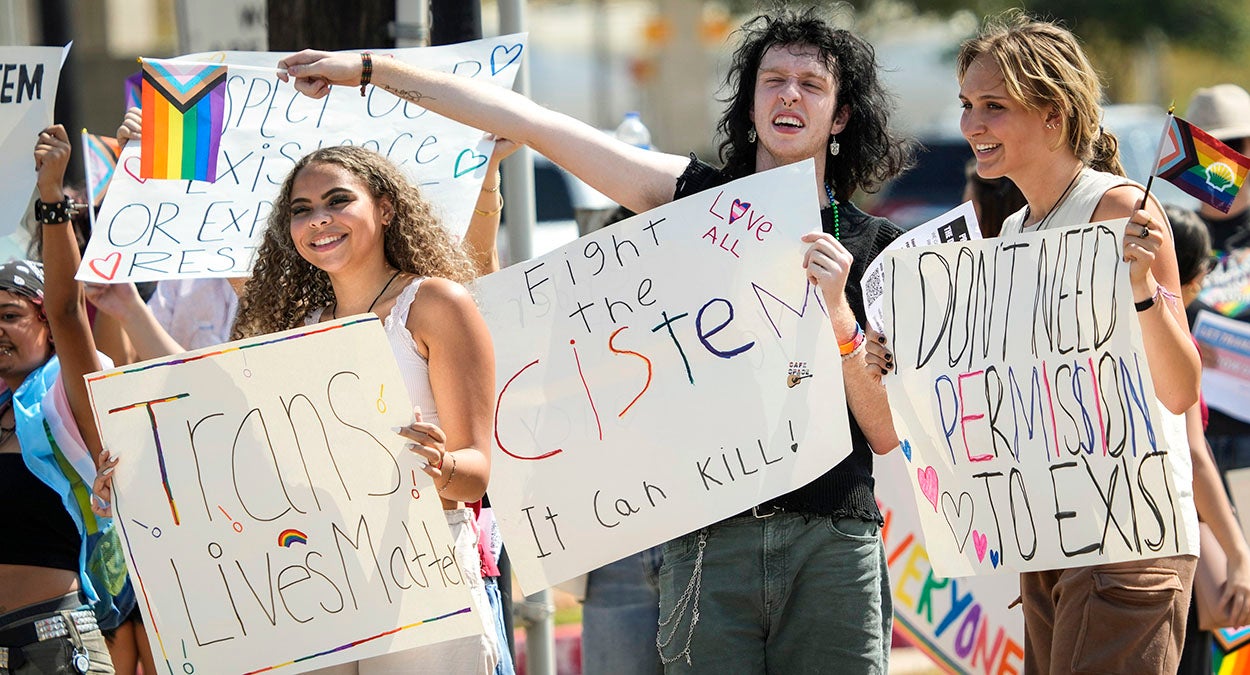 , https://www.dailysignal.com/wp-content/uploads/2024/12/Transgender-protest-young.jpg, The Daily Signal, Policy News, Conservative Analysis and Opinion, , https://www.dailysignal.com/rss, ,