A few fishermen just brought about a sea change in administrative law. In Loper Bright v. Raimondo and Relentless v. Department of Commerce, herring boat owners… Read More
The Supreme Court decided a case Friday that will affect the prosecutions of around 350 individuals charged in connection with the events at the Capitol… Read More
“We finally beat Medicare.” That was just one of the many astonishing things that President Joe Biden said, or tried to say, in his Thursday… Read More
The Supreme Court has ruled that the Eighth Amendment to the U.S. Constitution does not prohibit cities from criminalizing sleeping outdoors.
City of Grants Pass v. Johnson began when a small city in Oregon with just one homeless shelter began enforcing a local anti-camping law against people sleeping in public using a blanket or any other rudimentary protection against the elements – even if they had nowhere else to go.
The court confronted this question: Is it unconstitutional to punish homeless people for doing in public things that are necessary to survive, such as sleeping, when there is no option to do these acts in private?
In a 6-3 decision written by Justice Neil Gorsuch, the court said no. It rejected the claim that criminalizing sleeping in public by those with nowhere to go violates the Constitution’s prohibition on cruel and unusual punishment. In my view, the decision – which I see as disappointing but not surprising – will not lead to any reduction in homelessness, and will certainly result in more litigation.
As a specialist in poverty law, civil rights and access to justice who has litigated many cases in this area, I know that homelessness in the U.S. is a function of poverty, not criminality, and that criminalizing people experiencing homelessness in no way helps solve the problem.
Cities like Portland, Oregon, have struggled to find viable ways of managing homeless encampments while they work to generate more housing.
The Grants Pass case
Grants Pass v. Johnson culminated years of struggle over how far cities can go to discourage homeless people from residing within their borders, and whether or when criminal sanctions for actions such as sleeping in public are permissible.
In a 2019 case, Martin v. City of Boise, the 9th U.S. Circuit Court of Appeals held that the Eighth Amendment’s cruel and unusual punishment clause forbids criminalizing sleeping in public when a person has no private place to sleep. The decision was based on a 1962 Supreme Court case, Robinson v. California, which held that it is unconstitutional to criminalize being a drug addict. Robinson and a subsequent case, Powell v. Texas, have come to stand for distinguishing between status, which cannot constitutionally be punished, and conduct, which can.
In the Grants Pass ruling, the 9th Circuit went one step further than it had in the Boise case and held that the Constitution also banned criminalizing the act of public sleeping with rudimentary protection from the elements. The decision was contentious: Judges disagreed over whether the anti-camping ban regulated conduct or the status of being homeless, which inevitably leads to sleeping outside when there is no alternative.
Grants Pass urged the Supreme Court to abandon the Robinson precedent and its progeny as “moribund and misguided.” It argued that the Eighth Amendment forbids only certain cruel methods of punishment, which do not include fines and jail terms.
The homeless plaintiffs did not challenge reasonable regulation of the time and place of outdoor sleeping, the city’s ability to limit the size or location of homeless groups or encampments, or the legitimacy of punishing those who insist on remaining in public when shelter is available.
But they argued that broad anti-camping laws inflicted overly harsh punishments for “wholly innocent, universally unavoidable behavior” and that punishing people for “simply existing outside without access to shelter” would not reduce this activity.
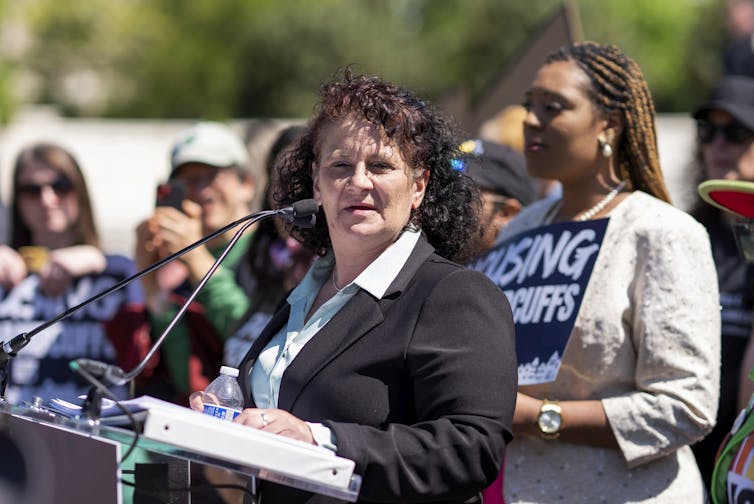
Helen Cruz, who once lived on the streets in Grants Pass, Oregon, speaks at a rally outside the Supreme Court on April 22, 2024.AP Photo/J. Scott Applewhite
In today’s decision, the court rejected the city’s invitation to overrule the 1962 Robinson decision and eliminate the prohibition on criminalizing status, but denied that being homeless is a status. Instead, the court agreed with the city that camping or sleeping in public are activities, not statuses, despite the plaintiffs’ evidence that for homeless people, there is no difference between criminalizing “being homeless” and criminalizing “sleeping in public.”
The decision is surprisingly thin on Eighth Amendment analysis. It declines to engage with plaintiffs’ arguments that criminalizing sleeping imposes disproportionate punishment or imposes punishment without a legitimate deterrent or rehabilitative goal.
Instead, the court returned over and over to the idea that the 9th Circuit’s decision required judges to make impermissible policy decisions about how to respond to homelessness. The court also extensively cited friend-of-the-court briefs from cities and others discussing the difficulties of addressing homelessness. Significantly, however, neither these briefs nor the court’s decision cite evidence that criminalization reduces homelessness in any way.
In a strong dissent beginning “Sleep is a biological necessity, not a crime,” Justice Sonia Sotomayor, joined by Justices Elena Kagan and Ketanji Brown Jackson, quoted extensively from the record in the case. The dissent included some shocking statements from the Grants Pass City Council, such as “Maybe [the homeless people] aren’t hungry enough or cold enough … to make a change in their behavior.”
Sotomayor noted that time, place and manner restrictions on sleeping in public are perfectly permissible under the Ninth Circuit’s analysis, and that the inevitable line-drawing problems upon which the majority dwells are a normal part of constitutional interpretation. She also observed that the majority’s contention that the Ninth Circuit’s rule is unworkable was belied by Oregon’s own actions: in 2021, the state legislature codified the Martin v. Boise ruling into law.
A national crisis
Homelessness is a massive problem in the U.S. The number of people without homes held steady during the COVID-19 pandemic largely because of eviction moratoriums and the temporary availability of expanded public benefits, but it has risen sharply since 2022.
Scholars and policymakers have spent many years analyzing the causes of homelessness. They include wage stagnation, shrinking public benefits, inadequate treatment for mental illness and addiction, and the politics of siting affordable housing. There is little disagreement, however, that the simple mismatch between the vast need for affordable housing and the limited supply is a central cause.
Crackdowns on the homeless
Increasing homelessness, especially its visible manifestations such as tent encampments, has frustrated city residents, businesses and policymakers across the U.S. and led to an increase in crackdowns against homeless people. Reports from the National Homelessness Law Center in 2019 and 2021 have tallied hundreds of laws restricting camping, sleeping, sitting, lying down, panhandling and loitering in public.
Under presidents Barack Obama and Joe Biden, the federal government has asserted that criminal sanctions are rarely useful. Instead it has emphasized alternatives, such as supportive services, specialty courts and coordinated systems of care, along with increased housing supply.
Some cities have had striking success with these measures. But not all communities are on board.
Pushing people out of town
I expect that this ruling will prompt some jurisdictions to continue or increase crackdowns on the homeless, despite the complete lack of evidence that such measures reduce homelessness. What such laws may well accomplish is to push the issue into other towns, as Grants Pass officials candidly admitted they sought to do.
The decision will likely put even more pressure on jurisdictions that choose not to criminalize homelessness, such as Los Angeles, whose mayor, Karen Bass, has condemned the ruling. While this ruling resolves the Eighth Amendment claims against sleeping bans, litigation over homeless policy is doubtless far from over.
This is an updated version of an article originally published April 17, 2024.
The indictments – and in some cases, the convictions – of hundreds of people charged with participating in the riot at the U.S. Capitol on Jan. 6, 2021, will have to be reconsidered, and possibly dropped, because of a ruling by the U.S. Supreme Court on June 28, 2024. Among those charged using a broad interpretation of the obstruction law now narrowed by the high court: former President Donald Trump.
In its decision in Fischer v. United States, the Supreme Court held that a federal statute that prohibits obstructing an official proceeding may not apply to three defendants who were charged with participating in the U.S. Capitol riot. Although former President Donald Trump is not a defendant in the case, special counsel Jack Smith has charged him separately with violating the same statute.
As a law professor who teaches and writes in the fields of constitutional law and federal courts, I’ll explain what the court’s decision means for Jan. 6 defendants – and for Smith’s case against Trump.
Charges against Capitol rioters
According to their indictments, Joseph Fischer, Edward Lang and Garret Miller were present at the Capitol on Jan. 6, 2021. Prosecutors say that all three men entered the Capitol building and assaulted police officers during the riot. One of the men, Lang, brandished a bat and a stolen police shield, and another, Miller, later called for the assassination of U.S. Rep. Alexandria Ocasio-Cortez on social media.
Federal prosecutors charged the three men with various crimes, including assault on a federal officer, disorderly conduct on the Capitol grounds and obstructing a congressional proceeding. That last charge is the one at issue in the Supreme Court appeal.
Before trial, the defendants argued that the law the prosecutors had used to charge them with obstruction applied only to evidence tampering, not the violent disruption of a congressional proceeding. The district court agreed and dismissed the charge, but the U.S. Court of Appeals for the D.C. Circuit reversed and sent the case back for trial.
The Supreme Court then agreed to hear the case, putting the trial on hold while it considered the dispute over the scope of the obstruction law.
The Supreme Court’s decision could affect the prosecution of former President Donald Trump for his attempts to overturn the 2020 presidential election.AP Photo/Jacquelyn Martin, File
Defining a catch-all term
In a 6-3 opinion by Chief Justice John Roberts, the Supreme Court agreed with the defendants and held that the statute prohibits only evidence tampering. It then sent the case back to the appeals court to decide whether the defendants violated the law under that narrower reading by trying to prevent Congress from receiving and certifying the states’ true electoral votes.
The court began with the text of the obstruction law. The law penalizes anyone who “alters, destroys, mutilates, or conceals a record, document, or other object” or who “otherwise obstructs, influences, or impedes any official proceeding.” The government argued that the defendants had “otherwise obstruct(ed)” proceedings in Congress to certify the results of the 2020 election.
But the court rejected that argument, holding that the phrase “otherwise obstructs” refers only to obstruction that – like altering, destroying, mutilating or concealing a record, document or object – impairs the availability or integrity of evidence for use in an official proceeding. The law’s catch-all for “otherwise obstructing” an official proceeding must be read in common with the list of actions that precedes it, the court explained. Otherwise, the list would be redundant.
The court also pointed to the law’s historical background. Congress, the court explained, enacted this specific obstruction law in 2002 in the wake of the Enron accounting fraud scandal. Its aim was to fill a gap in the nation’s existing obstruction laws, which at the time prohibited directing a third party to destroy incriminating evidence but not destroying the evidence oneself.
The government’s reading of the law, the court explained, would stretch it far beyond that purpose, prohibiting forms of obstruction that had nothing to do with evidence and that Congress never intended to criminalize.
What this means for Jan. 6 defendants – and for Trump
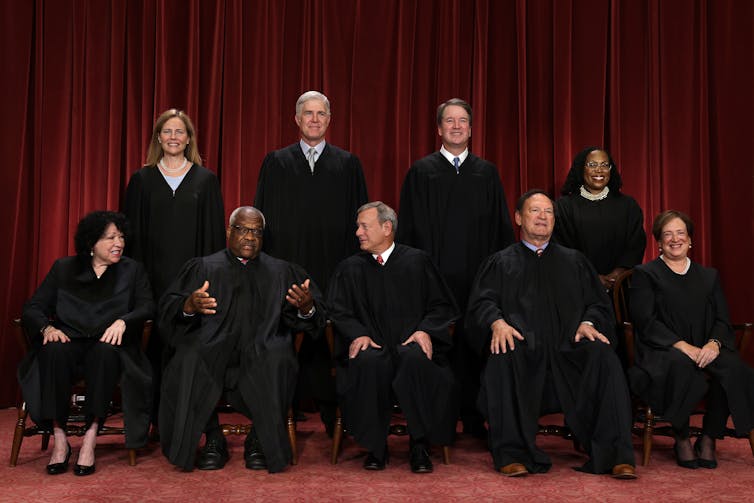
The Supreme Court, from left in front row: Sonia Sotomayor, Clarence Thomas, John Roberts, Samuel Alito and Elena Kagan; and from left in back row: Amy Coney Barrett, Neil Gorsuch, Brett Kavanaugh and Ketanji Brown Jackson.Alex Wong/Getty Images
The Supreme Court’s decision does not end the case against the Fischer defendants, who will likely stand trial on their assault and disorderly conduct charges.
But it may lead to the dismissal of obstruction charges, or reversal of obstruction convictions, for other Jan. 6 defendants. According to an NPR database, federal prosecutors have charged at least 250 other defendants with obstruction of an official proceeding, and 128 have been convicted.
The ruling may also undermine special counsel Jack Smith’s case against former President Donald Trump, whom Smith has charged with obstruction under the same law. If that case survives a separate pending Supreme Court appeal, the former president will likely seek dismissal of that charge.
Trump may not succeed, however, as the obstruction charge against him is based in part on the allegation that he organized slates of electors to certify false election results to Congress. That may amount to impairing the integrity of the evidence used in the certification proceedings.
And the obstruction charge is also not the only count the former president faces. But the ruling may narrow the case and make it more difficult for the special counsel to present evidence to the jury concerning the violence that occurred on Jan. 6. Under this new ruling, that violence alone may not count as obstruction.
The Fischer case also shows how sometimes, especially in high-stakes cases, the justices can use methods of legal reasoning that they are quick to criticize in other contexts. In the opinion, members of the Supreme Court’s conservative majority cited the legislative history of the obstruction law – evidence that conservative jurists such as the late Justice Antonin Scalia often called unreliable.
The Supreme Court’s decision in the Fischer case may have a profound effect on the special counsel’s historic prosecution of former President Trump.
But even if it does not, it still sheds important light on the court’s inner workings and the federal government’s power to safeguard the integrity of its proceedings.
The 2024 Homeland Security appropriations bill increased funding for U.S. Immigration and Customs Enforcement operations to handle an anticipated daily detainee population of 41,500, up from an average of 34,000 in recent years.
Yet recent studies have exposed cracks that call into question the agency’s ability to medically care for the detainees it is entrusted with, including inhumane conditions, high suicide rates, structural problems such as the use of prisons to hold detainees, delayed or interrupted medical care and overcrowded conditions. Research also shows that the pandemic years further exacerbated these inequalities.
One recent report by a trio of nonprofit advocacy groups blames preventable deaths of people detained by ICE on inadequate investigations and flawed systems at the agency. The report, Deadly Failures, released on June 25, 2024, by the American Civil Liberties Union, American Oversight, and Physicians for Human Rights, documents inadequacies in diagnosis, treatment and emergency response. It points to suicides that might have been prevented with appropriate mental health care and properly managed medication. And it details underlying issues – understaffing and a lack of interpretation and translation services.
The Conversation asked Cara Buchanan, an emergency physician and clinical fellow in health policy and social emergency medicine at the Harvard Kennedy School, whose research the report cites, about research in this area by her team and others, ICE’s track record on detainee medical care and what needs to be done to improve medical care for people in ICE custody.
What have you and your colleagues found in studying medical care for detainees in U.S. Immigration and Customs Enforcement custody?
Our research shows that preventable deaths of people in ICE detention are often preceded by lapses in a standardized, consistent and competent approach to medical triage, including identification and escalation of the need for emergency care.
What has other recent research uncovered in this area?
Research across many disciplines, including medicine, law, policy, criminal justice, health economics, human rights and public health, correlate structural design features of immigration detention facilities to adverse health outcomes for detainees. This includes the use of solitary confinement, which is linked to an increased risk of self-harm for detainees in ICE custody.
The COVID-19 pandemic highlighted significant health disparities in immigration detention facilities. Many facilities failed to provide adequate basic, preventive and emergency medical care.
Studies also demonstrate a persistent lack of transparent information about conditions in ICE facilities that continues to prompt ongoing calls for increased oversight and accountability to address the systemic sources of poor health outcomes.
The ultimate failure of the immigration detention system to protect the health and safety of detainees is the outcome of preventable death. Publicly available ICE detainee death reports provide basic details about timelines preceding death. However, independent investigations and analyses into the circumstances surrounding these deaths have demonstrated pervasive and systemic negligence.
Billions of dollars of congressional appropriations continue to pour into the expansion of ICE detention facilities, and private prisons contracted to provide services for immigrants in detention report profit margins in the billions of dollars.
How did your work fit with the recently released report?
Deadly Failures expounds on our prior research with a depth and breadth of context.
The report provides clear policy recommendations for major stakeholders – the Department of Homeland Security, the Department of Justice, Congress and local and state governments.
These recommendations range from feasible to ambitious in detailing actions that would eliminate preventable death for those in ICE custody. Proposed interventions include prompt disposition of detainees who have medical and mental health vulnerabilities, limiting the physical and fiscal expansion of detention facilities, investing in community-based services, banning solitary confinement, passing legislation to ensure accountability to standards of care in facility contracts and establishing mechanisms for regular public data reporting. The report also calls for ICE to dismantle the mass immigration detention system at large.
I was particularly heartened to read the second line of the Deadly Failures executive summary, which highlights the most striking finding of our research – the troubling trend of ICE releasing people from custody immediately prior to their deaths.
Why does this happen?
ICE regulations specify that when a detained noncitizen dies in custody, the agency will conduct timely notification, review and publication of the death. But the regulatory language about people who die immediately after release from ICE custody is vague and doesn’t include a reporting timeline or proposed mechanism of accountability for such deaths.
When we investigated the total number of deaths in ICE custody from fiscal years 2021 to 2023, our research team cross-referenced published ICE death reports with news releases issued by investigative journalists and immigration advocacy groups. Our review of public records and available legal documents confirmed four deaths that were not accounted for in the 11 death reports ICE published from those years.
Through this investigation we found a pattern of detainees who, while hospitalized, were released from ICE custody after being deemed critically ill, with death clinically imminent. When we reviewed these detainees’ medical records we found deaths that could have been prevented. In one such case, a detainee contracted COVID-19 while in custody and suffered a series of complications, including multiple hospitalizations for recurrent infections. Concerns raised by the facility medical director about the patient’s persistently critical condition went unaddressed, and after ultimately suffering a stroke the patient was placed on life support. ICE released the unconscious patient from custody just prior to his death. This technical release from custody allowed ICE to avoid mandatory public reporting of this case and its details.
Officially, ICE has said that it is continuing to evaluate its enforcement of health standards and is looking for ways to improve medical care delivery.
Our research team’s key recommendation, also highlighted by the authors of Deadly Failures, is that all deaths of individuals that occur within 30 days of release from ICE custody be included in mandatory public reporting of ICE statistics and death reports. This is a critical measure of transparency and accountability.
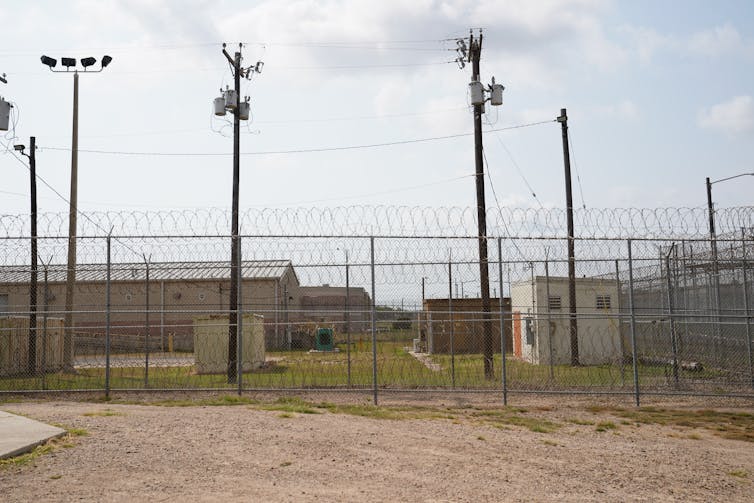
The Port Isabel ICE detention center in Los Fresnos, Texas.Veronica Gabriela Cardenas-Pool/Getty Images
What should Immigration and Customs Enforcement be doing to prevent unnecessary deaths on its watch?
Time in ICE custody is related to preventable death. People detained in ICE facilities should be released as quickly as possible so their medical needs can be transitioned to more consistent and long-term care.
Triage should also be standardized. Detainees who show signs and symptoms of serious medical conditions should be rapidly assessed and quickly transferred to local emergency rooms for further evaluation and treatment. Rigorous oversight and accountability should be established for all workers at ICE facilities and for clinical outcomes of detained patients.
Are you still seeking answers to questions you have about detainees? If so, what are you looking for?
ICE’s collection, recording and sharing of high-quality data regarding the capacity of ICE facilities, the scope of health services available and metrics of health outcomes for people detained in ICE custody is markedly limited. The dearth of data leaves a barrage of unanswered questions regarding the conditions that contribute to poor health outcomes. In my view, ICE detention facilities should be held to standards of transparency and accountability to federal and public reporting, as are other large systems of medical care.
Is there anything that has surprised you in what you’ve found over the past few years?
The instances of deficient professional language services, including interpretation and translation, for people detained in ICE custody is surprising. It is at odds with a federal mandate that stipulates a patient’s right to receive health information in their preferred language at no cost. This right is exercised daily in U.S. hospitals and clinics across the country for the nondetained with in-person interpreters or readily accessible technology.
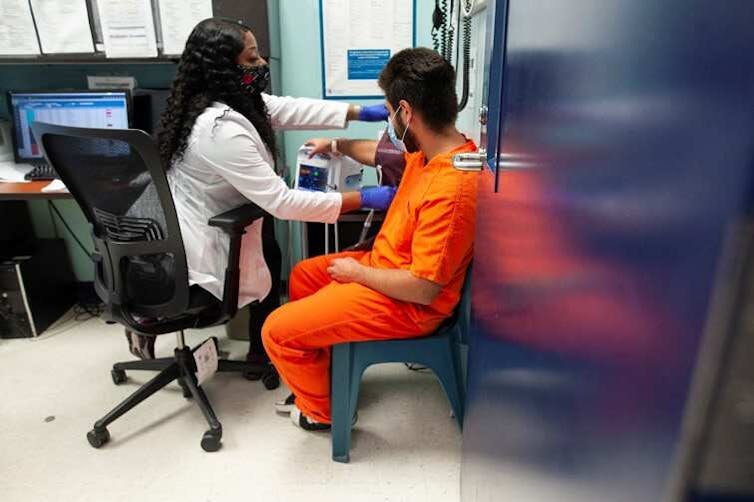
An ICE Health Service Corps photo shows a detainee in an orange jumpsuit receiving care.ICE Health Service Corps
Ultimately, it is disheartening but not surprising that extensive research continues to demonstrate a diminished standard of care experienced by people detained in ICE custody.
With four months to go until Election Day, the earliest-ever general election debate featured two presidents – one current, one former – and a lot of bitter personal attacks. Joe Biden’s universally acknowledged poor performance surprised and even panicked Democrats; Donald Trump gave a more forceful – if not truthful – performance.
The Conversation asked two scholars, Mary Kate Cary and Karrin Vasby Anderson, to watch the debate and analyze a passage or a moment that stood out to them. Anderson is a communications scholar with a specialty in gender and the presidency, as well as political pop culture. Cary teaches political speechwriting and worked as a White House speechwriter for President George H.W. Bush, for whom she wrote more than 100 addresses.
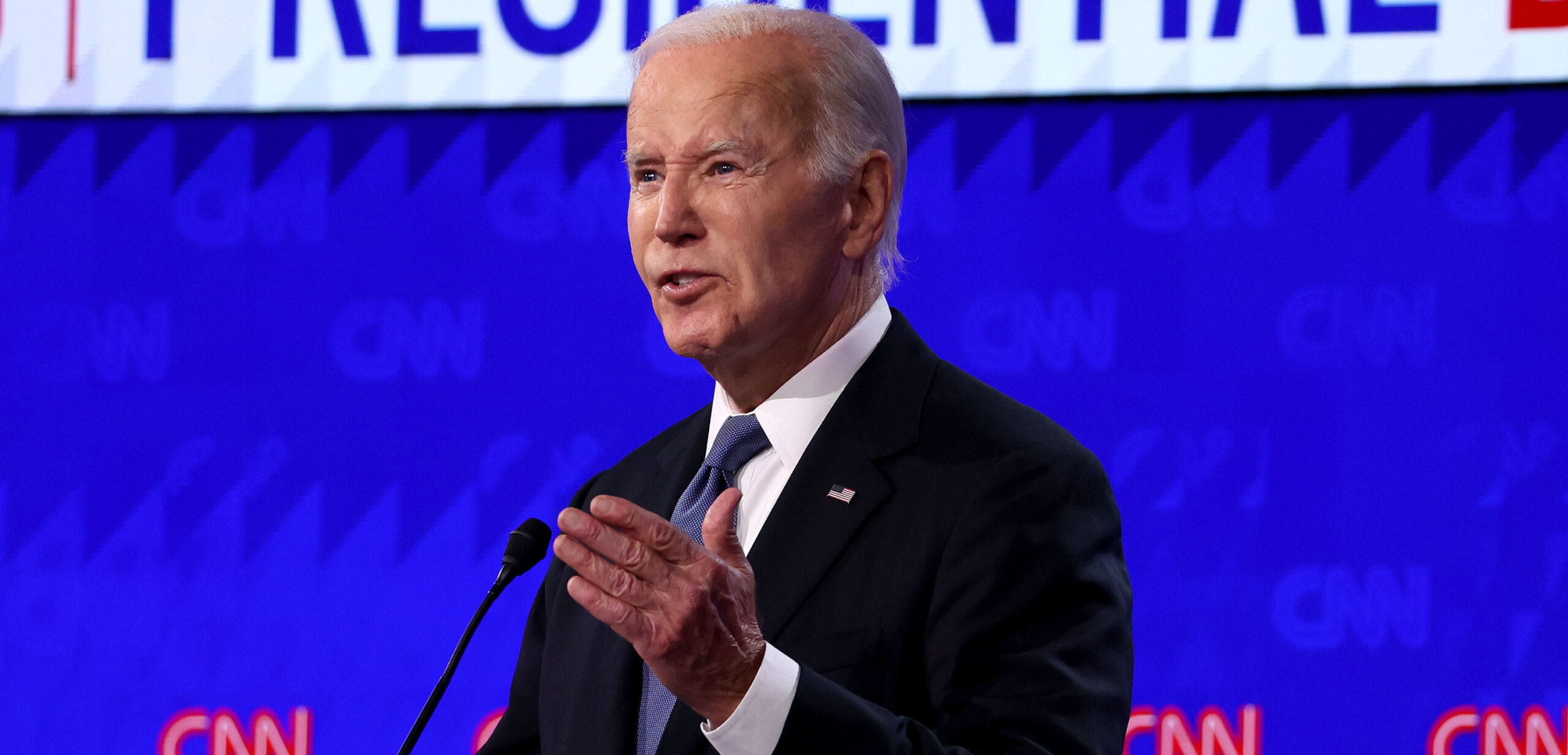
President Joe Biden speaks during the CNN debate against Donald Trump on June 27, 2024, in Atlanta.Justin Sullivan/Getty Images
Karrin Vasby Anderson, Colorado State University Department of Communication Studies
One of the first definitions of good public speaking I learned as a college debater and student of rhetoric came from the ancient Roman scholar and rhetoric teacher Quintilian. In his 12-volume “Institutio Oratoria,” Quintilian said the ideal orator was a good person, speaking well. He was particularly concerned about the danger that a skilled rhetorician who lacked character could pose to society.
A presidential debate ought to showcase ideal orators – skilled speakers who are also people of character. The June 27 debate offered voters an either-or scenario.
Former President Donald Trump was aggressive, confident and disciplined, but he peppered his remarks with a steady stream of lies, half-truths and misinformation. President Joe Biden focused on Trump’s documented record – both criminal and political – but failed as an orator, demonstrating none of the charisma and command on display during his most recent State of the Union address just four months ago.
The contrast was clear early in the debate when CNN’s Dana Bash asked Trump whether he would block access to abortion medication. Trump said that he would not. He then falsely claimed that, in the lead-up to the 2022 Supreme Court decision that overturned Roe v. Wade and removed the federal protection for abortion rights, “everybody wanted to get it back to the states, everybody, without exception.”
Trump then went on offense, accusing Democrats of taking “the life of a child in the eighth month, ninth month, even after birth.”
Biden’s response was initially clear and resolute: “It’s been a terrible thing, what you’ve done,” he said. And he pushed back against the preposterous claim that “everybody” wanted Roe v. Wade overturned, saying, “the idea that states are able to do this is a little like saying we’re going to turn civil rights back to the states (and) let each state have a different rule.”
But the rest of Biden’s response was muddled. After “veering inexplicably” into an anecdote about a woman murdered by an undocumented immigrant, Biden expressed his support for people’s right to choose by saying on three separate occasions that the decision should be up to a doctor, rather than the pregnant person.
Trump closed out the segment by reiterating his blatant lie in stronger terms: “So that means, he can take the life of the baby, in the ninth month and even after birth because some states, Democrat run, take it after birth.” The Associated Press’s fact check of this claim is succinct: “Infanticide is criminalized in every state, and no state has passed a law that allows killing a baby after birth.”
After nearly a decade of exposure to Trump’s habitual misinformation, lies about states murdering babies may not stand out as shocking in a presidential debate. And, certainly, it’s an argument that should have been easy for Biden to refute.
But if the populace must choose between a good person and someone who spoke well, Quintilian would remind us that someone who speaks well but has no integrity is dangerous.
The consequences for the republic could be dire.
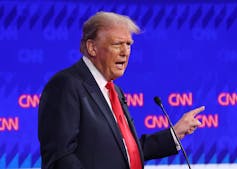
Republican presidential candidate Donald Trump answers a question during the first debate of the 2024 U.S. presidential election.Justin Sullivan/Getty Images
Mary Kate Cary, University of Virginia Department of Politics
I think America just saw history being made.
Within 10 minutes, a very hoarse President Joe Biden, was asked about deficit spending, lost his train of thought, and ended his answer by muttering something about “beating Medicare.” It was awful.
There were so many moments when Biden looked confused and unable to process what was happening. I took notes on key exchanges, but the number of embarrassing episodes, unfinished sentences and incoherent phrases by Biden is too long to list. His answer on why he should be president in his 80s somehow veered into computer chips being made in South Korea.
Former President Donald Trump made his own share of missteps, but overall, he was relatively sharp, and restrained when he was provoked. He scored some points on the issues and did much better than he did in their first debate four years ago. Trump did better than I think many people thought he would.
Our assignment tonight was to find a moment to react to and put it in context. I’ve been to multiple presidential debates and watched many more on television over the years, and have never seen anything like this.
Is there any way the Democrats can convincingly argue for keeping Biden as their nominee?
The bottom line: Moderators Jake Tapper and Dana Bash did a good job of asking substantive questions and keeping control of the debate; Trump missed an opportunity to knock it out of the park but got through it; and Biden will most likely have caused a disaster for the Democratic Party.
On June 27, 2024, the U.S. Supreme Court dismissed a case brought by the federal government regarding whether Idaho’s abortion ban conflicts with a federal law called the Emergency Medical Treatment and Labor Act. The law requires emergency rooms to provide stabilizing care for patients experiencing medical emergencies regardless of their ability to pay.
The Conversation asked law professors Naomi Cahn and Sonia Suter to explain how the case ended up in the Supreme Court’s hands and why battles between this federal law and state abortion laws will likely be in the news for the foreseeable future.
What is the key disagreement between Idaho and the federal government?
In Moyle v. United States, the Supreme Court faced the question of whether the Emergency Medical Treatment and Labor Act overrides Idaho’s strict abortion ban.
Congress passed the law in 1986 to ensure patients’ access to emergency care even if they couldn’t afford to pay for it. It requires emergency rooms to stabilize patients if failing to do so would result in serious jeopardy to the patient’s health. The law does not require patients to be on the brink of death before treatment.
After the Dobbs decision overturned a federal right to an abortion in 2022, Idaho’s trigger law went into effect. The state law banned abortions except to save the life of a pregnant person and in some cases of rape and incest. The Biden administration challenged the law in federal court.
The federal government argued that the act requires providers to offer an abortion as stabilizing care in some obstetric emergencies, but that Idaho’s law would prohibit the abortion if only the patient’s health, but not life, was in jeopardy. Therefore, the government argued, the federal act overrides the Idaho law when the two are in conflict.
A federal district court sided with the Biden administration and ruled that Idaho’s ban doesn’t apply when the federal act would necessitate an abortion. So Idaho appealed to the 9th Circuit.
As a result of various procedural issues, the case was appealed to the Supreme Court before the 9th Circuit Court of Appeals reached a final ruling on the merits. The Supreme Court also blocked the district court’s ruling. As a result, doctors in Idaho could no longer perform abortions in emergency situations unless the patient’s life was threatened.
The practical impact of the Supreme Court’s action was stark. From January through April 2024, when the Idaho law was fully enforceable, St. Luke’s – the largest largest private employer in Idaho – medevaced six women to another state to obtain an abortion for health reasons.
In contrast, from late 2022 to the end of 2023, when the federal law governed, only one pregnant patient had to be airlifted out of state.
What did the justices say?
On June 27, the Supreme Court issued an unsigned (per curiam) opinion: At least five of the justices decided that the court was wrong to hear the case at this early stage. Accordingly, the case goes back to the 9th Circuit for further argument.
But there were four concurring and dissenting opinions, which provide insight into the court’s deliberations and may explain why it took so long for the court to issue its one-sentence opinion.
Justices Elena Kagan, Sonia Sotomayor, Amy Coney Barrett and Brett Kavanaugh and Chief Justice John Roberts thought the case should go back to the lower courts for further argument.
Justices Ketanji Brown Jackson, Samuel Alito, Clarence Thomas and Neil Gorsuch thought the court should resolve the question of whether the federal law overrides Idaho’s law. Their idea of how it should be resolved differed, however. Alito, Thomas and Gorsuch concluded that the federal law does not preempt Idaho’s law. Jackson thought there was a clear conflict between the laws and that “under the Supremacy clause, Idaho’s law is preempted.”
Jackson went further in excoriating the Supreme Court for not resolving what she saw as a clear and dire issue: “Today’s decision is not a victory for pregnant patients in Idaho. It is delay. While this Court dawdles and the country waits, pregnant people experiencing medical conditions remain in a precarious position, as their doctors are kept in the dark about what the law requires.”
The Supreme Court allows abortion in Idaho to protect a woman’s health, not just in emergency situations as Idaho’s law would have dictated – at least for the moment.
What does this decision mean for abortion in Idaho?
The decision means that the Emergency Medical Treatment and Labor Act – at least for now – applies in Idaho. That is, in cases of medical emergencies, abortions must be an option if one is necessary to stabilize a pregnant patient and protect the patient’s health, even if their life is not at risk.
As Jackson noted, those scenarios could arise with many health conditions, like “preeclampsia, preterm premature rupture of the membranes, sepsis and placental abruption.”
It is worth emphasizing that in the rare cases when abortion is necessary to stabilize an obstetric emergency, the pregnancy is “often of a non-viable fetus”, Kagan wrote in her concurrence. Thus, if the federal law is followed, rather than wait until the patient is near death to perform the inevitable abortion, the necessary medical care can be provided earlier to prevent health complications.
While this decision now allows the federal law to block the Idaho abortion ban in cases of obstetric emergencies that can only be stabilized with an abortion, it still allows Idaho to prohibit all other abortions. Thus, Idaho’s ban of all other abortions except in limited cases of rape or incest still applies. Of course, it remains to be seen what the 9th Circuit will decide about the effect of the federal law on Idaho’s abortion ban.
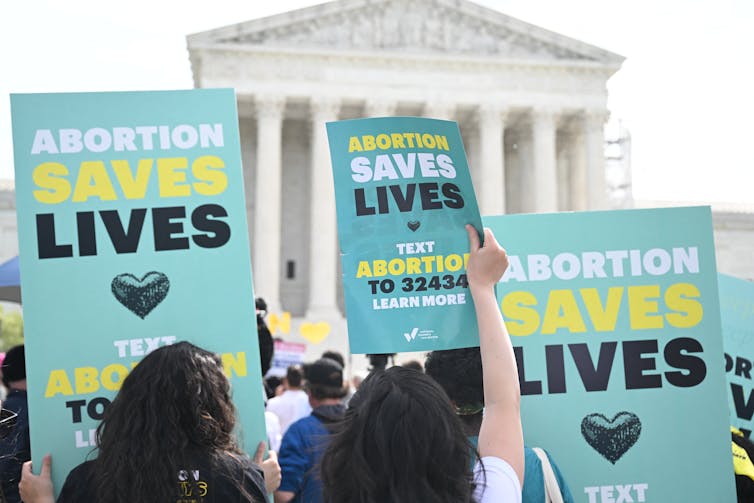
Abortion-rights activists rally outside the Supreme Court building as the court considers its emergency medical treatment and abortion case in April 2024.Saul Loeb/AFP via Getty Images
Is this the last word on the Emergency Medical Treatment and Labor Act?
Probably not.
The Supreme Court will likely have another opportunity to consider whether the Emergency Medical Treatment and Labor Act overrides state abortion bans that conflict with it. The case is going back to the 9th Circuit to decide whether there is a conflict between Idaho and federal law. The losing party will probably appeal to the Supreme Court.
In another case pending before the Supreme Court, Texas has challenged the Biden administration’s assertion that the federal law preempts laws that would ban abortions in cases of obstetric emergencies. Both the lower federal court and the 5th Circuit concluded that the federal act did not override Texas’ abortion bans.
The Biden administration asked the Supreme Court to consider the Texas case, but the court has not yet decided whether to do so. If it does, then the questions related to the federal law will be back again in the next Supreme Court term, which begins in October.
By the time the case gets back to the Supreme Court, a different president may have taken office, and their administration may have a different view of what the act requires.
Does the ruling affect abortion in other states?
Because there are two conflicting federal court rulings in the 9th and 5th circuits on whether the federal law overrides state abortion bans, this Supreme Court ruling has no impact in other states.
In dismissing the case rather than addressing its merits, the Supreme Court has not taken a position as to whether the federal law preempts state laws when there is a conflict. This means that health care providers in the many states that have enacted near-total abortion bans still face a dilemma where, as public health professor Sara Rosenbaum put it, pregnant patients have “become radioactive to emergency departments.”
It is also noteworthy that this is the second time in a single month that the court has ducked an abortion-related issue. Earlier in June 2024, it dismissed a challenge to abortion pill access – leaving many unsettled questions about access to abortion in the United States.
The Supreme Court ruled 5-4 against an estimated US$6 billion Purdue Pharma bankruptcy plan on June 27, 2024, that would have shielded the Sackler family – which owned and controlled the company – from legal liability.
Hundreds of thousands of Americans have died from opioid-related overdoses since Purdue rolled out OxyContin in 1996. The company helped spur a public health crisis through its deceptive marketing and aggressive sales of OxyContin, a prescription opioid painkiller.
The company, but not the family, sought bankruptcy protection in 2019 in exchange for contributions to a global settlement deal. That settlement would have forever protected the Sacklers – as well as hundreds of affiliates and other Purdue Pharma insiders – from all opioid-related civil claims. Because the Sacklers have said they would reject any deal without legal immunity, this Supreme Court ruling makes the fate of this settlement unclear.
The Conversation asked Temple University law professor Jonathan Lipson to explain what the ruling in this case, Harrington v. Purdue Pharma, means for the company, the Sacklers, people harmed by OxyContin and the public.
What does this ruling mean?
In the near term, it means that the effort by Purdue and the Sacklers to limit their liability will go back to the bankruptcy court, where the deal will probably be renegotiated. In the long term, it means that powerful people cannot use their company’s bankruptcy to escape accountability.
This ruling will further delay the roughly $6 billion promised under Purdue’s plan. So far, companies involved in the manufacturing, distribution and sale of opioids have reached settlements that are contributing $50 billion to efforts to abate the opioid crisis.
The majority was careful to say that its opinion was “narrow” and should not upset similar prior deals. But, going forward, corporate insiders will no longer be able to use their companies’ bankruptcies to force creditors to give up claims. In many ways, this decision simply confirms the status quo: If you have liability for misconduct, you cannot latch onto a company’s bankruptcy to get out of it.
You either have to defend the claims in court or file for bankruptcy yourself.
Families who lost loved ones to opioid use have urged the courts to punish the Sackler family.AP Photo/Seth Wenig
What did the court object to?
The technical term for what this very wealthy family sought – and what the court’s majority rejected – is a “nonconsensual third-party release.”
“Release” is a bit of a misnomer, though, because that is really a contractual concept, and there is nothing contractual about what the Sacklers demanded. They wanted an injunction from a federal bankruptcy court that would forever bar anyone who might try to hold them accountable from suing them for their role at Purdue Pharma when the company committed two sets of confessed drug-marketing crimes.
Until now, only bankruptcy courts could provide such releases, and appellate courts have been split about the practice for many years.
On the one hand, many lawyers and scholars laud these releases because they can increase the amounts paid to creditors following bankruptcy. They promote settlements, which can reduce the amount and cost of litigation.
On the other hand, the U.S. Bankruptcy Code says nothing about these releases. Congress amended that code in 1994 to permit them for asbestos-related liability, but the majority in the Purdue case recognized that these releases aren’t approved for any other purpose.
The petitioner before the Supreme Court was U.S. Trustee William Harrington. Trustees are Justice Department officials who serve as regional watchdogs of the bankruptcy system. They have long argued that these releases go too far because they give too much discretion and power to bankruptcy judges.
Netflix’s limited series ‘Painkiller’ dramatized the Sackler family’s role in marketing OxyContin as a risk-free drug while ignoring much evidence to the contrary.
How did the majority explain its rationale?
The court’s majority said the releases went too far because they were outside the text of the Bankruptcy Code. Most Supreme Court justices view themselves as “textualists,” meaning that if Congress has gone to the trouble of writing a statute, courts should apply it carefully and within the limits legislators defined.
Here, there was no doubt that Purdue could extinguish its own liability in bankruptcy. The problem was that “rather than seek to resolve claims that substantively belong to Purdue,” Justice Neil Gorsuch wrote for the majority, Purdue’s plan “seeks to extinguish claims against the Sacklers that belong to their victims” even though “precisely nothing” in the Bankruptcy Code permitted that.
Gorsuch was joined by Justices Clarence Thomas, Samuel Alito, Amy Coney Barrett and Ketanji Brown Jackson.
In an emotional dissent, Justice Brett Kavanaugh focused on the consequences he fears.
“With the current plan now gone and non-debtor releases categorically prohibited, the consequences will be severe,” he wrote in a dissent joined by Justices Elena Kagan, Sonia Sotomayor and Chief Justice John Roberts.
According to the dissent, people harmed by opioids might never get any compensation from a settlement with Purdue Pharma and the Sackler family.
Kavanaugh also suggested that claims against the Sacklers were no different than claims against Purdue. But it has long been a basic tenet of corporate law that owners and other kinds of shareholders are legally separate from the corporations they own.
What happens next?
The case will return to the bankruptcy court.
Purdue, the Sacklers and lawyers representing people harmed by OxyContin will probably renegotiate the plan and seek individualized consent to release the Sacklers. This is actually a very common approach – Purdue was pushing the boundaries by doing this without the consent of everyone who it harmed because not everyone who was filing these lawsuits agreed to the terms of the settlement.
In the end, the Sacklers may have to pay more than they previously promised. And they will run the risk that some people harmed by OxyContin won’t agree with the revised terms and instead will sue them outside of the bankruptcy system.
My guess is that the Sacklers will be willing to pay enough to reduce this risk, rather than blow up the plan entirely.
But they may throw in the towel and go back to a regular court to defend themselves. If they do, they would increase the chances that they will be prosecuted individually – which they clearly do not want.
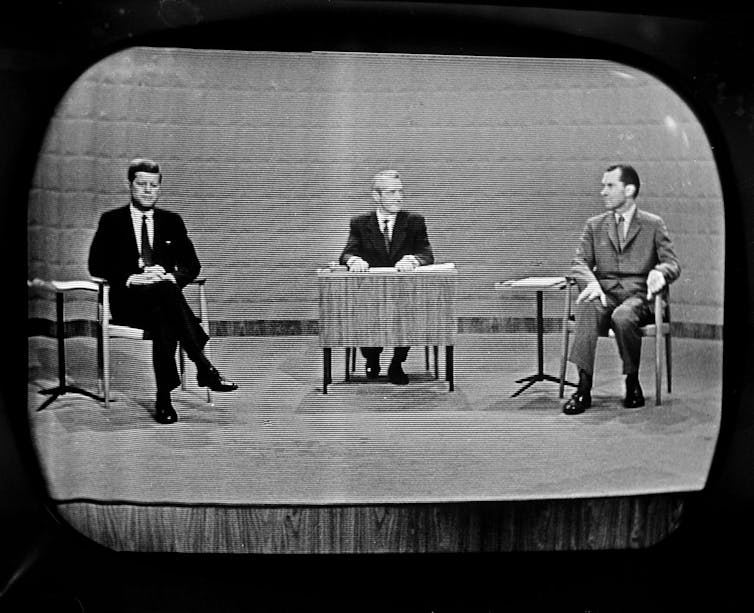
The run-up to the Joe Biden-Donald Trump debate at the end of June 2024 has brought reminders about the first-ever televised presidential debate – and how Vice President Richard Nixon’s sweaty, haggard appearance that autumn night in 1960 opened a pathway to the White House for the tanned and telegenic Sen. John F. Kennedy.
That, at least, is conventional wisdom about the Kennedy-Nixon debate of Sept. 26, 1960: Image prevailed, rewarding Kennedy and punishing Nixon.
“Kennedy went on to narrowly win the election that most say he never would have had a shot at without that first debate,” Time magazine declared in 2016, in recounting the greatest missteps in political debates. “It seems Nixon’s fatal flub was in failing to recognize the power of the visual image.”
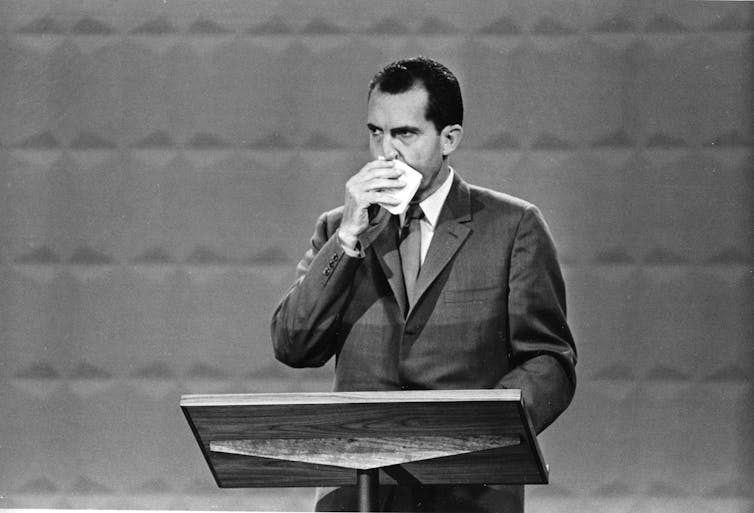
Or as Max Frankel, then the executive editor of The New York Times, wrote sardonically several months after Nixon’s death in 1994, “Nixon lost a TV debate, and the Presidency, to John F. Kennedy in 1960 because of a sweaty upper lip.”
Nixon did perspire under the hot studio lights, but few pundits and analysts at the time focused their commentaries on the vice president’s appearance. In a revealing example of the impermanence of in-the-moment judgments, many pundits and analysts thought both candidates appeared nervous and tentative. Some of them said Nixon, who was still recovering from the effects of an infected knee that had sent him to Walter Reed Army Medical Center in late August 1960, had the better of the confrontation.
The prevailing view at the time was that the debate settled nothing about the 1960 race for the presidency.
John F. Kennedy and Richard Nixon debate in September 1960, as seen on a black-and-white TV.Associated Press
The debate as a draw
What the public is often told nowadays about that first-of-its-kind debate, which took place without an audience in a television studio in Chicago, does not quite square with reactions and perceptions that circulated at the time. As the debate’s aftermath made clear, first assessments can be fleeting and prone to dramatic revision.
I examined scores of newspaper articles, editorials and commentaries written in the debate’s immediate aftermath in researching a chapter for “Getting It Wrong,” my 2017 book about media-driven myths. There was, I found, no unanimity among newspaper columnists and editorial writers about Nixon’s appearance. Not all of them thought Nixon’s performance was dreadful or that Kennedy was necessarily all that appealing.
The Washington Post, for example, declared in an editorial two days after the debate: “Of the two performances Mr. Nixon’s was probably the smoother. He is an accomplished debater with a professional polish, and he managed to convey a slightly patronizing air of a master instructing a pupil.”
The debate moderator, Howard K. Smith of ABC News, later was quoted as saying he thought “Nixon was marginally better” than Kennedy.
Saul Pett, a prominent feature writer for The Associated Press, rated Nixon highly for projecting cordiality. “On general folksiness, both before and during the debate,” Pett wrote in an article published the day after, “my scorecard showed Nixon easily ahead, at least 8 to 1. … He smiled more often and more broadly, especially at the start and close of a remark. Kennedy only allowed himself the luxury of a quarter-smile now and then.”
Walter Lippmann, a leading newspaper commentator of the time, mentioned Nixon’s manner deep in his column the day after the debate, saying television cameras “were very hard on Mr. Nixon. … They made him look sick, which he is not, and they made him look older and more worn than he is.”
The effect, Lippmann wrote, “was a misrepresentation and we must make sure for the future that the cameras are in fact impartial.”
Republican presidential candidate Richard Nixon wipes his face with a handkerchief during his September 1960 debate with John F. Kennedy.Associated Press
Doubting TV’s powerful effects
But another syndicated columnist, William S. White, questioned the powerful effects of television in politics, writing, “There is, after all, no miraculous way to ride the electronic waves to the presidency: no gold mine of easily extracted votes in the TV sky.” Television was not new in 1960. About 87% of American households had at least one TV set by then. Still evolving, however, was television’s role in American politics.
Of greater importance, at least to some analysts, were Nixon’s tactics during the debate. He, for example, seemed inclined to discuss matters as framed by Kennedy. In his opening statement, Kennedy expressed dissatisfaction with the country’s direction amid the uncertainties of the Cold War, saying, “This is a great country, but I think it could be a greater country; and this is a powerful country, but I think it could be a more powerful country.” He wrapped up his opening remarks by stating: “I think it’s time America started moving again.”
Nixon, who spoke after Kennedy, disputed that the country had been “standing still” during the Eisenhower years, but said, nonetheless: “I subscribe completely to the spirit that Senator Kennedy has expressed tonight, the spirit that the United States should move ahead.”
He concluded his opening remarks by saying, “I know Senator Kennedy feels as deeply about these problems [facing the country] as I do, but our disagreement is not about the goals for America but only about the means to reach those goals.”
Whether Nixon was trying to curb his combative tendencies or appeal to wavering Democrats, his remarks came across as oddly defensive and deferential.
“Nixon insisted so strongly that he shared all Senator Kennedy’s worthy goals that one expected a Nixonian endorsement of the Democratic platform at any moment,” columnist Joseph Alsop wrote, sarcastically, a few days after the debate.
So what altered the consensus about the first debate from being a draw to being Nixon’s on-air ruin? The answer no doubt rests in the search for a post-election explanation for Kennedy’s victory. He won the popular vote by 0.2 percentage points, or about 118,000 votes.
Historians of the 1960 campaign have pointed out that any of a number of variables could have tipped the outcome in such a close race. But political journalist Theodore H. White, in his Pulitzer Prize-winning book “The Making of the President, 1960,” argued that televising the first debate had been crucial.
“Until the cameras opened on the senator and the vice-president,” White wrote in his book, which was published in 1961, “Kennedy had been the boy under assault and attack by the vice-president as immature, young, inexperienced. Now, obviously, in flesh and behavior, he was the vice-president’s equal.”
Whether television was so revealing and conclusive is arguable. Less debatable, however, is the sense today that television had made a difference. As historian David Greenberg has written about that first televised debate, “the perception of television’s influence went on to transform American politics, shaping the behavior of leaders and candidates for decades.”
To that observation one could easily add: The perception of television’s influence likewise transformed conventional wisdom about the first-ever presidential debate.