Secret Service director reveals no one has been disciplined after Trump assassination attempt thumbnail

Secret Service director reveals no one has been disciplined after Trump assassination attempt

Secret Service Director Kimberly Cheatle told House lawmakers on Monday during a hearing that no employees from her agency have seen disciplinary action as a result of the assassination attempt on former President Donald Trump more than a week ago.

When questioned by Rep. Pete Sessions (R-TX), Cheatle said no personnel have been disciplined “at this time,” but she indicated that there could be disciplinary action in the future.

“So no employee has been disciplined, and no employee has been placed in any position that would place their job in jeopardy?” Sessions asked.

As Cheatle began to speak about how the agency was still in a review process, Sessions interjected, accusing her of failing to answer his question.

“When I have a full and complete report of exactly what happened, there will be accountability and we will make changes,” Cheatle said.

The director said her agency’s internal review process would take 60 days and noted that several external investigations of the assassination attempt, including ones by the FBI and the Department of Homeland Security inspector general, were also still open.

Cheatle underwent hours of tough questioning by House Oversight Committee members from both parties during the hearing. Lawmakers appeared baffled by the grave security failure at a Trump rally on July 13 that left one dead and two seriously injured. Trump’s head was grazed by a bullet, resulting in a minor injury to his ear.

After Sessions spoke, Rep. Alexandria Ocasio-Cortez (D-NY) said Cheatle’s responses were inadequate.

“The lack of answers and the lack of report is just simply not something that we can accept here,” Ocasio-Cortez said.

Rep. Ro Khanna (D-CA) joined several of his colleagues in calling on her to resign.

Cheatle was again grilled later in the hearing by Rep. Nancy Mace (R-SC) on whether anyone has been reprimanded.

“How many Secret Service personnel have lost their jobs due to this colossal failure?” Mace asked.

“At this time, none,” Cheatle replied, later adding that her agency was still “examining the facts.”

CLICK HERE TO READ MORE FROM THE WASHINGTON EXAMINER

Authorities say Thomas Matthew Crooks, 20, crawled atop the roof of a building about 400 feet from where Trump was speaking at the rally and fired off multiple shots before he was killed by a Secret Service counter-sniper.

Cheatle, who has been with the Secret Service for nearly 30 years, admitted during her opening statement that the incident was “the most significant operational failure at the Secret Service in decades.”

2024-07-22 18:41:00, http://s.wordpress.com/mshots/v1/https%3A%2F%2Fwww.washingtonexaminer.com%2Fnews%2Fhouse%2F3094349%2Fsecret-service-director-reveals-no-one-has-been-disciplined-after-trump-assassination-attempt%2F?w=600&h=450, Secret Service Director Kimberly Cheatle told House lawmakers on Monday during a hearing that no employees from her agency have seen disciplinary action as a result of the assassination attempt on former President Donald Trump more than a week ago. When questioned by Rep. Pete Sessions (R-TX), Cheatle said no personnel have been disciplined “at,

Secret Service Director Kimberly Cheatle told House lawmakers on Monday during a hearing that no employees from her agency have seen disciplinary action as a result of the assassination attempt on former President Donald Trump more than a week ago.

When questioned by Rep. Pete Sessions (R-TX), Cheatle said no personnel have been disciplined “at this time,” but she indicated that there could be disciplinary action in the future.

“So no employee has been disciplined, and no employee has been placed in any position that would place their job in jeopardy?” Sessions asked.

As Cheatle began to speak about how the agency was still in a review process, Sessions interjected, accusing her of failing to answer his question.

“When I have a full and complete report of exactly what happened, there will be accountability and we will make changes,” Cheatle said.

The director said her agency’s internal review process would take 60 days and noted that several external investigations of the assassination attempt, including ones by the FBI and the Department of Homeland Security inspector general, were also still open.

Cheatle underwent hours of tough questioning by House Oversight Committee members from both parties during the hearing. Lawmakers appeared baffled by the grave security failure at a Trump rally on July 13 that left one dead and two seriously injured. Trump’s head was grazed by a bullet, resulting in a minor injury to his ear.

After Sessions spoke, Rep. Alexandria Ocasio-Cortez (D-NY) said Cheatle’s responses were inadequate.

“The lack of answers and the lack of report is just simply not something that we can accept here,” Ocasio-Cortez said.

Rep. Ro Khanna (D-CA) joined several of his colleagues in calling on her to resign.

Cheatle was again grilled later in the hearing by Rep. Nancy Mace (R-SC) on whether anyone has been reprimanded.

“How many Secret Service personnel have lost their jobs due to this colossal failure?” Mace asked.

“At this time, none,” Cheatle replied, later adding that her agency was still “examining the facts.”

CLICK HERE TO READ MORE FROM THE WASHINGTON EXAMINER

Authorities say Thomas Matthew Crooks, 20, crawled atop the roof of a building about 400 feet from where Trump was speaking at the rally and fired off multiple shots before he was killed by a Secret Service counter-sniper.

Cheatle, who has been with the Secret Service for nearly 30 years, admitted during her opening statement that the incident was “the most significant operational failure at the Secret Service in decades.”

, Secret Service Director Kimberly Cheatle told House lawmakers on Monday during a hearing that no employees from her agency have seen disciplinary action as a result of the assassination attempt on former President Donald Trump more than a week ago. When questioned by Rep. Pete Sessions (R-TX), Cheatle said no personnel have been disciplined “at this time,” but she indicated that there could be disciplinary action in the future. “So no employee has been disciplined, and no employee has been placed in any position that would place their job in jeopardy?” Sessions asked. As Cheatle began to speak about how the agency was still in a review process, Sessions interjected, accusing her of failing to answer his question. “When I have a full and complete report of exactly what happened, there will be accountability and we will make changes,” Cheatle said. The director said her agency’s internal review process would take 60 days and noted that several external investigations of the assassination attempt, including ones by the FBI and the Department of Homeland Security inspector general, were also still open. Cheatle underwent hours of tough questioning by House Oversight Committee members from both parties during the hearing. Lawmakers appeared baffled by the grave security failure at a Trump rally on July 13 that left one dead and two seriously injured. Trump’s head was grazed by a bullet, resulting in a minor injury to his ear. After Sessions spoke, Rep. Alexandria Ocasio-Cortez (D-NY) said Cheatle’s responses were inadequate. “The lack of answers and the lack of report is just simply not something that we can accept here,” Ocasio-Cortez said. Rep. Ro Khanna (D-CA) joined several of his colleagues in calling on her to resign. Cheatle was again grilled later in the hearing by Rep. Nancy Mace (R-SC) on whether anyone has been reprimanded. “How many Secret Service personnel have lost their jobs due to this colossal failure?” Mace asked. “At this time, none,” Cheatle replied, later adding that her agency was still “examining the facts.” CLICK HERE TO READ MORE FROM THE WASHINGTON EXAMINER Authorities say Thomas Matthew Crooks, 20, crawled atop the roof of a building about 400 feet from where Trump was speaking at the rally and fired off multiple shots before he was killed by a Secret Service counter-sniper. Cheatle, who has been with the Secret Service for nearly 30 years, admitted during her opening statement that the incident was “the most significant operational failure at the Secret Service in decades.”, , Secret Service director reveals no one has been disciplined after Trump assassination attempt, https://www.washingtonexaminer.com/wp-content/uploads/2024/07/Kimberly_Cheatle_Oversight_44-scaled-1024×683.webp, Washington Examiner, Political News and Conservative Analysis About Congress, the President, and the Federal Government, https://www.washingtonexaminer.com/wp-content/uploads/2023/11/cropped-favicon-32×32.png, https://www.washingtonexaminer.com/feed/, Ashley Oliver,
Dual hearings to test Secret Service and FBI leaders after Trump assassination attempt thumbnail

Dual hearings to test Secret Service and FBI leaders after Trump assassination attempt

Secret Service Director Kimberly Cheatle is set to appear for a highly anticipated hearing before the House Oversight Committee on Monday morning as lawmakers begin investigating what failures led to an assassination attempt on former President Donald Trump.

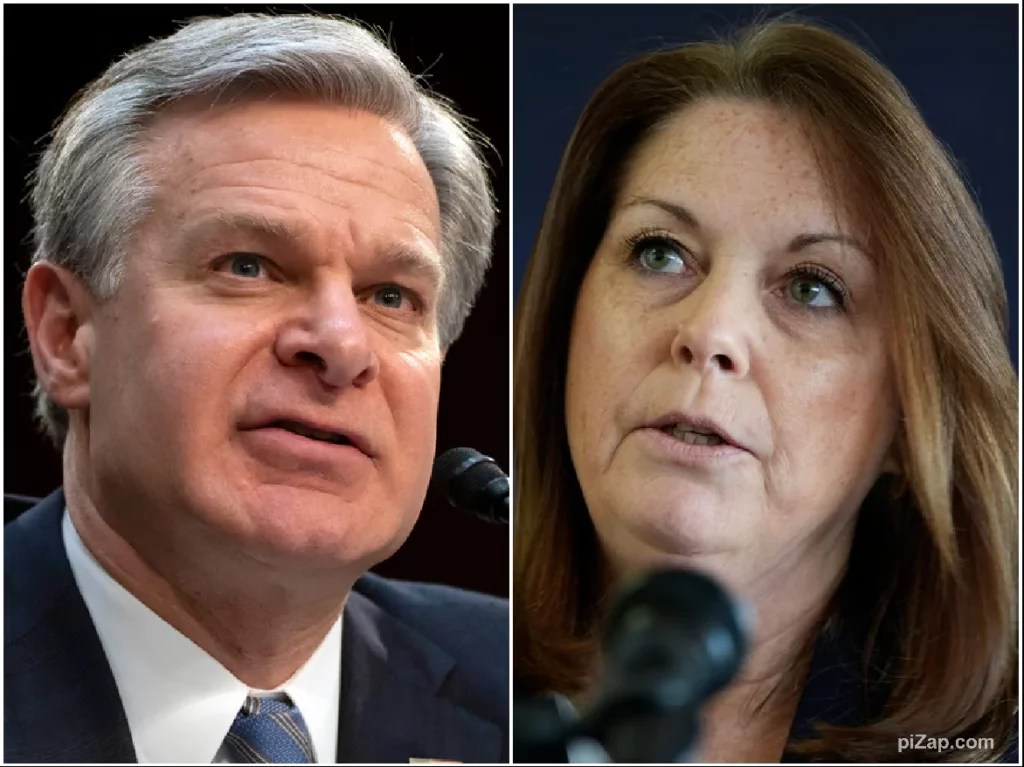
Cheatle’s appearance, along with a House Judiciary Committee hearing on Wednesday featuring FBI Director Christopher Wray, will mark the first of two public events in the House this week that will examine how and why a would-be assassin was able to take shots at Trump during a recent campaign rally.

The House Oversight Committee, a deeply divided Republican-led panel that has been dominated this Congress by a one-sided impeachment inquiry, has shown rare bipartisanship ahead of the hearing.

Its top Republican and Democrat, Reps. James Comer (R-KY) and Jamie Raskin (D-MD), said in a joint statement that while they often have “passionate disagreements,” they want to prevent the “horrific event from ever happening again.”

“Americans have many serious questions about the historic security failures” and they deserve “transparency and accountability,” the pair said, a sign that Cheatle is likely to have few allies when she sits down in the hearing room to take questions from members of Congress.

Authorities say Thomas Matthew Crooks, 20, was perched on a nearby rooftop when he fired multiple shots into a rally crowd, killing one and critically injuring two. Photos and video footage show a bullet nearly missing Trump’s head and instead grazing the side of it, resulting in a minor injury to the former president’s ear.

A committee aide told the Washington Examiner to expect lawmakers to grill Cheatle on what intelligence her agency had on the shooter, the planning in the lead-up to the rally, how the Secret Service deployed its resources, and why the rooftop, situated about 400 feet from Trump, was not secured.

There will likely also be questions about the timeline of events at the rally “given they were aware there was a suspicious person walking around with a rangefinder,” the aide said.

Secret Service Deputy Director Ronald Rowe gave lawmakers a summary of the timeline during a briefing last week, saying Pennsylvania State Police alerted the Secret Service to Crooks 20 minutes before shots rang out. Rowe said Crooks had a rangefinder, a firearm accessory used to take long shots, with him.

Cheatle, who has worked at the Secret Service for 25 years, is under enormous pressure to provide answers to lawmakers as she faces widespread calls from Republicans to resign. Democrats have been remiss to go that far before hearing directly from Cheatle, but Oversight Committee member Jared Moskowitz (D-FL) also said in a recent television interview that he believes she will likely have to step down.

The FBI, for its part, is leading the investigation into the shooting, and more than a week after the assassination attempt, the bureau has not indicated that it has identified any motive of Crooks. FBI Deputy Director Paul Abbate told lawmakers in last week’s briefing that the bureau found no evidence of Crooks having a political ideology after searching his primary phone, home, and vehicle. The FBI is still analyzing Crooks’s items and in the process of trying to access three foreign encrypted platforms on his phone, Abbate said.

Wray is expected to be interrogated on the investigation process at his own hearing before the House Judiciary Committee.

The hearing was already scheduled as part of the committee’s annual oversight of the FBI, but the committee announced after the rally shooting that Wray would be questioned about the attack during his appearance. Chairman Jim Jordan (R-OH) asked Wray last week for numerous records related to the assassination attempt in advance of his anticipated testimony.

Jordan also put Wray on the hook for the security failures, saying he heard from whistleblowers that the FBI was part of the security planning process when a Secret Service special agent in charge revealed that resources were “limited” the week of the rally because of the NATO summit in Washington, D.C.

Other committees, including the House Homeland Security Committee and Senate Judiciary and Homeland Security committees, have all indicated that they are investigating the assassination attempt as well.

CLICK HERE TO READ MORE FROM THE WASHINGTON EXAMINER

Senate Judiciary Committee Chairman Dick Durbin (D-IL) had initially asked for a closed-door briefing about the assassination attempt, while committee Republicans called for a hearing.

Durbin agreed to a hearing, and now discussions on the details of it are being worked out among the Biden administration, Durbin, and ranking member Sen. Lindsey Graham (R-SC), according to a Senate aide. The aide added that the hearing would most likely focus on both the Secret Service and FBI.

2024-07-22 11:00:00, http://s.wordpress.com/mshots/v1/https%3A%2F%2Fwww.washingtonexaminer.com%2Fnews%2F3091809%2Fdual-hearings-to-test-secret-service-fbi-leaders-trump-assassination-attempt%2F?w=600&h=450, Secret Service Director Kimberly Cheatle is set to appear for a highly anticipated hearing before the House Oversight Committee on Monday morning as lawmakers begin investigating what failures led to an assassination attempt on former President Donald Trump. Cheatle’s appearance, along with a House Judiciary Committee hearing on Wednesday featuring FBI Director Christopher Wray, will,

Secret Service Director Kimberly Cheatle is set to appear for a highly anticipated hearing before the House Oversight Committee on Monday morning as lawmakers begin investigating what failures led to an assassination attempt on former President Donald Trump.

Cheatle’s appearance, along with a House Judiciary Committee hearing on Wednesday featuring FBI Director Christopher Wray, will mark the first of two public events in the House this week that will examine how and why a would-be assassin was able to take shots at Trump during a recent campaign rally.

The House Oversight Committee, a deeply divided Republican-led panel that has been dominated this Congress by a one-sided impeachment inquiry, has shown rare bipartisanship ahead of the hearing.

Its top Republican and Democrat, Reps. James Comer (R-KY) and Jamie Raskin (D-MD), said in a joint statement that while they often have “passionate disagreements,” they want to prevent the “horrific event from ever happening again.”

“Americans have many serious questions about the historic security failures” and they deserve “transparency and accountability,” the pair said, a sign that Cheatle is likely to have few allies when she sits down in the hearing room to take questions from members of Congress.

Authorities say Thomas Matthew Crooks, 20, was perched on a nearby rooftop when he fired multiple shots into a rally crowd, killing one and critically injuring two. Photos and video footage show a bullet nearly missing Trump’s head and instead grazing the side of it, resulting in a minor injury to the former president’s ear.

A committee aide told the Washington Examiner to expect lawmakers to grill Cheatle on what intelligence her agency had on the shooter, the planning in the lead-up to the rally, how the Secret Service deployed its resources, and why the rooftop, situated about 400 feet from Trump, was not secured.

There will likely also be questions about the timeline of events at the rally “given they were aware there was a suspicious person walking around with a rangefinder,” the aide said.

Secret Service Deputy Director Ronald Rowe gave lawmakers a summary of the timeline during a briefing last week, saying Pennsylvania State Police alerted the Secret Service to Crooks 20 minutes before shots rang out. Rowe said Crooks had a rangefinder, a firearm accessory used to take long shots, with him.

Cheatle, who has worked at the Secret Service for 25 years, is under enormous pressure to provide answers to lawmakers as she faces widespread calls from Republicans to resign. Democrats have been remiss to go that far before hearing directly from Cheatle, but Oversight Committee member Jared Moskowitz (D-FL) also said in a recent television interview that he believes she will likely have to step down.

The FBI, for its part, is leading the investigation into the shooting, and more than a week after the assassination attempt, the bureau has not indicated that it has identified any motive of Crooks. FBI Deputy Director Paul Abbate told lawmakers in last week’s briefing that the bureau found no evidence of Crooks having a political ideology after searching his primary phone, home, and vehicle. The FBI is still analyzing Crooks’s items and in the process of trying to access three foreign encrypted platforms on his phone, Abbate said.

Wray is expected to be interrogated on the investigation process at his own hearing before the House Judiciary Committee.

The hearing was already scheduled as part of the committee’s annual oversight of the FBI, but the committee announced after the rally shooting that Wray would be questioned about the attack during his appearance. Chairman Jim Jordan (R-OH) asked Wray last week for numerous records related to the assassination attempt in advance of his anticipated testimony.

Jordan also put Wray on the hook for the security failures, saying he heard from whistleblowers that the FBI was part of the security planning process when a Secret Service special agent in charge revealed that resources were “limited” the week of the rally because of the NATO summit in Washington, D.C.

Other committees, including the House Homeland Security Committee and Senate Judiciary and Homeland Security committees, have all indicated that they are investigating the assassination attempt as well.

CLICK HERE TO READ MORE FROM THE WASHINGTON EXAMINER

Senate Judiciary Committee Chairman Dick Durbin (D-IL) had initially asked for a closed-door briefing about the assassination attempt, while committee Republicans called for a hearing.

Durbin agreed to a hearing, and now discussions on the details of it are being worked out among the Biden administration, Durbin, and ranking member Sen. Lindsey Graham (R-SC), according to a Senate aide. The aide added that the hearing would most likely focus on both the Secret Service and FBI.

, Secret Service Director Kimberly Cheatle is set to appear for a highly anticipated hearing before the House Oversight Committee on Monday morning as lawmakers begin investigating what failures led to an assassination attempt on former President Donald Trump. Cheatle’s appearance, along with a House Judiciary Committee hearing on Wednesday featuring FBI Director Christopher Wray, will mark the first of two public events in the House this week that will examine how and why a would-be assassin was able to take shots at Trump during a recent campaign rally. The House Oversight Committee, a deeply divided Republican-led panel that has been dominated this Congress by a one-sided impeachment inquiry, has shown rare bipartisanship ahead of the hearing. Its top Republican and Democrat, Reps. James Comer (R-KY) and Jamie Raskin (D-MD), said in a joint statement that while they often have “passionate disagreements,” they want to prevent the “horrific event from ever happening again.” “Americans have many serious questions about the historic security failures” and they deserve “transparency and accountability,” the pair said, a sign that Cheatle is likely to have few allies when she sits down in the hearing room to take questions from members of Congress. Authorities say Thomas Matthew Crooks, 20, was perched on a nearby rooftop when he fired multiple shots into a rally crowd, killing one and critically injuring two. Photos and video footage show a bullet nearly missing Trump’s head and instead grazing the side of it, resulting in a minor injury to the former president’s ear. A committee aide told the Washington Examiner to expect lawmakers to grill Cheatle on what intelligence her agency had on the shooter, the planning in the lead-up to the rally, how the Secret Service deployed its resources, and why the rooftop, situated about 400 feet from Trump, was not secured. There will likely also be questions about the timeline of events at the rally “given they were aware there was a suspicious person walking around with a rangefinder,” the aide said. Secret Service Deputy Director Ronald Rowe gave lawmakers a summary of the timeline during a briefing last week, saying Pennsylvania State Police alerted the Secret Service to Crooks 20 minutes before shots rang out. Rowe said Crooks had a rangefinder, a firearm accessory used to take long shots, with him. Cheatle, who has worked at the Secret Service for 25 years, is under enormous pressure to provide answers to lawmakers as she faces widespread calls from Republicans to resign. Democrats have been remiss to go that far before hearing directly from Cheatle, but Oversight Committee member Jared Moskowitz (D-FL) also said in a recent television interview that he believes she will likely have to step down. The FBI, for its part, is leading the investigation into the shooting, and more than a week after the assassination attempt, the bureau has not indicated that it has identified any motive of Crooks. FBI Deputy Director Paul Abbate told lawmakers in last week’s briefing that the bureau found no evidence of Crooks having a political ideology after searching his primary phone, home, and vehicle. The FBI is still analyzing Crooks’s items and in the process of trying to access three foreign encrypted platforms on his phone, Abbate said. Wray is expected to be interrogated on the investigation process at his own hearing before the House Judiciary Committee. The hearing was already scheduled as part of the committee’s annual oversight of the FBI, but the committee announced after the rally shooting that Wray would be questioned about the attack during his appearance. Chairman Jim Jordan (R-OH) asked Wray last week for numerous records related to the assassination attempt in advance of his anticipated testimony. Jordan also put Wray on the hook for the security failures, saying he heard from whistleblowers that the FBI was part of the security planning process when a Secret Service special agent in charge revealed that resources were “limited” the week of the rally because of the NATO summit in Washington, D.C. Other committees, including the House Homeland Security Committee and Senate Judiciary and Homeland Security committees, have all indicated that they are investigating the assassination attempt as well. CLICK HERE TO READ MORE FROM THE WASHINGTON EXAMINER Senate Judiciary Committee Chairman Dick Durbin (D-IL) had initially asked for a closed-door briefing about the assassination attempt, while committee Republicans called for a hearing. Durbin agreed to a hearing, and now discussions on the details of it are being worked out among the Biden administration, Durbin, and ranking member Sen. Lindsey Graham (R-SC), according to a Senate aide. The aide added that the hearing would most likely focus on both the Secret Service and FBI., , Dual hearings to test Secret Service and FBI leaders after Trump assassination attempt, https://www.washingtonexaminer.com/wp-content/uploads/2024/07/Wray-Cheatle-1024×767.webp, Washington Examiner, Political News and Conservative Analysis About Congress, the President, and the Federal Government, https://www.washingtonexaminer.com/wp-content/uploads/2023/11/cropped-favicon-32×32.png, https://www.washingtonexaminer.com/feed/, Ashley Oliver,

Four unanswered questions about Trump assassination attempt thumbnail

Four unanswered questions about Trump assassination attempt

Days after a gunman shot at former President Donald Trump during a rally in Butler, Pennsylvania, questions persist about how the shocking incident could have occurred.

Authorities have not explained how or why Thomas Matthew Crooks, the 20-year-old armed suspect, gained a clear line of sight of Trump from a rooftop about 400 feet away from the former president.

Scrutiny of the Secret Service has intensified in the aftermath of the event, and signs of finger-pointing between the agency and local police have cropped up in media reports.

The FBI, whose Pittsburgh Field Office is leading the investigation of the shooting, said Monday that its inquiry was in an “early stage” but that it had interviewed nearly 100 witnesses and received hundreds of tips.

Meanwhile, President Joe Biden has called for an independent review of the attempted assassination, and congressional lawmakers in both chambers from across the political spectrum have demanded information about it. Lawmakers and officials are expected to receive briefings and hold meetings and hearings about it in the coming days and weeks.

Trump, who was looking to the side when Crooks fired multiple rounds toward him, was nicked in the ear and suffered a minor injury. One person was killed, and two were injured and remain in critical but stable condition as of Tuesday, according to an Allegheny health official.

Below are some of the open questions percolating after the first gunshot to hit a president or former president since 1981.

Why wasn’t the roof secure?

Crooks obtained access to the roof of a building owned by a glass research company, and videos circulating online show bystanders observing him crawling on top of the facility for nearly a minute while Trump was speaking. Some observers could be heard calling out for police to respond.

Secret Service Director Kimberly Cheatle, who has worked at the agency for 25 years, said during an interview with ABC News that her team identified the building ahead of the rally but opted to secure it from the inside rather than from the roof of it because of the roof’s slant. The explanation fell flat on social media, where critics shared images of law enforcement officers working on slanted roofs.

“That building in particular has a sloped roof at its highest point, and so, you know, there’s a safety factor that would be considered there that we wouldn’t want to put somebody up on a sloped roof,” Cheatle said. “And so, you know, the decision was made to secure the building from inside.”

What was the gunman’s motive?

The FBI announced this week that it gained access to Crooks’s phone and completed investigations of his home and vehicle.

The bureau, however, provided no information about what prompted Crooks’s attempt on Trump’s life. Even after searching Crooks’s phone, the FBI still had not determined a motive, according to NBC News.

Records matching Crooks’s description show he was a registered Republican but donated $15 to the “Progressive Turnout Project PAC” on Jan. 20, 2021, Trump’s last day in office. His parents told the Wall Street Journal they were unaware of what political leanings their son may have had.

How did he get past police in the building?

Cheatle said during the interview that the Secret Service was responsible for the inner perimeter of the rally, while local law enforcement in Butler County was responsible for the outer area.

Armed local police were inside the building when Crooks hoisted himself up onto the roof using an air conditioning unit, meaning the police would have had no eyes on the outside of the building, according to CNN.

What took so long to stop the gunman?

A countersniper shot and killed Crooks seconds after he opened fire, but it remains unclear why he was ever able to take a shot at all when law enforcement had become concerned about him before he crawled onto the roof.

Well before Crooks accessed the rooftop, he became a person of interest during the rally security screening process.

One report said he passed through magnetometers with a rangefinder, which is a firearm accessory used to take long shots, three hours before the shooting. This prompted authorities conducting screenings to keep an eye on him.

CLICK HERE TO READ MORE FROM THE WASHINGTON EXAMINER

Another report said observers noticed him acting erratically around the metal detectors, leading local police to alert the Secret Service about him.

The “working theory,” according to CNN, is that officers lost track of Crooks when he left the rally entrance area and went to his truck to grab his rifle.

House Oversight issues sweeping records request to Secret Service ahead of hearing thumbnail

House Oversight issues sweeping records request to Secret Service ahead of hearing

The House Oversight Committee asked the Secret Service on Monday to provide a wide range of material related to the assassination attempt on former President Donald Trump ahead of a planned hearing next week.

Chairman James Comer (R-KY) and other Republican members wrote a letter to Director Kimberly Cheatle asking her for a list of law enforcement officers working at the Butler, Pennsylvania, rally, where a gunman opened fire over the weekend, killing one, critically injuring two, and causing a minor injury to Trump.

The lawmakers also asked Cheatle for any audio and video recordings from the event that were in the Secret Service’s possession, as well as all internal documents and communications the agency had from the event.

Cheatle is set to appear before the committee for a hearing on July 22, according to an aide.

CLICK HERE TO READ MORE FROM THE WASHINGTON EXAMINER

Read the committee’s request here:

This story is developing.

Engoron allows Trump to subpoena lawyer who ‘boasted’ of talk with civil fraud judge thumbnail

Engoron allows Trump to subpoena lawyer who ‘boasted’ of talk with civil fraud judge

Donald Trump can move forward with subpoenaing a lawyer who publicly claimed to have met with the judge who oversaw the former president’s civil fraud trial, according to a court order.

Judge Arthur Engoron denied portions of Trump’s subpoena but determined that it was “not wholly without merit,” the judge wrote in the order, filed Tuesday.

Trump’s attorneys had requested to issue a subpoena for documents to New York-based lawyer Adam Bailey after Bailey told a local NBC affiliate that he privately spoke with Engoron about the case weeks before Engoron announced his verdict against Trump in it.

Bailey “boasted” to the media about the meeting, Engoron said, observing that he had to allow some form of Trump’s subpoena for that reason.

“Mr. Bailey has opened the door by making his extraordinary claims to the media, in which he, by his own admission, stated that he attempted to offer unsolicited legal advice to this Court,” Engoron wrote.

Engoron found Trump liable for years of business fraud, and in February, he affirmed the finding and ordered Trump and Trump Organization executives to pay $454 million in damages and interest.

NBC New York reported on Bailey’s conversation with Engoron three months later, prompting an ethics probe into whether it was appropriate.

Engoron denied through a spokesperson at the time that anything “untoward” had occurred with Bailey.

“No ex parte conversation concerning this matter occurred between Justice Engoron and Mr. Bailey or any other person,” spokesman Al Baker said. “The decision Justice Engoron issued February 16 was his alone, was deeply considered, and was wholly uninfluenced by this individual.”

Trump, who is appealing Engoron’s verdict, still requested to issue a sweeping subpoena for documents of Bailey’s communications that could shed light on any of his interactions with the court.

CLICK HERE TO READ MORE FROM THE WASHINGTON EXAMINER

Engoron ruled that the subpoena was too broad and “unquestionably would permit an improper wholesale fishing expedition” but offered a narrower version of it for Bailey to comply with instead.

Engoron ordered Bailey to furnish the documents within seven days.

Former FEC chairman: Bragg campaign finance claims against Trump are ‘laughable’ thumbnail

Former FEC chairman: Bragg campaign finance claims against Trump are ‘laughable’

A former Federal Election Commission chairman testified to Congress on Tuesday that the Manhattan district attorney’s hush money charges against former President Donald Trump were “simply laughable.”

Bradley Smith, who was originally set to appear as a defense witness in Trump’s New York trial, identified for lawmakers what he viewed as legal errors in District Attorney Alvin Bragg’s case.

In a lengthy written opening statement, Smith mapped out in detail how Bragg’s claim that Trump violated campaign finance laws to pay off porn star Stormy Daniels could not have amounted to, as Bragg alleged, a conspiracy to throw the 2016 election.

Bragg, an elected Democrat, secured a felony conviction against Trump for falsifying records of the Daniels payment. Trump’s former attorney Michael Cohen issued the payment from his own personal bank account days ahead of the election, and then the Trump Organization reimbursed Cohen beginning in 2017 after Trump took office. Bragg was able to elevate Trump’s charges of falsifying business records, which are normally misdemeanors, to felonies in part by alleging the Daniels payment amounted to an illegal campaign contribution.

Smith said the payment could not have been categorized as campaign related and that “even assuming the expense was a campaign expenditure, no public disclosure of the expense would have been legally required before the election.”

A nefarious plot to hide the expenditure until after the election was impossible because of these deadlines, Smith said.

“This undercuts the entire theory of the case offered by the prosecution,” Smith said, observing how prosecutor Matthew Colangelo told jurors that Cohen’s payment to Daniels, which was made as part of a nondisclosure agreement to suppress her story about an alleged affair with Trump, was an “illegal payment” and “election fraud, pure and simple.”

Smith added that to him, the “most important principle of campaign finance law” dictates that any payments to Daniels “were not, and should not be, considered campaign expenditures.”

A payment to her therefore “cannot support a finding of a [Federal Election Campaign Act] violation,” Smith testified.

Smith, a Republican, is a professor at Capital University Law School who was appointed to the FEC by former President Bill Clinton. He has frequently been tapped as an election expert for testimonies and other speaking engagements.

Trump’s defense team initially planned to call Smith to testify at trial, but defense attorneys reversed course after Judge Juan Merchan narrowed the scope of what Smith could speak about from the witness stand. Merchan warned that as an expert witness, which is what Merchan deemed Smith, the former FEC official could not reference any facts about Trump’s case and could instead speak only in general terms.

Smith told lawmakers that if he had been called to the witness stand and had enough leeway from Merchan, he would have provided “relevant context” about FEC deadlines to jurors that he believes would have led them to acquit Trump.

Smith’s brutal assessment of Bragg comes after Trey Trainor, another FEC commissioner, testified last month to Congress that he believed Bragg “usurped” federal law when he tried to bring federal campaign finance laws into a state case that the FEC had already vetted.

The two election law experts’ criticisms of Bragg follow the district attorney attracting scrutiny for taking the rare step of attaching, or “bootstrapping,” a New York election violation to Trump’s falsifying records charges to overcome statutes of limitations and strengthen the charges to felonies.

Bragg alleged Trump violated New York election law’s section 17-152. The statute states that it is against the law to conspire to influence an election “by unlawful means.”

Bragg gave the jury three options for what those unlawful means could have been. One of the options was that Trump violated FECA. The other two options were additional falsifications of records or tax violations. The jury did not have to agree on what unlawful means Trump used to violate section 17-152, only that he violated the overarching state law.

CLICK HERE TO READ MORE FROM THE WASHINGTON EXAMINER

Trump is expected to appeal his conviction on numerous grounds, and some legal experts have speculated that one could be that Bragg inappropriately incorporated federal campaign finance laws into a state prosecution.

Bragg’s office did not respond to a request for comment.

DOJ plots path forward after Supreme Court setbacks thumbnail

DOJ plots path forward after Supreme Court setbacks

The Department of Justice is showing signs of how it might attempt to overcome the fresh set of challenges it is facing in the wake of a recent Supreme Court decision that favored dozens of Jan. 6 defendants, including former President Donald Trump.

Over the past week, the DOJ began asking judges in Washington, D.C., for one or two months of extra time to weigh the impact of Fischer v. United States on some of its cases related to the 2021 breach.

In one case, Judge Dabney Friedrich ordered DOJ prosecutors and defense attorneys to make recommendations for “further proceedings” and a new sentencing date “in light of Fischer” for defendant Ronald Sandlin.

On Friday, prosecutors told Friedrich they needed 30 extra days to come up with their response, according to a court filing.

Sandlin pleaded guilty in 2022 to conspiring to obstruct an official proceeding, the charge at the center of Fischer. The Supreme Court narrowed the scope of the charge so that obstruction had to occur by destroying or tampering with, or attempting to destroy or tamper with, physical records.

“The government is actively assessing the impacts of Fischer on Jan. 6 cases in a variety of procedural postures,” prosecutors wrote in Sandlin’s case.

Sandlin also pleaded guilty to assaulting an officer, admitting that he shoved police while trying to enter the Senate Gallery. For his two charges, he was sentenced to more than five years behind bars and has been in prison since January 2021.

Prosecutors said their next step would be to consider whether the obstruction charge they brought against Sandlin is still appropriate under the Supreme Court’s newly narrowed view of the law.

“The government will also analyze whether it would still be able to meet its burden under the narrower interpretation of 18 U.S.C. § 1512(c)(2) articulated in Fischer, and whether Fischer alters the government’s position on the defendant’s sentence,” prosecutors wrote.

In the case of Tara Stottlemyer, DOJ prosecutors asked for 60 days to respond to the defendant, who argued days after the Fischer ruling came down that her sentence of eight months in jail and two years probation should be vacated.

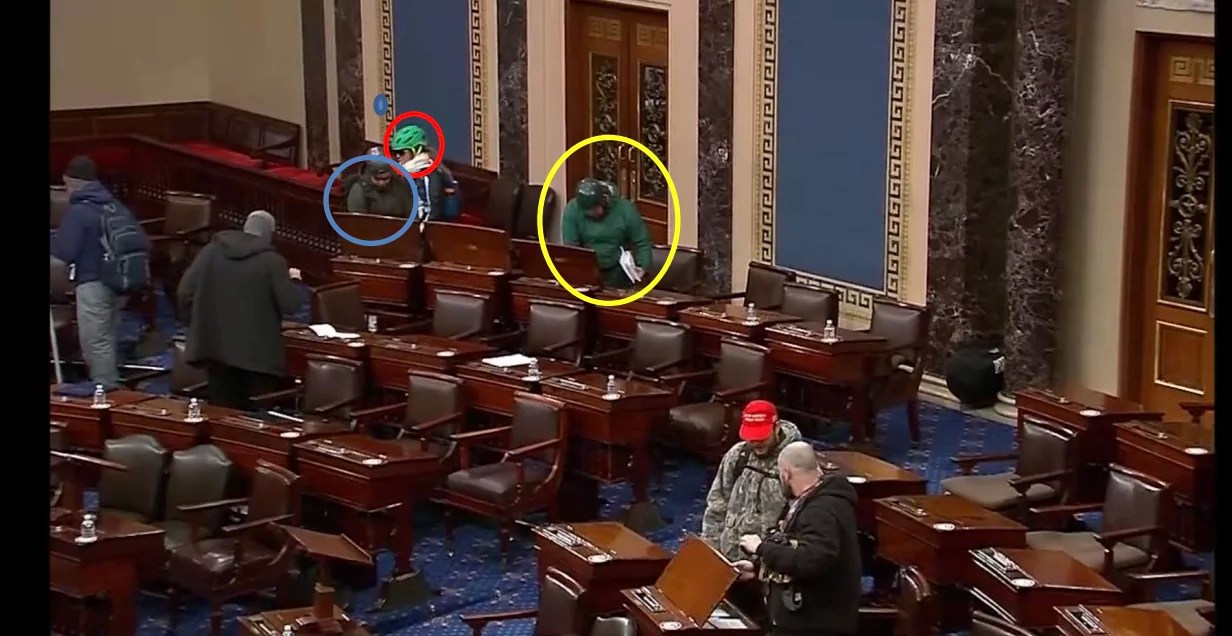
Stottlemyer pleaded guilty in 2022 to one charge of obstructing an official proceeding, admitting that she illegally entered the Capitol, wandered into House Speaker Nancy Pelosi’s (D-CA) suite and the Senate Chamber, and rifled through senators’ papers.

The New Atlantis
Tara Stottlemyer, who is circled in red, examines papers in the Senate chamber after breaching the Capitol on Jan. 6, 2021. (Department of Justice)

Her attorney argued that under the Supreme Court’s new requirement for bringing obstruction charges, Stottlemyer’s guilty plea and sentence were “constitutionally infirm and must be vacated.” She has already served her jail time and is currently in the probation phase of sentencing.

Prosecutors responded that the high court “did not reject the application” of the obstruction charge “whole cloth” but that they needed until September to respond to Stottlemyer’s request “so that this process may take place efficiently and thoughtfully.”

Judge Timothy Kelly, who is presiding over that case, denied the request and gave the prosecutors until July 30 to issue their response.

Donovan Crowl was convicted of obstruction and civil disorder, and earlier this year, Judge Amit Mehta agreed to push his sentencing hearing until late July in anticipation of the Supreme Court’s decision.

On July 1, prosecutors again asked for extra time to “assess the impact” of the Fischer case on Crowl.

“The United States of America respectfully requests that the court continue Defendant Donovan Crowl’s sentencing hearing, which is currently scheduled for July 25, 2024, for a period of 30-60 days, in light of the decision issued by the Supreme Court last week in United States v. Fischer,” the prosecutors wrote.

Fischer was one of two Supreme Court decisions that dealt blows to the DOJ’s Jan. 6 prosecution efforts. In the case of Trump v. United States, the high court determined that presidents have some absolute immunity from criminal prosecution.

The decision effectively guaranteed that special counsel Jack Smith would need to reconfigure his four election interference charges against Trump. Two of the charges are also tied to the Fischer ruling, adding a layer of work for Smith as he attempts to salvage his indictment of the former president.

CLICK HERE TO READ MORE FROM THE WASHINGTON EXAMINER 

Legal experts have predicted that Judge Tanya Chutkan, who is presiding over Trump’s case, will soon schedule a hearing to begin the process of stripping any presidential activity that is now deemed protected under the Supreme Court’s new guidance from the indictment.

It remains unclear how Smith will respond, but based on the high court’s framework, the special counsel has a steep uphill climb to argue Trump’s activities while he was in office are fair game to be used against him in a criminal prosecution.

Here’s what could get tossed from Trump indictment after Supreme Court ruling thumbnail

Here’s what could get tossed from Trump indictment after Supreme Court ruling

Special counsel Jack Smith accused former President Donald Trump of pressuring his vice president to derail the election certification in January 2021.

Trump’s interactions with Mike Pence were among several key acts Smith used to bring his election interference indictment against Trump, but the special counsel may now have to scrap these acts because of the Supreme Court’s decision on Monday.

The high court ruled 6-3 along ideological lines that certain official acts by presidents are not prosecutable at all, while other official acts require the government to meet a high criteria before it can criminally charge a president for them.

The ruling was a massive blow to Smith’s case, which could look like a shell of its former self once the lower courts have sifted through it to align it with the Supreme Court’s guidance.

The decision came after Trump argued all four of his charges should be dropped because he had absolute immunity as president, which, he said, protected him from prosecution. The district court and appellate court in Washington, D.C., rejected Trump’s claims, but the Supreme Court partly agreed with Trump.

The high court’s majority divided presidential acts into three categories: official acts that are absolutely immune from prosecution, official acts that are presumptively immune from prosecution until the government can prove the prosecution would not threaten the authority of the executive branch, and unofficial acts, which can always be prosecuted.

Judge Tanya Chutkan, who is presiding over Trump’s case at the lower court level, must now hear arguments from parties about which specific acts are which and make excisions in Trump’s indictment where appropriate.

Chief Justice John Roberts offered a roadmap for Chutkan, saying Trump’s communication with his Department of Justice officials when he was in office were core functions of Trump’s job, for which he can absolutely not be prosecuted. Trump’s communication with his vice president or state officials was less clear cut, Roberts wrote, noting the lower courts would have to sort that out.

Complicating matters, Roberts wrote that prosecutors are not to raise questions about the motives behind a president’s actions or use immunized official acts as evidence. These activities would serve to “distort Presidential decisionmaking,” Roberts said.

The question of how the Supreme Court’s decision will look in practice is not fully clear at this stage, but below are examples of alleged acts in Smith’s indictment that are now in jeopardy.

Trump’s exchanges with Department of Justice officials

Smith repeatedly cited conversations Trump had with acting Attorney General Jeffrey Rosen and other DOJ officials in his indictment. To support the allegation that Trump knowingly defrauded the United States and deceived voters, Smith alleged the DOJ officials told Trump his claims about widespread voter fraud were unfounded.

“On December 31 and January 3, the Defendant repeatedly raised with the Acting Attorney General and Acting Deputy Attorney General the allegation that in Pennsylvania, there had been 205,000 more votes than voters,” Smith wrote. “Each time, the Justice Department officials informed the Defendant that his claim was false.”

Because the Supreme Court said DOJ communication is off limits from prosecution, Smith will likely no longer be able to rely on these details to support his charges.

Trump’s exchanges with Jeffrey Clark

Clark appears as an unnamed co-conspirator in Trump’s indictment. He served as acting head of the DOJ’s Civil Division in 2020, and Smith alleged that Trump conspired with Clark on phone calls to circumvent his superiors at the DOJ in an effort to help Trump pressure state officials to overturn the election.

As a DOJ official, Clark’s communication with Trump may now be stripped from the case.

Moreover, Clark has reason to celebrate the Supreme Court’s decision for his own purposes.

Clark was indicted along with Trump and others in a separate election interference case in Georgia, and the judge there may need to take his cues from the high court and reevaluate some of the charges. Clark was also at risk of losing his bar license because of the election cases, but he may avoid disbarment now.

Trump’s alleged pressure on Pence

While the Supreme Court did not delve into Trump’s indictment to separate all acts into the three categories it laid out, it did explicitly highlight Trump’s interactions with his vice president as an example of what will become a “difficult question” for Chutkan.

“The indictment’s allegations that Trump attempted to pressure the Vice President to take particular acts in connection with his role at the certification proceeding thus involve official conduct, and Trump is at least presumptively immune from prosecution for such conduct,” Roberts wrote. “The question then becomes whether that presumption of immunity is rebutted under the circumstances. It is the Government’s burden to rebut the presumption of immunity.”

Smith alleged Trump conspired with others to attempt to “enlist the Vice President to use his ceremonial role at the January 6 certification proceeding to fraudulently alter the election results.”

According to the Supreme Court, Smith will have to prove to Chutkan in the coming months that accusing Trump of such a pressure campaign does not threaten the authority of the executive branch.

Trump’s comments to the public

The Supreme Court said that like communication with Pence, Trump’s “comments to the general public” could also be stripped from Smith’s prosecution now.

Trump was a frequent social media user in 2020 and 2021, and Smith seized on some of these posts to support his charges that Trump conspired to violate the rights of voters.

CLICK HERE TO READ MORE FROM THE WASHINGTON EXAMINER 

“On December 3, the Defendant issued a Tweet amplifying the knowingly false claims made in Co Conspirator 1’s [Rudy Giuliani’s] presentation in Georgia,” Smith wrote, adding that Trump posted that Democrats were “ballot stuffing” and that Rudy Giuliani’s presentation meant an “easy win” for Trump in the battleground state.

Smith will now have to justify to Chutkan that these posts were unofficial acts or official acts that are not immune from prosecution if he would like to use them against Trump.

What happens next in Jack Smith’s diminished Jan. 6 case thumbnail

What happens next in Jack Smith’s diminished Jan. 6 case

The Supreme Court gave a lower court in Washington, D.C., on Monday the monumental task of determining what acts are official and unofficial in the election interference case against former President Donald Trump.

The high court’s 6-3 decision along ideological lines was a massive victory for Trump, as it found that presidents cannot be prosecuted for actions they took in their official capacity unless the Department of Justice can prove the prosecution will not threaten the authority of the executive branch as a whole.

The Supreme Court also found that evidence encompassing a president’s official acts cannot be used in court, which is expected to weaken special counsel Jack Smith’s case severely because he cites several such acts in the charges he brought against Trump.

The full effects of the complicated and unprecedented nature of the decision remain to be seen.

Judge Tanya Chutkan, who is presiding over Trump’s case at the district court level, must first hold a hearing to begin the tall order of weeding out parts of Trump’s indictment. Trump will also have options to challenge her orders, which could dramatically postpone any trial in the case.

Smith brought the indictment against Trump last year, alleging the former president conspired to defraud the government and violate the rights of voters during the 2020 election. The 45-page document included a wealth of detail to support the charges, and Smith may now need to excise significant portions of it in the wake of the Supreme Court’s decision.

Trump had argued to the courts that all of his charges should be dropped because he was protected from prosecution by presidential immunity, and Chutkan and the appellate court in Washington were quick to deny his claim. In its decision, the Supreme Court rebuked the lower courts for rushing to decide Trump was not immune from prosecution.

The justices said the lower courts must now take the time to “analyze the conduct alleged in the indictment” and determine which of Trump’s actions cannot be used as evidence and which ones he cannot be criminally charged for.

Smith, for instance, alleged that former Deputy Attorney General Jeffrey Rosen privately told Trump his claims about widespread voter fraud were unfounded. Trump communicating with executive branch officeholders is “readily categorized” as an official act, Chief Justice John Roberts wrote.

The conversations with Rosen, or with former Vice President Mike Pence, may now need to be carved out of Smith’s indictment.

The decision will have reach beyond Trump’s indictment in Washington, however. For example, Fulton County District Attorney Fani Willis brought a separate criminal indictment against Trump and 18 others at the state level in Georgia for election-related activity.

Andrew Fleischman, a Georgia-based defense attorney, observed that Willis’s case may face insurmountable hurdles now. The case is already on pause indefinitely while a higher state court reviews a question about her disqualification, but once it resumes, the judge there will then have to take under consideration the Supreme Court’s decision.

“Here’s the part that probably borks the Georgia case against Trump, at least for the foreseeable future. A judge has to dig through this extremely complicated RICO indictment and decide, with no established test, if Trump was being official,” Fleischman wrote on X.

Other officials from Trump’s administration stand to benefit from the decision. Former DOJ official Jeffrey Clark, for example, was indicted in Georgia for his involvement in an alternate electors plan and is at risk of losing his bar license in Washington.

The group Center for Renewing America responded to the Supreme Court’s decision by calling for Clark’s charges to be dismissed in Georgia and with the District of Columbia Bar.

On top of the immunity decision, the Supreme Court also decided last week that prosecutors and judges had used an Enron-era obstruction charge too broadly. Two of Smith’s four charges against Trump fall under the high court’s decision, meaning Trump could now rely on the decision to fight those charges if they still remain in any form once immunity claims are addressed. Smith has argued his obstruction charges against Trump fall under the Supreme Court’s newly narrowed interpretation of the law.

CLICK HERE TO READ MORE FROM THE WASHINGTON EXAMINER

Smith’s only saving grace in the decision was that the justices unequivocally said the unofficial acts of presidents are not immune from criminal prosecution.

Regardless, the new challenges imposed on the district court mean Trump, the presumptive Republican presidential nominee, will likely not see a trial before the election.

This story is developing.