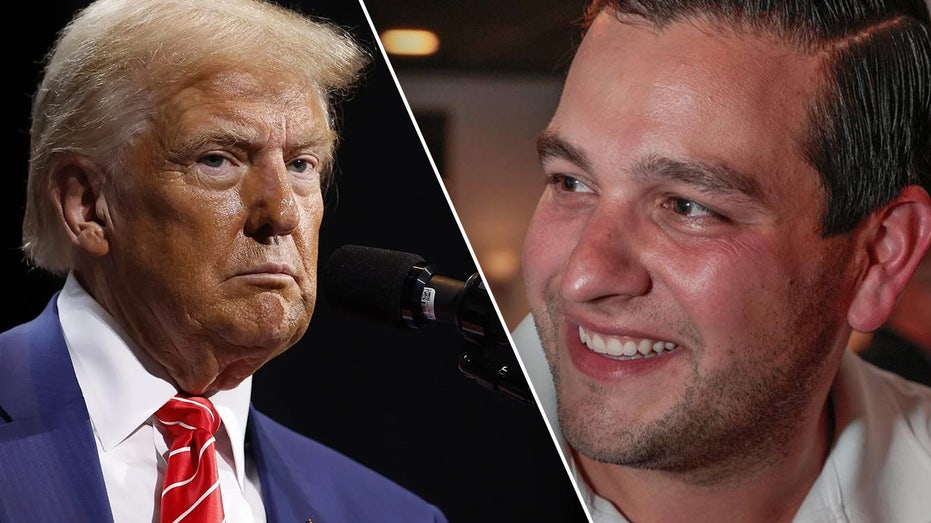
Trump picks Miami-Dade County Commissioner Kevin Marino Cabrera for Panama ambassador thumbnail

Trump picks Miami-Dade County Commissioner Kevin Marino Cabrera for Panama ambassador

President-elect Trump picked Miami-Dade County Commissioner Kevin Marino Cabrera to serve as ambassador to Panama.

Calling the Miami-Dade County Commissioner a “fierce fighter,” Trump said that he would advance the “MAGA agenda” to the Central American country.

“Kevin is a fierce fighter for America First principles. As a Miami-Dade County Commissioner, and Vice Chairman of the International Trade Consortium, he has been instrumental in driving Economic growth, and fostering International partnerships,” Trump wrote in the Wednesday announcement. “In 2020, Kevin did an incredible job as my Florida State Director and, this year, advanced our MAGA Agenda as a Member of the RNC Platform Committee.”

“Few understand Latin American politics as well as Kevin – He will do a FANTASTIC job representing our Nation’s interests in Panama!” he said.

GET TO KNOW DONALD TRUMP’S CABINET: WHO HAS THE PRESIDENT-ELECT PICKED SO FAR?

The announcement came after Trump said that Panama was “a Country that is ripping us off on the Panama Canal, far beyond their wildest dreams.”

In a post on Truth Social on Wednesday, Trump also accused Chinese soldiers of illegally operating the canal and “always making certain that the United States puts in Billions of Dollars in ‘repair’ money but will have absolutely nothing to say about ‘anything.'”

In a statement on X, Cabrera thanked Trump for the nomination.

HOW PRESIDENT-ELECT TRUMP COULD PULL OFF ‘THE DEAL OF THE CENTURY’ AS HE ENTERS OFFICE

“I’m humbled and honored by your nomination to serve as the U.S. Ambassador to Panama,” he wrote. “Let’s get to work!”

Cabrera won his county election two years ago following an endorsement by Trump. 

He also served as the Florida state director for Trump’s 2020 campaign and was a member of the RNC Platform Committee.

2024-12-25 22:50:00, http://s.wordpress.com/mshots/v1/https%3A%2F%2Fwww.foxnews.com%2Fpolitics%2Ftrump-picks-miami-dade-county-commissioner-kevin-marino-cabrera-panama-ambassador?w=600&h=450, President-elect Trump picked Miami-Dade County Commissioner Kevin Marino Cabrera to serve as ambassador to Panama. Calling the Miami-Dade County Commissioner a “fierce fighter,” Trump said that he would advance the “MAGA agenda” to the Central American country. “Kevin is a fierce fighter for America First principles. As a Miami-Dade County Commissioner, and Vice Chairman of,

President-elect Trump picked Miami-Dade County Commissioner Kevin Marino Cabrera to serve as ambassador to Panama.

Calling the Miami-Dade County Commissioner a “fierce fighter,” Trump said that he would advance the “MAGA agenda” to the Central American country.

“Kevin is a fierce fighter for America First principles. As a Miami-Dade County Commissioner, and Vice Chairman of the International Trade Consortium, he has been instrumental in driving Economic growth, and fostering International partnerships,” Trump wrote in the Wednesday announcement. “In 2020, Kevin did an incredible job as my Florida State Director and, this year, advanced our MAGA Agenda as a Member of the RNC Platform Committee.”

“Few understand Latin American politics as well as Kevin – He will do a FANTASTIC job representing our Nation’s interests in Panama!” he said.

GET TO KNOW DONALD TRUMP’S CABINET: WHO HAS THE PRESIDENT-ELECT PICKED SO FAR?

The announcement came after Trump said that Panama was “a Country that is ripping us off on the Panama Canal, far beyond their wildest dreams.”

In a post on Truth Social on Wednesday, Trump also accused Chinese soldiers of illegally operating the canal and “always making certain that the United States puts in Billions of Dollars in ‘repair’ money but will have absolutely nothing to say about ‘anything.'”

In a statement on X, Cabrera thanked Trump for the nomination.

HOW PRESIDENT-ELECT TRUMP COULD PULL OFF ‘THE DEAL OF THE CENTURY’ AS HE ENTERS OFFICE

“I’m humbled and honored by your nomination to serve as the U.S. Ambassador to Panama,” he wrote. “Let’s get to work!”

Cabrera won his county election two years ago following an endorsement by Trump. 

He also served as the Florida state director for Trump’s 2020 campaign and was a member of the RNC Platform Committee.

, President-elect Trump picked Miami-Dade County Commissioner Kevin Marino Cabrera to serve as ambassador to Panama. Calling the Miami-Dade County Commissioner a “fierce fighter,” Trump said that he would advance the “MAGA agenda” to the Central American country. “Kevin is a fierce fighter for America First principles. As a Miami-Dade County Commissioner, and Vice Chairman of the International Trade Consortium, he has been instrumental in driving Economic growth, and fostering International partnerships,” Trump wrote in the Wednesday announcement. “In 2020, Kevin did an incredible job as my Florida State Director and, this year, advanced our MAGA Agenda as a Member of the RNC Platform Committee.” “Few understand Latin American politics as well as Kevin – He will do a FANTASTIC job representing our Nation’s interests in Panama!” he said. GET TO KNOW DONALD TRUMP’S CABINET: WHO HAS THE PRESIDENT-ELECT PICKED SO FAR? The announcement came after Trump said that Panama was “a Country that is ripping us off on the Panama Canal, far beyond their wildest dreams.” In a post on Truth Social on Wednesday, Trump also accused Chinese soldiers of illegally operating the canal and “always making certain that the United States puts in Billions of Dollars in ‘repair’ money but will have absolutely nothing to say about ‘anything.'” In a statement on X, Cabrera thanked Trump for the nomination. HOW PRESIDENT-ELECT TRUMP COULD PULL OFF ‘THE DEAL OF THE CENTURY’ AS HE ENTERS OFFICE “I’m humbled and honored by your nomination to serve as the U.S. Ambassador to Panama,” he wrote. “Let’s get to work!” Cabrera won his county election two years ago following an endorsement by Trump.  He also served as the Florida state director for Trump’s 2020 campaign and was a member of the RNC Platform Committee., , Trump picks Miami-Dade County Commissioner Kevin Marino Cabrera for Panama ambassador, https://a57.foxnews.com/static.foxnews.com/foxnews.com/content/uploads/2024/12/931/523/trumpcabera.jpg?ve=1&tl=1, Latest Political News on Fox News, Read all about the political news happening with Fox News. Learn about political parties, political campaigns, and international politics today., https://global.fncstatic.com/static/orion/styles/img/fox-news/logos/fox-news-desktop.png, https://moxie.foxnews.com/google-publisher/politics.xml, ,

Major changes coming to Social Security regardless of Trump’s presence thumbnail

Major changes coming to Social Security regardless of Trump’s presence

In the spirit of the season, the Washington Examiner has identified 12 issues we believe will shape and influence 2025 and beyond. The incoming Trump administration has made the fight against illegal immigration and the use of tariffs its flagship policy items. The U.S. will also possibly undergo a health revolution, while very real questions need to be answered on everything from social security reform to the military to the changing landscape of the energy sector. Part Three is on Social Security.

Retirees make up a larger proportion of citizens than ever before after birth rates sank to historic lows over the past few years, hitting below the replacement rate that is needed to sustain the United States’s population. 

Nearly 73 million people across the country now receive Social Security Administration benefits as part of a vast federal social safety net program. 

There are a few changes coming to Social Security in 2025, regardless of President-elect Donald Trump’s actions during his second term. Here’s a rundown of four shifts you can prepare for ahead of the holidays, largely due to inflation and wage trends. 

BUSINESS-UNION DIVIDE A ‘TOUGH STRADDLE’ FOR TRUMP AHEAD OF SECOND TERM

COLA Adjustments

The cost-of-living adjustment (COLA) is one of the biggest changes slated to come to Social Security next year. 

“The COLA is tied to inflationary changes, so as the rate of inflation decreases, so does the COLA,” Kevin Thompson, a finance expert, told Newsweek. “This will be the lowest increase in the COLA since 2021 when the increase was 1.3 percent.”

In Jan. 2025,  Social Security recipients will see a 2.5% raise in their payments, adding around $48 per month for the average filer and an estimated $39 per month for the typical worker with eligible disabilities.

The COLA has increased by an average of 2.6% annually over the past decade, although last year’s COLA increase was calculated to be 3.4%. 

WHICH ITEMS WOULD BE AFFECTED BY TRUMP’S PROPOSED TARIFFS ON CANADA AND MEXICO

Increases in Medicare B premiums

Social Security beneficiaries typically have their Medicare Part B premium deducted directly from their monthly payment if they are enrolled in the federal health insurance program. 

Medicare is a federal health insurance program for citizens 65 years or older. It also covers eligible beneficiaries younger than 65 with certain health conditions. An estimated 56.1 million people across the country received Medicare Part B in 2019. 

Beginning in 2025, Social Security beneficiaries on the Medicare B plan will start to see $10.30 more a month deducted from their monthly payment. 

That’s because Medicare Part B premiums will increase from $174.70 per month to $185 per month.

Although the premium increase will be somewhat offset by COLA adjustments, it’s still a change beneficiaries should be tracking.

WHAT TRUMP’S ECONOMIC PICKS COULD FORETELL FOR SECOND ADMINISTRATION

“I would also remind seniors that Medicare premiums that mandatorily come out of Social Security have been growing at a rate of 7.42 percent for Part B and 6.73 percent on Part D,” Joseph Patrick Roop, the president of Belmont Capital Advisors told Newsweek. “This is a large driving factor why many times the revised income goes down on Social Security even after a small COLA.”

Earnings test adjustment

Workers are affected by a federal policy called the earnings test limit, which may temporarily reduce their social security benefits until they reach full retirement age.

In 2024, the earnings test limit for those for those who will not reach FRA until a later year was $22,320. In 2025, the earnings test limit will increase to $23,400, and beneficiaries who have not reached FRA will have $1 withheld from their Social Security payment for every $2 in work income.

That means the beneficiaries making above $23,400 a year will be able to keep over $1,000 more of their money annually starting in 2025 before they face benefit reductions.

Tax increases

More people paying into Social Security will have to pay a tax on the program in 2025. 

That’s because the maximum taxable earnings limit, which is the highest income subject to Social Security tax, is set to increase. 

In  2024, the Social Security tax limit was $168,600, meaning people who earned more than that amount were not required to pay the tax. The tax limit in 2023 was $160,200. 

In 2025, the maximum taxable earnings limit is rising to $176,100. Any current worker earning up to this amount will be required to pay the Social Security tax of 6.2% on their income each for both employees and employers.

What’s next?

Trump pledged to stay far away from making cuts to Social Security on the campaign trail this year.

However, experts warn reforms are needed as the federal program faces a looming crisis.

CLICK HERE TO READ MORE FROM THE WASHINGTON EXAMINER

Social Security faces a $3.5 trillion shortfall over the next decade, according to the Tax Foundation.

“Fear not about Social Security going away. That’s not going to happen,” said Stephen Goss, chief actuary at the Social Security Administration, during a panel discussion in October. “The challenge is for Congress to come up with ways to either bring down the scheduled benefits, raise the tax revenue coming in, or some combination of the two, which they have always done in the entire history of this program.”

2024-12-27 13:00:00, http://s.wordpress.com/mshots/v1/https%3A%2F%2Fwww.washingtonexaminer.com%2Fin_focus%2F3256937%2Fmajor-changes-coming-to-social-security-regardless-trump-presence%2F?w=600&h=450, In the spirit of the season, the Washington Examiner has identified 12 issues we believe will shape and influence 2025 and beyond. The incoming Trump administration has made the fight against illegal immigration and the use of tariffs its flagship policy items. The U.S. will also possibly undergo a health revolution, while very real questions need to be answered on everything from social security,

In the spirit of the season, the Washington Examiner has identified 12 issues we believe will shape and influence 2025 and beyond. The incoming Trump administration has made the fight against illegal immigration and the use of tariffs its flagship policy items. The U.S. will also possibly undergo a health revolution, while very real questions need to be answered on everything from social security reform to the military to the changing landscape of the energy sector. Part Three is on Social Security.

Retirees make up a larger proportion of citizens than ever before after birth rates sank to historic lows over the past few years, hitting below the replacement rate that is needed to sustain the United States’s population. 

Nearly 73 million people across the country now receive Social Security Administration benefits as part of a vast federal social safety net program. 

There are a few changes coming to Social Security in 2025, regardless of President-elect Donald Trump’s actions during his second term. Here’s a rundown of four shifts you can prepare for ahead of the holidays, largely due to inflation and wage trends. 

BUSINESS-UNION DIVIDE A ‘TOUGH STRADDLE’ FOR TRUMP AHEAD OF SECOND TERM

COLA Adjustments

The cost-of-living adjustment (COLA) is one of the biggest changes slated to come to Social Security next year. 

“The COLA is tied to inflationary changes, so as the rate of inflation decreases, so does the COLA,” Kevin Thompson, a finance expert, told Newsweek. “This will be the lowest increase in the COLA since 2021 when the increase was 1.3 percent.”

In Jan. 2025,  Social Security recipients will see a 2.5% raise in their payments, adding around $48 per month for the average filer and an estimated $39 per month for the typical worker with eligible disabilities.

The COLA has increased by an average of 2.6% annually over the past decade, although last year’s COLA increase was calculated to be 3.4%. 

WHICH ITEMS WOULD BE AFFECTED BY TRUMP’S PROPOSED TARIFFS ON CANADA AND MEXICO

Increases in Medicare B premiums

Social Security beneficiaries typically have their Medicare Part B premium deducted directly from their monthly payment if they are enrolled in the federal health insurance program. 

Medicare is a federal health insurance program for citizens 65 years or older. It also covers eligible beneficiaries younger than 65 with certain health conditions. An estimated 56.1 million people across the country received Medicare Part B in 2019. 

Beginning in 2025, Social Security beneficiaries on the Medicare B plan will start to see $10.30 more a month deducted from their monthly payment. 

That’s because Medicare Part B premiums will increase from $174.70 per month to $185 per month.

Although the premium increase will be somewhat offset by COLA adjustments, it’s still a change beneficiaries should be tracking.

WHAT TRUMP’S ECONOMIC PICKS COULD FORETELL FOR SECOND ADMINISTRATION

“I would also remind seniors that Medicare premiums that mandatorily come out of Social Security have been growing at a rate of 7.42 percent for Part B and 6.73 percent on Part D,” Joseph Patrick Roop, the president of Belmont Capital Advisors told Newsweek. “This is a large driving factor why many times the revised income goes down on Social Security even after a small COLA.”

Earnings test adjustment

Workers are affected by a federal policy called the earnings test limit, which may temporarily reduce their social security benefits until they reach full retirement age.

In 2024, the earnings test limit for those for those who will not reach FRA until a later year was $22,320. In 2025, the earnings test limit will increase to $23,400, and beneficiaries who have not reached FRA will have $1 withheld from their Social Security payment for every $2 in work income.

That means the beneficiaries making above $23,400 a year will be able to keep over $1,000 more of their money annually starting in 2025 before they face benefit reductions.

Tax increases

More people paying into Social Security will have to pay a tax on the program in 2025. 

That’s because the maximum taxable earnings limit, which is the highest income subject to Social Security tax, is set to increase. 

In  2024, the Social Security tax limit was $168,600, meaning people who earned more than that amount were not required to pay the tax. The tax limit in 2023 was $160,200. 

In 2025, the maximum taxable earnings limit is rising to $176,100. Any current worker earning up to this amount will be required to pay the Social Security tax of 6.2% on their income each for both employees and employers.

What’s next?

Trump pledged to stay far away from making cuts to Social Security on the campaign trail this year.

However, experts warn reforms are needed as the federal program faces a looming crisis.

CLICK HERE TO READ MORE FROM THE WASHINGTON EXAMINER

Social Security faces a $3.5 trillion shortfall over the next decade, according to the Tax Foundation.

“Fear not about Social Security going away. That’s not going to happen,” said Stephen Goss, chief actuary at the Social Security Administration, during a panel discussion in October. “The challenge is for Congress to come up with ways to either bring down the scheduled benefits, raise the tax revenue coming in, or some combination of the two, which they have always done in the entire history of this program.”

, In the spirit of the season, the Washington Examiner has identified 12 issues we believe will shape and influence 2025 and beyond. The incoming Trump administration has made the fight against illegal immigration and the use of tariffs its flagship policy items. The U.S. will also possibly undergo a health revolution, while very real questions need to be answered on everything from social security reform to the military to the changing landscape of the energy sector. Part Three is on Social Security . Retirees make up a larger proportion of citizens than ever before after birth rates sank to historic lows over the past few years, hitting below the replacement rate that is needed to sustain the United States’s population.  Nearly 73 million people across the country now receive Social Security Administration benefits as part of a vast federal social safety net program.  There are a few changes coming to Social Security in 2025, regardless of President-elect Donald Trump’s actions during his second term. Here’s a rundown of four shifts you can prepare for ahead of the holidays, largely due to inflation and wage trends.  BUSINESS-UNION DIVIDE A ‘TOUGH STRADDLE’ FOR TRUMP AHEAD OF SECOND TERM COLA Adjustments The cost-of-living adjustment (COLA) is one of the biggest changes slated to come to Social Security next year.  “The COLA is tied to inflationary changes, so as the rate of inflation decreases, so does the COLA,” Kevin Thompson, a finance expert, told  Newsweek . “This will be the lowest increase in the COLA since 2021 when the increase was 1.3 percent.” In Jan. 2025,  Social Security recipients will see a 2.5% raise in their payments, adding around $48 per month for the average filer and an estimated $39 per month for the typical worker with eligible disabilities. The COLA has increased by an average of 2.6% annually over the past decade, although last year’s COLA increase was calculated to be 3.4%.  WHICH ITEMS WOULD BE AFFECTED BY TRUMP’S PROPOSED TARIFFS ON CANADA AND MEXICO Increases in Medicare B premiums Social Security beneficiaries typically have their Medicare Part B premium deducted directly from their monthly payment if they are enrolled in the federal health insurance program.  Medicare is a federal health insurance program for citizens 65 years or older. It also covers eligible beneficiaries younger than 65 with certain health conditions. An estimated 56.1 million people across the country received Medicare Part B in 2019.  Beginning in 2025, Social Security beneficiaries on the Medicare B plan will start to see $10.30 more a month deducted from their monthly payment.  That’s because Medicare Part B premiums will increase from $174.70 per month to $185 per month. Although the premium increase will be somewhat offset by COLA adjustments, it’s still a change beneficiaries should be tracking. WHAT TRUMP’S ECONOMIC PICKS COULD FORETELL FOR SECOND ADMINISTRATION “I would also remind seniors that Medicare premiums that mandatorily come out of Social Security have been growing at a rate of 7.42 percent for Part B and 6.73 percent on Part D,” Joseph Patrick Roop, the president of Belmont Capital Advisors told Newsweek. “This is a large driving factor why many times the revised income goes down on Social Security even after a small COLA.” Earnings test adjustment Workers are affected by a federal policy called the earnings test limit, which may temporarily reduce their social security benefits until they reach full retirement age. In 2024, the earnings test limit for those for those who will not reach FRA until a later year was $22,320. In 2025, the earnings test limit will increase to $23,400, and beneficiaries who have not reached FRA will have $1 withheld from their Social Security payment for every $2 in work income. That means the beneficiaries making above $23,400 a year will be able to keep over $1,000 more of their money annually starting in 2025 before they face benefit reductions. Tax increases More people paying into Social Security will have to pay a tax on the program in 2025.  That’s because the maximum taxable earnings limit, which is the highest income subject to Social Security tax, is set to increase.  In  2024, the Social Security tax limit was $168,600, meaning people who earned more than that amount were not required to pay the tax. The tax limit in 2023 was $160,200.  In 2025, the maximum taxable earnings limit is rising to $176,100. Any current worker earning up to this amount will be required to pay the Social Security tax of 6.2% on their income each for both employees and employers. What’s next? Trump pledged to stay far away from making cuts to Social Security on the campaign trail this year. However, experts warn reforms are needed as the federal program faces a looming crisis. CLICK HERE TO READ MORE FROM THE WASHINGTON EXAMINER Social Security faces a $3.5 trillion shortfall over the next decade, according to the Tax Foundation. “Fear not about Social Security going away. That’s not going to happen,” said Stephen Goss, chief actuary at the Social Security Administration, during a panel discussion in October. “The challenge is for Congress to come up with ways to either bring down the scheduled benefits, raise the tax revenue coming in, or some combination of the two, which they have always done in the entire history of this program.”, , Major changes coming to Social Security regardless of Trump’s presence, https://www.washingtonexaminer.com/wp-content/uploads/2024/10/donald-trump-social-security-tax.webp, Washington Examiner, Political News and Conservative Analysis About Congress, the President, and the Federal Government, https://www.washingtonexaminer.com/wp-content/uploads/2023/11/cropped-favicon-32×32.png, https://www.washingtonexaminer.com/feed/, Emily Hallas,

Social Security update: First round of January payments worth up to $4,873 goes out in 12 days thumbnail

Social Security update: First round of January payments worth up to $4,873 goes out in 12 days

Millions of Social Security beneficiaries will receive their first round of January retirement checks, worth up to $4,873 per check for those who retire at 70 years old, in 12 days.

Social Security beneficiaries who were born between the 1st and the 10th of a month will receive their regular monthly checks for January from the Social Security Administration on Jan. 8, 2025.

Retirees receive their Social Security check depending on when their birthday falls, and the checks are sent out in three different waves.

The amount of Social Security benefits retirees receive depends on their age, the number of years they paid into the system, and the amount of money they paid to Social Security. The highest-income earners who retired at age 70 can expect to receive a maximum of $4,873 each month. Those who retire at age 62, the earliest one can begin collecting benefits, can collect a maximum of $2,710 each month.

Beneficiaries can see a personalized estimate of how much they can expect each month through the SSA’s calculator.

CLICK HERE TO READ MORE FROM THE WASHINGTON EXAMINER

Monthly Social Security payments differ from other checks the SSA sends out, such as disability insurance or Supplemental Security Income. SSI payments are mailed to recipients by the beginning of each month to those with debilitating disabilities that may affect their income.

The federal government has provided Social Security benefits to retirees since 1935. The program is financed by a payroll tax paid by employers and employees. However, analysts estimate the SSA will no longer be able to give out full payments to recipients as early as 2034 due to a rising number of retirees and a shrinking number of workers. It is up to Congress to make changes to ensure recipients don’t see a dip in payments.

2024-12-27 12:00:00, http://s.wordpress.com/mshots/v1/https%3A%2F%2Fwww.washingtonexaminer.com%2Fpolicy%2Ffinance-and-economy%2F3270590%2Fsocial-security-payment-first-round-12-days%2F?w=600&h=450, Millions of Social Security beneficiaries will receive their first round of January retirement checks, worth up to $4,873 per check for those who retire at 70 years old, in 12 days. Social Security beneficiaries who were born between the 1st and the 10th of a month will receive their regular monthly checks for January from the Social Security Administration on Jan. 8, 2025. Retirees receive their Social Security,

Millions of Social Security beneficiaries will receive their first round of January retirement checks, worth up to $4,873 per check for those who retire at 70 years old, in 12 days.

Social Security beneficiaries who were born between the 1st and the 10th of a month will receive their regular monthly checks for January from the Social Security Administration on Jan. 8, 2025.

Retirees receive their Social Security check depending on when their birthday falls, and the checks are sent out in three different waves.

The amount of Social Security benefits retirees receive depends on their age, the number of years they paid into the system, and the amount of money they paid to Social Security. The highest-income earners who retired at age 70 can expect to receive a maximum of $4,873 each month. Those who retire at age 62, the earliest one can begin collecting benefits, can collect a maximum of $2,710 each month.

Beneficiaries can see a personalized estimate of how much they can expect each month through the SSA’s calculator.

CLICK HERE TO READ MORE FROM THE WASHINGTON EXAMINER

Monthly Social Security payments differ from other checks the SSA sends out, such as disability insurance or Supplemental Security Income. SSI payments are mailed to recipients by the beginning of each month to those with debilitating disabilities that may affect their income.

The federal government has provided Social Security benefits to retirees since 1935. The program is financed by a payroll tax paid by employers and employees. However, analysts estimate the SSA will no longer be able to give out full payments to recipients as early as 2034 due to a rising number of retirees and a shrinking number of workers. It is up to Congress to make changes to ensure recipients don’t see a dip in payments.

, Millions of Social Security beneficiaries will receive their first round of January retirement checks, worth up to $4,873 per check for those who retire at 70 years old, in 12 days. Social Security beneficiaries who were born between the 1st and the 10th of a month will receive their regular monthly checks for January from the Social Security Administration on Jan. 8, 2025. Retirees receive their Social Security check depending on when their birthday falls, and the checks are sent out in three different waves. The amount of Social Security benefits retirees receive depends on their age, the number of years they paid into the system, and the amount of money they paid to Social Security. The highest-income earners who retired at age 70 can expect to receive a maximum of $4,873 each month. Those who retire at age 62, the earliest one can begin collecting benefits, can collect a maximum of $2,710 each month. Beneficiaries can see a personalized estimate of how much they can expect each month through the SSA’s calculator. CLICK HERE TO READ MORE FROM THE WASHINGTON EXAMINER Monthly Social Security payments differ from other checks the SSA sends out, such as disability insurance or Supplemental Security Income. SSI payments are mailed to recipients by the beginning of each month to those with debilitating disabilities that may affect their income. The federal government has provided Social Security benefits to retirees since 1935. The program is financed by a payroll tax paid by employers and employees. However, analysts estimate the SSA will no longer be able to give out full payments to recipients as early as 2034 due to a rising number of retirees and a shrinking number of workers. It is up to Congress to make changes to ensure recipients don’t see a dip in payments., , Social Security update: First round of January payments worth up to $4,873 goes out in 12 days, https://www.washingtonexaminer.com/wp-content/uploads/2024/06/AP23285408619913.jpg.optimal.jpg, Washington Examiner, Political News and Conservative Analysis About Congress, the President, and the Federal Government, https://www.washingtonexaminer.com/wp-content/uploads/2023/11/cropped-favicon-32×32.png, https://www.washingtonexaminer.com/feed/, Ross O'Keefe,

Social Security update: January direct payment worth $943 goes out in four days thumbnail

Social Security update: January direct payment worth $943 goes out in four days

January’s Supplemental Security Income payment, worth up to $943, will go out to millions of beneficiaries in four days.

The next SSI payments are scheduled to be distributed on Dec. 31 because Jan. 1 is a federal holiday. SSI payments are given to people living with debilitating disabilities that affect their income, according to the Social Security Administration.

COMER TO INVITE EX-SOCIAL SECURITY ADMINISTRATION CHIEF TO TESTIFY OVER TELEWORK CHANGES

To meet eligibility requirements, filers must be at least partially blind or have a “physical or mental condition(s) that seriously limits their daily activities for 12 months or more or may be expected to result in death.”

The amount beneficiaries receive depends on several factors, including the number of people filing. Applicants filing individually can receive up to $943 per month, couples filing jointly can receive up to $1,415, and essential persons, or those who provide SSI recipients with necessary care, can receive up to $472. Inflation has caused these amounts to increase by 3.2% since last year.

CLICK HERE TO READ MORE FROM THE WASHINGTON EXAMINER

Recipients can use an SSA calculator to determine their total payment.

SSI payments and regular Social Security benefits are not connected. Those who receive Social Security payments do not automatically qualify for SSI payments and vice versa.

2024-12-27 12:00:00, http://s.wordpress.com/mshots/v1/https%3A%2F%2Fwww.washingtonexaminer.com%2Fpolicy%2Ffinance-and-economy%2F3270560%2Fsocial-security-january-direct-payment-four-days%2F?w=600&h=450, January’s Supplemental Security Income payment, worth up to $943, will go out to millions of beneficiaries in four days. The next SSI payments are scheduled to be distributed on Dec. 31 because Jan. 1 is a federal holiday. SSI payments are given to people living with debilitating disabilities that affect their income, according to the Social Security Administration. COMER TO INVITE EX-SOCIAL SECURITY,

January’s Supplemental Security Income payment, worth up to $943, will go out to millions of beneficiaries in four days.

The next SSI payments are scheduled to be distributed on Dec. 31 because Jan. 1 is a federal holiday. SSI payments are given to people living with debilitating disabilities that affect their income, according to the Social Security Administration.

COMER TO INVITE EX-SOCIAL SECURITY ADMINISTRATION CHIEF TO TESTIFY OVER TELEWORK CHANGES

To meet eligibility requirements, filers must be at least partially blind or have a “physical or mental condition(s) that seriously limits their daily activities for 12 months or more or may be expected to result in death.”

The amount beneficiaries receive depends on several factors, including the number of people filing. Applicants filing individually can receive up to $943 per month, couples filing jointly can receive up to $1,415, and essential persons, or those who provide SSI recipients with necessary care, can receive up to $472. Inflation has caused these amounts to increase by 3.2% since last year.

CLICK HERE TO READ MORE FROM THE WASHINGTON EXAMINER

Recipients can use an SSA calculator to determine their total payment.

SSI payments and regular Social Security benefits are not connected. Those who receive Social Security payments do not automatically qualify for SSI payments and vice versa.

, January’s Supplemental Security Income payment, worth up to $943, will go out to millions of beneficiaries in four days. The next SSI payments are scheduled to be distributed on Dec. 31 because Jan. 1 is a federal holiday. SSI payments are given to people living with debilitating disabilities that affect their income, according to the Social Security Administration. COMER TO INVITE EX-SOCIAL SECURITY ADMINISTRATION CHIEF TO TESTIFY OVER TELEWORK CHANGES To meet eligibility requirements, filers must be at least partially blind or have a “physical or mental condition(s) that seriously limits their daily activities for 12 months or more or may be expected to result in death.” The amount beneficiaries receive depends on several factors, including the number of people filing. Applicants filing individually can receive up to $943 per month, couples filing jointly can receive up to $1,415, and essential persons, or those who provide SSI recipients with necessary care, can receive up to $472. Inflation has caused these amounts to increase by 3.2% since last year. CLICK HERE TO READ MORE FROM THE WASHINGTON EXAMINER Recipients can use an SSA calculator to determine their total payment. SSI payments and regular Social Security benefits are not connected. Those who receive Social Security payments do not automatically qualify for SSI payments and vice versa., , Social Security update: January direct payment worth $943 goes out in four days, https://www.washingtonexaminer.com/wp-content/uploads/2024/06/iStock-1155492869.jpg.optimal.jpg, Washington Examiner, Political News and Conservative Analysis About Congress, the President, and the Federal Government, https://www.washingtonexaminer.com/wp-content/uploads/2023/11/cropped-favicon-32×32.png, https://www.washingtonexaminer.com/feed/, Ross O'Keefe,

Five Jack Smith moments Republicans could investigate thumbnail

Five Jack Smith moments Republicans could investigate

President-elect Donald Trump vowed throughout his presidential campaign to seek retribution against special counsel Jack Smith, who brought criminal charges against Trump that Republicans widely criticized as unfair.

Trump and his Republican allies in Congress, who will have complete control of Washington beginning in January, now aim to turn the tables and investigate Smith’s dual prosecutions of the president-elect.

Senate and House Judiciary committee members have sent preservation notices to Smith, telling him to save his records related to Trump, a sign that the lawmakers intend to summon testimony and documents from the special counsel next year.

TRUMP DEFENDERS POISED TO GO ON OFFENSE AT DOJ

Meanwhile, Trump’s attorney general nominee, Pam Bondi, said last year in a now-viral comment that “the prosecutors will be prosecuted, the bad ones,” signaling alignment with Trump’s mission to punish Smith for his work.

Smith was forced to terminate both of his cases against Trump, and his office plans to, according to reports, disband before Trump enters the White House. At the same time, Smith and his team are plotting out how best to respond to the anticipated GOP inquiries.

Below are top grievances against Smith that could become subjects of investigations.

1. Smith’s court activity during final campaign weeks

Smith raised eyebrows by filing a behemoth motion in court in October, a month out from the presidential election, in an attempt to defend his Jan. 6 case against Trump in the wake of the Supreme Court’s landmark immunity ruling.

The document contained details that Smith was deprived of presenting in a trial (since the case never moved to a trial stage), including damning and unflattering grand jury material about how Trump went about objecting to the 2020 election results.

Former federal prosecutor Elie Honig called the move an “October cheap shot,” blasting Smith for defying Department of Justice policy that prohibits prosecutorial activity that could affect an election.

Former assistant U.S. attorney Jack Goldsmith said the move was “in clear tension with the Justice Department’s 60-day rule” and that Smith owed the public an explanation for how the filing did not constitute election interference.

2. Bratt and Cooney

House Republicans have been seeking records from the DOJ for various misconduct allegations, including against two of Smith’s prosecutors, Jay Bratt and J.P. Cooney.

A misconduct allegation against Bratt was first raised in court by an attorney representing Walt Nauta, one of the co-defendants in the classified documents case against Trump. The attorney, Stanley Woodward, said that during a closed-door meeting, Bratt violated ethics rules by bringing up Woodward’s application to become a judge while Bratt was trying to goad Woodward into complying with him in the Trump case. Smith has disputed the accusation.

Cooney’s allegation relates to a prior case when he helped prosecute Trump ally Roger Stone for lying to Congress. According to a DOJ inspector general report, Cooney wanted to impose an unusually harsh sentence on Stone, and when he was overridden, he claimed that the Trump administration gave Stone preferential treatment. The DOJ inspector general assessed in his report that this was not a “well considered” move by Cooney, but Rep. Jim Jordan (R-OH) has continued to demand more information about it.

3. Using a DC grand jury in a Florida case

Some legal analysts, such as William Shipley, who has served as counsel for dozens of Jan. 6 defendants, have questioned why Smith used a Washington-based grand jury to bring charges against Trump in Florida over his handling of classified documents.

“He was almost certain to have greater success [in Washington] in trying to evade attorney-client privilege claims, to conduct the investigation into the classified documents case that almost certainly was going to be venued in Florida,” Shipley stated on X.

Judge Aileen Cannon, a Trump appointee who presided over the case, ordered Smith last year to “address the legal propriety of using an out-of-district grand jury proceeding.”

Smith replied that he was appropriately using the Washington grand jury to investigate narrow allegations of false statements, even if it had “incidental” advantages in the broader classified documents case.

4. ‘Conspiracy against rights’

Trump has called for Smith to be arrested, but it remains unclear what charges Smith could face for his work.

Article III Project founder Mike Davis, a fervent Trump supporter, recently teased a federal law associated with law enforcement misconduct and hate crimes, known as conspiracy against rights.

“Jack Smith and his office must face severe legal, political, and financial consequences for their blatant lawfare and election interference,” Davis said.

5. Early underlying political motivations

Sen. Chuck Grassley (R-IA), the incoming chairman of the Senate Judiciary Committee, has long raised concerns about politically driven investigators in authoritative roles at the FBI, including one who Grassley said helped Smith in the early stages of his investigations into Trump.

The former longtime special agent, Timothy Thibault, who handled public corruption matters in the Washington Field Office, drew attention from Grassley and other Republicans in 2022 based on whistleblower disclosures. Grassley has since tied him to Smith’s case.

CLICK HERE TO READ MORE FROM THE WASHINGTON EXAMINER

“Jack Smith court filing released 2day is part of case started by former FBI official Thibault who was forced 2retire bc of extreme anti-Trump political bias my oversight revealed This case was politicized frm start Releasing info this way reeks of undeniable partisan tactics,” Grassley recently wrote in an X post.

Grassley also suggested in a letter last month to the DOJ that he planned to examine Thibault’s role in Smith’s work when the GOP takes control of the Senate.

2024-12-27 12:00:00, http://s.wordpress.com/mshots/v1/https%3A%2F%2Fwww.washingtonexaminer.com%2Fnews%2Fjustice%2F3267883%2Fjack-smith-moments-republicans-could-investigate%2F?w=600&h=450, President-elect Donald Trump vowed throughout his presidential campaign to seek retribution against special counsel Jack Smith, who brought criminal charges against Trump that Republicans widely criticized as unfair. Trump and his Republican allies in Congress, who will have complete control of Washington beginning in January, now aim to turn the tables and investigate Smith’s dual prosecutions of the,

President-elect Donald Trump vowed throughout his presidential campaign to seek retribution against special counsel Jack Smith, who brought criminal charges against Trump that Republicans widely criticized as unfair.

Trump and his Republican allies in Congress, who will have complete control of Washington beginning in January, now aim to turn the tables and investigate Smith’s dual prosecutions of the president-elect.

Senate and House Judiciary committee members have sent preservation notices to Smith, telling him to save his records related to Trump, a sign that the lawmakers intend to summon testimony and documents from the special counsel next year.

TRUMP DEFENDERS POISED TO GO ON OFFENSE AT DOJ

Meanwhile, Trump’s attorney general nominee, Pam Bondi, said last year in a now-viral comment that “the prosecutors will be prosecuted, the bad ones,” signaling alignment with Trump’s mission to punish Smith for his work.

Smith was forced to terminate both of his cases against Trump, and his office plans to, according to reports, disband before Trump enters the White House. At the same time, Smith and his team are plotting out how best to respond to the anticipated GOP inquiries.

Below are top grievances against Smith that could become subjects of investigations.

1. Smith’s court activity during final campaign weeks

Smith raised eyebrows by filing a behemoth motion in court in October, a month out from the presidential election, in an attempt to defend his Jan. 6 case against Trump in the wake of the Supreme Court’s landmark immunity ruling.

The document contained details that Smith was deprived of presenting in a trial (since the case never moved to a trial stage), including damning and unflattering grand jury material about how Trump went about objecting to the 2020 election results.

Former federal prosecutor Elie Honig called the move an “October cheap shot,” blasting Smith for defying Department of Justice policy that prohibits prosecutorial activity that could affect an election.

Former assistant U.S. attorney Jack Goldsmith said the move was “in clear tension with the Justice Department’s 60-day rule” and that Smith owed the public an explanation for how the filing did not constitute election interference.

2. Bratt and Cooney

House Republicans have been seeking records from the DOJ for various misconduct allegations, including against two of Smith’s prosecutors, Jay Bratt and J.P. Cooney.

A misconduct allegation against Bratt was first raised in court by an attorney representing Walt Nauta, one of the co-defendants in the classified documents case against Trump. The attorney, Stanley Woodward, said that during a closed-door meeting, Bratt violated ethics rules by bringing up Woodward’s application to become a judge while Bratt was trying to goad Woodward into complying with him in the Trump case. Smith has disputed the accusation.

Cooney’s allegation relates to a prior case when he helped prosecute Trump ally Roger Stone for lying to Congress. According to a DOJ inspector general report, Cooney wanted to impose an unusually harsh sentence on Stone, and when he was overridden, he claimed that the Trump administration gave Stone preferential treatment. The DOJ inspector general assessed in his report that this was not a “well considered” move by Cooney, but Rep. Jim Jordan (R-OH) has continued to demand more information about it.

3. Using a DC grand jury in a Florida case

Some legal analysts, such as William Shipley, who has served as counsel for dozens of Jan. 6 defendants, have questioned why Smith used a Washington-based grand jury to bring charges against Trump in Florida over his handling of classified documents.

“He was almost certain to have greater success [in Washington] in trying to evade attorney-client privilege claims, to conduct the investigation into the classified documents case that almost certainly was going to be venued in Florida,” Shipley stated on X.

Judge Aileen Cannon, a Trump appointee who presided over the case, ordered Smith last year to “address the legal propriety of using an out-of-district grand jury proceeding.”

Smith replied that he was appropriately using the Washington grand jury to investigate narrow allegations of false statements, even if it had “incidental” advantages in the broader classified documents case.

4. ‘Conspiracy against rights’

Trump has called for Smith to be arrested, but it remains unclear what charges Smith could face for his work.

Article III Project founder Mike Davis, a fervent Trump supporter, recently teased a federal law associated with law enforcement misconduct and hate crimes, known as conspiracy against rights.

“Jack Smith and his office must face severe legal, political, and financial consequences for their blatant lawfare and election interference,” Davis said.

5. Early underlying political motivations

Sen. Chuck Grassley (R-IA), the incoming chairman of the Senate Judiciary Committee, has long raised concerns about politically driven investigators in authoritative roles at the FBI, including one who Grassley said helped Smith in the early stages of his investigations into Trump.

The former longtime special agent, Timothy Thibault, who handled public corruption matters in the Washington Field Office, drew attention from Grassley and other Republicans in 2022 based on whistleblower disclosures. Grassley has since tied him to Smith’s case.

CLICK HERE TO READ MORE FROM THE WASHINGTON EXAMINER

“Jack Smith court filing released 2day is part of case started by former FBI official Thibault who was forced 2retire bc of extreme anti-Trump political bias my oversight revealed This case was politicized frm start Releasing info this way reeks of undeniable partisan tactics,” Grassley recently wrote in an X post.

Grassley also suggested in a letter last month to the DOJ that he planned to examine Thibault’s role in Smith’s work when the GOP takes control of the Senate.

, President-elect Donald Trump vowed throughout his presidential campaign to seek retribution against special counsel Jack Smith, who brought criminal charges against Trump that Republicans widely criticized as unfair. Trump and his Republican allies in Congress, who will have complete control of Washington beginning in January, now aim to turn the tables and investigate Smith’s dual prosecutions of the president-elect. Senate and House Judiciary committee members have sent preservation notices to Smith, telling him to save his records related to Trump, a sign that the lawmakers intend to summon testimony and documents from the special counsel next year. TRUMP DEFENDERS POISED TO GO ON OFFENSE AT DOJ Meanwhile, Trump’s attorney general nominee, Pam Bondi, said last year in a now-viral comment that “the prosecutors will be prosecuted, the bad ones,” signaling alignment with Trump’s mission to punish Smith for his work. Smith was forced to terminate both of his cases against Trump, and his office plans to, according to reports, disband before Trump enters the White House. At the same time, Smith and his team are plotting out how best to respond to the anticipated GOP inquiries. Below are top grievances against Smith that could become subjects of investigations. 1. Smith’s court activity during final campaign weeks Smith raised eyebrows by filing a behemoth motion in court in October, a month out from the presidential election, in an attempt to defend his Jan. 6 case against Trump in the wake of the Supreme Court’s landmark immunity ruling. The document contained details that Smith was deprived of presenting in a trial (since the case never moved to a trial stage), including damning and unflattering grand jury material about how Trump went about objecting to the 2020 election results. Former federal prosecutor Elie Honig called the move an “October cheap shot,” blasting Smith for defying Department of Justice policy that prohibits prosecutorial activity that could affect an election. Former assistant U.S. attorney Jack Goldsmith said the move was “in clear tension with the Justice Department’s 60-day rule” and that Smith owed the public an explanation for how the filing did not constitute election interference. 2. Bratt and Cooney House Republicans have been seeking records from the DOJ for various misconduct allegations, including against two of Smith’s prosecutors, Jay Bratt and J.P. Cooney. A misconduct allegation against Bratt was first raised in court by an attorney representing Walt Nauta, one of the co-defendants in the classified documents case against Trump. The attorney, Stanley Woodward, said that during a closed-door meeting, Bratt violated ethics rules by bringing up Woodward’s application to become a judge while Bratt was trying to goad Woodward into complying with him in the Trump case. Smith has disputed the accusation. Cooney’s allegation relates to a prior case when he helped prosecute Trump ally Roger Stone for lying to Congress. According to a DOJ inspector general report, Cooney wanted to impose an unusually harsh sentence on Stone, and when he was overridden, he claimed that the Trump administration gave Stone preferential treatment. The DOJ inspector general assessed in his report that this was not a “well considered” move by Cooney, but Rep. Jim Jordan (R-OH) has continued to demand more information about it. 3. Using a DC grand jury in a Florida case Some legal analysts, such as William Shipley, who has served as counsel for dozens of Jan. 6 defendants, have questioned why Smith used a Washington-based grand jury to bring charges against Trump in Florida over his handling of classified documents. “He was almost certain to have greater success [in Washington] in trying to evade attorney-client privilege claims, to conduct the investigation into the classified documents case that almost certainly was going to be venued in Florida,” Shipley stated on X. Judge Aileen Cannon, a Trump appointee who presided over the case, ordered Smith last year to “address the legal propriety of using an out-of-district grand jury proceeding.” Smith replied that he was appropriately using the Washington grand jury to investigate narrow allegations of false statements, even if it had “incidental” advantages in the broader classified documents case. 4. ‘Conspiracy against rights’ Trump has called for Smith to be arrested, but it remains unclear what charges Smith could face for his work. Article III Project founder Mike Davis, a fervent Trump supporter, recently teased a federal law associated with law enforcement misconduct and hate crimes, known as conspiracy against rights. “Jack Smith and his office must face severe legal, political, and financial consequences for their blatant lawfare and election interference,” Davis said. 5. Early underlying political motivations Sen. Chuck Grassley (R-IA), the incoming chairman of the Senate Judiciary Committee, has long raised concerns about politically driven investigators in authoritative roles at the FBI, including one who Grassley said helped Smith in the early stages of his investigations into Trump. The former longtime special agent, Timothy Thibault, who handled public corruption matters in the Washington Field Office, drew attention from Grassley and other Republicans in 2022 based on whistleblower disclosures. Grassley has since tied him to Smith’s case. CLICK HERE TO READ MORE FROM THE WASHINGTON EXAMINER “Jack Smith court filing released 2day is part of case started by former FBI official Thibault who was forced 2retire bc of extreme anti-Trump political bias my oversight revealed This case was politicized frm start Releasing info this way reeks of undeniable partisan tactics,” Grassley recently wrote in an X post. Grassley also suggested in a letter last month to the DOJ that he planned to examine Thibault’s role in Smith’s work when the GOP takes control of the Senate., , Five Jack Smith moments Republicans could investigate, https://www.washingtonexaminer.com/wp-content/uploads/2024/08/jack-smith-surprise.webp, Washington Examiner, Political News and Conservative Analysis About Congress, the President, and the Federal Government, https://www.washingtonexaminer.com/wp-content/uploads/2023/11/cropped-favicon-32×32.png, https://www.washingtonexaminer.com/feed/, Ashley Oliver,

Rising Republican and Democratic stars who could be 2028 presidential contenders thumbnail

Rising Republican and Democratic stars who could be 2028 presidential contenders

After a chaotic 2024 presidential season that ended with President-elect Donald Trump defeating Vice President Kamala Harris, attention is turning to the 2028 contenders.

Trump will be ineligible to run for another term after he finishes a second term in 2028, and President Joe Biden’s tenure comes to an end when he leaves office next month, meaning both parties will not have an incumbent leader who could block ambitious politicians.

Lawmakers on both political sides are already waiting in the wings to become their party’s standard-bearers as they build out their portfolios in the meantime.

TRUMP CABINET PICKS: WHO’S BEEN TAPPED TO SERVE IN THE PRESIDENT-ELECT’S ADMINISTRATION

Here are the top contenders for both Democrats and Republicans. 

Vice President-elect JD Vance

The New Atlantis
Vice President-elect J.D. Vance continues his job as a Republican senator from Ohio as he arrives for Senate GOP leadership elections at the Capitol in Washington, Wednesday, Nov. 13, 2024. (AP Photo/J. Scott Applewhite)

Trump’s running mate could be in the best position to lead the GOP in the next four years, provided he remains in good standing with the president-elect. Former Vice President Mike Pence’s falling out with Trump doomed his 2024 presidential run.

Vance could be tapped with a career-enhancing portfolio when he is sworn in as vice president on Jan. 20, 2025, in stark contrast to Harris, who was given tough topics such as stemming illegal immigration at the southern border while serving as vice president.

Plus, at 40 years old, Vance has the benefit of age in his favor, a concern that reared its head throughout the 2024 cycle.

“If you were to ask me who the nominee will be in 2028, it’ll be J.D. Vance,” outgoing Sen. Mitt Romney (R-UT) told CNN’s State of the Union this month.

Vice President Kamala Harris

The New Atlantis
Vice President Kamala Harris speaks during the 2024 White House Tribal Nations Summit on Monday, Dec. 9, 2024, at the Department of the Interior in Washington. (AP Photo/Jacquelyn Martin)

Despite losing the 2024 election, Harris could spend the next four years laying out the groundwork for a second run in 2028, similar to how Hillary Clinton kept focused after losing the 2008 primary to then-candidate Barack Obama and then running again in 2016. 

Her ability to raise a billion dollars during this cycle proves that Harris has fundraising prowess, with many Democrats pinning the vice president’s loss not on Harris but on Biden’s late exit from the race. 

However, Harris could run for California governor if she decided a second presidential run isn’t in her favor. 

DEMOCRATS SEARCH FOR ANSWERS AS BARACK OBAMA’S INFLUENCE WANES

Republican governors

The New Atlantis
President-elect Donald Trump appears to have mended his relationship with Gov. Ron DeSantis (R-FL) despite an extremely fraught 2024 primary race. (AP)

Several GOP governors are in prime position to challenge Vance and any other lawmaker during the presidential primary. 

Gov. Ron DeSantis (R-FL) seemed left for dead after losing the primary to Trump in January, but after patching up their relationship, the Florida governor could likely decide to run for president. 

“I haven’t ruled anything out,” DeSantis said in a private conversation that was leaked to the media in February.

Gov. Glenn Youngkin (R-VA) has long been considered a presidential contender after flipping Virginia red in 2021. Like DeSantis, he is term-limited from running for governor, meaning if he wanted a higher office, the White House could be an option. 

Gov. Brian Kemp (R-GA) is a popular executive in a battleground state. He also had a complicated relationship with Trump, but in the run-up to the 2024 election, the two men seemed to set aside their differences. Should Georgia flip a Senate seat red in 2026, it could also propel Kemp to seek a presidential run. 

Other possible governors who may enter the race include Govs. Greg Abbott (R-TX) and Sarah Huckabee Sanders (R-AR), both of whom are staunch conservatives with a history of backing Trump.

Democratic governors

The New Atlantis
Gov. Gavin Newsom (D-CA) speaks during a press conference in Los Angeles on Wednesday, Sept. 25, 2024. (AP Photo/Eric Thayer)

Even before Biden bowed out of the race, paving the way for Harris, Gov. Gavin Newsom (D-CA) was accused of running a shadow presidential campaign. Newsom, unlike other Democrats, appeared on Fox News repeatedly, even agreeing to a debate against DeSantis moderated by host Sean Hannity.

The California governor has already geared up to battle against a second Trump term, as have other governors who could run in 2028. 

“We know their playbook. We know what they’re going to do,” Newsom said days after Trump won the election.

Govs. Gretchen Whitmer (D-MI), J.B. Pritzker (D-IL), Andy Beshear (D-KY), Roy Cooper (D-NC), and Josh Shapiro (D-PA) were all diligent campaign surrogates for Harris that could help bolster their credentials if they decide to run. 

Whitmer, Cooper, and Shapiro are also all popular chief executives of battleground states that went for Trump, proving their ability to appeal to independents and some Republicans. Cooper could decide instead to run for North Carolina’s open Senate seat in 2026.

Beshear is a two-term Democratic governor in the solidly red state of Kentucky, which could help make his case to a U.S. electorate that swung conservative in 2024, while Pritzker is another solidly anti-Trump leader who could appeal to Democrats eager to move on from the Trump era. 

Possible Trump Cabinet contenders

The New Atlantis
Sen. Marco Rubio (R-FL) shakes hands with Donald Trump, Republican presidential nominee, at a campaign rally at the PPL Center, Oct. 29, 2024, in Allentown, Pennsylvania. (Chip Somodevilla / Getty Images)

At least three past and future Trump Cabinet members could likely take a shot at the White House in 2028. 

Former U.S. Ambassador to the United Nations Nikki Haley was the last GOP candidate before Trump locked down the primary nomination in March. Although she has not been invited back to a second Trump administration, she could still launch another run four years from now. 

Sen. Marco Rubio (R-FL) has not yet been confirmed as secretary of state, but he already has bipartisan support and is expected to sail through. This could give him the portfolio and gravitas to seek another chance at the White House after he lost the 2016 primary to Trump. 

Rep. Elise Stefanik (R-NY) is awaiting confirmation as Trump’s ambassador to the U.N., but after several victories following college presidents stepping down due to pro-Palestinian protests, she could have the background for higher office.

“Elise will do whatever her ambition takes her,” said Jay Townsend, a political consultant.

WHAT MAGA AND THE GOP WILL LOOK LIKE IN A POST-TRUMP ERA

Democratic Cabinet members

The New Atlantis
Transportation Secretary Pete Buttigieg speaks before President Joe Biden during a visit to the U.A. Local 190 Training Center in Ann Arbor, Michigan, on Friday, Sept. 6, 2024. (AP Photo/Paul Sancya)

Besides Harris, Transportation Secretary Pete Buttigieg could be another Biden Cabinet member seeking higher office. 

Buttigieg has remained in the spotlight after losing the 2020 primary to Biden and joining his Cabinet, and now, he could even run for Michigan’s gubernatorial race in 2026 to replace Whitmer. 

The transportation secretary moved to Traverse City and said he hasn’t made a decision on whether he will seek the governor’s mansion or try another presidential run. 

 CLICK HERE TO READ MORE FROM THE WASHINGTON EXAMINER 

“I love this job, but it is very 24/7, so I’m ready to catch my breath. I’m ready to spend more time with our kids. I have not made any big life decisions, and I won’t until I’ve had a little more time,” he told USA Today.

Commerce Secretary Gina Raimondo is another possible dark horse contender in 2028. However, there are reports she may seek another term as Rhode Island governor.

2024-12-27 12:00:00, http://s.wordpress.com/mshots/v1/https%3A%2F%2Fwww.washingtonexaminer.com%2Fnews%2Fcampaigns%2Fpresidential%2F3262017%2Frising-republican-democratic-stars-2028-contenders%2F?w=600&h=450, After a chaotic 2024 presidential season that ended with President-elect Donald Trump defeating Vice President Kamala Harris, attention is turning to the 2028 contenders. Trump will be ineligible to run for another term after he finishes a second term in 2028, and President Joe Biden’s tenure comes to an end when he leaves office next,

After a chaotic 2024 presidential season that ended with President-elect Donald Trump defeating Vice President Kamala Harris, attention is turning to the 2028 contenders.

Trump will be ineligible to run for another term after he finishes a second term in 2028, and President Joe Biden’s tenure comes to an end when he leaves office next month, meaning both parties will not have an incumbent leader who could block ambitious politicians.

Lawmakers on both political sides are already waiting in the wings to become their party’s standard-bearers as they build out their portfolios in the meantime.

TRUMP CABINET PICKS: WHO’S BEEN TAPPED TO SERVE IN THE PRESIDENT-ELECT’S ADMINISTRATION

Here are the top contenders for both Democrats and Republicans. 

Vice President-elect JD Vance

The New Atlantis
Vice President-elect J.D. Vance continues his job as a Republican senator from Ohio as he arrives for Senate GOP leadership elections at the Capitol in Washington, Wednesday, Nov. 13, 2024. (AP Photo/J. Scott Applewhite)

Trump’s running mate could be in the best position to lead the GOP in the next four years, provided he remains in good standing with the president-elect. Former Vice President Mike Pence’s falling out with Trump doomed his 2024 presidential run.

Vance could be tapped with a career-enhancing portfolio when he is sworn in as vice president on Jan. 20, 2025, in stark contrast to Harris, who was given tough topics such as stemming illegal immigration at the southern border while serving as vice president.

Plus, at 40 years old, Vance has the benefit of age in his favor, a concern that reared its head throughout the 2024 cycle.

“If you were to ask me who the nominee will be in 2028, it’ll be J.D. Vance,” outgoing Sen. Mitt Romney (R-UT) told CNN’s State of the Union this month.

Vice President Kamala Harris

The New Atlantis
Vice President Kamala Harris speaks during the 2024 White House Tribal Nations Summit on Monday, Dec. 9, 2024, at the Department of the Interior in Washington. (AP Photo/Jacquelyn Martin)

Despite losing the 2024 election, Harris could spend the next four years laying out the groundwork for a second run in 2028, similar to how Hillary Clinton kept focused after losing the 2008 primary to then-candidate Barack Obama and then running again in 2016. 

Her ability to raise a billion dollars during this cycle proves that Harris has fundraising prowess, with many Democrats pinning the vice president’s loss not on Harris but on Biden’s late exit from the race. 

However, Harris could run for California governor if she decided a second presidential run isn’t in her favor. 

DEMOCRATS SEARCH FOR ANSWERS AS BARACK OBAMA’S INFLUENCE WANES

Republican governors

The New Atlantis
President-elect Donald Trump appears to have mended his relationship with Gov. Ron DeSantis (R-FL) despite an extremely fraught 2024 primary race. (AP)

Several GOP governors are in prime position to challenge Vance and any other lawmaker during the presidential primary. 

Gov. Ron DeSantis (R-FL) seemed left for dead after losing the primary to Trump in January, but after patching up their relationship, the Florida governor could likely decide to run for president. 

“I haven’t ruled anything out,” DeSantis said in a private conversation that was leaked to the media in February.

Gov. Glenn Youngkin (R-VA) has long been considered a presidential contender after flipping Virginia red in 2021. Like DeSantis, he is term-limited from running for governor, meaning if he wanted a higher office, the White House could be an option. 

Gov. Brian Kemp (R-GA) is a popular executive in a battleground state. He also had a complicated relationship with Trump, but in the run-up to the 2024 election, the two men seemed to set aside their differences. Should Georgia flip a Senate seat red in 2026, it could also propel Kemp to seek a presidential run. 

Other possible governors who may enter the race include Govs. Greg Abbott (R-TX) and Sarah Huckabee Sanders (R-AR), both of whom are staunch conservatives with a history of backing Trump.

Democratic governors

The New Atlantis
Gov. Gavin Newsom (D-CA) speaks during a press conference in Los Angeles on Wednesday, Sept. 25, 2024. (AP Photo/Eric Thayer)

Even before Biden bowed out of the race, paving the way for Harris, Gov. Gavin Newsom (D-CA) was accused of running a shadow presidential campaign. Newsom, unlike other Democrats, appeared on Fox News repeatedly, even agreeing to a debate against DeSantis moderated by host Sean Hannity.

The California governor has already geared up to battle against a second Trump term, as have other governors who could run in 2028. 

“We know their playbook. We know what they’re going to do,” Newsom said days after Trump won the election.

Govs. Gretchen Whitmer (D-MI), J.B. Pritzker (D-IL), Andy Beshear (D-KY), Roy Cooper (D-NC), and Josh Shapiro (D-PA) were all diligent campaign surrogates for Harris that could help bolster their credentials if they decide to run. 

Whitmer, Cooper, and Shapiro are also all popular chief executives of battleground states that went for Trump, proving their ability to appeal to independents and some Republicans. Cooper could decide instead to run for North Carolina’s open Senate seat in 2026.

Beshear is a two-term Democratic governor in the solidly red state of Kentucky, which could help make his case to a U.S. electorate that swung conservative in 2024, while Pritzker is another solidly anti-Trump leader who could appeal to Democrats eager to move on from the Trump era. 

Possible Trump Cabinet contenders

The New Atlantis
Sen. Marco Rubio (R-FL) shakes hands with Donald Trump, Republican presidential nominee, at a campaign rally at the PPL Center, Oct. 29, 2024, in Allentown, Pennsylvania. (Chip Somodevilla / Getty Images)

At least three past and future Trump Cabinet members could likely take a shot at the White House in 2028. 

Former U.S. Ambassador to the United Nations Nikki Haley was the last GOP candidate before Trump locked down the primary nomination in March. Although she has not been invited back to a second Trump administration, she could still launch another run four years from now. 

Sen. Marco Rubio (R-FL) has not yet been confirmed as secretary of state, but he already has bipartisan support and is expected to sail through. This could give him the portfolio and gravitas to seek another chance at the White House after he lost the 2016 primary to Trump. 

Rep. Elise Stefanik (R-NY) is awaiting confirmation as Trump’s ambassador to the U.N., but after several victories following college presidents stepping down due to pro-Palestinian protests, she could have the background for higher office.

“Elise will do whatever her ambition takes her,” said Jay Townsend, a political consultant.

WHAT MAGA AND THE GOP WILL LOOK LIKE IN A POST-TRUMP ERA

Democratic Cabinet members

The New Atlantis
Transportation Secretary Pete Buttigieg speaks before President Joe Biden during a visit to the U.A. Local 190 Training Center in Ann Arbor, Michigan, on Friday, Sept. 6, 2024. (AP Photo/Paul Sancya)

Besides Harris, Transportation Secretary Pete Buttigieg could be another Biden Cabinet member seeking higher office. 

Buttigieg has remained in the spotlight after losing the 2020 primary to Biden and joining his Cabinet, and now, he could even run for Michigan’s gubernatorial race in 2026 to replace Whitmer. 

The transportation secretary moved to Traverse City and said he hasn’t made a decision on whether he will seek the governor’s mansion or try another presidential run. 

 CLICK HERE TO READ MORE FROM THE WASHINGTON EXAMINER 

“I love this job, but it is very 24/7, so I’m ready to catch my breath. I’m ready to spend more time with our kids. I have not made any big life decisions, and I won’t until I’ve had a little more time,” he told USA Today.

Commerce Secretary Gina Raimondo is another possible dark horse contender in 2028. However, there are reports she may seek another term as Rhode Island governor.

, After a chaotic 2024 presidential season that ended with President-elect Donald Trump defeating Vice President Kamala Harris, attention is turning to the 2028 contenders. Trump will be ineligible to run for another term after he finishes a second term in 2028, and President Joe Biden’s tenure comes to an end when he leaves office next month, meaning both parties will not have an incumbent leader who could block ambitious politicians. Lawmakers on both political sides are already waiting in the wings to become their party’s standard-bearers as they build out their portfolios in the meantime. TRUMP CABINET PICKS: WHO’S BEEN TAPPED TO SERVE IN THE PRESIDENT-ELECT’S ADMINISTRATION Here are the top contenders for both Democrats and Republicans.  Vice President-elect JD Vance Vice President-elect J.D. Vance continues his job as a Republican senator from Ohio as he arrives for Senate GOP leadership elections at the Capitol in Washington, Wednesday, Nov. 13, 2024. (AP Photo/J. Scott Applewhite) Trump’s running mate could be in the best position to lead the GOP in the next four years, provided he remains in good standing with the president-elect. Former Vice President Mike Pence’s falling out with Trump doomed his 2024 presidential run. Vance could be tapped with a career-enhancing portfolio when he is sworn in as vice president on Jan. 20, 2025, in stark contrast to Harris, who was given tough topics such as stemming illegal immigration at the southern border while serving as vice president. Plus, at 40 years old, Vance has the benefit of age in his favor, a concern that reared its head throughout the 2024 cycle. “If you were to ask me who the nominee will be in 2028, it’ll be J.D. Vance,” outgoing Sen. Mitt Romney (R-UT) told CNN’s State of the Union this month. Vice President Kamala Harris Vice President Kamala Harris speaks during the 2024 White House Tribal Nations Summit on Monday, Dec. 9, 2024, at the Department of the Interior in Washington. (AP Photo/Jacquelyn Martin) Despite losing the 2024 election, Harris could spend the next four years laying out the groundwork for a second run in 2028, similar to how Hillary Clinton kept focused after losing the 2008 primary to then-candidate Barack Obama and then running again in 2016.  Her ability to raise a billion dollars during this cycle proves that Harris has fundraising prowess, with many Democrats pinning the vice president’s loss not on Harris but on Biden’s late exit from the race.  However, Harris could run for California governor if she decided a second presidential run isn’t in her favor.  DEMOCRATS SEARCH FOR ANSWERS AS BARACK OBAMA’S INFLUENCE WANES Republican governors President-elect Donald Trump appears to have mended his relationship with Gov. Ron DeSantis (R-FL) despite an extremely fraught 2024 primary race. (AP) Several GOP governors are in prime position to challenge Vance and any other lawmaker during the presidential primary.  Gov. Ron DeSantis (R-FL) seemed left for dead after losing the primary to Trump in January, but after patching up their relationship, the Florida governor could likely decide to run for president.  “I haven’t ruled anything out,” DeSantis said in a private conversation that was leaked to the media in February. Gov. Glenn Youngkin (R-VA) has long been considered a presidential contender after flipping Virginia red in 2021. Like DeSantis, he is term-limited from running for governor, meaning if he wanted a higher office, the White House could be an option.  Gov. Brian Kemp (R-GA) is a popular executive in a battleground state. He also had a complicated relationship with Trump, but in the run-up to the 2024 election, the two men seemed to set aside their differences. Should Georgia flip a Senate seat red in 2026, it could also propel Kemp to seek a presidential run.  Other possible governors who may enter the race include Govs. Greg Abbott (R-TX) and Sarah Huckabee Sanders (R-AR), both of whom are staunch conservatives with a history of backing Trump. Democratic governors Gov. Gavin Newsom (D-CA) speaks during a press conference in Los Angeles on Wednesday, Sept. 25, 2024. (AP Photo/Eric Thayer) Even before Biden bowed out of the race, paving the way for Harris, Gov. Gavin Newsom (D-CA) was accused of running a shadow presidential campaign. Newsom, unlike other Democrats, appeared on Fox News repeatedly, even agreeing to a debate against DeSantis moderated by host Sean Hannity. The California governor has already geared up to battle against a second Trump term, as have other governors who could run in 2028.  “We know their playbook. We know what they’re going to do,” Newsom said days after Trump won the election. Govs. Gretchen Whitmer (D-MI), J.B. Pritzker (D-IL), Andy Beshear (D-KY), Roy Cooper (D-NC), and Josh Shapiro (D-PA) were all diligent campaign surrogates for Harris that could help bolster their credentials if they decide to run.  Whitmer, Cooper, and Shapiro are also all popular chief executives of battleground states that went for Trump, proving their ability to appeal to independents and some Republicans. Cooper could decide instead to run for North Carolina’s open Senate seat in 2026. Beshear is a two-term Democratic governor in the solidly red state of Kentucky, which could help make his case to a U.S. electorate that swung conservative in 2024, while Pritzker is another solidly anti-Trump leader who could appeal to Democrats eager to move on from the Trump era.  Possible Trump Cabinet contenders Sen. Marco Rubio (R-FL) shakes hands with Donald Trump, Republican presidential nominee, at a campaign rally at the PPL Center, Oct. 29, 2024, in Allentown, Pennsylvania. (Chip Somodevilla / Getty Images) At least three past and future Trump Cabinet members could likely take a shot at the White House in 2028.  Former U.S. Ambassador to the United Nations Nikki Haley was the last GOP candidate before Trump locked down the primary nomination in March. Although she has not been invited back to a second Trump administration, she could still launch another run four years from now.  Sen. Marco Rubio (R-FL) has not yet been confirmed as secretary of state, but he already has bipartisan support and is expected to sail through. This could give him the portfolio and gravitas to seek another chance at the White House after he lost the 2016 primary to Trump.  Rep. Elise Stefanik (R-NY) is awaiting confirmation as Trump’s ambassador to the U.N., but after several victories following college presidents stepping down due to pro-Palestinian protests, she could have the background for higher office. “Elise will do whatever her ambition takes her,” said Jay Townsend, a political consultant. WHAT MAGA AND THE GOP WILL LOOK LIKE IN A POST-TRUMP ERA Democratic Cabinet members Transportation Secretary Pete Buttigieg speaks before President Joe Biden during a visit to the U.A. Local 190 Training Center in Ann Arbor, Michigan, on Friday, Sept. 6, 2024. (AP Photo/Paul Sancya) Besides Harris, Transportation Secretary Pete Buttigieg could be another Biden Cabinet member seeking higher office.  Buttigieg has remained in the spotlight after losing the 2020 primary to Biden and joining his Cabinet, and now, he could even run for Michigan’s gubernatorial race in 2026 to replace Whitmer.  The transportation secretary moved to Traverse City and said he hasn’t made a decision on whether he will seek the governor’s mansion or try another presidential run.    CLICK HERE TO READ MORE FROM THE WASHINGTON EXAMINER   “I love this job, but it is very 24/7, so I’m ready to catch my breath. I’m ready to spend more time with our kids. I have not made any big life decisions, and I won’t until I’ve had a little more time,” he told USA Today. Commerce Secretary Gina Raimondo is another possible dark horse contender in 2028. However, there are reports she may seek another term as Rhode Island governor., , Rising Republican and Democratic stars who could be 2028 presidential contenders, https://www.washingtonexaminer.com/wp-content/uploads/2024/05/AP23259073899305-2-1-1024×591.jpg, Washington Examiner, Political News and Conservative Analysis About Congress, the President, and the Federal Government, https://www.washingtonexaminer.com/wp-content/uploads/2023/11/cropped-favicon-32×32.png, https://www.washingtonexaminer.com/feed/, Mabinty Quarshie,

Four times Trump made life more complicated for House GOP in 2024 thumbnail

Four times Trump made life more complicated for House GOP in 2024

President-elect Donald Trump has loomed large over House Republicans this year. Though the GOP has blamed any intraparty friction on the Democratic-controlled Senate and White House, Trump is already giving a preview as to how he will dominate Congress in 2025.

Over the last year, House Republican leadership under Speaker Mike Johnson (R-LA) has needed to balance not only the wishes of their own members but also the commands from the president-elect. Combined with a razor-thin majority, this has made passing GOP-approved legislation along party lines difficult and at times impossible. 

Earlier this month, House GOP lawmakers got a taste of what 2025 will look like after Trump shot down a bipartisan spending deal just days before a government shutdown. This sent leaders back to the drawing board, leaving members unsure when they would leave town and government employees worried they would not get paid before the holiday season.

Several other pieces of legislation had to be reshaped or scrapped completely due to Trump’s disapproval, all while setting Johnson up for a difficult next year if he can hold onto the speaker’s gavel — and Trump’s approval.

THE FRESH FACES OF THE HOUSE WHO ARE READY TO ‘ROLL UP’ THEIR SLEEVES IN THE 119TH CONGRESS

1. Trump deals winning and losing hands for continuing resolutions

A thousand-page spending bill hit a dead end Dec. 18 after both Trump and Vice President-elect J.D. Vance came out against the deal. Businessmen Elon Musk and Vivek Ramaswamy, who have inserted themselves into House politics since becoming the head of the Department of Government Efficiency, also called for the bill to be killed.

The original continuing resolution was constructed in a bipartisan manner, with Johnson and other House Republican leaders pitching the spending deal as a win for the GOP. It originally extended current government funding levels until March 14, 2025, and included an extra $110.4 billion supplemental package for disaster relief and farmers’ economic assistance.

However, a large number of Republicans revolted after noting a significant amount of additional spending and unrelated provisions shoved into the package. The final nail in the coffin came from Vance and Trump, who called for a clean continuing resolution and told Johnson to drop all provisions that were negotiated with Democrats.

“Any Republican that would be so stupid as to do this should, and will, be Primaried,” Trump said in a Truth Social post of any GOP lawmaker who voted for the bill. “Everything should be done, and fully negotiated, prior to my taking Office on January 20th, 2025.”

A second spending deal was unveiled, specifically crafted to get GOP members on board, as well as win the approval of Trump. It still extended funding to March 14 and kept the $110 billion for disaster aid and farmers, but it included language to push the debt limit fight off for another two years — relieving Trump of having to address it at the start of his second term. However, it failed on the House floor on Dec. 19, 174-235, and put Johnson in a tight spot with support for his speakership come next year.

A third and final CR was dropped the afternoon of Dec. 20, with the only difference to Thursday’s being the debt limit language. It passed on Friday night with a majority of the GOP conference and all but one Democrat, who voted present.

Last week’s spending deal is not the first in which Trump got involved. In September, Trump pushed for a six-month government funding plan that included the SAVE Act, a bill targeting noncitizen funding. He ramped up pressure for Republicans to reject any bill that did not include the SAVE Act.

“If Republicans in the House, and Senate, don’t get absolute assurances on Election Security, THEY SHOULD, IN NO WAY, SHAPE, OR FORM, GO FORWARD WITH A CONTINUING RESOLUTION ON THE BUDGET. THE DEMOCRATS ARE TRYING TO “STUFF” VOTER REGISTRATIONS WITH ILLEGAL ALIENS. DON’T LET IT HAPPEN – CLOSE IT DOWN!!!” Trump said on Truth Social ahead of the September vote.

That bill ultimately passed and extended funding until the Dec. 20 deadline — but without the SAVE Act, after it failed to pass on the House floor.

House Republicans could continue to face additional struggles when it comes to funding despite gaining a trifecta in January. Republicans were unable to pass all 12 appropriations bills, even with a majority, the last two years. With a virtually nonexistent one coming up in 2025, Johnson will likely face even more hurdles when it comes to passing continuing resolutions in the future.

2. Key provision in foreign surveillance bill faced Trump opposition

In April, Trump urged Republicans to vote against reauthorizing Section 702 of the Foreign Intelligence Surveillance Act and used a personal anecdote to do so. 

“KILL FISA, IT WAS ILLEGALLY USED AGAINST ME, AND MANY OTHERS. THEY SPIED ON MY CAMPAIGN!!!” Trump wrote in a post, suggesting that the government misused FISA to surveil one of his 2016 campaign aides. This has been a contested claim, as the accusations occurred through a separate provision of the surveillance bill unaffected by Section 702.

The original FISA deal faced several failed attempts on the House floor after Trump’s post, when 19 Republicans defected and sunk a procedural rule to advance the legislation. 

While many of those 19 had already decided to oppose the legislation before Trump’s outburst, it signaled Trump’s enormous sway with the party and his supporters as some of Johnson’s allies began to reconsider their stance.

The measure eventually passed, but Trump joined many other Republicans who were displeased the legislation did not include warrant requirements for federal agencies to search U.S. citizens’ data. Johnson’s vote against the requirements preempted the speaker’s visit to Trump’s home in Mar-a-Lago. 

The visit was as much a campaign promotion for Trump as it was a Hail Mary for Johnson, who was facing a motion to vacate over yet another spending deal and the renewal of the key federal surveillance tool.

3. Trump sinks Senate border deal due to foreign aid provisions

Trump’s influence hit the hardest in February after he demanded congressional Republicans reject anything other than a “perfect deal” on the border so he could use immigration reform as the centerpiece of his reelection campaign.

The $118 billion bipartisan Senate border deal — led for months by top GOP negotiator Sen. James Lankford (R-OK), top Democratic negotiator Chris Murphy (D-CT), and others — included additional funding for Ukraine and Israel, as well as humanitarian assistance for civilians in Gaza who were affected by the Hamas-Israel war. 

However, House Republicans called the deal “dead on arrival” in the House, especially after Trump called for an “all or nothing” approach to the bill.

“I do not think we should do a Border Deal, at all, unless we get EVERYTHING needed to shut down the INVASION of Millions & Millions of people, many from parts unknown, into our once great, but soon to be great again, Country!” Trump wrote in February.

Lankford had pushed back on the president-elect and his fellow Republican senators, arguing it was the best-case scenario with a Democratic president and Senate.

“This is a moment to solve as many things as we can and then keep working on the next thing,” Lankford said at the time.

However, Senate Republicans effectively sunk the border bill in February and officially killed the bill in a vote in May. The border bill’s foreign aid components eventualy went on to pass as its own package.

4. Trump goes against supporters and vocalizes support for Johnson

In a rare moment of solidarity, Trump took Johnson’s side during one of the various attempts to vacate the speakership this year from Rep. Marjorie Taylor Greene (R-GA).

One of Trump’s staunchest supporters, Greene threatened to remove Johnson as speaker over foreign aid deals and the FISA vote. However, Trump spoke up in defense of Johnson, arguing he held up well under pressure given the razor-thin majority he operated under.

“Well, look, we have a majority of one, OK?” Trump said in a radio interview in April. “It’s not like he can go and do whatever he wants to do. I think he’s a very good person. You know, he stood very strongly with me on NATO when I said NATO has to pay up. … I think he’s trying very hard.”

Trump had backed Johnson and leadership’s foreign aid deal to send money to Ukraine, Taiwan, and Israel that turned a portion of the aid into a loan. After the foreign aid package passed, eyes turned to Greene to see whether she would move forward with the motion to vacate.

CLICK HERE TO READ MORE FROM THE WASHINGTON EXAMINER

The president-elect continued to offer words of encouragement to Johnson in front of the whole conference, particularly when he met with House Republicans shortly after winning the 2024 election. Trump officially endorsed Johnson as speaker, putting him at odds with some of his main loyalists like Greene and Rep. Thomas Massie (R-KY).

However, whether Trump gets involved in Johnson’s future remains to be seen. Despite avoiding the Dec. 20 shutdown, many House Republicans have indicated privately or publicly that they wouldn’t support Johnson to hold the speaker’s gavel again, or that they are “now undecided” as to who should remain in leadership.

2024-12-27 11:00:00, http://s.wordpress.com/mshots/v1/https%3A%2F%2Fwww.washingtonexaminer.com%2Fnews%2Fhouse%2F3267916%2Ftrump-complicated-house-gop-2024%2F?w=600&h=450, President-elect Donald Trump has loomed large over House Republicans this year. Though the GOP has blamed any intraparty friction on the Democratic-controlled Senate and White House, Trump is already giving a preview as to how he will dominate Congress in 2025. Over the last year, House Republican leadership under Speaker Mike Johnson (R-LA) has needed,

President-elect Donald Trump has loomed large over House Republicans this year. Though the GOP has blamed any intraparty friction on the Democratic-controlled Senate and White House, Trump is already giving a preview as to how he will dominate Congress in 2025.

Over the last year, House Republican leadership under Speaker Mike Johnson (R-LA) has needed to balance not only the wishes of their own members but also the commands from the president-elect. Combined with a razor-thin majority, this has made passing GOP-approved legislation along party lines difficult and at times impossible. 

Earlier this month, House GOP lawmakers got a taste of what 2025 will look like after Trump shot down a bipartisan spending deal just days before a government shutdown. This sent leaders back to the drawing board, leaving members unsure when they would leave town and government employees worried they would not get paid before the holiday season.

Several other pieces of legislation had to be reshaped or scrapped completely due to Trump’s disapproval, all while setting Johnson up for a difficult next year if he can hold onto the speaker’s gavel — and Trump’s approval.

THE FRESH FACES OF THE HOUSE WHO ARE READY TO ‘ROLL UP’ THEIR SLEEVES IN THE 119TH CONGRESS

1. Trump deals winning and losing hands for continuing resolutions

A thousand-page spending bill hit a dead end Dec. 18 after both Trump and Vice President-elect J.D. Vance came out against the deal. Businessmen Elon Musk and Vivek Ramaswamy, who have inserted themselves into House politics since becoming the head of the Department of Government Efficiency, also called for the bill to be killed.

The original continuing resolution was constructed in a bipartisan manner, with Johnson and other House Republican leaders pitching the spending deal as a win for the GOP. It originally extended current government funding levels until March 14, 2025, and included an extra $110.4 billion supplemental package for disaster relief and farmers’ economic assistance.

However, a large number of Republicans revolted after noting a significant amount of additional spending and unrelated provisions shoved into the package. The final nail in the coffin came from Vance and Trump, who called for a clean continuing resolution and told Johnson to drop all provisions that were negotiated with Democrats.

“Any Republican that would be so stupid as to do this should, and will, be Primaried,” Trump said in a Truth Social post of any GOP lawmaker who voted for the bill. “Everything should be done, and fully negotiated, prior to my taking Office on January 20th, 2025.”

A second spending deal was unveiled, specifically crafted to get GOP members on board, as well as win the approval of Trump. It still extended funding to March 14 and kept the $110 billion for disaster aid and farmers, but it included language to push the debt limit fight off for another two years — relieving Trump of having to address it at the start of his second term. However, it failed on the House floor on Dec. 19, 174-235, and put Johnson in a tight spot with support for his speakership come next year.

A third and final CR was dropped the afternoon of Dec. 20, with the only difference to Thursday’s being the debt limit language. It passed on Friday night with a majority of the GOP conference and all but one Democrat, who voted present.

Last week’s spending deal is not the first in which Trump got involved. In September, Trump pushed for a six-month government funding plan that included the SAVE Act, a bill targeting noncitizen funding. He ramped up pressure for Republicans to reject any bill that did not include the SAVE Act.

“If Republicans in the House, and Senate, don’t get absolute assurances on Election Security, THEY SHOULD, IN NO WAY, SHAPE, OR FORM, GO FORWARD WITH A CONTINUING RESOLUTION ON THE BUDGET. THE DEMOCRATS ARE TRYING TO “STUFF” VOTER REGISTRATIONS WITH ILLEGAL ALIENS. DON’T LET IT HAPPEN – CLOSE IT DOWN!!!” Trump said on Truth Social ahead of the September vote.

That bill ultimately passed and extended funding until the Dec. 20 deadline — but without the SAVE Act, after it failed to pass on the House floor.

House Republicans could continue to face additional struggles when it comes to funding despite gaining a trifecta in January. Republicans were unable to pass all 12 appropriations bills, even with a majority, the last two years. With a virtually nonexistent one coming up in 2025, Johnson will likely face even more hurdles when it comes to passing continuing resolutions in the future.

2. Key provision in foreign surveillance bill faced Trump opposition

In April, Trump urged Republicans to vote against reauthorizing Section 702 of the Foreign Intelligence Surveillance Act and used a personal anecdote to do so. 

“KILL FISA, IT WAS ILLEGALLY USED AGAINST ME, AND MANY OTHERS. THEY SPIED ON MY CAMPAIGN!!!” Trump wrote in a post, suggesting that the government misused FISA to surveil one of his 2016 campaign aides. This has been a contested claim, as the accusations occurred through a separate provision of the surveillance bill unaffected by Section 702.

The original FISA deal faced several failed attempts on the House floor after Trump’s post, when 19 Republicans defected and sunk a procedural rule to advance the legislation. 

While many of those 19 had already decided to oppose the legislation before Trump’s outburst, it signaled Trump’s enormous sway with the party and his supporters as some of Johnson’s allies began to reconsider their stance.

The measure eventually passed, but Trump joined many other Republicans who were displeased the legislation did not include warrant requirements for federal agencies to search U.S. citizens’ data. Johnson’s vote against the requirements preempted the speaker’s visit to Trump’s home in Mar-a-Lago. 

The visit was as much a campaign promotion for Trump as it was a Hail Mary for Johnson, who was facing a motion to vacate over yet another spending deal and the renewal of the key federal surveillance tool.

3. Trump sinks Senate border deal due to foreign aid provisions

Trump’s influence hit the hardest in February after he demanded congressional Republicans reject anything other than a “perfect deal” on the border so he could use immigration reform as the centerpiece of his reelection campaign.

The $118 billion bipartisan Senate border deal — led for months by top GOP negotiator Sen. James Lankford (R-OK), top Democratic negotiator Chris Murphy (D-CT), and others — included additional funding for Ukraine and Israel, as well as humanitarian assistance for civilians in Gaza who were affected by the Hamas-Israel war. 

However, House Republicans called the deal “dead on arrival” in the House, especially after Trump called for an “all or nothing” approach to the bill.

“I do not think we should do a Border Deal, at all, unless we get EVERYTHING needed to shut down the INVASION of Millions & Millions of people, many from parts unknown, into our once great, but soon to be great again, Country!” Trump wrote in February.

Lankford had pushed back on the president-elect and his fellow Republican senators, arguing it was the best-case scenario with a Democratic president and Senate.

“This is a moment to solve as many things as we can and then keep working on the next thing,” Lankford said at the time.

However, Senate Republicans effectively sunk the border bill in February and officially killed the bill in a vote in May. The border bill’s foreign aid components eventualy went on to pass as its own package.

4. Trump goes against supporters and vocalizes support for Johnson

In a rare moment of solidarity, Trump took Johnson’s side during one of the various attempts to vacate the speakership this year from Rep. Marjorie Taylor Greene (R-GA).

One of Trump’s staunchest supporters, Greene threatened to remove Johnson as speaker over foreign aid deals and the FISA vote. However, Trump spoke up in defense of Johnson, arguing he held up well under pressure given the razor-thin majority he operated under.

“Well, look, we have a majority of one, OK?” Trump said in a radio interview in April. “It’s not like he can go and do whatever he wants to do. I think he’s a very good person. You know, he stood very strongly with me on NATO when I said NATO has to pay up. … I think he’s trying very hard.”

Trump had backed Johnson and leadership’s foreign aid deal to send money to Ukraine, Taiwan, and Israel that turned a portion of the aid into a loan. After the foreign aid package passed, eyes turned to Greene to see whether she would move forward with the motion to vacate.

CLICK HERE TO READ MORE FROM THE WASHINGTON EXAMINER

The president-elect continued to offer words of encouragement to Johnson in front of the whole conference, particularly when he met with House Republicans shortly after winning the 2024 election. Trump officially endorsed Johnson as speaker, putting him at odds with some of his main loyalists like Greene and Rep. Thomas Massie (R-KY).

However, whether Trump gets involved in Johnson’s future remains to be seen. Despite avoiding the Dec. 20 shutdown, many House Republicans have indicated privately or publicly that they wouldn’t support Johnson to hold the speaker’s gavel again, or that they are “now undecided” as to who should remain in leadership.

, President-elect Donald Trump has loomed large over House Republicans this year. Though the GOP has blamed any intraparty friction on the Democratic-controlled Senate and White House, Trump is already giving a preview as to how he will dominate Congress in 2025. Over the last year, House Republican leadership under Speaker Mike Johnson (R-LA) has needed to balance not only the wishes of their own members but also the commands from the president-elect. Combined with a razor-thin majority, this has made passing GOP-approved legislation along party lines difficult and at times impossible.  Earlier this month, House GOP lawmakers got a taste of what 2025 will look like after Trump shot down a bipartisan spending deal just days before a government shutdown. This sent leaders back to the drawing board, leaving members unsure when they would leave town and government employees worried they would not get paid before the holiday season. Several other pieces of legislation had to be reshaped or scrapped completely due to Trump’s disapproval, all while setting Johnson up for a difficult next year if he can hold onto the speaker’s gavel — and Trump’s approval. THE FRESH FACES OF THE HOUSE WHO ARE READY TO ‘ROLL UP’ THEIR SLEEVES IN THE 119TH CONGRESS 1. Trump deals winning and losing hands for continuing resolutions A thousand-page spending bill hit a dead end Dec. 18 after both Trump and Vice President-elect J.D. Vance came out against the deal. Businessmen Elon Musk and Vivek Ramaswamy, who have inserted themselves into House politics since becoming the head of the Department of Government Efficiency, also called for the bill to be killed. The original continuing resolution was constructed in a bipartisan manner, with Johnson and other House Republican leaders pitching the spending deal as a win for the GOP. It originally extended current government funding levels until March 14, 2025, and included an extra $110.4 billion supplemental package for disaster relief and farmers’ economic assistance. However, a large number of Republicans revolted after noting a significant amount of additional spending and unrelated provisions shoved into the package. The final nail in the coffin came from Vance and Trump, who called for a clean continuing resolution and told Johnson to drop all provisions that were negotiated with Democrats. “Any Republican that would be so stupid as to do this should, and will, be Primaried,” Trump said in a Truth Social post of any GOP lawmaker who voted for the bill. “Everything should be done, and fully negotiated, prior to my taking Office on January 20th, 2025.” A second spending deal was unveiled, specifically crafted to get GOP members on board, as well as win the approval of Trump. It still extended funding to March 14 and kept the $110 billion for disaster aid and farmers, but it included language to push the debt limit fight off for another two years — relieving Trump of having to address it at the start of his second term. However, it failed on the House floor on Dec. 19, 174-235, and put Johnson in a tight spot with support for his speakership come next year. A third and final CR was dropped the afternoon of Dec. 20, with the only difference to Thursday’s being the debt limit language. It passed on Friday night with a majority of the GOP conference and all but one Democrat, who voted present. Last week’s spending deal is not the first in which Trump got involved. In September, Trump pushed for a six-month government funding plan that included the SAVE Act, a bill targeting noncitizen funding. He ramped up pressure for Republicans to reject any bill that did not include the SAVE Act. “If Republicans in the House, and Senate, don’t get absolute assurances on Election Security, THEY SHOULD, IN NO WAY, SHAPE, OR FORM, GO FORWARD WITH A CONTINUING RESOLUTION ON THE BUDGET. THE DEMOCRATS ARE TRYING TO “STUFF” VOTER REGISTRATIONS WITH ILLEGAL ALIENS. DON’T LET IT HAPPEN – CLOSE IT DOWN!!!” Trump said on Truth Social ahead of the September vote. That bill ultimately passed and extended funding until the Dec. 20 deadline — but without the SAVE Act, after it failed to pass on the House floor. House Republicans could continue to face additional struggles when it comes to funding despite gaining a trifecta in January. Republicans were unable to pass all 12 appropriations bills, even with a majority, the last two years. With a virtually nonexistent one coming up in 2025, Johnson will likely face even more hurdles when it comes to passing continuing resolutions in the future. 2. Key provision in foreign surveillance bill faced Trump opposition In April, Trump urged Republicans to vote against reauthorizing Section 702 of the Foreign Intelligence Surveillance Act and used a personal anecdote to do so.  “KILL FISA, IT WAS ILLEGALLY USED AGAINST ME, AND MANY OTHERS. THEY SPIED ON MY CAMPAIGN!!!” Trump wrote in a post, suggesting that the government misused FISA to surveil one of his 2016 campaign aides. This has been a contested claim, as the accusations occurred through a separate provision of the surveillance bill unaffected by Section 702. The original FISA deal faced several failed attempts on the House floor after Trump’s post, when 19 Republicans defected and sunk a procedural rule to advance the legislation.  While many of those 19 had already decided to oppose the legislation before Trump’s outburst, it signaled Trump’s enormous sway with the party and his supporters as some of Johnson’s allies began to reconsider their stance. The measure eventually passed, but Trump joined many other Republicans who were displeased the legislation did not include warrant requirements for federal agencies to search U.S. citizens’ data. Johnson’s vote against the requirements preempted the speaker’s visit to Trump’s home in Mar-a-Lago.  The visit was as much a campaign promotion for Trump as it was a Hail Mary for Johnson, who was facing a motion to vacate over yet another spending deal and the renewal of the key federal surveillance tool. 3. Trump sinks Senate border deal due to foreign aid provisions Trump’s influence hit the hardest in February after he demanded congressional Republicans reject anything other than a “perfect deal” on the border so he could use immigration reform as the centerpiece of his reelection campaign. The $118 billion bipartisan Senate border deal — led for months by top GOP negotiator Sen. James Lankford (R-OK), top Democratic negotiator Chris Murphy (D-CT), and others — included additional funding for Ukraine and Israel, as well as humanitarian assistance for civilians in Gaza who were affected by the Hamas-Israel war.  However, House Republicans called the deal “dead on arrival” in the House, especially after Trump called for an “all or nothing” approach to the bill. “I do not think we should do a Border Deal, at all, unless we get EVERYTHING needed to shut down the INVASION of Millions & Millions of people, many from parts unknown, into our once great, but soon to be great again, Country!” Trump wrote in February. Lankford had pushed back on the president-elect and his fellow Republican senators, arguing it was the best-case scenario with a Democratic president and Senate. “This is a moment to solve as many things as we can and then keep working on the next thing,” Lankford said at the time. However, Senate Republicans effectively sunk the border bill in February and officially killed the bill in a vote in May. The border bill’s foreign aid components eventualy went on to pass as its own package. 4. Trump goes against supporters and vocalizes support for Johnson In a rare moment of solidarity, Trump took Johnson’s side during one of the various attempts to vacate the speakership this year from Rep. Marjorie Taylor Greene (R-GA). One of Trump’s staunchest supporters, Greene threatened to remove Johnson as speaker over foreign aid deals and the FISA vote. However, Trump spoke up in defense of Johnson, arguing he held up well under pressure given the razor-thin majority he operated under. “Well, look, we have a majority of one, OK?” Trump said in a radio interview in April. “It’s not like he can go and do whatever he wants to do. I think he’s a very good person. You know, he stood very strongly with me on NATO when I said NATO has to pay up. … I think he’s trying very hard.” Trump had backed Johnson and leadership’s foreign aid deal to send money to Ukraine, Taiwan, and Israel that turned a portion of the aid into a loan. After the foreign aid package passed, eyes turned to Greene to see whether she would move forward with the motion to vacate. CLICK HERE TO READ MORE FROM THE WASHINGTON EXAMINER The president-elect continued to offer words of encouragement to Johnson in front of the whole conference, particularly when he met with House Republicans shortly after winning the 2024 election. Trump officially endorsed Johnson as speaker, putting him at odds with some of his main loyalists like Greene and Rep. Thomas Massie (R-KY). However, whether Trump gets involved in Johnson’s future remains to be seen. Despite avoiding the Dec. 20 shutdown, many House Republicans have indicated privately or publicly that they wouldn’t support Johnson to hold the speaker’s gavel again, or that they are “now undecided” as to who should remain in leadership., , Four times Trump made life more complicated for House GOP in 2024, https://www.washingtonexaminer.com/wp-content/uploads/2024/12/Mike-Johnson-Donald-Trump-Congress-House-GOP-Republicans-uu17u.webp, Washington Examiner, Political News and Conservative Analysis About Congress, the President, and the Federal Government, https://www.washingtonexaminer.com/wp-content/uploads/2023/11/cropped-favicon-32×32.png, https://www.washingtonexaminer.com/feed/, Rachel Schilke,

The four biggest economic stories of 2024 thumbnail

The four biggest economic stories of 2024

This year featured much economic news, some concerning and some encouraging. Here are four of the economic stories that stood out in 2024.

This past year was an election year, and the economy was voters’ biggest concern. Anger about years of too-high inflation helped tilt the election in President-elect Donald Trump’s favor. Additionally, bitcoin had a banner year; the government fell further into fiscal trouble, and investors poured billions of dollars into artificial intelligence, betting that it is the future.

Inflation and the Fed

Inflation has gradually trended down from a peak of about 9% in 2022, but this past year, consumers still felt the pain from four cumulative years of fast-rising prices. To close out 2024, goods and services are now generally about 20% more expensive than when President Joe Biden entered office.

While inflation rapidly decelerated in the latter half of 2022 and in 2023, it declined this year, although not as fast as might have been hoped.

The Federal Reserve is targeting 2% inflation, and while inflation still isn’t there, the Fed has made progress in its goals.

Mark Hamrick, senior economic analyst at Bankrate, said there is much uncertainty in the months ahead.

“I think the path of inflation has been bumpy all along,” he told the Washington Examiner. “And, you know, it appears that perhaps the current part of the journey is a little more challenging for the Fed to get to its 2% target.”

There are a few gauges of inflation, but the consumer price index is the most closely watched one, and the personal consumption expenditures index is the one the Fed tracks.

CPI inflation was tracking at 3.1% in January and has now fallen to 2.7% after briefly dipping to 2.4% in September. PCE inflation began the year at 2.6% and has fallen to 2.3% after falling to a low of just under 2.1% in September.

The Fed raised interest rates to historic levels in response to inflation, with the central bank bringing its rate target to a peak of 5.25% to 5.50%. But the Fed finally cut interest rates in September, the first time in over four years. The Fed cut again in November and analysts expect more downward revisions in the year ahead.

Inflation was a top political consideration. Many voters said the past few years of high inflation was the biggest issue on their minds heading into the voting booth. The higher interest rate environment also made consumers like the economy was in bad shape, even as unemployment remained low and economic growth was hearty.

Fiscal outlook darkened

Also tied, in part, to the higher interest rates, the federal government’s fiscal outlook became even more uncertain in 2024.

The Congressional Budget Office estimated in October that the federal budget deficit for fiscal 2024 rose to $1.8 trillion, the highest in three years. That is an increase from $1.7 trillion the year before.

Interest costs continued to surge in 2024. Spending on interest on the public debt rose by $240 billion last year to a total of $950 billion.

Spending on Social Security also rose by about 8% because of cost-of-living increases raising the average benefit payment and a larger number of people receiving benefits.

Medicare spending also rose about 9% because of rising enrollment and higher payment rates for services.

Yields on 10-year and 5-year Treasuries have also been elevated despite the Fed cutting short-term rates. That means that spending on the interest on the federal debt is only set to increase, which raises cost of running deficits. That means that policies that add to deficits, such as Trump’s planned tax cut extensions next year, are more costly.

The total national debt of the U.S. hit $35 trillion in July and then, just a few months later, hit another milestone of $36 trillion. The federal debt per citizen has now climbed to about $107,000.

“We are only two months into the fiscal year, and we have already borrowed a staggering $622 billion, with $365 billion in the month of November alone,” said Maya MacGuineas, president of the Committee for a Responsible Federal Budget. “Less than a month ago, our national debt reached a new high of $36 trillion, and the threat of even more debt looms large.”

Rising debt and deficits threaten popular programs like Social Security and Medicare, which millions of Americans rely on. The Medicare trust fund will be exhausted in 2036, and the combined Social Security trust fund will become exhausted in 2035, the program’s trustees projected in May.

Bitcoin boom

Bitcoin had a banner year, with its price rising from about $44,000 per coin at the start of 2024 to around $60,000 by mid-year and all the way up to over $100,000 in December.

For context, if someone would have converted their total $250,000 in savings and traditional investments into bitcoin at the start of the year, their nest egg would have grown to a staggering $603,000 — a 141% return on investment.

A big part of the bitcoin growth in 2024 came as a result of Trump besting Vice President Kamala Harris in the election. Cryptocurrency proponents see Biden, and by extension Harris, as hostile to the industry. But more than that, Trump embraced bitcoin on the campaign trail and groups associated with digital assets ended up supporting his election bid.

Since winning, Trump has tapped a crypto-friendly Securities and Exchange Commission chairman and treasury secretary. Trump also selected venture capitalist David Sacks as the first-ever “crypto czar.”

In good news for the industry that predated Trump’s win, the SEC finally allowed bitcoin spot ETFs in early 2024 after years of waiting from cryptocurrency advocates and hope from large institutions such as BlackRock and Fidelity that their applications would get approved.

Institutional acceptance increased for bitcoin this past year as well, further supporting the crypto space.

“I mean, now even Blackrock is recommending people have Bitcoin as part of their portfolios,” Brian Morgenstern, who is head of public policy at Riot Platforms, told the Washington Examiner. “So it’s a scarce asset with demand rapidly increasing.”

AI: the future?

Artificial intelligence came to the fore in 2024 and dominated headlines. There was an increasing adoption in a wide array of industries and stocks associated with the nascent technology, which proved to be cash cows.

Nvidia, a U.S. computer and software company, has seen its stock outperform even bitcoin, posting behemoth 170% gains since just the start of the year. Just one daily rally in February resulted in 16.4% gains.

The rapid growth of Nvidia, which specializes in the chips behind AI, in 2024 was fueled by a boom in interest in AI and the semiconductor chips that are needed to make it run.

“Accelerated computing and generative AI have hit the tipping point. Demand is surging worldwide across companies, industries, and nations,” Jensen Huang, founder and CEO of Nvidia, said after a positive earnings report earlier this year.

Tools like ChatGPT also came into common usage. ChatGPT and platforms like it are able to tap into AI to perform complicated tasks, such as designing spreadsheets and solving complex equations. They are also able to perform more menial tasks like providing tweaks to recipes and scouring the internet for movie reviews.

CLICK HERE TO READ MORE FROM THE WASHINGTON EXAMINER

It is yet to be seen just how big the AI boom is. Some investors think 2024 marked the beginning of an AI revolution, while others contend there is an AI bubble, akin to the dot-com bubble, about to burst.

“I think there’s reason to believe that this is a very significant point in our history with respect to the emergence of new technology,” Hamrick said. “But that does not mean that everybody comes out a winner with respect to what they’re investing.”

2024-12-27 11:00:00, http://s.wordpress.com/mshots/v1/https%3A%2F%2Fwww.washingtonexaminer.com%2Fpolicy%2Ffinance-and-economy%2F3263386%2Ffour-biggest-economic-stories-2024%2F?w=600&h=450, This year featured much economic news, some concerning and some encouraging. Here are four of the economic stories that stood out in 2024. This past year was an election year, and the economy was voters’ biggest concern. Anger about years of too-high inflation helped tilt the election in President-elect Donald Trump’s favor. Additionally, bitcoin had,

This year featured much economic news, some concerning and some encouraging. Here are four of the economic stories that stood out in 2024.

This past year was an election year, and the economy was voters’ biggest concern. Anger about years of too-high inflation helped tilt the election in President-elect Donald Trump’s favor. Additionally, bitcoin had a banner year; the government fell further into fiscal trouble, and investors poured billions of dollars into artificial intelligence, betting that it is the future.

Inflation and the Fed

Inflation has gradually trended down from a peak of about 9% in 2022, but this past year, consumers still felt the pain from four cumulative years of fast-rising prices. To close out 2024, goods and services are now generally about 20% more expensive than when President Joe Biden entered office.

While inflation rapidly decelerated in the latter half of 2022 and in 2023, it declined this year, although not as fast as might have been hoped.

The Federal Reserve is targeting 2% inflation, and while inflation still isn’t there, the Fed has made progress in its goals.

Mark Hamrick, senior economic analyst at Bankrate, said there is much uncertainty in the months ahead.

“I think the path of inflation has been bumpy all along,” he told the Washington Examiner. “And, you know, it appears that perhaps the current part of the journey is a little more challenging for the Fed to get to its 2% target.”

There are a few gauges of inflation, but the consumer price index is the most closely watched one, and the personal consumption expenditures index is the one the Fed tracks.

CPI inflation was tracking at 3.1% in January and has now fallen to 2.7% after briefly dipping to 2.4% in September. PCE inflation began the year at 2.6% and has fallen to 2.3% after falling to a low of just under 2.1% in September.

The Fed raised interest rates to historic levels in response to inflation, with the central bank bringing its rate target to a peak of 5.25% to 5.50%. But the Fed finally cut interest rates in September, the first time in over four years. The Fed cut again in November and analysts expect more downward revisions in the year ahead.

Inflation was a top political consideration. Many voters said the past few years of high inflation was the biggest issue on their minds heading into the voting booth. The higher interest rate environment also made consumers like the economy was in bad shape, even as unemployment remained low and economic growth was hearty.

Fiscal outlook darkened

Also tied, in part, to the higher interest rates, the federal government’s fiscal outlook became even more uncertain in 2024.

The Congressional Budget Office estimated in October that the federal budget deficit for fiscal 2024 rose to $1.8 trillion, the highest in three years. That is an increase from $1.7 trillion the year before.

Interest costs continued to surge in 2024. Spending on interest on the public debt rose by $240 billion last year to a total of $950 billion.

Spending on Social Security also rose by about 8% because of cost-of-living increases raising the average benefit payment and a larger number of people receiving benefits.

Medicare spending also rose about 9% because of rising enrollment and higher payment rates for services.

Yields on 10-year and 5-year Treasuries have also been elevated despite the Fed cutting short-term rates. That means that spending on the interest on the federal debt is only set to increase, which raises cost of running deficits. That means that policies that add to deficits, such as Trump’s planned tax cut extensions next year, are more costly.

The total national debt of the U.S. hit $35 trillion in July and then, just a few months later, hit another milestone of $36 trillion. The federal debt per citizen has now climbed to about $107,000.

“We are only two months into the fiscal year, and we have already borrowed a staggering $622 billion, with $365 billion in the month of November alone,” said Maya MacGuineas, president of the Committee for a Responsible Federal Budget. “Less than a month ago, our national debt reached a new high of $36 trillion, and the threat of even more debt looms large.”

Rising debt and deficits threaten popular programs like Social Security and Medicare, which millions of Americans rely on. The Medicare trust fund will be exhausted in 2036, and the combined Social Security trust fund will become exhausted in 2035, the program’s trustees projected in May.

Bitcoin boom

Bitcoin had a banner year, with its price rising from about $44,000 per coin at the start of 2024 to around $60,000 by mid-year and all the way up to over $100,000 in December.

For context, if someone would have converted their total $250,000 in savings and traditional investments into bitcoin at the start of the year, their nest egg would have grown to a staggering $603,000 — a 141% return on investment.

A big part of the bitcoin growth in 2024 came as a result of Trump besting Vice President Kamala Harris in the election. Cryptocurrency proponents see Biden, and by extension Harris, as hostile to the industry. But more than that, Trump embraced bitcoin on the campaign trail and groups associated with digital assets ended up supporting his election bid.

Since winning, Trump has tapped a crypto-friendly Securities and Exchange Commission chairman and treasury secretary. Trump also selected venture capitalist David Sacks as the first-ever “crypto czar.”

In good news for the industry that predated Trump’s win, the SEC finally allowed bitcoin spot ETFs in early 2024 after years of waiting from cryptocurrency advocates and hope from large institutions such as BlackRock and Fidelity that their applications would get approved.

Institutional acceptance increased for bitcoin this past year as well, further supporting the crypto space.

“I mean, now even Blackrock is recommending people have Bitcoin as part of their portfolios,” Brian Morgenstern, who is head of public policy at Riot Platforms, told the Washington Examiner. “So it’s a scarce asset with demand rapidly increasing.”

AI: the future?

Artificial intelligence came to the fore in 2024 and dominated headlines. There was an increasing adoption in a wide array of industries and stocks associated with the nascent technology, which proved to be cash cows.

Nvidia, a U.S. computer and software company, has seen its stock outperform even bitcoin, posting behemoth 170% gains since just the start of the year. Just one daily rally in February resulted in 16.4% gains.

The rapid growth of Nvidia, which specializes in the chips behind AI, in 2024 was fueled by a boom in interest in AI and the semiconductor chips that are needed to make it run.

“Accelerated computing and generative AI have hit the tipping point. Demand is surging worldwide across companies, industries, and nations,” Jensen Huang, founder and CEO of Nvidia, said after a positive earnings report earlier this year.

Tools like ChatGPT also came into common usage. ChatGPT and platforms like it are able to tap into AI to perform complicated tasks, such as designing spreadsheets and solving complex equations. They are also able to perform more menial tasks like providing tweaks to recipes and scouring the internet for movie reviews.

CLICK HERE TO READ MORE FROM THE WASHINGTON EXAMINER

It is yet to be seen just how big the AI boom is. Some investors think 2024 marked the beginning of an AI revolution, while others contend there is an AI bubble, akin to the dot-com bubble, about to burst.

“I think there’s reason to believe that this is a very significant point in our history with respect to the emergence of new technology,” Hamrick said. “But that does not mean that everybody comes out a winner with respect to what they’re investing.”

, This year featured much economic news, some concerning and some encouraging. Here are four of the economic stories that stood out in 2024. This past year was an election year, and the economy was voters’ biggest concern. Anger about years of too-high inflation helped tilt the election in President-elect Donald Trump’s favor. Additionally, bitcoin had a banner year; the government fell further into fiscal trouble, and investors poured billions of dollars into artificial intelligence, betting that it is the future. Inflation and the Fed Inflation has gradually trended down from a peak of about 9% in 2022, but this past year, consumers still felt the pain from four cumulative years of fast-rising prices. To close out 2024, goods and services are now generally about 20% more expensive than when President Joe Biden entered office. While inflation rapidly decelerated in the latter half of 2022 and in 2023, it declined this year, although not as fast as might have been hoped. The Federal Reserve is targeting 2% inflation, and while inflation still isn’t there, the Fed has made progress in its goals. Mark Hamrick, senior economic analyst at Bankrate, said there is much uncertainty in the months ahead. “I think the path of inflation has been bumpy all along,” he told the Washington Examiner. “And, you know, it appears that perhaps the current part of the journey is a little more challenging for the Fed to get to its 2% target.” There are a few gauges of inflation, but the consumer price index is the most closely watched one, and the personal consumption expenditures index is the one the Fed tracks. CPI inflation was tracking at 3.1% in January and has now fallen to 2.7% after briefly dipping to 2.4% in September. PCE inflation began the year at 2.6% and has fallen to 2.3% after falling to a low of just under 2.1% in September. The Fed raised interest rates to historic levels in response to inflation, with the central bank bringing its rate target to a peak of 5.25% to 5.50%. But the Fed finally cut interest rates in September, the first time in over four years. The Fed cut again in November and analysts expect more downward revisions in the year ahead. Inflation was a top political consideration. Many voters said the past few years of high inflation was the biggest issue on their minds heading into the voting booth. The higher interest rate environment also made consumers like the economy was in bad shape, even as unemployment remained low and economic growth was hearty. Fiscal outlook darkened Also tied, in part, to the higher interest rates, the federal government’s fiscal outlook became even more uncertain in 2024. The Congressional Budget Office estimated in October that the federal budget deficit for fiscal 2024 rose to $1.8 trillion, the highest in three years. That is an increase from $1.7 trillion the year before. Interest costs continued to surge in 2024. Spending on interest on the public debt rose by $240 billion last year to a total of $950 billion. Spending on Social Security also rose by about 8% because of cost-of-living increases raising the average benefit payment and a larger number of people receiving benefits. Medicare spending also rose about 9% because of rising enrollment and higher payment rates for services. Yields on 10-year and 5-year Treasuries have also been elevated despite the Fed cutting short-term rates. That means that spending on the interest on the federal debt is only set to increase, which raises cost of running deficits. That means that policies that add to deficits, such as Trump’s planned tax cut extensions next year, are more costly. The total national debt of the U.S. hit $35 trillion in July and then, just a few months later, hit another milestone of $36 trillion. The federal debt per citizen has now climbed to about $107,000. “We are only two months into the fiscal year, and we have already borrowed a staggering $622 billion, with $365 billion in the month of November alone,” said Maya MacGuineas, president of the Committee for a Responsible Federal Budget. “Less than a month ago, our national debt reached a new high of $36 trillion, and the threat of even more debt looms large.” Rising debt and deficits threaten popular programs like Social Security and Medicare, which millions of Americans rely on. The Medicare trust fund will be exhausted in 2036, and the combined Social Security trust fund will become exhausted in 2035, the program’s trustees projected in May. Bitcoin boom Bitcoin had a banner year, with its price rising from about $44,000 per coin at the start of 2024 to around $60,000 by mid-year and all the way up to over $100,000 in December. For context, if someone would have converted their total $250,000 in savings and traditional investments into bitcoin at the start of the year, their nest egg would have grown to a staggering $603,000 — a 141% return on investment. A big part of the bitcoin growth in 2024 came as a result of Trump besting Vice President Kamala Harris in the election. Cryptocurrency proponents see Biden, and by extension Harris, as hostile to the industry. But more than that, Trump embraced bitcoin on the campaign trail and groups associated with digital assets ended up supporting his election bid. Since winning, Trump has tapped a crypto-friendly Securities and Exchange Commission chairman and treasury secretary. Trump also selected venture capitalist David Sacks as the first-ever “crypto czar.” In good news for the industry that predated Trump’s win, the SEC finally allowed bitcoin spot ETFs in early 2024 after years of waiting from cryptocurrency advocates and hope from large institutions such as BlackRock and Fidelity that their applications would get approved. Institutional acceptance increased for bitcoin this past year as well, further supporting the crypto space. “I mean, now even Blackrock is recommending people have Bitcoin as part of their portfolios,” Brian Morgenstern, who is head of public policy at Riot Platforms, told the Washington Examiner. “So it’s a scarce asset with demand rapidly increasing.” AI: the future? Artificial intelligence came to the fore in 2024 and dominated headlines. There was an increasing adoption in a wide array of industries and stocks associated with the nascent technology, which proved to be cash cows. Nvidia, a U.S. computer and software company, has seen its stock outperform even bitcoin, posting behemoth 170% gains since just the start of the year. Just one daily rally in February resulted in 16.4% gains. The rapid growth of Nvidia, which specializes in the chips behind AI, in 2024 was fueled by a boom in interest in AI and the semiconductor chips that are needed to make it run. “Accelerated computing and generative AI have hit the tipping point. Demand is surging worldwide across companies, industries, and nations,” Jensen Huang, founder and CEO of Nvidia, said after a positive earnings report earlier this year. Tools like ChatGPT also came into common usage. ChatGPT and platforms like it are able to tap into AI to perform complicated tasks, such as designing spreadsheets and solving complex equations. They are also able to perform more menial tasks like providing tweaks to recipes and scouring the internet for movie reviews. CLICK HERE TO READ MORE FROM THE WASHINGTON EXAMINER It is yet to be seen just how big the AI boom is. Some investors think 2024 marked the beginning of an AI revolution, while others contend there is an AI bubble, akin to the dot-com bubble, about to burst. “I think there’s reason to believe that this is a very significant point in our history with respect to the emergence of new technology,” Hamrick said. “But that does not mean that everybody comes out a winner with respect to what they’re investing.”, , The four biggest economic stories of 2024, https://www.washingtonexaminer.com/wp-content/uploads/2024/12/economic-stories-2024.webp, Washington Examiner, Political News and Conservative Analysis About Congress, the President, and the Federal Government, https://www.washingtonexaminer.com/wp-content/uploads/2023/11/cropped-favicon-32×32.png, https://www.washingtonexaminer.com/feed/, Zach Halaschak,

Year in review: How Trump inspired dance crazes in 2024 thumbnail

Year in review: How Trump inspired dance crazes in 2024

President-elect Donald Trump inspired some worldwide dance crazes during the 2024 election year.

The 78-year-old president-elect had Americans dancing for different reasons during an intense 2024 election cycle.

The signature “Trump dance” became a dance challenge across social media platforms when clips were seen of Trump grooving at campaign rallies to the beat of Village People’s “Y.M.C.A.”

College fraternities, toddlers, sports celebrities, social media influencers, and Americans across social media joined in with videos of their impersonations of the Trump dance.

Victor Willis, lead singer of Village People, defended Trump’s use of his hit song and loved that he was “having a lot of fun with it.”

Willis said his group has “benefited greatly from use by the President Elect.”

“Y.M.C.A. was stuck at #2 on the Billboard chart prior to the President Elect’s use. However, the song finally made it to #1 on a Billboard chart after over 45 years (and held on to #1 for two weeks) due to the President Elect’s use,” he said in a Facebook post.

Many Trump supporters and tourists have been making stops in New York City in front of Trump Tower to film themselves doing the Trump dance.

Another dance trend inspired by Trump in 2024 occurred when he criticized the Haitian immigrant crisis happening in the small town of Springfield, Ohio, in September during a presidential debate.

“Our country is being lost. We’re a failing nation,” he said during an ABC News presidential debate with Vice President Kamala Harris on Sept. 10 about the Ohio town. “They’re eating the dogs, the people that came in, they’re eating the cats. They’re eating the pets of the people that live there.”

TikTok users began producing music remixes of Trump’s references to “eating the dogs” and “eating the cats,” and then a dance craze for the song took hold in September.

In addition to the dances, artificial intelligence-generated memes of Trump rescuing cats and dogs from Springfield spread quickly across the internet.

While social media users were creating Trump dances, the Harris-Walz campaign used its $1 billion presidential campaign to pay content creator influencers anywhere from $200 to $100,000 for political posts.

Trump has given much credit to his son Barron Trump for helping him choose famous internet personalities, such as Theo Von, Adin Ross, and Joe Rogan, to appeal to the younger voting population. During his sit-down interview with Ross, Trump went viral doing the Trump dance with the internet star.

During a Dec. 16 press conference at Mar-a-Lago, the president-elect admitted that his mind was changing about the TikTok ban after seeing how it helped his presidential campaign.

“We’ll take a look at TikTok. You know, I have a warm spot in my heart for TikTok,” Trump said.

CLICK HERE TO READ MORE FROM THE WASHINGTON EXAMINER

He met TikTok CEO Shou Zi Chew at his Mar-a-Lago estate in Florida on Dec. 16. The meeting comes when the United States is pressuring TikTok to be sold or banned because of alleged links between ByteDance and the Chinese state.

On Wednesday, the Supreme Court agreed to hear arguments about the TikTok ban and how it violates the U.S. Constitution’s free speech protections.

2024-12-27 10:00:00, http://s.wordpress.com/mshots/v1/https%3A%2F%2Fwww.washingtonexaminer.com%2Fpolitics%2F3267983%2Ftrump-viral-dance-moments-2024%2F?w=600&h=450, President-elect Donald Trump inspired some worldwide dance crazes during the 2024 election year. The 78-year-old president-elect had Americans dancing for different reasons during an intense 2024 election cycle. The signature “Trump dance” became a dance challenge across social media platforms when clips were seen of Trump grooving at campaign rallies to the beat of Village,

President-elect Donald Trump inspired some worldwide dance crazes during the 2024 election year.

The 78-year-old president-elect had Americans dancing for different reasons during an intense 2024 election cycle.

The signature “Trump dance” became a dance challenge across social media platforms when clips were seen of Trump grooving at campaign rallies to the beat of Village People’s “Y.M.C.A.”

College fraternities, toddlers, sports celebrities, social media influencers, and Americans across social media joined in with videos of their impersonations of the Trump dance.

Victor Willis, lead singer of Village People, defended Trump’s use of his hit song and loved that he was “having a lot of fun with it.”

Willis said his group has “benefited greatly from use by the President Elect.”

“Y.M.C.A. was stuck at #2 on the Billboard chart prior to the President Elect’s use. However, the song finally made it to #1 on a Billboard chart after over 45 years (and held on to #1 for two weeks) due to the President Elect’s use,” he said in a Facebook post.

Many Trump supporters and tourists have been making stops in New York City in front of Trump Tower to film themselves doing the Trump dance.

Another dance trend inspired by Trump in 2024 occurred when he criticized the Haitian immigrant crisis happening in the small town of Springfield, Ohio, in September during a presidential debate.

“Our country is being lost. We’re a failing nation,” he said during an ABC News presidential debate with Vice President Kamala Harris on Sept. 10 about the Ohio town. “They’re eating the dogs, the people that came in, they’re eating the cats. They’re eating the pets of the people that live there.”

TikTok users began producing music remixes of Trump’s references to “eating the dogs” and “eating the cats,” and then a dance craze for the song took hold in September.

In addition to the dances, artificial intelligence-generated memes of Trump rescuing cats and dogs from Springfield spread quickly across the internet.

While social media users were creating Trump dances, the Harris-Walz campaign used its $1 billion presidential campaign to pay content creator influencers anywhere from $200 to $100,000 for political posts.

Trump has given much credit to his son Barron Trump for helping him choose famous internet personalities, such as Theo Von, Adin Ross, and Joe Rogan, to appeal to the younger voting population. During his sit-down interview with Ross, Trump went viral doing the Trump dance with the internet star.

During a Dec. 16 press conference at Mar-a-Lago, the president-elect admitted that his mind was changing about the TikTok ban after seeing how it helped his presidential campaign.

“We’ll take a look at TikTok. You know, I have a warm spot in my heart for TikTok,” Trump said.

CLICK HERE TO READ MORE FROM THE WASHINGTON EXAMINER

He met TikTok CEO Shou Zi Chew at his Mar-a-Lago estate in Florida on Dec. 16. The meeting comes when the United States is pressuring TikTok to be sold or banned because of alleged links between ByteDance and the Chinese state.

On Wednesday, the Supreme Court agreed to hear arguments about the TikTok ban and how it violates the U.S. Constitution’s free speech protections.

, President-elect Donald Trump inspired some worldwide dance crazes during the 2024 election year. The 78-year-old president-elect had Americans dancing for different reasons during an intense 2024 election cycle. The signature “Trump dance” became a dance challenge across social media platforms when clips were seen of Trump grooving at campaign rallies to the beat of Village People’s “Y.M.C.A.” Make America Fun Again #TrumpDance pic.twitter.com/8ejExxt7B1 — Byron Donalds (@ByronDonalds) November 17, 2024 College fraternities, toddlers, sports celebrities, social media influencers, and Americans across social media joined in with videos of their impersonations of the Trump dance. Victor Willis, lead singer of Village People, defended Trump’s use of his hit song and loved that he was “having a lot of fun with it.” Willis said his group has “benefited greatly from use by the President Elect.” “Y.M.C.A. was stuck at #2 on the Billboard chart prior to the President Elect’s use. However, the song finally made it to #1 on a Billboard chart after over 45 years (and held on to #1 for two weeks) due to the President Elect’s use,” he said in a Facebook post. Fraternity at Mizzou celebrating the Trump victory. Unthinkable the past 2 elections. Young men are turning conservative. pic.twitter.com/udEW4H4YwM — T.J. Moe (@TJMoe28) November 11, 2024 Many Trump supporters and tourists have been making stops in New York City in front of Trump Tower to film themselves doing the Trump dance. The Trump Dance lives on America is back baby!! pic.twitter.com/J4eAjEBHmN — TONY (@TONYxTWO) December 16, 2024 Another dance trend inspired by Trump in 2024 occurred when he criticized the Haitian immigrant crisis happening in the small town of Springfield, Ohio, in September during a presidential debate. “Our country is being lost. We’re a failing nation,” he said during an ABC News presidential debate with Vice President Kamala Harris on Sept. 10 about the Ohio town. “They’re eating the dogs, the people that came in, they’re eating the cats. They’re eating the pets of the people that live there.” TikTok users began producing music remixes of Trump’s references to “eating the dogs” and “eating the cats,” and then a dance craze for the song took hold in September. Trump breaks internet with viral “They’re eating the dogs. They’re eating the cats” remix trend taking over TikTok Unstoppable. pic.twitter.com/buZvDLdssA — Benny Johnson (@bennyjohnson) September 12, 2024 @bizzyboom The internet strikes again #dance #dancechallenge #trend #tutorial #trump ♬ Theyre eating the dogs Theyre eating the cats – CasaDi In addition to the dances, artificial intelligence-generated memes of Trump rescuing cats and dogs from Springfield spread quickly across the internet. While social media users were creating Trump dances, the Harris-Walz campaign used its $1 billion presidential campaign to pay content creator influencers anywhere from $200 to $100,000 for political posts. Trump has given much credit to his son Barron Trump for helping him choose famous internet personalities, such as Theo Von, Adin Ross, and Joe Rogan, to appeal to the younger voting population. During his sit-down interview with Ross, Trump went viral doing the Trump dance with the internet star. During a Dec. 16 press conference at Mar-a-Lago, the president-elect admitted that his mind was changing about the TikTok ban after seeing how it helped his presidential campaign. “We’ll take a look at TikTok. You know, I have a warm spot in my heart for TikTok,” Trump said. CLICK HERE TO READ MORE FROM THE WASHINGTON EXAMINER He met TikTok CEO Shou Zi Chew at his Mar-a-Lago estate in Florida on Dec. 16. The meeting comes when the United States is pressuring TikTok to be sold or banned because of alleged links between ByteDance and the Chinese state. On Wednesday, the Supreme Court agreed to hear arguments about the TikTok ban and how it violates the U.S. Constitution’s free speech protections., , Year in review: How Trump inspired dance crazes in 2024, https://www.washingtonexaminer.com/wp-content/uploads/2024/12/trump-dance.webp, Washington Examiner, Political News and Conservative Analysis About Congress, the President, and the Federal Government, https://www.washingtonexaminer.com/wp-content/uploads/2023/11/cropped-favicon-32×32.png, https://www.washingtonexaminer.com/feed/, Heather Hunter,

Karine Jean-Pierre’s top 10 tussles of 2024 as White House press secretary thumbnail

Karine Jean-Pierre’s top 10 tussles of 2024 as White House press secretary

White House press secretary Karine Jean-Pierre had a difficult job in 2024, defending President Joe Biden as he spiraled out of his own reelection bid.

Biden followed that up by going back on his word about pardoning his son, Hunter Biden, putting Jean-Pierre in a bind, and often forcing her to face off with reporters in the James S. Brady briefing room and aboard Air Force One, even as her boss faded from the spotlight.

Here are the top 10 tussles of 2024 between Jean-Pierre and reporters:

1. ‘How big of a headache’ is Hunter Biden?

The younger Biden was a frequent topic of conversation in press briefings, one in which Jean-Pierre rarely had an easy answer.

Hunter Biden made a surprise visit to Congress in January, and reporters were curious whether he had been hanging out at the White House.

“Hunter Biden on Capitol Hill — how big of a headache is that for you?” Fox News correspondent Peter Doocy asked.

She refused to elaborate on whether Hunter Biden stayed at the White House and made the oft-repeated point that he makes his own decisions.

“Hunter Biden is a private citizen,” Jean-Pierre responded after chuckling at Doocy’s question. “He is not a member of the White House, as you know, and I just don’t have anything else to share.”

It did not end there. Doocy noted Jean-Pierre’s earlier statement that Joe Biden was familiar with what his son would say when he skipped a congressional subpoena to make a public statement on Dec. 13, 2023.

“He doesn’t help with his business, but does help him skirt congressional subpoenas?” Doocy asked.

Jean-Pierre did not laugh at that one, calling it “incredibly disingenuous” and “a jump” that is “not even true.”

2. ‘You’re upset because the president has notecards?’

The press secretary got her own quip when asked about Joe Biden’s reliance on notecards during public appearances.

“You’re upset because the president has notecards?” she shot back at the reporter.

Channelling Allen Iverson, she added, “You’re asking me a question about the president having notecards?”

“Answer his question,” another reporter, Newsmax’s James Rosen, shouted.

“I’m not speaking to you right now, James,” Jean-Pierre replied. “But thank you so much for interjecting.”

3. ‘That is an incredibly offensive question to ask’

One of Jean-Pierre’s most heated moments came outside of the briefing room and with a non-White House media personality.

During an interview with Charlotte’s WBT radio, she took offense to questions about dementia and high prices, then appeared to hang up the phone.

When asked by host Mark Garrison if Biden had dementia, Jean-Pierre called the question “offensive” and “insulting.”

“I can’t even believe you’re asking me this question,” she said. “That is an incredibly offensive question to ask. For the past several years, the president’s physician has laid out in a comprehensive way the president’s health. This is a president who, if you watch him every day, if you really pay attention to his record and what he has done, you will see exactly how focused he’s been on the American people, how historic his actions have been.”

After answering the inflation question, she said, “Have an amazing day,” and ended the spot.

The White House responded to the report of Jean-Pierre hanging up the phone, saying the radio station “artificially attached a sound effect that our phones do not make.”

4. ‘Cheap fakes’

One of Jean-Pierre’s most infamous talking points came in June, when she said clips of Biden appearing to zone out or wander off were “cheap fakes,” a play on the term “deepfake.”

Not only that, she singled out conservative news outlets for spreading them.

“The right-wing critics of the president have a credibility problem,” Jean-Pierre told reporters. “It tells you everything we need to know about how desperate Republicans are. Instead of talking about the president’s performance in office, we’re seeing these deepfakes, these manipulated videos.”

Most of the clips were not manipulated or otherwise edited except for length.

“What they’re doing is pure bad faith, and it’s been fact-checked by many, including conservative media,” she said.

Days later, Biden’s weakened condition was confirmed during his disastrous debate performance against President-elect Donald Trump. Jean-Pierre was undeterred, saying, “I don’t regret it at all.”

5. ‘That’s inappropriate’

When Biden’s fitness for office took center stage in the summer, Jean-Pierre got an assist from White House Correspondents’ Association President Kelly O’Donnell.

O’Donnell, an NBC reporter, began to ask if Biden could address the press himself inside the briefing room.

Rosen, of Newsmax, chimed in, “If he’s awake.”

“That’s inappropriate,” O’Donnell snapped back. Jean-Pierre then jumped into the fray.

“As you heard from your colleague, the president of the WHCA, that’s inappropriate,” she said, albeit with a slight smile on her face. “Thank you, Kelly.”

6. ‘It doesn’t matter how hard you push me’

Tensions boiled over in the weeks between Biden’s June 27 debate and July 21, when he dropped his reelection bid.

By July 8, reports surfaced that Dr. Kevin Cannard, a specialist in Parkinson’s disease, had visited the White House eight times in eight months.

When Jean-Pierre was pressed for specifics about those visits, things got testy.

In one particularly heated exchange, Ed O’Keefe of CBS News repeatedly asked the press secretary to “state very clearly yes or no” if any of Cannard’s trips to the White House were to treat the president.

Instead of answering the question directly, Jean-Pierre told the assembled reporters that Biden had undergone three neurological exams since entering office as part of his annual physicals — but she declined to elaborate on Cannard’s trips, saying she was bound by personal security concerns.

It doesn’t matter how hard you push me. It doesn’t matter how angry you get with me from here,” Jean-Pierre added after O’Keefe voiced additional frustration with “how information has been shared with the press corps.”

“Has the president been treated for Parkinson’s? No,” she declared. “Is he being treated for Parkinson’s? No. Is he taking medication for Parkinson’s? No.”

7. ‘She was not a border czar’

Biden took some pressure off his deputy by dropping out of the race, only for the spotlight to shine on Vice President Kamala Harris, who is also part of his administration.

Doocy pressed Jean-Pierre about the vice president’s involvement at the border.

“Democrats on Capitol Hill are being handed this card with talking points about the vice president and the border,” Doocy said as he held up a flier. He told the press secretary that the first talking point said, “Vice President Harris was never appointed border czar. There’s never been such a position, it doesn’t exist.”

The White House press secretary denied knowledge about the talking points while agreeing that the position never existed.

“We are going to debunk the false characterization of the vice president,” she said. “She was not a border czar. Independent fact-checkers have said the same thing, that that did not exist, and that that is not true.”

She also pushed back against the premise of the question.

“Why are Republicans so sensitive about actually not owning up to them getting in the way of a border deal? Why?” she pushed back. “Why won’t they own up to that? Why won’t they own up to the last president who told them not to move forward?”

KARINE JEAN-PIERRE’S TOP 2023 TUSSLES WITH WHITE HOUSE REPORTERS

8. ‘He was not calling Trump supporters garbage’

Jean-Pierre was forced to deny the obvious after Biden called Trump supporters “garbage” in the waning days of the 2024 election. Reporters quickly got on her case about it, and she rejected the accusations.

“Just to clarify, he was not calling Trump supporters garbage, which is why he wanted to make sure that he put out a statement that clarified what he meant and what he was trying to say,” she said.

Reporters repeatedly grilled Jean-Pierre over Biden’s mistake, however, asking if he regretted the comments or if the president had been reading from a script of prepared remarks.

She declined to “get into specifics” and said clarification was only needed “to make sure that his words were not taken out of context.”

“I said this already, and I’ll say it again: from Day One, this president has always said that he would be a president for all Americans,” Jean-Pierre said.

She did not say whether Biden apologized to Harris for stepping on her campaign’s message.

9. The ‘only person’ to beat Trump

When Harris lost to Trump on Nov. 5, Jean-Pierre responded to hostile questions about Biden by pointing to the scoreboard.

She was asked in a harsh tone whether Biden and his team showed “arrogance” in believing that only he could beat Trump, and responded by asserting that the president remains the lone candidate to do so.

“This is the president who has been the only person who has been able to beat Donald Trump,” Karine Jean-Pierre said, shrugging her shoulders for emphasis. “That is true. In 2020, he was able to do that.”

“There were more than 20 candidates who tried to beat” Trump, she said, including GOP primary challengers in the tally. Biden “was the only one that has been able to do that.”

10. ‘There’ll be more to come’

The press secretary’s year ended the same way it started — with a controversy surrounding Hunter Biden.

In December, it was because his father went back on his word and issued him a sweeping pardon covering any known or unknown crimes over an 11-year period.

Joe Biden never took questions from the press on the matter, leaving Jean-Pierre to bear the brunt of the criticism.

I know what I said,” Jean-Pierre told reporters, referring to her own role in denying that a pardon would happen. “I know what the president said. That is where we were at the time. That is where the president was at the time. … He wrestled with it and made this decision. … Circumstances have changed.”

CLICK HERE TO READ MORE FROM THE WASHINGTON EXAMINER

Reporters kept asking about it, leading her to concede that additional pardons could be forthcoming.

“Certainly, the president is looking at, you know, reviewing next steps, and there’ll be more to come,” she said. If they do, Jean-Pierre could face at least one more hostile press briefing before Biden leaves office on Jan. 20, 2025.

2024-12-27 10:00:00, http://s.wordpress.com/mshots/v1/https%3A%2F%2Fwww.washingtonexaminer.com%2Fnews%2Fwhite-house%2F3255758%2Fkarine-jean-pierre-top-10-tussles-reporters-2024%2F?w=600&h=450, White House press secretary Karine Jean-Pierre had a difficult job in 2024, defending President Joe Biden as he spiraled out of his own reelection bid. Biden followed that up by going back on his word about pardoning his son, Hunter Biden, putting Jean-Pierre in a bind, and often forcing her to face off with reporters,

White House press secretary Karine Jean-Pierre had a difficult job in 2024, defending President Joe Biden as he spiraled out of his own reelection bid.

Biden followed that up by going back on his word about pardoning his son, Hunter Biden, putting Jean-Pierre in a bind, and often forcing her to face off with reporters in the James S. Brady briefing room and aboard Air Force One, even as her boss faded from the spotlight.

Here are the top 10 tussles of 2024 between Jean-Pierre and reporters:

1. ‘How big of a headache’ is Hunter Biden?

The younger Biden was a frequent topic of conversation in press briefings, one in which Jean-Pierre rarely had an easy answer.

Hunter Biden made a surprise visit to Congress in January, and reporters were curious whether he had been hanging out at the White House.

“Hunter Biden on Capitol Hill — how big of a headache is that for you?” Fox News correspondent Peter Doocy asked.

She refused to elaborate on whether Hunter Biden stayed at the White House and made the oft-repeated point that he makes his own decisions.

“Hunter Biden is a private citizen,” Jean-Pierre responded after chuckling at Doocy’s question. “He is not a member of the White House, as you know, and I just don’t have anything else to share.”

It did not end there. Doocy noted Jean-Pierre’s earlier statement that Joe Biden was familiar with what his son would say when he skipped a congressional subpoena to make a public statement on Dec. 13, 2023.

“He doesn’t help with his business, but does help him skirt congressional subpoenas?” Doocy asked.

Jean-Pierre did not laugh at that one, calling it “incredibly disingenuous” and “a jump” that is “not even true.”

2. ‘You’re upset because the president has notecards?’

The press secretary got her own quip when asked about Joe Biden’s reliance on notecards during public appearances.

“You’re upset because the president has notecards?” she shot back at the reporter.

Channelling Allen Iverson, she added, “You’re asking me a question about the president having notecards?”

“Answer his question,” another reporter, Newsmax’s James Rosen, shouted.

“I’m not speaking to you right now, James,” Jean-Pierre replied. “But thank you so much for interjecting.”

3. ‘That is an incredibly offensive question to ask’

One of Jean-Pierre’s most heated moments came outside of the briefing room and with a non-White House media personality.

During an interview with Charlotte’s WBT radio, she took offense to questions about dementia and high prices, then appeared to hang up the phone.

When asked by host Mark Garrison if Biden had dementia, Jean-Pierre called the question “offensive” and “insulting.”

“I can’t even believe you’re asking me this question,” she said. “That is an incredibly offensive question to ask. For the past several years, the president’s physician has laid out in a comprehensive way the president’s health. This is a president who, if you watch him every day, if you really pay attention to his record and what he has done, you will see exactly how focused he’s been on the American people, how historic his actions have been.”

After answering the inflation question, she said, “Have an amazing day,” and ended the spot.

The White House responded to the report of Jean-Pierre hanging up the phone, saying the radio station “artificially attached a sound effect that our phones do not make.”

4. ‘Cheap fakes’

One of Jean-Pierre’s most infamous talking points came in June, when she said clips of Biden appearing to zone out or wander off were “cheap fakes,” a play on the term “deepfake.”

Not only that, she singled out conservative news outlets for spreading them.

“The right-wing critics of the president have a credibility problem,” Jean-Pierre told reporters. “It tells you everything we need to know about how desperate Republicans are. Instead of talking about the president’s performance in office, we’re seeing these deepfakes, these manipulated videos.”

Most of the clips were not manipulated or otherwise edited except for length.

“What they’re doing is pure bad faith, and it’s been fact-checked by many, including conservative media,” she said.

Days later, Biden’s weakened condition was confirmed during his disastrous debate performance against President-elect Donald Trump. Jean-Pierre was undeterred, saying, “I don’t regret it at all.”

5. ‘That’s inappropriate’

When Biden’s fitness for office took center stage in the summer, Jean-Pierre got an assist from White House Correspondents’ Association President Kelly O’Donnell.

O’Donnell, an NBC reporter, began to ask if Biden could address the press himself inside the briefing room.

Rosen, of Newsmax, chimed in, “If he’s awake.”

“That’s inappropriate,” O’Donnell snapped back. Jean-Pierre then jumped into the fray.

“As you heard from your colleague, the president of the WHCA, that’s inappropriate,” she said, albeit with a slight smile on her face. “Thank you, Kelly.”

6. ‘It doesn’t matter how hard you push me’

Tensions boiled over in the weeks between Biden’s June 27 debate and July 21, when he dropped his reelection bid.

By July 8, reports surfaced that Dr. Kevin Cannard, a specialist in Parkinson’s disease, had visited the White House eight times in eight months.

When Jean-Pierre was pressed for specifics about those visits, things got testy.

In one particularly heated exchange, Ed O’Keefe of CBS News repeatedly asked the press secretary to “state very clearly yes or no” if any of Cannard’s trips to the White House were to treat the president.

Instead of answering the question directly, Jean-Pierre told the assembled reporters that Biden had undergone three neurological exams since entering office as part of his annual physicals — but she declined to elaborate on Cannard’s trips, saying she was bound by personal security concerns.

It doesn’t matter how hard you push me. It doesn’t matter how angry you get with me from here,” Jean-Pierre added after O’Keefe voiced additional frustration with “how information has been shared with the press corps.”

“Has the president been treated for Parkinson’s? No,” she declared. “Is he being treated for Parkinson’s? No. Is he taking medication for Parkinson’s? No.”

7. ‘She was not a border czar’

Biden took some pressure off his deputy by dropping out of the race, only for the spotlight to shine on Vice President Kamala Harris, who is also part of his administration.

Doocy pressed Jean-Pierre about the vice president’s involvement at the border.

“Democrats on Capitol Hill are being handed this card with talking points about the vice president and the border,” Doocy said as he held up a flier. He told the press secretary that the first talking point said, “Vice President Harris was never appointed border czar. There’s never been such a position, it doesn’t exist.”

The White House press secretary denied knowledge about the talking points while agreeing that the position never existed.

“We are going to debunk the false characterization of the vice president,” she said. “She was not a border czar. Independent fact-checkers have said the same thing, that that did not exist, and that that is not true.”

She also pushed back against the premise of the question.

“Why are Republicans so sensitive about actually not owning up to them getting in the way of a border deal? Why?” she pushed back. “Why won’t they own up to that? Why won’t they own up to the last president who told them not to move forward?”

KARINE JEAN-PIERRE’S TOP 2023 TUSSLES WITH WHITE HOUSE REPORTERS

8. ‘He was not calling Trump supporters garbage’

Jean-Pierre was forced to deny the obvious after Biden called Trump supporters “garbage” in the waning days of the 2024 election. Reporters quickly got on her case about it, and she rejected the accusations.

“Just to clarify, he was not calling Trump supporters garbage, which is why he wanted to make sure that he put out a statement that clarified what he meant and what he was trying to say,” she said.

Reporters repeatedly grilled Jean-Pierre over Biden’s mistake, however, asking if he regretted the comments or if the president had been reading from a script of prepared remarks.

She declined to “get into specifics” and said clarification was only needed “to make sure that his words were not taken out of context.”

“I said this already, and I’ll say it again: from Day One, this president has always said that he would be a president for all Americans,” Jean-Pierre said.

She did not say whether Biden apologized to Harris for stepping on her campaign’s message.

9. The ‘only person’ to beat Trump

When Harris lost to Trump on Nov. 5, Jean-Pierre responded to hostile questions about Biden by pointing to the scoreboard.

She was asked in a harsh tone whether Biden and his team showed “arrogance” in believing that only he could beat Trump, and responded by asserting that the president remains the lone candidate to do so.

“This is the president who has been the only person who has been able to beat Donald Trump,” Karine Jean-Pierre said, shrugging her shoulders for emphasis. “That is true. In 2020, he was able to do that.”

“There were more than 20 candidates who tried to beat” Trump, she said, including GOP primary challengers in the tally. Biden “was the only one that has been able to do that.”

10. ‘There’ll be more to come’

The press secretary’s year ended the same way it started — with a controversy surrounding Hunter Biden.

In December, it was because his father went back on his word and issued him a sweeping pardon covering any known or unknown crimes over an 11-year period.

Joe Biden never took questions from the press on the matter, leaving Jean-Pierre to bear the brunt of the criticism.

I know what I said,” Jean-Pierre told reporters, referring to her own role in denying that a pardon would happen. “I know what the president said. That is where we were at the time. That is where the president was at the time. … He wrestled with it and made this decision. … Circumstances have changed.”

CLICK HERE TO READ MORE FROM THE WASHINGTON EXAMINER

Reporters kept asking about it, leading her to concede that additional pardons could be forthcoming.

“Certainly, the president is looking at, you know, reviewing next steps, and there’ll be more to come,” she said. If they do, Jean-Pierre could face at least one more hostile press briefing before Biden leaves office on Jan. 20, 2025.

, White House press secretary Karine Jean-Pierre had a difficult job in 2024, defending President Joe Biden as he spiraled out of his own reelection bid. Biden followed that up by going back on his word about pardoning his son, Hunter Biden, putting Jean-Pierre in a bind, and often forcing her to face off with reporters in the James S. Brady briefing room and aboard Air Force One, even as her boss faded from the spotlight. Here are the top 10 tussles of 2024 between Jean-Pierre and reporters: 1. ‘How big of a headache’ is Hunter Biden? The younger Biden was a frequent topic of conversation in press briefings, one in which Jean-Pierre rarely had an easy answer. Hunter Biden made a surprise visit to Congress in January, and reporters were curious whether he had been hanging out at the White House. “Hunter Biden on Capitol Hill — how big of a headache is that for you?” Fox News correspondent Peter Doocy asked. She refused to elaborate on whether Hunter Biden stayed at the White House and made the oft-repeated point that he makes his own decisions. “Hunter Biden is a private citizen,” Jean-Pierre responded after chuckling at Doocy’s question. “He is not a member of the White House, as you know, and I just don’t have anything else to share.” It did not end there. Doocy noted Jean-Pierre’s earlier statement that Joe Biden was familiar with what his son would say when he skipped a congressional subpoena to make a public statement on Dec. 13, 2023. “He doesn’t help with his business, but does help him skirt congressional subpoenas?” Doocy asked. Jean-Pierre did not laugh at that one, calling it “incredibly disingenuous” and “a jump” that is “not even true.” 2. ‘You’re upset because the president has notecards?’ The press secretary got her own quip when asked about Joe Biden’s reliance on notecards during public appearances. “You’re upset because the president has notecards?” she shot back at the reporter. Channelling Allen Iverson, she added, “You’re asking me a question about the president having notecards?” “Answer his question,” another reporter, Newsmax’s James Rosen, shouted. “I’m not speaking to you right now, James,” Jean-Pierre replied. “But thank you so much for interjecting.” 3. ‘That is an incredibly offensive question to ask’ One of Jean-Pierre’s most heated moments came outside of the briefing room and with a non-White House media personality. During an interview with Charlotte’s WBT radio, she took offense to questions about dementia and high prices, then appeared to hang up the phone. LISTEN: KJP hangs up on a Charlotte, North Carolina radio host after being asked if Joe Biden has dementia and about high gas prices and high grocery prices. pic.twitter.com/eu69qAQhVH — Conservative War Machine (@WarMachineRR) March 26, 2024 When asked by host Mark Garrison if Biden had dementia, Jean-Pierre called the question “offensive” and “insulting.” “I can’t even believe you’re asking me this question,” she said. “That is an incredibly offensive question to ask. For the past several years, the president’s physician has laid out in a comprehensive way the president’s health. This is a president who, if you watch him every day, if you really pay attention to his record and what he has done, you will see exactly how focused he’s been on the American people, how historic his actions have been.” After answering the inflation question, she said, “Have an amazing day,” and ended the spot. The White House responded to the report of Jean-Pierre hanging up the phone, saying the radio station “artificially attached a sound effect that our phones do not make.” 4. ‘Cheap fakes’ One of Jean-Pierre’s most infamous talking points came in June, when she said clips of Biden appearing to zone out or wander off were “cheap fakes,” a play on the term “deepfake.” Not only that, she singled out conservative news outlets for spreading them. “The right-wing critics of the president have a credibility problem,” Jean-Pierre told reporters. “It tells you everything we need to know about how desperate Republicans are. Instead of talking about the president’s performance in office, we’re seeing these deepfakes, these manipulated videos.” Most of the clips were not manipulated or otherwise edited except for length. “What they’re doing is pure bad faith, and it’s been fact-checked by many, including conservative media,” she said. Days later, Biden’s weakened condition was confirmed during his disastrous debate performance against President-elect Donald Trump. Jean-Pierre was undeterred, saying, “I don’t regret it at all.” 5. ‘That’s inappropriate’ When Biden’s fitness for office took center stage in the summer, Jean-Pierre got an assist from White House Correspondents’ Association President Kelly O’Donnell. O’Donnell, an NBC reporter, began to ask if Biden could address the press himself inside the briefing room. Rosen, of Newsmax, chimed in, “If he’s awake.” “That’s inappropriate,” O’Donnell snapped back. Jean-Pierre then jumped into the fray. “We would invite the President to tell us directly” “If he’s awake” “That’s innapropriate” pic.twitter.com/7ik6k18jsu — Brennan Murphy (@brenonade) July 3, 2024 “As you heard from your colleague, the president of the WHCA, that’s inappropriate,” she said, albeit with a slight smile on her face. “Thank you, Kelly.” 6. ‘It doesn’t matter how hard you push me’ Tensions boiled over in the weeks between Biden’s June 27 debate and July 21, when he dropped his reelection bid. By July 8, reports surfaced that Dr. Kevin Cannard, a specialist in Parkinson’s disease, had visited the White House eight times in eight months. When Jean-Pierre was pressed for specifics about those visits, things got testy. In one particularly heated exchange, Ed O’Keefe of CBS News repeatedly asked the press secretary to “state very clearly yes or no” if any of Cannard’s trips to the White House were to treat the president. Instead of answering the question directly, Jean-Pierre told the assembled reporters that Biden had undergone three neurological exams since entering office as part of his annual physicals — but she declined to elaborate on Cannard’s trips, saying she was bound by personal security concerns. “It doesn’t matter how hard you push me. It doesn’t matter how angry you get with me from here,” Jean-Pierre added after O’Keefe voiced additional frustration with “how information has been shared with the press corps.” “Has the president been treated for Parkinson’s? No,” she declared. “Is he being treated for Parkinson’s? No. Is he taking medication for Parkinson’s? No.” 7. ‘She was not a border czar’ Biden took some pressure off his deputy by dropping out of the race, only for the spotlight to shine on Vice President Kamala Harris, who is also part of his administration. Doocy pressed Jean-Pierre about the vice president’s involvement at the border. “Democrats on Capitol Hill are being handed this card with talking points about the vice president and the border,” Doocy said as he held up a flier. He told the press secretary that the first talking point said, “Vice President Harris was never appointed border czar. There’s never been such a position, it doesn’t exist.” The White House press secretary denied knowledge about the talking points while agreeing that the position never existed. “We are going to debunk the false characterization of the vice president,” she said. “She was not a border czar. Independent fact-checkers have said the same thing, that that did not exist, and that that is not true.” KJP: “We are going to debunk the false characterization of the vice president. She was not a border czar. And it’s not just us. Independent fact-checkers have said the same thing, that that did not exist.” pic.twitter.com/ghL56XZ4Qt — TheBlaze (@theblaze) July 25, 2024 She also pushed back against the premise of the question. “Why are Republicans so sensitive about actually not owning up to them getting in the way of a border deal? Why?” she pushed back. “Why won’t they own up to that? Why won’t they own up to the last president who told them not to move forward?” Doocy: Why are Democrats so sensitive about VP and the border? KJP: Why are Republican so sensitive about not owning up to them getting in the way of the border deal? pic.twitter.com/qfL4In2dZj — Acyn (@Acyn) July 25, 2024 KARINE JEAN-PIERRE’S TOP 2023 TUSSLES WITH WHITE HOUSE REPORTERS 8. ‘He was not calling Trump supporters garbage’ Jean-Pierre was forced to deny the obvious after Biden called Trump supporters “garbage” in the waning days of the 2024 election. Reporters quickly got on her case about it, and she rejected the accusations. “Just to clarify, he was not calling Trump supporters garbage, which is why he wanted to make sure that he put out a statement that clarified what he meant and what he was trying to say,” she said. Reporters repeatedly grilled Jean-Pierre over Biden’s mistake, however, asking if he regretted the comments or if the president had been reading from a script of prepared remarks. She declined to “get into specifics” and said clarification was only needed “to make sure that his words were not taken out of context.” “I said this already, and I’ll say it again: from Day One, this president has always said that he would be a president for all Americans,” Jean-Pierre said. She did not say whether Biden apologized to Harris for stepping on her campaign’s message. 9. The ‘only person’ to beat Trump When Harris lost to Trump on Nov. 5, Jean-Pierre responded to hostile questions about Biden by pointing to the scoreboard. She was asked in a harsh tone whether Biden and his team showed “arrogance” in believing that only he could beat Trump, and responded by asserting that the president remains the lone candidate to do so. “This is the president who has been the only person who has been able to beat Donald Trump,” Karine Jean-Pierre said, shrugging her shoulders for emphasis. “That is true. In 2020, he was able to do that.” Reporter asks Karine Jean-Pierre about whether Biden and his team showed “arrogance of believing he was the only one who could beat Donald Trump”: “This is the president who has been the only person has been able to beat Donald Trump.” pic.twitter.com/nptAI03ZGt — The Recount (@therecount) November 7, 2024 “There were more than 20 candidates who tried to beat” Trump, she said, including GOP primary challengers in the tally. Biden “was the only one that has been able to do that.” 10. ‘There’ll be more to come’ The press secretary’s year ended the same way it started — with a controversy surrounding Hunter Biden. In December, it was because his father went back on his word and issued him a sweeping pardon covering any known or unknown crimes over an 11-year period. Joe Biden never took questions from the press on the matter, leaving Jean-Pierre to bear the brunt of the criticism. “I know what I said,” Jean-Pierre told reporters, referring to her own role in denying that a pardon would happen. “I know what the president said. That is where we were at the time. That is where the president was at the time. … He wrestled with it and made this decision. … Circumstances have changed.” CLICK HERE TO READ MORE FROM THE WASHINGTON EXAMINER Reporters kept asking about it, leading her to concede that additional pardons could be forthcoming. “Certainly, the president is looking at, you know, reviewing next steps, and there’ll be more to come,” she said. If they do, Jean-Pierre could face at least one more hostile press briefing before Biden leaves office on Jan. 20, 2025., , Karine Jean-Pierre’s top 10 tussles of 2024 as White House press secretary, https://www.washingtonexaminer.com/wp-content/uploads/2024/12/Karine-Jean-Pierre-2024.webp, Washington Examiner, Political News and Conservative Analysis About Congress, the President, and the Federal Government, https://www.washingtonexaminer.com/wp-content/uploads/2023/11/cropped-favicon-32×32.png, https://www.washingtonexaminer.com/feed/, Haisten Willis,