This Supreme Court has redefined the meaning of corruption thumbnail

This Supreme Court has redefined the meaning of corruption

The U.S. Supreme Court is deregulating corruption, with arguably grim consequences for American democracy.

The latest example of this troubling trend was the case known as Snyder v. United States. At first glance, this may have seemed like a narrow, wonky case about whether a part of the U.S. criminal code that outlaws bribery also covers “gratuities.”

Yet the court’s decision, issued on June 26, 2024, kneecaps federal prosecutors’ power to go after corrupt government officials.

Snyder follows a pattern of the current Supreme Court I’ve documented in three books. Since John Roberts became its chief justice in 2006, the court has made prosecuting corruption, especially at the state and local level, nearly impossible for federal prosecutors.

Gift, gratuity or bribe?

The Snyder case centered on a former mayor of Portage, Indiana, who was charged with violating federal anti-corruption law while he was mayor. He accepted US$13,000 from a truck company in 2014 after the city had signed a $1.1 million contract to buy trash trucks.

Mayor James Snyder showed up at the trucking business and said, “I need money.” He claimed the payment was a consulting fee, or gratuity.

In a 6-3 decision, along ideological lines, the court’s conservative majority overruled the lower court that convicted Snyder of bribery and the appeals court that had affirmed his conviction. The mayor should not have been prosecuted, the justices said, because federal anti-corruption statute Section 666 in question covers only bribes and not gratuities.

And bribes, it said, are paid before an official action, not after that official action is complete.

In his majority opinion, Justice Brett Kavanaugh explained why it’s not desirable for federal prosecutors to go after small-time local crooks. For one thing, he argued, many states and cities already have their own laws about politicians and gratuities; thus, the Department of Justice need not play Big Brother.

“Section 666 does not supplement those state and local rules by subjecting 19 million state and local officials to up to 10 years in federal prison for accepting even commonplace gratuities,” Kavanaugh wrote.

Deregulating campaign finance

The Supreme Court has also been narrowing what counts as corruption in campaign finance.

In a 2007 case called WRTL II, the court blew a huge hole in a federal campaign finance law called the Bipartisan Campaign Reform Act, also known as McCain-Feingold. Among other regulations, McCain-Feingold had barred “electioneering communication,” when corporations and unions buy campaign ads in the lead-up to voting.

In WRTL II, the court ruled that “corruption” in political campaigns must be “of the ‘quid pro quo’ variety, whereby an individual or entity makes a contribution or expenditure in exchange for some action by an official.”

This definition means that a briber must be cartoonishly bold in demanding a specific vote from a lawmaker in exchange for cash. Most bribery in the real world is more subtle, as the Supreme Court once recognized.

Under Roberts’ predecessor, Chief Justice William Rehnquist, the majority of justices – both left-leaning and right-leaning – saw efforts by political donors to set the agenda for political parties and elected officials as an improper corruption of the political process.

As the Rehnquist Court once concluded, corruption occurs “not only as quid pro quo agreements, but also as undue influence on an officeholder’s judgment, and the appearance of such influence.”

Money in politics

The Roberts Court’s most notorious acquiescence to money in politics was Citizens United. Issued in 2010, the Citizens United decision decided that corporations have a First Amendment right to spend as much money as they want on political ads in any American election.

Illustrated image of a hand tucking some dollar bills into a ballot box

American elections are awash in corporate cash. Dedraw Studio via Getty

Limiting corporate spending on political ads has “a chilling effect” on corporate free speech, Justice Anthony Kennedy wrote, and the government’s “anti-corruption interest” does not trump that concern.

The court reiterated this stance in 2014, when it threw out the federal limit of $123,000 in total donations per person to federal candidates over a two-year election cycle. In McCutcheon v. FEC, the court again insisted that campaign finance regulations must target only quid pro quo corruption – or “dollars for political favors.”

“Campaign finance restrictions that pursue other objectives impermissibly inject the Government” into deciding who wins an election, wrote Roberts in his majority opinion.

The chief justice was unswayed by arguments that strong campaign finance rules ensure rich and poor have an equal say in elections.

“No matter how desirable it may seem, it is not an acceptable governmental objective to ‘level the playing field,’” he wrote in McCutcheon.

Today, individual donors may sink unlimited funds into a federal election.

Redefining fraud

The Roberts Supreme Court has substantially narrowed the definition of corruption in white-collar crime cases, too.

In 2016’s McDonnell v. United States, the justices declared that Virginia Gov. Bob McDonnell did nothing wrong when he touted a dubious health product on behalf of a man who had paid for McDonnell’s wife’s clothes and his daughter’s wedding.

Four years later, the Supreme Court decided that the federal government could not prosecute a woman named Bridget Anne Kelly involved in the 2013 Bridgegate Scandal, when aides to New Jersey Gov. Chris Christie, including Kelly, intentionally caused a stifling traffic jam on the George Washington Bridge to punish one of Christie’s political opponents.

“Not every corrupt act by state or local officials is a federal crime,” wrote Justice Elena Kagan, typically considered a liberal justice, in Kelly v. United States.

The Supreme Court continued this trend in a 2023 case called Percoco v. United States.

Joseph Percoco, an aide to New York Gov. Andrew Cuomo, had been convicted of fraud in 2018 for accepting $315,000 from two New York-based corporations to promote policies that favored their businesses. The Supreme Court threw out the conviction, in large part because the money exchanged hands while he was working on Cuomo’s 2014 election campaign – meaning he was not technically in government.
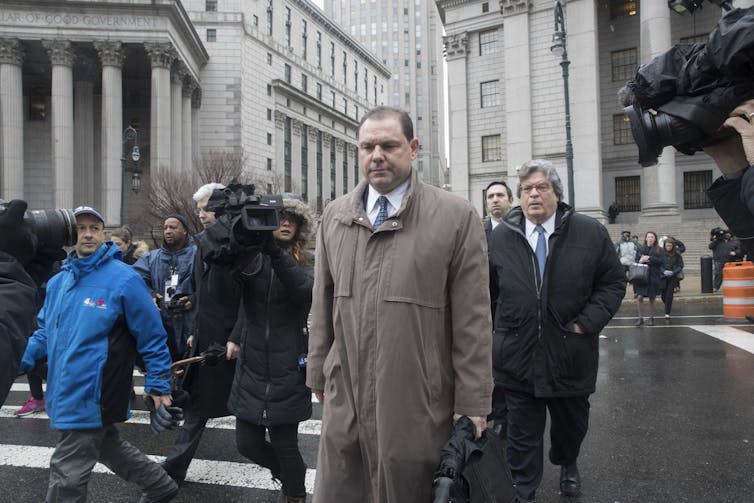
Joseph Percoco, wearing a trench coat, crosses a Manhattan street with court buildings in the background

Joseph Percoco leaves court in New York City after being convicted of fraud on March 13, 2018. Mary Altaffer/AP

Yet, Percoco used a New York government phone approximately 837 times during that period, suggesting he wanted the outside world to perceive him as a government insider with access to political power.

Traditionally, private individuals found to have “dominated and controlled” government business, as Percoco was alleged to have done, could be guilty under federal law of what’s called “honest-services-fraud.” Since Percoco, that term now covers only bribery and kickbacks.

The Supreme Court’s lax stance on corruption endangers the integrity of American democracy, as I explain in my latest book, “Corporatocracy.” From McDonnell to Kelly to Percoco to Snyder, its rulings have eviscerated anti-corruption law. That sends a message to the corrupt: “You can be venal with few legal consequences.”

Corrupt people get a pass; good government takes another hit.

2024-07-31 12:42:00, http://s.wordpress.com/mshots/v1/https%3A%2F%2Ftheconversation.com%2Fthis-supreme-court-has-redefined-the-meaning-of-corruption-233424?w=600&h=450, The U.S. Supreme Court is deregulating corruption, with arguably grim consequences for American democracy. The latest example of this troubling trend was the case known as Snyder v. United States. At first glance, this may have seemed like a narrow, wonky case about whether a part of the U.S. criminal code that outlaws bribery also,

The U.S. Supreme Court is deregulating corruption, with arguably grim consequences for American democracy.

The latest example of this troubling trend was the case known as Snyder v. United States. At first glance, this may have seemed like a narrow, wonky case about whether a part of the U.S. criminal code that outlaws bribery also covers “gratuities.”

Yet the court’s decision, issued on June 26, 2024, kneecaps federal prosecutors’ power to go after corrupt government officials.

Snyder follows a pattern of the current Supreme Court I’ve documented in three books. Since John Roberts became its chief justice in 2006, the court has made prosecuting corruption, especially at the state and local level, nearly impossible for federal prosecutors.

Gift, gratuity or bribe?

The Snyder case centered on a former mayor of Portage, Indiana, who was charged with violating federal anti-corruption law while he was mayor. He accepted US$13,000 from a truck company in 2014 after the city had signed a $1.1 million contract to buy trash trucks.

Mayor James Snyder showed up at the trucking business and said, “I need money.” He claimed the payment was a consulting fee, or gratuity.

In a 6-3 decision, along ideological lines, the court’s conservative majority overruled the lower court that convicted Snyder of bribery and the appeals court that had affirmed his conviction. The mayor should not have been prosecuted, the justices said, because federal anti-corruption statute Section 666 in question covers only bribes and not gratuities.

And bribes, it said, are paid before an official action, not after that official action is complete.

In his majority opinion, Justice Brett Kavanaugh explained why it’s not desirable for federal prosecutors to go after small-time local crooks. For one thing, he argued, many states and cities already have their own laws about politicians and gratuities; thus, the Department of Justice need not play Big Brother.

“Section 666 does not supplement those state and local rules by subjecting 19 million state and local officials to up to 10 years in federal prison for accepting even commonplace gratuities,” Kavanaugh wrote.

Deregulating campaign finance

The Supreme Court has also been narrowing what counts as corruption in campaign finance.

In a 2007 case called WRTL II, the court blew a huge hole in a federal campaign finance law called the Bipartisan Campaign Reform Act, also known as McCain-Feingold. Among other regulations, McCain-Feingold had barred “electioneering communication,” when corporations and unions buy campaign ads in the lead-up to voting.

In WRTL II, the court ruled that “corruption” in political campaigns must be “of the ‘quid pro quo’ variety, whereby an individual or entity makes a contribution or expenditure in exchange for some action by an official.”

This definition means that a briber must be cartoonishly bold in demanding a specific vote from a lawmaker in exchange for cash. Most bribery in the real world is more subtle, as the Supreme Court once recognized.

Under Roberts’ predecessor, Chief Justice William Rehnquist, the majority of justices – both left-leaning and right-leaning – saw efforts by political donors to set the agenda for political parties and elected officials as an improper corruption of the political process.

As the Rehnquist Court once concluded, corruption occurs “not only as quid pro quo agreements, but also as undue influence on an officeholder’s judgment, and the appearance of such influence.”

Money in politics

The Roberts Court’s most notorious acquiescence to money in politics was Citizens United. Issued in 2010, the Citizens United decision decided that corporations have a First Amendment right to spend as much money as they want on political ads in any American election.

Illustrated image of a hand tucking some dollar bills into a ballot box

American elections are awash in corporate cash. Dedraw Studio via Getty

Limiting corporate spending on political ads has “a chilling effect” on corporate free speech, Justice Anthony Kennedy wrote, and the government’s “anti-corruption interest” does not trump that concern.

The court reiterated this stance in 2014, when it threw out the federal limit of $123,000 in total donations per person to federal candidates over a two-year election cycle. In McCutcheon v. FEC, the court again insisted that campaign finance regulations must target only quid pro quo corruption – or “dollars for political favors.”

“Campaign finance restrictions that pursue other objectives impermissibly inject the Government” into deciding who wins an election, wrote Roberts in his majority opinion.

The chief justice was unswayed by arguments that strong campaign finance rules ensure rich and poor have an equal say in elections.

“No matter how desirable it may seem, it is not an acceptable governmental objective to ‘level the playing field,’” he wrote in McCutcheon.

Today, individual donors may sink unlimited funds into a federal election.

Redefining fraud

The Roberts Supreme Court has substantially narrowed the definition of corruption in white-collar crime cases, too.

In 2016’s McDonnell v. United States, the justices declared that Virginia Gov. Bob McDonnell did nothing wrong when he touted a dubious health product on behalf of a man who had paid for McDonnell’s wife’s clothes and his daughter’s wedding.

Four years later, the Supreme Court decided that the federal government could not prosecute a woman named Bridget Anne Kelly involved in the 2013 Bridgegate Scandal, when aides to New Jersey Gov. Chris Christie, including Kelly, intentionally caused a stifling traffic jam on the George Washington Bridge to punish one of Christie’s political opponents.

“Not every corrupt act by state or local officials is a federal crime,” wrote Justice Elena Kagan, typically considered a liberal justice, in Kelly v. United States.

The Supreme Court continued this trend in a 2023 case called Percoco v. United States.

Joseph Percoco, an aide to New York Gov. Andrew Cuomo, had been convicted of fraud in 2018 for accepting $315,000 from two New York-based corporations to promote policies that favored their businesses. The Supreme Court threw out the conviction, in large part because the money exchanged hands while he was working on Cuomo’s 2014 election campaign – meaning he was not technically in government.

Joseph Percoco, wearing a trench coat, crosses a Manhattan street with court buildings in the background

Joseph Percoco leaves court in New York City after being convicted of fraud on March 13, 2018. Mary Altaffer/AP

Yet, Percoco used a New York government phone approximately 837 times during that period, suggesting he wanted the outside world to perceive him as a government insider with access to political power.

Traditionally, private individuals found to have “dominated and controlled” government business, as Percoco was alleged to have done, could be guilty under federal law of what’s called “honest-services-fraud.” Since Percoco, that term now covers only bribery and kickbacks.

The Supreme Court’s lax stance on corruption endangers the integrity of American democracy, as I explain in my latest book, “Corporatocracy.” From McDonnell to Kelly to Percoco to Snyder, its rulings have eviscerated anti-corruption law. That sends a message to the corrupt: “You can be venal with few legal consequences.”

Corrupt people get a pass; good government takes another hit.

, The U.S. Supreme Court is deregulating corruption, with arguably grim consequences for American democracy. The latest example of this troubling trend was the case known as Snyder v. United States. At first glance, this may have seemed like a narrow, wonky case about whether a part of the U.S. criminal code that outlaws bribery also covers “gratuities.” Yet the court’s decision, issued on June 26, 2024, kneecaps federal prosecutors’ power to go after corrupt government officials. Snyder follows a pattern of the current Supreme Court I’ve documented in three books. Since John Roberts became its chief justice in 2006, the court has made prosecuting corruption, especially at the state and local level, nearly impossible for federal prosecutors. Gift, gratuity or bribe? The Snyder case centered on a former mayor of Portage, Indiana, who was charged with violating federal anti-corruption law while he was mayor. He accepted US$13,000 from a truck company in 2014 after the city had signed a $1.1 million contract to buy trash trucks. Mayor James Snyder showed up at the trucking business and said, “I need money.” He claimed the payment was a consulting fee, or gratuity. In a 6-3 decision, along ideological lines, the court’s conservative majority overruled the lower court that convicted Snyder of bribery and the appeals court that had affirmed his conviction. The mayor should not have been prosecuted, the justices said, because federal anti-corruption statute Section 666 in question covers only bribes and not gratuities. And bribes, it said, are paid before an official action, not after that official action is complete. In his majority opinion, Justice Brett Kavanaugh explained why it’s not desirable for federal prosecutors to go after small-time local crooks. For one thing, he argued, many states and cities already have their own laws about politicians and gratuities; thus, the Department of Justice need not play Big Brother. “Section 666 does not supplement those state and local rules by subjecting 19 million state and local officials to up to 10 years in federal prison for accepting even commonplace gratuities,” Kavanaugh wrote. Deregulating campaign finance The Supreme Court has also been narrowing what counts as corruption in campaign finance. In a 2007 case called WRTL II, the court blew a huge hole in a federal campaign finance law called the Bipartisan Campaign Reform Act, also known as McCain-Feingold. Among other regulations, McCain-Feingold had barred “electioneering communication,” when corporations and unions buy campaign ads in the lead-up to voting. In WRTL II, the court ruled that “corruption” in political campaigns must be “of the ‘quid pro quo’ variety, whereby an individual or entity makes a contribution or expenditure in exchange for some action by an official.” This definition means that a briber must be cartoonishly bold in demanding a specific vote from a lawmaker in exchange for cash. Most bribery in the real world is more subtle, as the Supreme Court once recognized. Under Roberts’ predecessor, Chief Justice William Rehnquist, the majority of justices – both left-leaning and right-leaning – saw efforts by political donors to set the agenda for political parties and elected officials as an improper corruption of the political process. As the Rehnquist Court once concluded, corruption occurs “not only as quid pro quo agreements, but also as undue influence on an officeholder’s judgment, and the appearance of such influence.” Money in politics The Roberts Court’s most notorious acquiescence to money in politics was Citizens United. Issued in 2010, the Citizens United decision decided that corporations have a First Amendment right to spend as much money as they want on political ads in any American election. American elections are awash in corporate cash. Dedraw Studio via Getty Limiting corporate spending on political ads has “a chilling effect” on corporate free speech, Justice Anthony Kennedy wrote, and the government’s “anti-corruption interest” does not trump that concern. The court reiterated this stance in 2014, when it threw out the federal limit of $123,000 in total donations per person to federal candidates over a two-year election cycle. In McCutcheon v. FEC, the court again insisted that campaign finance regulations must target only quid pro quo corruption – or “dollars for political favors.” “Campaign finance restrictions that pursue other objectives impermissibly inject the Government” into deciding who wins an election, wrote Roberts in his majority opinion. The chief justice was unswayed by arguments that strong campaign finance rules ensure rich and poor have an equal say in elections. “No matter how desirable it may seem, it is not an acceptable governmental objective to ‘level the playing field,’” he wrote in McCutcheon. Today, individual donors may sink unlimited funds into a federal election. Redefining fraud The Roberts Supreme Court has substantially narrowed the definition of corruption in white-collar crime cases, too. In 2016’s McDonnell v. United States, the justices declared that Virginia Gov. Bob McDonnell did nothing wrong when he touted a dubious health product on behalf of a man who had paid for McDonnell’s wife’s clothes and his daughter’s wedding. Four years later, the Supreme Court decided that the federal government could not prosecute a woman named Bridget Anne Kelly involved in the 2013 Bridgegate Scandal, when aides to New Jersey Gov. Chris Christie, including Kelly, intentionally caused a stifling traffic jam on the George Washington Bridge to punish one of Christie’s political opponents. “Not every corrupt act by state or local officials is a federal crime,” wrote Justice Elena Kagan, typically considered a liberal justice, in Kelly v. United States. The Supreme Court continued this trend in a 2023 case called Percoco v. United States. Joseph Percoco, an aide to New York Gov. Andrew Cuomo, had been convicted of fraud in 2018 for accepting $315,000 from two New York-based corporations to promote policies that favored their businesses. The Supreme Court threw out the conviction, in large part because the money exchanged hands while he was working on Cuomo’s 2014 election campaign – meaning he was not technically in government. Joseph Percoco leaves court in New York City after being convicted of fraud on March 13, 2018. Mary Altaffer/AP Yet, Percoco used a New York government phone approximately 837 times during that period, suggesting he wanted the outside world to perceive him as a government insider with access to political power. Traditionally, private individuals found to have “dominated and controlled” government business, as Percoco was alleged to have done, could be guilty under federal law of what’s called “honest-services-fraud.” Since Percoco, that term now covers only bribery and kickbacks. The Supreme Court’s lax stance on corruption endangers the integrity of American democracy, as I explain in my latest book, “Corporatocracy.” From McDonnell to Kelly to Percoco to Snyder, its rulings have eviscerated anti-corruption law. That sends a message to the corrupt: “You can be venal with few legal consequences.” Corrupt people get a pass; good government takes another hit., , This Supreme Court has redefined the meaning of corruption, https://images.theconversation.com/files/609445/original/file-20240725-19-lep1ft.jpg?ixlib=rb-4.1.0&rect=24%2C539%2C4112%2C2053&q=45&auto=format&w=1356&h=668&fit=crop, Politics + Society – The Conversation, , , https://theconversation.com/us/politics/articles.atom, Ciara Torres-Spelliscy, Professor of Law, Stetson University,


Harris brings joy to the presidential campaign − and GOP mockery of ‘laughing Kamala’ is nothing new to Black women thumbnail

Harris brings joy to the presidential campaign − and GOP mockery of ‘laughing Kamala’ is nothing new to Black women

With Vice President Kamala Harris’ ascent to the top of the Democratic ticket, Republicans are rebuilding a campaign strategy that for months focused on running against President Joe Biden. One emerging theme asserts that Harris laughs too much at inappropriate moments – part of a broader argument that Harris is “weird.”

“I call her ‘laughing Kamala,’” former President Donald Trump said at a rally in Michigan on July 24. “Have you ever watched her laugh? She is crazy. You can tell a lot by a laugh. … She is nuts.”

As a professor of American studies with a focus on race and politics, I know that Black women in the U.S. have a history of struggle against violence and oppression. And too often when we experience joy, and show it, ridicule follows. We are said to be too loud, too emotional – well, too “Black women.”

History shows that this is a familiar dog whistle. Black women have been called out as sexually provocative Jezebels, emasculating Sapphires or servile, nurturing Mammys in popular culture. Those labels clearly don’t fit Harris, so Trump has created a new epithet: “crazy laughing.”

Invisibility has long haunted Black girls and women. In response, their choices, from dress to spirituality to activist groups, often center on making themselves visible. They do this to highlight injustice and to offer a vision of justice based on their experiences.

As I see it, Black women deserve for some of that visibility to be joyful. In this realm, Harris is paving the way.

Then-senator and presidential candidate Kamala Harris dances with a children’s group at the Des Moines Steak Fry on Sept. 21, 2019.

Elation in struggle

Many public views of Harris don’t reflect Trump’s framing. The vice president’s anecdotes, smile, laugh, and even – shocker – dancing in public have inspired a tidal wave of fan posts and videos celebrating her energy and what media scholar Jamie Cohen describes as her “endearing awkwardness.”

For these observers, Harris embodies the idea of Black joy – a national movement that started in 2020 after George Floyd was killed. As NAACP Legal Defense Fund senior writer Lindsey Norward explains:

“Black joy is an essential part of the complete story of Black people in their fight for dignity and reclamation … the unfettered ability to go and enjoy all of the good things about life.”

Black joy is embodied in all kinds of actions, from personal fashion to sports to voting. It offers a powerful antidote to pervasive images of Black trauma.

Act of self-definition

In a book that I co-edited with Wake Forest University political science professor Julia Jordan-Zachery, we examined a related concept: Black Girl Magic. Our book described how Black girls and women maintain their humanity in the face of hostility by fostering community, countering invisibility and creating spaces for freedom.

Sometimes this means drawing attention to their struggles. One essay in the book cites African American Policy Forum executive director Kimberlé Crenshaw, explaining the hashtag #SayHerName, which was coined to raise awareness of Black women victims of police brutality and anti-Black violence.

“Although Black women are routinely killed, raped and beaten by the police, their experiences are rarely foregrounded in popular understandings of police brutality,” Crenshaw wrote. “Yet, inclusion of Black women’s experiences in social movements, media narratives, and policy demands around policing and police brutality is critical to effectively combating racialized state violence for Black communities and other communities of color.”

On July 23, 2024, Harris released a statement expressing grief at the “senseless death” of Sonya Massey, a 36-year-old Black woman who was fatally shot in her Illinois home by a sheriff’s deputy who responded to a report of a prowler. The deputy has been fired and charged with murder, based on bodycam footage from another deputy that showed him threatening Massey after she rebuked him and then shooting her.

“Sonya Massey deserved to be safe,” Harris wrote. “The disturbing footage released yesterday confirms what we know from the lived experiences of so many – we have much work to do to ensure that our justice system fully lives up to its name.” In other words, Harris said Massey’s name.

Writing her own story

Our book argued that in the age of Trump, whom Black women almost universally see as hostile to their interests, finding the balance between humanity and magic is more important than ever for Black girls and women.

As then-first lady Michelle Obama said in a speech at the March 2015 Black Girls Rock awards, young Black girls often hear “voices that tell you that you’re not good enough, that you have to look a certain way, act a certain way; that if you speak up, you’re too loud; if you step up to lead, you’re being bossy.”

Around this time, author and social media influencer CaShawn Thompson began tweeting “#BlackGirlMagic” because, she said, “magic is something that people don’t always understand. Sometimes our accomplishments might seem to come out of thin air, because a lot of times, the only people supporting us are other Black women.”

The hashtag went mainstream at the 2016 Black Entertainment Television Awards, where actor and activist Jesse Williams delivered an impassioned discourse about race in America. He ended with a subtle nod:

“(T)he burden of the brutalized is not to comfort the bystander. That’s not our job, alright – stop with all that … the thing is that just because we’re magic doesn’t mean we’re not real.”

Williams was respectfully referencing the #BlackGirlMagic movement, alluding to the fact that Black girls’ and women’s identities include resistance against narratives that exclude them and a willingness to define themselves for themselves.

Harris has confronted this challenge many times through her career as a district attorney, state attorney general, senator and vice president. Now she has to invent herself again as a presidential candidate. And even with a large campaign staff, Harris will have to do this for herself.

As Nobel laureate Toni Morrison observed, the Black woman has “nothing to fall back on: not maleness, not whiteness, not ladyhood, not anything. And out of the profound desolation of her reality she may very well have invented herself.”

Our book highlighted the emotional fortitude that Black women draw on to accomplish so many feats while breaking unfathomable barriers. It’s no exaggeration to call what they do magic.

Harris will need plenty of support for a successful campaign – from Black women and many others. There will be serious issues to debate, from border security to foreign policy to the economy. But Harris also has a real opportunity to contrast her humor and positive energy with a very dark vision from the GOP – without letting them dictate when it’s OK for her to laugh.

2024-07-31 12:41:00, http://s.wordpress.com/mshots/v1/https%3A%2F%2Ftheconversation.com%2Fharris-brings-joy-to-the-presidential-campaign-and-gop-mockery-of-laughing-kamala-is-nothing-new-to-black-women-235564?w=600&h=450, With Vice President Kamala Harris’ ascent to the top of the Democratic ticket, Republicans are rebuilding a campaign strategy that for months focused on running against President Joe Biden. One emerging theme asserts that Harris laughs too much at inappropriate moments – part of a broader argument that Harris is “weird.” “I call her ‘laughing,

With Vice President Kamala Harris’ ascent to the top of the Democratic ticket, Republicans are rebuilding a campaign strategy that for months focused on running against President Joe Biden. One emerging theme asserts that Harris laughs too much at inappropriate moments – part of a broader argument that Harris is “weird.”

“I call her ‘laughing Kamala,’” former President Donald Trump said at a rally in Michigan on July 24. “Have you ever watched her laugh? She is crazy. You can tell a lot by a laugh. … She is nuts.”

As a professor of American studies with a focus on race and politics, I know that Black women in the U.S. have a history of struggle against violence and oppression. And too often when we experience joy, and show it, ridicule follows. We are said to be too loud, too emotional – well, too “Black women.”

History shows that this is a familiar dog whistle. Black women have been called out as sexually provocative Jezebels, emasculating Sapphires or servile, nurturing Mammys in popular culture. Those labels clearly don’t fit Harris, so Trump has created a new epithet: “crazy laughing.”

Invisibility has long haunted Black girls and women. In response, their choices, from dress to spirituality to activist groups, often center on making themselves visible. They do this to highlight injustice and to offer a vision of justice based on their experiences.

As I see it, Black women deserve for some of that visibility to be joyful. In this realm, Harris is paving the way.

Then-senator and presidential candidate Kamala Harris dances with a children’s group at the Des Moines Steak Fry on Sept. 21, 2019.

Elation in struggle

Many public views of Harris don’t reflect Trump’s framing. The vice president’s anecdotes, smile, laugh, and even – shocker – dancing in public have inspired a tidal wave of fan posts and videos celebrating her energy and what media scholar Jamie Cohen describes as her “endearing awkwardness.”

For these observers, Harris embodies the idea of Black joy – a national movement that started in 2020 after George Floyd was killed. As NAACP Legal Defense Fund senior writer Lindsey Norward explains:

“Black joy is an essential part of the complete story of Black people in their fight for dignity and reclamation … the unfettered ability to go and enjoy all of the good things about life.”

Black joy is embodied in all kinds of actions, from personal fashion to sports to voting. It offers a powerful antidote to pervasive images of Black trauma.

Act of self-definition

In a book that I co-edited with Wake Forest University political science professor Julia Jordan-Zachery, we examined a related concept: Black Girl Magic. Our book described how Black girls and women maintain their humanity in the face of hostility by fostering community, countering invisibility and creating spaces for freedom.

Sometimes this means drawing attention to their struggles. One essay in the book cites African American Policy Forum executive director Kimberlé Crenshaw, explaining the hashtag #SayHerName, which was coined to raise awareness of Black women victims of police brutality and anti-Black violence.

“Although Black women are routinely killed, raped and beaten by the police, their experiences are rarely foregrounded in popular understandings of police brutality,” Crenshaw wrote. “Yet, inclusion of Black women’s experiences in social movements, media narratives, and policy demands around policing and police brutality is critical to effectively combating racialized state violence for Black communities and other communities of color.”

On July 23, 2024, Harris released a statement expressing grief at the “senseless death” of Sonya Massey, a 36-year-old Black woman who was fatally shot in her Illinois home by a sheriff’s deputy who responded to a report of a prowler. The deputy has been fired and charged with murder, based on bodycam footage from another deputy that showed him threatening Massey after she rebuked him and then shooting her.

“Sonya Massey deserved to be safe,” Harris wrote. “The disturbing footage released yesterday confirms what we know from the lived experiences of so many – we have much work to do to ensure that our justice system fully lives up to its name.” In other words, Harris said Massey’s name.

Writing her own story

Our book argued that in the age of Trump, whom Black women almost universally see as hostile to their interests, finding the balance between humanity and magic is more important than ever for Black girls and women.

As then-first lady Michelle Obama said in a speech at the March 2015 Black Girls Rock awards, young Black girls often hear “voices that tell you that you’re not good enough, that you have to look a certain way, act a certain way; that if you speak up, you’re too loud; if you step up to lead, you’re being bossy.”

Around this time, author and social media influencer CaShawn Thompson began tweeting “#BlackGirlMagic” because, she said, “magic is something that people don’t always understand. Sometimes our accomplishments might seem to come out of thin air, because a lot of times, the only people supporting us are other Black women.”

The hashtag went mainstream at the 2016 Black Entertainment Television Awards, where actor and activist Jesse Williams delivered an impassioned discourse about race in America. He ended with a subtle nod:

“(T)he burden of the brutalized is not to comfort the bystander. That’s not our job, alright – stop with all that … the thing is that just because we’re magic doesn’t mean we’re not real.”

Williams was respectfully referencing the #BlackGirlMagic movement, alluding to the fact that Black girls’ and women’s identities include resistance against narratives that exclude them and a willingness to define themselves for themselves.

Harris has confronted this challenge many times through her career as a district attorney, state attorney general, senator and vice president. Now she has to invent herself again as a presidential candidate. And even with a large campaign staff, Harris will have to do this for herself.

As Nobel laureate Toni Morrison observed, the Black woman has “nothing to fall back on: not maleness, not whiteness, not ladyhood, not anything. And out of the profound desolation of her reality she may very well have invented herself.”

Our book highlighted the emotional fortitude that Black women draw on to accomplish so many feats while breaking unfathomable barriers. It’s no exaggeration to call what they do magic.

Harris will need plenty of support for a successful campaign – from Black women and many others. There will be serious issues to debate, from border security to foreign policy to the economy. But Harris also has a real opportunity to contrast her humor and positive energy with a very dark vision from the GOP – without letting them dictate when it’s OK for her to laugh.

, With Vice President Kamala Harris’ ascent to the top of the Democratic ticket, Republicans are rebuilding a campaign strategy that for months focused on running against President Joe Biden. One emerging theme asserts that Harris laughs too much at inappropriate moments – part of a broader argument that Harris is “weird.” “I call her ‘laughing Kamala,’” former President Donald Trump said at a rally in Michigan on July 24. “Have you ever watched her laugh? She is crazy. You can tell a lot by a laugh. … She is nuts.” As a professor of American studies with a focus on race and politics, I know that Black women in the U.S. have a history of struggle against violence and oppression. And too often when we experience joy, and show it, ridicule follows. We are said to be too loud, too emotional – well, too “Black women.” History shows that this is a familiar dog whistle. Black women have been called out as sexually provocative Jezebels, emasculating Sapphires or servile, nurturing Mammys in popular culture. Those labels clearly don’t fit Harris, so Trump has created a new epithet: “crazy laughing.” Invisibility has long haunted Black girls and women. In response, their choices, from dress to spirituality to activist groups, often center on making themselves visible. They do this to highlight injustice and to offer a vision of justice based on their experiences. As I see it, Black women deserve for some of that visibility to be joyful. In this realm, Harris is paving the way. Then-senator and presidential candidate Kamala Harris dances with a children’s group at the Des Moines Steak Fry on Sept. 21, 2019. Elation in struggle Many public views of Harris don’t reflect Trump’s framing. The vice president’s anecdotes, smile, laugh, and even – shocker – dancing in public have inspired a tidal wave of fan posts and videos celebrating her energy and what media scholar Jamie Cohen describes as her “endearing awkwardness.” For these observers, Harris embodies the idea of Black joy – a national movement that started in 2020 after George Floyd was killed. As NAACP Legal Defense Fund senior writer Lindsey Norward explains: “Black joy is an essential part of the complete story of Black people in their fight for dignity and reclamation … the unfettered ability to go and enjoy all of the good things about life.” Black joy is embodied in all kinds of actions, from personal fashion to sports to voting. It offers a powerful antidote to pervasive images of Black trauma. Act of self-definition In a book that I co-edited with Wake Forest University political science professor Julia Jordan-Zachery, we examined a related concept: Black Girl Magic. Our book described how Black girls and women maintain their humanity in the face of hostility by fostering community, countering invisibility and creating spaces for freedom. Sometimes this means drawing attention to their struggles. One essay in the book cites African American Policy Forum executive director Kimberlé Crenshaw, explaining the hashtag #SayHerName, which was coined to raise awareness of Black women victims of police brutality and anti-Black violence. “Although Black women are routinely killed, raped and beaten by the police, their experiences are rarely foregrounded in popular understandings of police brutality,” Crenshaw wrote. “Yet, inclusion of Black women’s experiences in social movements, media narratives, and policy demands around policing and police brutality is critical to effectively combating racialized state violence for Black communities and other communities of color.” On July 23, 2024, Harris released a statement expressing grief at the “senseless death” of Sonya Massey, a 36-year-old Black woman who was fatally shot in her Illinois home by a sheriff’s deputy who responded to a report of a prowler. The deputy has been fired and charged with murder, based on bodycam footage from another deputy that showed him threatening Massey after she rebuked him and then shooting her. “Sonya Massey deserved to be safe,” Harris wrote. “The disturbing footage released yesterday confirms what we know from the lived experiences of so many – we have much work to do to ensure that our justice system fully lives up to its name.” In other words, Harris said Massey’s name. Writing her own story Our book argued that in the age of Trump, whom Black women almost universally see as hostile to their interests, finding the balance between humanity and magic is more important than ever for Black girls and women. As then-first lady Michelle Obama said in a speech at the March 2015 Black Girls Rock awards, young Black girls often hear “voices that tell you that you’re not good enough, that you have to look a certain way, act a certain way; that if you speak up, you’re too loud; if you step up to lead, you’re being bossy.” Around this time, author and social media influencer CaShawn Thompson began tweeting “#BlackGirlMagic” because, she said, “magic is something that people don’t always understand. Sometimes our accomplishments might seem to come out of thin air, because a lot of times, the only people supporting us are other Black women.” The hashtag went mainstream at the 2016 Black Entertainment Television Awards, where actor and activist Jesse Williams delivered an impassioned discourse about race in America. He ended with a subtle nod: “(T)he burden of the brutalized is not to comfort the bystander. That’s not our job, alright – stop with all that … the thing is that just because we’re magic doesn’t mean we’re not real.” Williams was respectfully referencing the #BlackGirlMagic movement, alluding to the fact that Black girls’ and women’s identities include resistance against narratives that exclude them and a willingness to define themselves for themselves. Harris has confronted this challenge many times through her career as a district attorney, state attorney general, senator and vice president. Now she has to invent herself again as a presidential candidate. And even with a large campaign staff, Harris will have to do this for herself. As Nobel laureate Toni Morrison observed, the Black woman has “nothing to fall back on: not maleness, not whiteness, not ladyhood, not anything. And out of the profound desolation of her reality she may very well have invented herself.” Our book highlighted the emotional fortitude that Black women draw on to accomplish so many feats while breaking unfathomable barriers. It’s no exaggeration to call what they do magic. Harris will need plenty of support for a successful campaign – from Black women and many others. There will be serious issues to debate, from border security to foreign policy to the economy. But Harris also has a real opportunity to contrast her humor and positive energy with a very dark vision from the GOP – without letting them dictate when it’s OK for her to laugh., , Harris brings joy to the presidential campaign − and GOP mockery of ‘laughing Kamala’ is nothing new to Black women, https://images.theconversation.com/files/610280/original/file-20240730-17-9sgycb.jpg?ixlib=rb-4.1.0&rect=40%2C136%2C4551%2C2275&q=45&auto=format&w=1356&h=668&fit=crop, Politics + Society – The Conversation, , , https://theconversation.com/us/politics/articles.atom, Duchess Harris, Professor of American Studies, Macalester College,

Chinese warships off Alaska and Cambodia highlight the role of near and far waters in sea power dominance thumbnail

Chinese warships off Alaska and Cambodia highlight the role of near and far waters in sea power dominance

Chinese warships were recently spotted sailing close to the Aleutian Islands, just off the Alaskan coast. Meanwhile, naval boats have begun to dock at a Beijing-built military port in Cambodia.

While these two events took place on different sides of the globe, they’re both part of an important geopolitical development – one that may lead to global war.

That may seem a little alarmist. But as I explain in my book “Near and Far Waters: The Geopolitics of Seapower,” the dynamics playing out today as China seeks to surpass the U.S. as the world’s major sea power are reflected in the past – and have led to some of the world’s most consequential conflicts.

To understand the geopolitics of sea power, you need to understand two terms: “near waters” and “far waters.” Near waters are areas close to a country’s shoreline that are seen as important for its defense. Far waters are areas across the ocean that a country wants to be present in for economic and strategic interests.

But here’s the thing: The far waters of one country are the near waters of another, and that leads to tension. For example, the western Pacific is China’s near waters and the U.S.’s far waters – and both countries are engaged in a battle for strategic advantage there. Complicating matters, two or more countries may be competing for influence in the same near waters. In the western Pacific, China competes for dominance over smaller island fleets from, among other countries, the Philippines and Vietnam.

Changing tides

Competition over near and far waters changes over time. U.S. near waters are a strategic and fluid area, rather than a legal definition that covers the Eastern and Western seaboards – the latter extended by Hawaii far into the Pacific. It also covers parts of the Caribbean and the Aleutian Islands.

The U.S. gained control of its near waters throughout the 1800s and the first half of the 20th century. It culminated in a “destroyers-for-bases” deal during the early stages of World War II, which saw British military bases in the Caribbean and Newfoundland being transferred to Washington’s control. In return, the British were “gifted” old warships that were barely functional.

It was only later that the U.S. projected its influence into far waters across the Atlantic and the Pacific, especially through its success in the Second World War.

China, meanwhile, lost control of its near waters in the late 1800s as European colonial powers and the U.S. competed for access to China’s markets. It marked a humiliation for China, hampering economic growth and contributing to the collapse of traditional dynasties and the emergence of competing nationalist and communist politics – and eventually leading to civil war.

A bored-looking child sits in front of a large naturalistic mural of a submarine.

A boy sits in front of a mural showing a People’s Liberation Army Navy submarine during an open house for the public as part of the 19th biennial meeting of the Western Pacific Naval Symposium on April 20, 2024 in Qingdao, China. Kevin Frayer/Getty Images

More than shipbuilding

China is a global economic power, and that requires controlling its near waters and building a presence in far waters.

Beijing sees this as a necessary and acceptable part of becoming a power equal to the U.S. But to the U.S. – the dominant naval power since World War II – the process represents a challenge to its presence in far waters.

China already has the largest navy in the world as measured by the number of ships. Over the past 15 years, China has built 131 ships that are capable of operating in far waters, while 144 are designed for near-water operations.

As of 2021, China was operating or fitting out two aircraft carriers, 36 destroyers, 30 frigates and nine large amphibious carriers – the type of vessels needed to truly challenge U.S. naval dominance.

These numbers are still dwarfed by the corresponding number of U.S. naval ships. But they are bigger than any other nation’s fleet, and without a doubt, China is developing a navy intended to project power into far waters.

But gaining sea dominance isn’t just about shipbuilding. The Chinese plan includes “island building” projects to establish a presence in the near waters of Asian countries, including the Philippines and Vietnam. Elsewhere, it seeks to use its economic might to entice countries away from Washington’s naval assistance.

Take Ream, a Cambodian military base in the Gulf of Thailand and former site of joint U.S.-Cambodian naval exercises. The base was in line for a refurbishment under a deal with the U.S. – an example of how Washington tries to maintain its presence in its Asian far waters.

But in a surprise move in 2020, Cambodia withdrew from the agreement.

Since then, funding from Beijing has provided for an upgraded base. There has been a continual Chinese presence at the Ream base in 2024, including the Chinese-funded construction of a pier and a large dry dock.

This naval presence serves China’s goal of defending its near waters. But it also adds to Beijing’s ability to project power into the far waters of the Indian Ocean, the Persian Gulf and the Red Sea.

A presence at Ream also gives China a prime position along a critical point of the “sea lines of communication,” the maritime routes through which much of global trade takes place. The nearby Malacca Strait is a key global choke point, through which US$3.5 trillion of trade passes annually – including a third of global trade, 40% of Japan’s and two-thirds of China’s.

Access to the Ream base in Cambodia puts China in the position to police those trade routes. China sees that policing role as positive and peaceful. The U.S. and other countries fear that China could use it to disrupt global trade – although it isn’t clear why China would do that when its economy relies on imports and exports.

Battle for influence

Ream isn’t an isolated example; China has been trying to gain power and influence across the Pacific for years.

Over the past decade, Beijing has developed strong economic and diplomatic relations with Pacific island nations, including a deal with the Solomon Islands that sparked Western concerns of China gaining a military naval presence there.

Of course, the U.S. is still a large and, for China, imposing presence through its bases in Japan and South Korea and its support of Taiwan. Washington has also started upping its efforts to outflank China among Pacific islands, inking a 2023 deal that would give U.S. ships “unimpeded access” to bases there.

But the geopolitics of sea power is a process, rather than determined by current events. As such, the ebb and flow should be viewed through the trajectory of naval presence over a number of years.

Which is why the presence of Chinese warships sailing close to Alaska is an important development.

It raises the prospect of China’s ability to project power into its far waters – and near waters of the U.S.

Albatrosses or hawks?

To be clear, China did not breach any international law by sailing close to the Aleutians. And U.S. officials seemingly played down the incident.

Still, it shows China has the ability and intent to take its naval rivalry with the U.S. into uncharted diplomatic waters, so to speak, and closer to the American coastline.

It represents a new stage in the sea power competition between the U.S. and China – and one we should all be concerned about.

In the past, the rise and fall of sea powers has played out through conflict in near and far waters and has led to major conflagrations. The Dutch fought the British and French in the far waters off the Indian coast in the 17th and 18th centuries, and a key ingredient of World War II was the challenge to British naval supremacy in its far waters in Asia and its near waters in northern Europe.

That isn’t to say that war in inevitable. It’s possible to address China-U.S. tensions in a way that accommodates China’s global ambitions without threatening or weakening other countries.

But that is a mutual duty, incumbent on policymakers in both Washington and Beijing. Relations between the two countries have, of late, been dominated by hawkish voices in both countries. But belligerence by either country when it comes to defending near or far waters would be a dangerous option.

2024-07-31 12:41:00, http://s.wordpress.com/mshots/v1/https%3A%2F%2Ftheconversation.com%2Fchinese-warships-off-alaska-and-cambodia-highlight-the-role-of-near-and-far-waters-in-sea-power-dominance-234953?w=600&h=450, Chinese warships were recently spotted sailing close to the Aleutian Islands, just off the Alaskan coast. Meanwhile, naval boats have begun to dock at a Beijing-built military port in Cambodia. While these two events took place on different sides of the globe, they’re both part of an important geopolitical development – one that may lead,

Chinese warships were recently spotted sailing close to the Aleutian Islands, just off the Alaskan coast. Meanwhile, naval boats have begun to dock at a Beijing-built military port in Cambodia.

While these two events took place on different sides of the globe, they’re both part of an important geopolitical development – one that may lead to global war.

That may seem a little alarmist. But as I explain in my book “Near and Far Waters: The Geopolitics of Seapower,” the dynamics playing out today as China seeks to surpass the U.S. as the world’s major sea power are reflected in the past – and have led to some of the world’s most consequential conflicts.

To understand the geopolitics of sea power, you need to understand two terms: “near waters” and “far waters.” Near waters are areas close to a country’s shoreline that are seen as important for its defense. Far waters are areas across the ocean that a country wants to be present in for economic and strategic interests.

But here’s the thing: The far waters of one country are the near waters of another, and that leads to tension. For example, the western Pacific is China’s near waters and the U.S.’s far waters – and both countries are engaged in a battle for strategic advantage there. Complicating matters, two or more countries may be competing for influence in the same near waters. In the western Pacific, China competes for dominance over smaller island fleets from, among other countries, the Philippines and Vietnam.

Changing tides

Competition over near and far waters changes over time. U.S. near waters are a strategic and fluid area, rather than a legal definition that covers the Eastern and Western seaboards – the latter extended by Hawaii far into the Pacific. It also covers parts of the Caribbean and the Aleutian Islands.

The U.S. gained control of its near waters throughout the 1800s and the first half of the 20th century. It culminated in a “destroyers-for-bases” deal during the early stages of World War II, which saw British military bases in the Caribbean and Newfoundland being transferred to Washington’s control. In return, the British were “gifted” old warships that were barely functional.

It was only later that the U.S. projected its influence into far waters across the Atlantic and the Pacific, especially through its success in the Second World War.

China, meanwhile, lost control of its near waters in the late 1800s as European colonial powers and the U.S. competed for access to China’s markets. It marked a humiliation for China, hampering economic growth and contributing to the collapse of traditional dynasties and the emergence of competing nationalist and communist politics – and eventually leading to civil war.

A bored-looking child sits in front of a large naturalistic mural of a submarine.

A boy sits in front of a mural showing a People’s Liberation Army Navy submarine during an open house for the public as part of the 19th biennial meeting of the Western Pacific Naval Symposium on April 20, 2024 in Qingdao, China. Kevin Frayer/Getty Images

More than shipbuilding

China is a global economic power, and that requires controlling its near waters and building a presence in far waters.

Beijing sees this as a necessary and acceptable part of becoming a power equal to the U.S. But to the U.S. – the dominant naval power since World War II – the process represents a challenge to its presence in far waters.

China already has the largest navy in the world as measured by the number of ships. Over the past 15 years, China has built 131 ships that are capable of operating in far waters, while 144 are designed for near-water operations.

As of 2021, China was operating or fitting out two aircraft carriers, 36 destroyers, 30 frigates and nine large amphibious carriers – the type of vessels needed to truly challenge U.S. naval dominance.

These numbers are still dwarfed by the corresponding number of U.S. naval ships. But they are bigger than any other nation’s fleet, and without a doubt, China is developing a navy intended to project power into far waters.

But gaining sea dominance isn’t just about shipbuilding. The Chinese plan includes “island building” projects to establish a presence in the near waters of Asian countries, including the Philippines and Vietnam. Elsewhere, it seeks to use its economic might to entice countries away from Washington’s naval assistance.

Take Ream, a Cambodian military base in the Gulf of Thailand and former site of joint U.S.-Cambodian naval exercises. The base was in line for a refurbishment under a deal with the U.S. – an example of how Washington tries to maintain its presence in its Asian far waters.

But in a surprise move in 2020, Cambodia withdrew from the agreement.

Since then, funding from Beijing has provided for an upgraded base. There has been a continual Chinese presence at the Ream base in 2024, including the Chinese-funded construction of a pier and a large dry dock.

This naval presence serves China’s goal of defending its near waters. But it also adds to Beijing’s ability to project power into the far waters of the Indian Ocean, the Persian Gulf and the Red Sea.

A presence at Ream also gives China a prime position along a critical point of the “sea lines of communication,” the maritime routes through which much of global trade takes place. The nearby Malacca Strait is a key global choke point, through which US$3.5 trillion of trade passes annually – including a third of global trade, 40% of Japan’s and two-thirds of China’s.

Access to the Ream base in Cambodia puts China in the position to police those trade routes. China sees that policing role as positive and peaceful. The U.S. and other countries fear that China could use it to disrupt global trade – although it isn’t clear why China would do that when its economy relies on imports and exports.

Battle for influence

Ream isn’t an isolated example; China has been trying to gain power and influence across the Pacific for years.

Over the past decade, Beijing has developed strong economic and diplomatic relations with Pacific island nations, including a deal with the Solomon Islands that sparked Western concerns of China gaining a military naval presence there.

Of course, the U.S. is still a large and, for China, imposing presence through its bases in Japan and South Korea and its support of Taiwan. Washington has also started upping its efforts to outflank China among Pacific islands, inking a 2023 deal that would give U.S. ships “unimpeded access” to bases there.

But the geopolitics of sea power is a process, rather than determined by current events. As such, the ebb and flow should be viewed through the trajectory of naval presence over a number of years.

Which is why the presence of Chinese warships sailing close to Alaska is an important development.

It raises the prospect of China’s ability to project power into its far waters – and near waters of the U.S.

Albatrosses or hawks?

To be clear, China did not breach any international law by sailing close to the Aleutians. And U.S. officials seemingly played down the incident.

Still, it shows China has the ability and intent to take its naval rivalry with the U.S. into uncharted diplomatic waters, so to speak, and closer to the American coastline.

It represents a new stage in the sea power competition between the U.S. and China – and one we should all be concerned about.

In the past, the rise and fall of sea powers has played out through conflict in near and far waters and has led to major conflagrations. The Dutch fought the British and French in the far waters off the Indian coast in the 17th and 18th centuries, and a key ingredient of World War II was the challenge to British naval supremacy in its far waters in Asia and its near waters in northern Europe.

That isn’t to say that war in inevitable. It’s possible to address China-U.S. tensions in a way that accommodates China’s global ambitions without threatening or weakening other countries.

But that is a mutual duty, incumbent on policymakers in both Washington and Beijing. Relations between the two countries have, of late, been dominated by hawkish voices in both countries. But belligerence by either country when it comes to defending near or far waters would be a dangerous option.

, Chinese warships were recently spotted sailing close to the Aleutian Islands, just off the Alaskan coast. Meanwhile, naval boats have begun to dock at a Beijing-built military port in Cambodia. While these two events took place on different sides of the globe, they’re both part of an important geopolitical development – one that may lead to global war. That may seem a little alarmist. But as I explain in my book “Near and Far Waters: The Geopolitics of Seapower,” the dynamics playing out today as China seeks to surpass the U.S. as the world’s major sea power are reflected in the past – and have led to some of the world’s most consequential conflicts. To understand the geopolitics of sea power, you need to understand two terms: “near waters” and “far waters.” Near waters are areas close to a country’s shoreline that are seen as important for its defense. Far waters are areas across the ocean that a country wants to be present in for economic and strategic interests. But here’s the thing: The far waters of one country are the near waters of another, and that leads to tension. For example, the western Pacific is China’s near waters and the U.S.’s far waters – and both countries are engaged in a battle for strategic advantage there. Complicating matters, two or more countries may be competing for influence in the same near waters. In the western Pacific, China competes for dominance over smaller island fleets from, among other countries, the Philippines and Vietnam. Changing tides Competition over near and far waters changes over time. U.S. near waters are a strategic and fluid area, rather than a legal definition that covers the Eastern and Western seaboards – the latter extended by Hawaii far into the Pacific. It also covers parts of the Caribbean and the Aleutian Islands. The U.S. gained control of its near waters throughout the 1800s and the first half of the 20th century. It culminated in a “destroyers-for-bases” deal during the early stages of World War II, which saw British military bases in the Caribbean and Newfoundland being transferred to Washington’s control. In return, the British were “gifted” old warships that were barely functional. It was only later that the U.S. projected its influence into far waters across the Atlantic and the Pacific, especially through its success in the Second World War. China, meanwhile, lost control of its near waters in the late 1800s as European colonial powers and the U.S. competed for access to China’s markets. It marked a humiliation for China, hampering economic growth and contributing to the collapse of traditional dynasties and the emergence of competing nationalist and communist politics – and eventually leading to civil war. A boy sits in front of a mural showing a People’s Liberation Army Navy submarine during an open house for the public as part of the 19th biennial meeting of the Western Pacific Naval Symposium on April 20, 2024 in Qingdao, China. Kevin Frayer/Getty Images More than shipbuilding China is a global economic power, and that requires controlling its near waters and building a presence in far waters. Beijing sees this as a necessary and acceptable part of becoming a power equal to the U.S. But to the U.S. – the dominant naval power since World War II – the process represents a challenge to its presence in far waters. China already has the largest navy in the world as measured by the number of ships. Over the past 15 years, China has built 131 ships that are capable of operating in far waters, while 144 are designed for near-water operations. As of 2021, China was operating or fitting out two aircraft carriers, 36 destroyers, 30 frigates and nine large amphibious carriers – the type of vessels needed to truly challenge U.S. naval dominance. These numbers are still dwarfed by the corresponding number of U.S. naval ships. But they are bigger than any other nation’s fleet, and without a doubt, China is developing a navy intended to project power into far waters. But gaining sea dominance isn’t just about shipbuilding. The Chinese plan includes “island building” projects to establish a presence in the near waters of Asian countries, including the Philippines and Vietnam. Elsewhere, it seeks to use its economic might to entice countries away from Washington’s naval assistance. Take Ream, a Cambodian military base in the Gulf of Thailand and former site of joint U.S.-Cambodian naval exercises. The base was in line for a refurbishment under a deal with the U.S. – an example of how Washington tries to maintain its presence in its Asian far waters. But in a surprise move in 2020, Cambodia withdrew from the agreement. Since then, funding from Beijing has provided for an upgraded base. There has been a continual Chinese presence at the Ream base in 2024, including the Chinese-funded construction of a pier and a large dry dock. This naval presence serves China’s goal of defending its near waters. But it also adds to Beijing’s ability to project power into the far waters of the Indian Ocean, the Persian Gulf and the Red Sea. A presence at Ream also gives China a prime position along a critical point of the “sea lines of communication,” the maritime routes through which much of global trade takes place. The nearby Malacca Strait is a key global choke point, through which US$3.5 trillion of trade passes annually – including a third of global trade, 40% of Japan’s and two-thirds of China’s. Access to the Ream base in Cambodia puts China in the position to police those trade routes. China sees that policing role as positive and peaceful. The U.S. and other countries fear that China could use it to disrupt global trade – although it isn’t clear why China would do that when its economy relies on imports and exports. Battle for influence Ream isn’t an isolated example; China has been trying to gain power and influence across the Pacific for years. Over the past decade, Beijing has developed strong economic and diplomatic relations with Pacific island nations, including a deal with the Solomon Islands that sparked Western concerns of China gaining a military naval presence there. Of course, the U.S. is still a large and, for China, imposing presence through its bases in Japan and South Korea and its support of Taiwan. Washington has also started upping its efforts to outflank China among Pacific islands, inking a 2023 deal that would give U.S. ships “unimpeded access” to bases there. But the geopolitics of sea power is a process, rather than determined by current events. As such, the ebb and flow should be viewed through the trajectory of naval presence over a number of years. Which is why the presence of Chinese warships sailing close to Alaska is an important development. It raises the prospect of China’s ability to project power into its far waters – and near waters of the U.S. Albatrosses or hawks? To be clear, China did not breach any international law by sailing close to the Aleutians. And U.S. officials seemingly played down the incident. Still, it shows China has the ability and intent to take its naval rivalry with the U.S. into uncharted diplomatic waters, so to speak, and closer to the American coastline. It represents a new stage in the sea power competition between the U.S. and China – and one we should all be concerned about. In the past, the rise and fall of sea powers has played out through conflict in near and far waters and has led to major conflagrations. The Dutch fought the British and French in the far waters off the Indian coast in the 17th and 18th centuries, and a key ingredient of World War II was the challenge to British naval supremacy in its far waters in Asia and its near waters in northern Europe. That isn’t to say that war in inevitable. It’s possible to address China-U.S. tensions in a way that accommodates China’s global ambitions without threatening or weakening other countries. But that is a mutual duty, incumbent on policymakers in both Washington and Beijing. Relations between the two countries have, of late, been dominated by hawkish voices in both countries. But belligerence by either country when it comes to defending near or far waters would be a dangerous option., , Chinese warships off Alaska and Cambodia highlight the role of near and far waters in sea power dominance, https://images.theconversation.com/files/610301/original/file-20240730-17-ygmw0y.jpg?ixlib=rb-4.1.0&rect=40%2C616%2C4480%2C2236&q=45&auto=format&w=1356&h=668&fit=crop, Politics + Society – The Conversation, , , https://theconversation.com/us/politics/articles.atom, Colin Flint, Distinguished Professor of Political Science, Utah State University,

Voters become more polarized when presidential candidates take positions on issues in K-12 education thumbnail

Voters become more polarized when presidential candidates take positions on issues in K-12 education

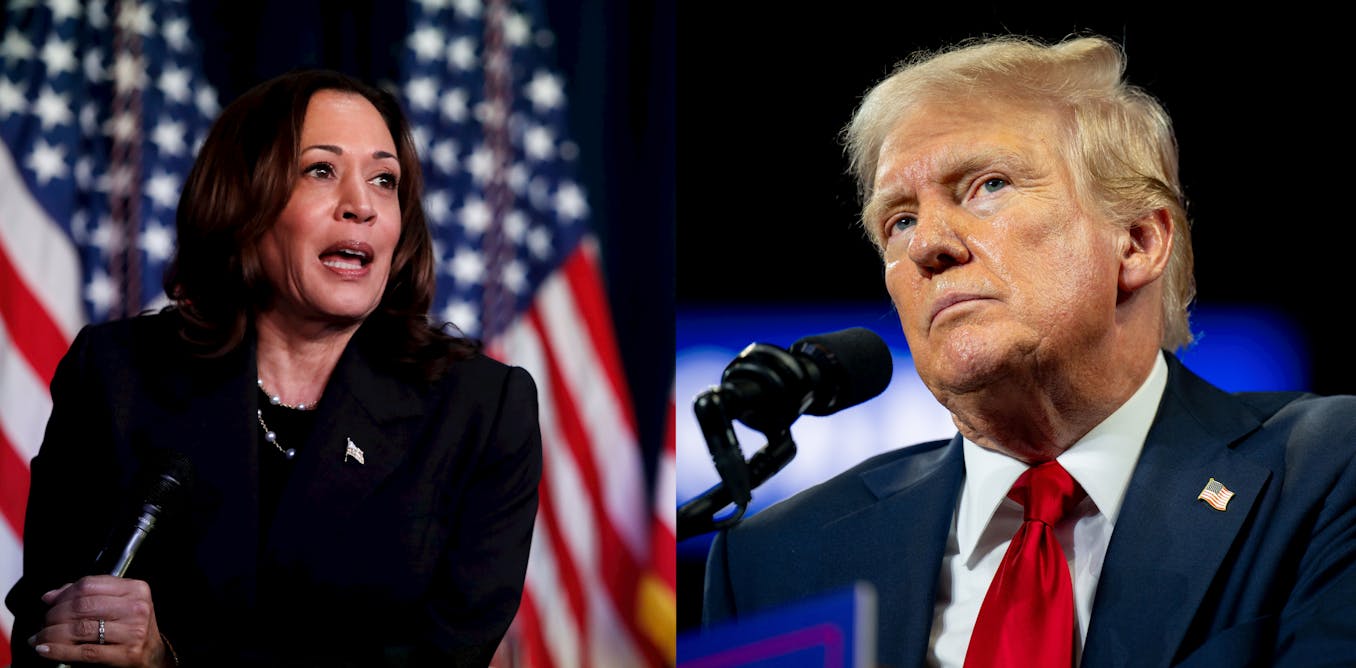
When Vice President Kamala Harris paid a visit to Florida in July 2023, she lambasted a state-approved Black history lesson that claimed “slaves developed skills which, in some instances, could be applied for their personal benefit.”

“Come on – adults know what slavery involved,” Harris said in Jacksonville. “How is it that anyone could suggest that in the midst of these atrocities, that there was any benefit to being subjected to this level of dehumanization?”

Donald Trump also delved into how race is dealt with in K-12 classrooms, but from a different angle. In January 2023, he called for eliminating federal funding for any school or program that pushes “critical race theory, gender ideology or other inappropriate racial, sexual or political content onto our children.” Critical race theory holds that racism is embedded in American society and law.

When U.S. presidents and presidential candidates inject themselves into K-12 education policy debates – as several have done over the course of the nation’s history – the results are often polarizing.

At least that’s what we found in our new study that examines the effects of presidents’ rhetoric on public education. We are researchers who study education politics and policy. We found that presidents are generally unable to persuade the public as a whole, but they are tremendously effective at sharpening divisions in public opinion along party lines.

There is, however, one key exception. When a president endorses a policy that is traditionally more popular with members of the other party, partisan polarization on that issue tends to lessen slightly. Also, public opinion as a whole tends to shift in the direction of the president’s position.

Education policy and presidential politics

There is no shortage of examples of presidents extolling the value of their respective education agendas.

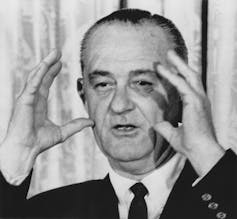
For instance, at the signing ceremony of the Elementary and Secondary Education Act of 1965, which directed federal dollars to schools serving low-income students, Lyndon B. Johnson remarked, “I believe deeply no law I have signed or will ever sign means more to the future of America.” More than 20 years later, on the campaign trail in 1988, George H.W. Bush declared: “I want to be the education president. I want to lead a renaissance of quality in our schools.” In 2011, while discussing the Race to the Top program, which incentivized states to adopt reforms such as common academic standards and charter schools, Barack Obama claimed that “this is probably the most significant education reform initiative that we’ve seen in a generation.”

A man speaking with his hands at the side of his head.

President Lyndon B. Johnson addresses the National Conference on Educational Legislation in Washington in 1965. Universal History Archive / Universal Images Group via Getty Images

Even though attention from the Oval Office can make it seem otherwise, the federal government plays a relatively small role in K-12 education policy. The vast majority of spending and decision-making happens at the state and local levels. In the 2020-21 school year, only about 11 cents of every dollar spent came from federal sources. This figure holds even after accounting for the first wave of federal money allocated during the COVID-19 pandemic to help schools reopen safely and effectively.

But K-12 education policy plays an outsized role in presidential politics. Occupants and aspiring occupants of the White House angle to present their visions for public education. They explain why their approach will lead the nation into a more prosperous future while their opponent will lead the country into disaster. They often deploy K-12 education policy as a medium for clarifying their own distinct political identities.

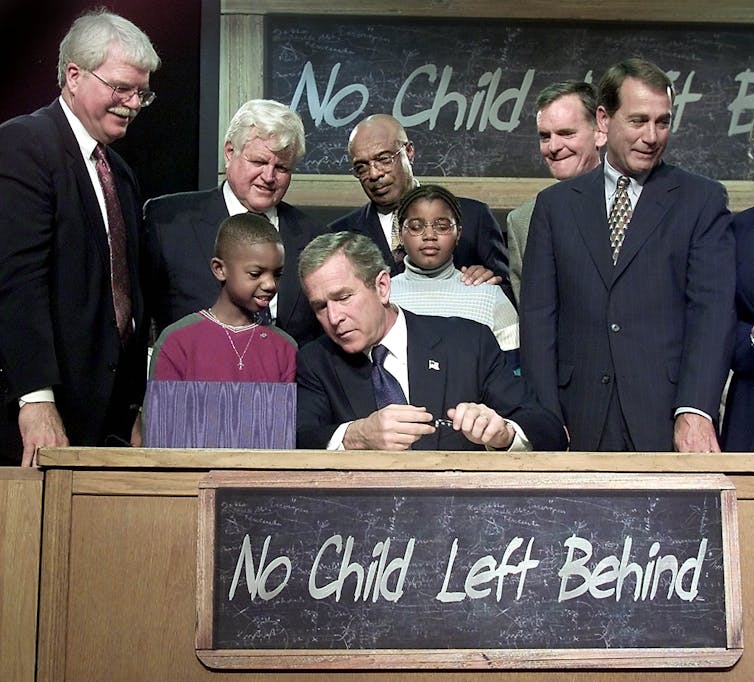
George W. Bush used his position on education reform – a more assertive role for the federal government and more emphasis on school accountability – as part of an effort to cast himself as a “compassionate conservative.” On his second day in office, Bush laid out those priorities by delivering an outline of a bill to Congress that would go on to become the landmark No Child Left Behind Act.

Obama’s support for charter schools, merit-based teacher compensation and annual testing allowed him to define himself as a Democrat who was less beholden to teachers unions.

A man seated at a desk surrounded by five other men in suits and two young boys in regular clothes.

George W. Bush signs the No Child Left Behind Act, an education reform bill, in Hamilton, Ohio, in 2002. Tim Sloan via Getty Images

Trump and Joe Biden have similarly wielded their education policy platforms to burnish their political brands. Trump established the 1776 Commission to promote “patriotic education” with less emphasis on the role of slavery in early American history or ongoing racial inequalities. Biden, in an attempt to distance himself from Obama’s reform agenda, told delegates of the nation’s largest teachers union, “You will never find in American history a president who is more teacher-centric or more supportive of teachers than me.”

Presidents and public opinion

We wanted to know how the public responds when presidents engage in the politics of education. To answer this question, we analyzed the results of 18 experiments embedded in the annual, nationally representative Education Next poll from 2009-2021. In each experiment, the survey randomly assigned some respondents to receive the president’s position on a specific education policy before asking all respondents to indicate their support or opposition to that policy.

When we aggregated all 18 experiments, the average effect of a presidential policy endorsement on public opinion was zero. For the public as a whole, information about presidents’ positions on K-12 education policy appeared not to make a difference one way or another. However, when members of the president’s own party learned about the president’s position, they became more supportive of that approach by about nearly half a point on a five-point scale. Conversely, when members of the other party received the same information, their opposition intensified by about the same amount.

There was one key exception to this polarizing pattern. When presidents adopted a position that was more popular among members of the other party – such as when Obama endorsed charter schools, which have traditionally been more popular among Republicans – it helped close the partisan gap. Specifically, the result was a small but nontrivial reduction in the average difference between Democrats’ and Republicans’ views on that issue. In addition, such signals also tended to increase the public’s overall support for the president’s position. Presidents could reduce partisan polarization and move public opinion, but only when they took a stand that was politically surprising.

On the campaign trail

When presidential candidates advocate for positions typically associated with their own party – for example, when Trump argued that teachers ought to be allowed to carry concealed weapons or when Biden opposed policies that prohibit transgender students from using a bathroom aligned with their gender identity – Americans use those comments to learn what Democrats and Republicans generally believe. In some cases, people update their own beliefs accordingly. In our contemporary political context, presidential engagement largely serves to reinforce partisan divisions.

But pay close attention when a candidate breaks from the party line. Those are the moments when presidential influence could shift the debate in a new direction.

For example, Trump has emphasized his support for historically black colleges and universities, which have not typically been a priority for Republican presidents. In the first few days of her presidential campaign, Harris has hewed closely to traditional Democratic Party priorities regarding education: increasing teachers’ salaries and forgiving student loan debt.

As the 2024 election draws near, we will be watching to see if the candidates double down on their parties’ education platforms or if they adopt new positions that scramble the party lines and reshape the public debate.

2024-07-31 12:40:00, http://s.wordpress.com/mshots/v1/https%3A%2F%2Ftheconversation.com%2Fvoters-become-more-polarized-when-presidential-candidates-take-positions-on-issues-in-k-12-education-231878?w=600&h=450, When Vice President Kamala Harris paid a visit to Florida in July 2023, she lambasted a state-approved Black history lesson that claimed “slaves developed skills which, in some instances, could be applied for their personal benefit.” “Come on – adults know what slavery involved,” Harris said in Jacksonville. “How is it that anyone could suggest,

When Vice President Kamala Harris paid a visit to Florida in July 2023, she lambasted a state-approved Black history lesson that claimed “slaves developed skills which, in some instances, could be applied for their personal benefit.”

“Come on – adults know what slavery involved,” Harris said in Jacksonville. “How is it that anyone could suggest that in the midst of these atrocities, that there was any benefit to being subjected to this level of dehumanization?”

Donald Trump also delved into how race is dealt with in K-12 classrooms, but from a different angle. In January 2023, he called for eliminating federal funding for any school or program that pushes “critical race theory, gender ideology or other inappropriate racial, sexual or political content onto our children.” Critical race theory holds that racism is embedded in American society and law.

When U.S. presidents and presidential candidates inject themselves into K-12 education policy debates – as several have done over the course of the nation’s history – the results are often polarizing.

At least that’s what we found in our new study that examines the effects of presidents’ rhetoric on public education. We are researchers who study education politics and policy. We found that presidents are generally unable to persuade the public as a whole, but they are tremendously effective at sharpening divisions in public opinion along party lines.

There is, however, one key exception. When a president endorses a policy that is traditionally more popular with members of the other party, partisan polarization on that issue tends to lessen slightly. Also, public opinion as a whole tends to shift in the direction of the president’s position.

Education policy and presidential politics

There is no shortage of examples of presidents extolling the value of their respective education agendas.

For instance, at the signing ceremony of the Elementary and Secondary Education Act of 1965, which directed federal dollars to schools serving low-income students, Lyndon B. Johnson remarked, “I believe deeply no law I have signed or will ever sign means more to the future of America.” More than 20 years later, on the campaign trail in 1988, George H.W. Bush declared: “I want to be the education president. I want to lead a renaissance of quality in our schools.” In 2011, while discussing the Race to the Top program, which incentivized states to adopt reforms such as common academic standards and charter schools, Barack Obama claimed that “this is probably the most significant education reform initiative that we’ve seen in a generation.”

A man speaking with his hands at the side of his head.

President Lyndon B. Johnson addresses the National Conference on Educational Legislation in Washington in 1965. Universal History Archive / Universal Images Group via Getty Images

Even though attention from the Oval Office can make it seem otherwise, the federal government plays a relatively small role in K-12 education policy. The vast majority of spending and decision-making happens at the state and local levels. In the 2020-21 school year, only about 11 cents of every dollar spent came from federal sources. This figure holds even after accounting for the first wave of federal money allocated during the COVID-19 pandemic to help schools reopen safely and effectively.

But K-12 education policy plays an outsized role in presidential politics. Occupants and aspiring occupants of the White House angle to present their visions for public education. They explain why their approach will lead the nation into a more prosperous future while their opponent will lead the country into disaster. They often deploy K-12 education policy as a medium for clarifying their own distinct political identities.

George W. Bush used his position on education reform – a more assertive role for the federal government and more emphasis on school accountability – as part of an effort to cast himself as a “compassionate conservative.” On his second day in office, Bush laid out those priorities by delivering an outline of a bill to Congress that would go on to become the landmark No Child Left Behind Act.

Obama’s support for charter schools, merit-based teacher compensation and annual testing allowed him to define himself as a Democrat who was less beholden to teachers unions.

A man seated at a desk surrounded by five other men in suits and two young boys in regular clothes.

George W. Bush signs the No Child Left Behind Act, an education reform bill, in Hamilton, Ohio, in 2002. Tim Sloan via Getty Images

Trump and Joe Biden have similarly wielded their education policy platforms to burnish their political brands. Trump established the 1776 Commission to promote “patriotic education” with less emphasis on the role of slavery in early American history or ongoing racial inequalities. Biden, in an attempt to distance himself from Obama’s reform agenda, told delegates of the nation’s largest teachers union, “You will never find in American history a president who is more teacher-centric or more supportive of teachers than me.”

Presidents and public opinion

We wanted to know how the public responds when presidents engage in the politics of education. To answer this question, we analyzed the results of 18 experiments embedded in the annual, nationally representative Education Next poll from 2009-2021. In each experiment, the survey randomly assigned some respondents to receive the president’s position on a specific education policy before asking all respondents to indicate their support or opposition to that policy.

When we aggregated all 18 experiments, the average effect of a presidential policy endorsement on public opinion was zero. For the public as a whole, information about presidents’ positions on K-12 education policy appeared not to make a difference one way or another. However, when members of the president’s own party learned about the president’s position, they became more supportive of that approach by about nearly half a point on a five-point scale. Conversely, when members of the other party received the same information, their opposition intensified by about the same amount.

There was one key exception to this polarizing pattern. When presidents adopted a position that was more popular among members of the other party – such as when Obama endorsed charter schools, which have traditionally been more popular among Republicans – it helped close the partisan gap. Specifically, the result was a small but nontrivial reduction in the average difference between Democrats’ and Republicans’ views on that issue. In addition, such signals also tended to increase the public’s overall support for the president’s position. Presidents could reduce partisan polarization and move public opinion, but only when they took a stand that was politically surprising.

On the campaign trail

When presidential candidates advocate for positions typically associated with their own party – for example, when Trump argued that teachers ought to be allowed to carry concealed weapons or when Biden opposed policies that prohibit transgender students from using a bathroom aligned with their gender identity – Americans use those comments to learn what Democrats and Republicans generally believe. In some cases, people update their own beliefs accordingly. In our contemporary political context, presidential engagement largely serves to reinforce partisan divisions.

But pay close attention when a candidate breaks from the party line. Those are the moments when presidential influence could shift the debate in a new direction.

For example, Trump has emphasized his support for historically black colleges and universities, which have not typically been a priority for Republican presidents. In the first few days of her presidential campaign, Harris has hewed closely to traditional Democratic Party priorities regarding education: increasing teachers’ salaries and forgiving student loan debt.

As the 2024 election draws near, we will be watching to see if the candidates double down on their parties’ education platforms or if they adopt new positions that scramble the party lines and reshape the public debate.

, When Vice President Kamala Harris paid a visit to Florida in July 2023, she lambasted a state-approved Black history lesson that claimed “slaves developed skills which, in some instances, could be applied for their personal benefit.” “Come on – adults know what slavery involved,” Harris said in Jacksonville. “How is it that anyone could suggest that in the midst of these atrocities, that there was any benefit to being subjected to this level of dehumanization?” Donald Trump also delved into how race is dealt with in K-12 classrooms, but from a different angle. In January 2023, he called for eliminating federal funding for any school or program that pushes “critical race theory, gender ideology or other inappropriate racial, sexual or political content onto our children.” Critical race theory holds that racism is embedded in American society and law. When U.S. presidents and presidential candidates inject themselves into K-12 education policy debates – as several have done over the course of the nation’s history – the results are often polarizing. At least that’s what we found in our new study that examines the effects of presidents’ rhetoric on public education. We are researchers who study education politics and policy. We found that presidents are generally unable to persuade the public as a whole, but they are tremendously effective at sharpening divisions in public opinion along party lines. There is, however, one key exception. When a president endorses a policy that is traditionally more popular with members of the other party, partisan polarization on that issue tends to lessen slightly. Also, public opinion as a whole tends to shift in the direction of the president’s position. Education policy and presidential politics There is no shortage of examples of presidents extolling the value of their respective education agendas. For instance, at the signing ceremony of the Elementary and Secondary Education Act of 1965, which directed federal dollars to schools serving low-income students, Lyndon B. Johnson remarked, “I believe deeply no law I have signed or will ever sign means more to the future of America.” More than 20 years later, on the campaign trail in 1988, George H.W. Bush declared: “I want to be the education president. I want to lead a renaissance of quality in our schools.” In 2011, while discussing the Race to the Top program, which incentivized states to adopt reforms such as common academic standards and charter schools, Barack Obama claimed that “this is probably the most significant education reform initiative that we’ve seen in a generation.” President Lyndon B. Johnson addresses the National Conference on Educational Legislation in Washington in 1965. Universal History Archive / Universal Images Group via Getty Images Even though attention from the Oval Office can make it seem otherwise, the federal government plays a relatively small role in K-12 education policy. The vast majority of spending and decision-making happens at the state and local levels. In the 2020-21 school year, only about 11 cents of every dollar spent came from federal sources. This figure holds even after accounting for the first wave of federal money allocated during the COVID-19 pandemic to help schools reopen safely and effectively. But K-12 education policy plays an outsized role in presidential politics. Occupants and aspiring occupants of the White House angle to present their visions for public education. They explain why their approach will lead the nation into a more prosperous future while their opponent will lead the country into disaster. They often deploy K-12 education policy as a medium for clarifying their own distinct political identities. George W. Bush used his position on education reform – a more assertive role for the federal government and more emphasis on school accountability – as part of an effort to cast himself as a “compassionate conservative.” On his second day in office, Bush laid out those priorities by delivering an outline of a bill to Congress that would go on to become the landmark No Child Left Behind Act. Obama’s support for charter schools, merit-based teacher compensation and annual testing allowed him to define himself as a Democrat who was less beholden to teachers unions. George W. Bush signs the No Child Left Behind Act, an education reform bill, in Hamilton, Ohio, in 2002. Tim Sloan via Getty Images Trump and Joe Biden have similarly wielded their education policy platforms to burnish their political brands. Trump established the 1776 Commission to promote “patriotic education” with less emphasis on the role of slavery in early American history or ongoing racial inequalities. Biden, in an attempt to distance himself from Obama’s reform agenda, told delegates of the nation’s largest teachers union, “You will never find in American history a president who is more teacher-centric or more supportive of teachers than me.” Presidents and public opinion We wanted to know how the public responds when presidents engage in the politics of education. To answer this question, we analyzed the results of 18 experiments embedded in the annual, nationally representative Education Next poll from 2009-2021. In each experiment, the survey randomly assigned some respondents to receive the president’s position on a specific education policy before asking all respondents to indicate their support or opposition to that policy. When we aggregated all 18 experiments, the average effect of a presidential policy endorsement on public opinion was zero. For the public as a whole, information about presidents’ positions on K-12 education policy appeared not to make a difference one way or another. However, when members of the president’s own party learned about the president’s position, they became more supportive of that approach by about nearly half a point on a five-point scale. Conversely, when members of the other party received the same information, their opposition intensified by about the same amount. There was one key exception to this polarizing pattern. When presidents adopted a position that was more popular among members of the other party – such as when Obama endorsed charter schools, which have traditionally been more popular among Republicans – it helped close the partisan gap. Specifically, the result was a small but nontrivial reduction in the average difference between Democrats’ and Republicans’ views on that issue. In addition, such signals also tended to increase the public’s overall support for the president’s position. Presidents could reduce partisan polarization and move public opinion, but only when they took a stand that was politically surprising. On the campaign trail When presidential candidates advocate for positions typically associated with their own party – for example, when Trump argued that teachers ought to be allowed to carry concealed weapons or when Biden opposed policies that prohibit transgender students from using a bathroom aligned with their gender identity – Americans use those comments to learn what Democrats and Republicans generally believe. In some cases, people update their own beliefs accordingly. In our contemporary political context, presidential engagement largely serves to reinforce partisan divisions. But pay close attention when a candidate breaks from the party line. Those are the moments when presidential influence could shift the debate in a new direction. For example, Trump has emphasized his support for historically black colleges and universities, which have not typically been a priority for Republican presidents. In the first few days of her presidential campaign, Harris has hewed closely to traditional Democratic Party priorities regarding education: increasing teachers’ salaries and forgiving student loan debt. As the 2024 election draws near, we will be watching to see if the candidates double down on their parties’ education platforms or if they adopt new positions that scramble the party lines and reshape the public debate., , Voters become more polarized when presidential candidates take positions on issues in K-12 education, https://images.theconversation.com/files/610069/original/file-20240729-17-2dqmem.jpg?ixlib=rb-4.1.0&rect=58%2C58%2C12882%2C6402&q=45&auto=format&w=1356&h=668&fit=crop, Politics + Society – The Conversation, , , https://theconversation.com/us/politics/articles.atom, David M. Houston, Assistant Professor of Education, George Mason University,

Swimmers plunge into Seine River at Paris Olympics after water safety concerns thumbnail

Swimmers plunge into Seine River at Paris Olympics after water safety concerns

Olympic swimmers finally made their jump into the Seine River in Paris near the Pont Alexandre III on Wednesday morning after multiple delays over water safety concerns.

One of the most widely discussed venues for the Paris Olympics was the Seine River as the host of swimming for triathlon events and the marathon swim, but hosting the events was contingent on a costly cleanup effort to make the river swimmable for the first time in more than 100 years. Officials confirmed early Wednesday that the women’s and men’s triathlon events would proceed with swimming the Seine.

“The results of the latest water analyses, received at 3.20am, have been assessed as compliant by World Triathlon allowing for the triathlon competitions to take place,” a statement from Olympic organizers said Wednesday.

The New Atlantis
Athletes compete in the swimming race in the Seine River during the women’s individual triathlon at the 2024 Summer Olympics on Wednesday, July 31, 2024, in Paris. (Martin Bureau/Pool Photo via AP)

The women’s triathlon was the first event in which swimmers took the plunge into the river, followed by the men’s event later Wednesday. In the women’s event, France’s Cassandre Beaugrand won the gold medal, while in the men’s event, Great Britain’s Alex Yee won gold.

Because of inadequate water quality levels prior to Wednesday, two swimming training events in the Seine were canceled, and the men’s event, which was scheduled for Tuesday, was delayed until immediately after the women’s event on Wednesday.

Paris spent $1.5 billion to clean up the Seine River in time for the 2024 Summer Olympics, only seven years after landing the Games. The river also played host to Friday’s opening ceremony, which featured a pouring rain — only adding to concerns the Seine would not be clean enough for the swimming events.

One of the test events for the triathlon in the Seine held last year was canceled over concerns regarding the water’s safety for swimming. A contingency plan had been formulated whereby the swimming portion of the triathlon would be canceled if the water quality was not at a safe level by a certain date.

In Washington, D.C., efforts have been made to hold a swim in the Anacostia River in 2023 and 2024, but in both years, the event was called off due to unsafe levels of E. coli. The Potomac River had long been unsafe to swim in, but recent efforts have made the river safe enough to take a dip in, according to a recent report, though it is still illegal to do so.

CLICK HERE TO READ MORE FROM THE WASHINGTON EXAMINER

The next swimming event in the Seine River is marathon swimming, scheduled for next week.

The Paris Olympics will continue through Aug. 11 and are being broadcast domestically by NBC. At the closing ceremony, the Olympic flag will be handed off to Los Angeles, which will host the 2028 Summer Olympics.

2024-07-31 14:42:00, http://s.wordpress.com/mshots/v1/https%3A%2F%2Fwww.washingtonexaminer.com%2Fnews%2Fworld%2F3105570%2Fswimmers-plunge-seine-river-olympics%2F?w=600&h=450, Olympic swimmers finally made their jump into the Seine River in Paris near the Pont Alexandre III on Wednesday morning after multiple delays over water safety concerns. One of the most widely discussed venues for the Paris Olympics was the Seine River as the host of swimming for triathlon events and the marathon swim, but,

Olympic swimmers finally made their jump into the Seine River in Paris near the Pont Alexandre III on Wednesday morning after multiple delays over water safety concerns.

One of the most widely discussed venues for the Paris Olympics was the Seine River as the host of swimming for triathlon events and the marathon swim, but hosting the events was contingent on a costly cleanup effort to make the river swimmable for the first time in more than 100 years. Officials confirmed early Wednesday that the women’s and men’s triathlon events would proceed with swimming the Seine.

“The results of the latest water analyses, received at 3.20am, have been assessed as compliant by World Triathlon allowing for the triathlon competitions to take place,” a statement from Olympic organizers said Wednesday.

The New Atlantis
Athletes compete in the swimming race in the Seine River during the women’s individual triathlon at the 2024 Summer Olympics on Wednesday, July 31, 2024, in Paris. (Martin Bureau/Pool Photo via AP)

The women’s triathlon was the first event in which swimmers took the plunge into the river, followed by the men’s event later Wednesday. In the women’s event, France’s Cassandre Beaugrand won the gold medal, while in the men’s event, Great Britain’s Alex Yee won gold.

Because of inadequate water quality levels prior to Wednesday, two swimming training events in the Seine were canceled, and the men’s event, which was scheduled for Tuesday, was delayed until immediately after the women’s event on Wednesday.

Paris spent $1.5 billion to clean up the Seine River in time for the 2024 Summer Olympics, only seven years after landing the Games. The river also played host to Friday’s opening ceremony, which featured a pouring rain — only adding to concerns the Seine would not be clean enough for the swimming events.

One of the test events for the triathlon in the Seine held last year was canceled over concerns regarding the water’s safety for swimming. A contingency plan had been formulated whereby the swimming portion of the triathlon would be canceled if the water quality was not at a safe level by a certain date.

In Washington, D.C., efforts have been made to hold a swim in the Anacostia River in 2023 and 2024, but in both years, the event was called off due to unsafe levels of E. coli. The Potomac River had long been unsafe to swim in, but recent efforts have made the river safe enough to take a dip in, according to a recent report, though it is still illegal to do so.

CLICK HERE TO READ MORE FROM THE WASHINGTON EXAMINER

The next swimming event in the Seine River is marathon swimming, scheduled for next week.

The Paris Olympics will continue through Aug. 11 and are being broadcast domestically by NBC. At the closing ceremony, the Olympic flag will be handed off to Los Angeles, which will host the 2028 Summer Olympics.

, Olympic swimmers finally made their jump into the Seine River in Paris near the Pont Alexandre III on Wednesday morning after multiple delays over water safety concerns. One of the most widely discussed venues for the Paris Olympics was the Seine River as the host of swimming for triathlon events and the marathon swim, but hosting the events was contingent on a costly cleanup effort to make the river swimmable for the first time in more than 100 years. Officials confirmed early Wednesday that the women’s and men’s triathlon events would proceed with swimming the Seine. “The results of the latest water analyses, received at 3.20am, have been assessed as compliant by World Triathlon allowing for the triathlon competitions to take place,” a statement from Olympic organizers said Wednesday. Athletes compete in the swimming race in the Seine River during the women’s individual triathlon at the 2024 Summer Olympics on Wednesday, July 31, 2024, in Paris. (Martin Bureau/Pool Photo via AP) The women’s triathlon was the first event in which swimmers took the plunge into the river, followed by the men’s event later Wednesday. In the women’s event, France’s Cassandre Beaugrand won the gold medal, while in the men’s event, Great Britain’s Alex Yee won gold. Because of inadequate water quality levels prior to Wednesday, two swimming training events in the Seine were canceled, and the men’s event, which was scheduled for Tuesday, was delayed until immediately after the women’s event on Wednesday. Paris spent $1.5 billion to clean up the Seine River in time for the 2024 Summer Olympics, only seven years after landing the Games. The river also played host to Friday’s opening ceremony, which featured a pouring rain — only adding to concerns the Seine would not be clean enough for the swimming events. One of the test events for the triathlon in the Seine held last year was canceled over concerns regarding the water’s safety for swimming. A contingency plan had been formulated whereby the swimming portion of the triathlon would be canceled if the water quality was not at a safe level by a certain date. In Washington, D.C., efforts have been made to hold a swim in the Anacostia River in 2023 and 2024, but in both years, the event was called off due to unsafe levels of E. coli. The Potomac River had long been unsafe to swim in, but recent efforts have made the river safe enough to take a dip in, according to a recent report, though it is still illegal to do so. CLICK HERE TO READ MORE FROM THE WASHINGTON EXAMINER The next swimming event in the Seine River is marathon swimming, scheduled for next week. The Paris Olympics will continue through Aug. 11 and are being broadcast domestically by NBC. At the closing ceremony, the Olympic flag will be handed off to Los Angeles, which will host the 2028 Summer Olympics., , Swimmers plunge into Seine River at Paris Olympics after water safety concerns, https://www.washingtonexaminer.com/wp-content/uploads/2024/07/seine-river-olympics-paris-2024.webp, Washington Examiner, Political News and Conservative Analysis About Congress, the President, and the Federal Government, https://www.washingtonexaminer.com/wp-content/uploads/2023/11/cropped-favicon-32×32.png, https://www.washingtonexaminer.com/feed/, Jack Birle,

‘White Dudes for Harris’ was an embarrassment thumbnail

‘White Dudes for Harris’ was an embarrassment

Vice President Kamala Harris’s presidential campaign held a “White Dudes for Harris” fundraising call on Monday, continuing the Democratic Party’s strategy of segregating voters into groups based on demographics.

White men are one of former President Donald Trump’s strongest voting blocs, so the call was focused on explaining ways that Republican policies supposedly harm them.

Secretary of Transportation Pete Buttigieg, who could become Harris’s running mate, said men are “more free” when they live in a country where abortion is legal, saying the quiet part out loud. That is, he admitted abortion is merely viewed as a form of birth control by Democrats, a far cry from the days of “safe, legal, and rare.”

Other running mate contenders who spoke on the call include Gov. J.B. Pritzker (D-IL), who said a second Trump term “would go after IVF and contraception,” and Gov. Tim Walz (D-MN), who said Democrats should never “shy away from our progressive values” because “one person’s socialism is another person’s neighborliness.”

Mark Hamill, who played Luke Skywalker, said Project 2025, which Trump has condemned, is “more terrifying than anything Edgar Allan Poe or Stephen King ever wrote.” He said Republicans want to “remake what we know as democracy into an autocracy.”

Actor Joseph Gordon-Levitt criticized those who support Trump because he is a “businessman,” arguing that Trump is not a “self-made man,” “successful,” or “honest.” Instead, he is a “con man” whose signature program as president was “cutting taxes for rich people.”

Actor Josh Gad said, “I stood over my kids’ bed and I wept” after the 2016 election, and “I felt like I let them down” because “we had the chance to have a female president for the first time.” He said he felt dread, fear, and shame after Trump entered the White House.

Gad also expressed his excitement about the caliber of the celebrities endorsing Harris instead of Trump, saying, “They have Kid Rock, Kevin Sorbo, and a dolphin aficionado. And we have the Hulk, Samwise Gamgee, Luke Skywalker, and Mayor Pete just on this Zoom. That’s pretty damn cool!”

Some of the other names on the three-hour call included director J.J. Abrams, Broadway star Rory O’Malley, actor Jeff Bridges, singer Lance Bass, anti-gun activist David Hogg, and comedian Paul Scheer.

CLICK HERE TO READ MORE FROM THE WASHINGTON EXAMINER

Both Republicans and Democrats have gotten into the habit of using celebrities as key campaign messengers, and it is annoying. No one really cares who Hulk Hogan or Mark Ruffalo is voting for. Moreover, the call showed the hypocrisy of the media because if a “White Dudes for Trump” fundraiser had been held, it would certainly dominate the news cycle for weeks and be held up as proof of racism on the Right.

Nevertheless, the fundraiser generated over $4 million for the Harris campaign and attracted almost 200,000 people.

2024-07-31 14:17:00, http://s.wordpress.com/mshots/v1/https%3A%2F%2Fwww.washingtonexaminer.com%2Fopinion%2Fbeltway-confidential%2F3105638%2Fwhite-dudes-for-harris-was-an-embarrassment%2F?w=600&h=450, Vice President Kamala Harris’s presidential campaign held a “White Dudes for Harris” fundraising call on Monday, continuing the Democratic Party’s strategy of segregating voters into groups based on demographics. White men are one of former President Donald Trump’s strongest voting blocs, so the call was focused on explaining ways that Republican policies supposedly harm them.,

Vice President Kamala Harris’s presidential campaign held a “White Dudes for Harris” fundraising call on Monday, continuing the Democratic Party’s strategy of segregating voters into groups based on demographics.

White men are one of former President Donald Trump’s strongest voting blocs, so the call was focused on explaining ways that Republican policies supposedly harm them.

Secretary of Transportation Pete Buttigieg, who could become Harris’s running mate, said men are “more free” when they live in a country where abortion is legal, saying the quiet part out loud. That is, he admitted abortion is merely viewed as a form of birth control by Democrats, a far cry from the days of “safe, legal, and rare.”

Other running mate contenders who spoke on the call include Gov. J.B. Pritzker (D-IL), who said a second Trump term “would go after IVF and contraception,” and Gov. Tim Walz (D-MN), who said Democrats should never “shy away from our progressive values” because “one person’s socialism is another person’s neighborliness.”

Mark Hamill, who played Luke Skywalker, said Project 2025, which Trump has condemned, is “more terrifying than anything Edgar Allan Poe or Stephen King ever wrote.” He said Republicans want to “remake what we know as democracy into an autocracy.”

Actor Joseph Gordon-Levitt criticized those who support Trump because he is a “businessman,” arguing that Trump is not a “self-made man,” “successful,” or “honest.” Instead, he is a “con man” whose signature program as president was “cutting taxes for rich people.”

Actor Josh Gad said, “I stood over my kids’ bed and I wept” after the 2016 election, and “I felt like I let them down” because “we had the chance to have a female president for the first time.” He said he felt dread, fear, and shame after Trump entered the White House.

Gad also expressed his excitement about the caliber of the celebrities endorsing Harris instead of Trump, saying, “They have Kid Rock, Kevin Sorbo, and a dolphin aficionado. And we have the Hulk, Samwise Gamgee, Luke Skywalker, and Mayor Pete just on this Zoom. That’s pretty damn cool!”

Some of the other names on the three-hour call included director J.J. Abrams, Broadway star Rory O’Malley, actor Jeff Bridges, singer Lance Bass, anti-gun activist David Hogg, and comedian Paul Scheer.

CLICK HERE TO READ MORE FROM THE WASHINGTON EXAMINER

Both Republicans and Democrats have gotten into the habit of using celebrities as key campaign messengers, and it is annoying. No one really cares who Hulk Hogan or Mark Ruffalo is voting for. Moreover, the call showed the hypocrisy of the media because if a “White Dudes for Trump” fundraiser had been held, it would certainly dominate the news cycle for weeks and be held up as proof of racism on the Right.

Nevertheless, the fundraiser generated over $4 million for the Harris campaign and attracted almost 200,000 people.

, Vice President Kamala Harris’s presidential campaign held a “White Dudes for Harris” fundraising call on Monday, continuing the Democratic Party’s strategy of segregating voters into groups based on demographics. White men are one of former President Donald Trump’s strongest voting blocs, so the call was focused on explaining ways that Republican policies supposedly harm them. Secretary of Transportation Pete Buttigieg, who could become Harris’s running mate, said men are “more free” when they live in a country where abortion is legal, saying the quiet part out loud. That is, he admitted abortion is merely viewed as a form of birth control by Democrats, a far cry from the days of “safe, legal, and rare.” Other running mate contenders who spoke on the call include Gov. J.B. Pritzker (D-IL), who said a second Trump term “would go after IVF and contraception,” and Gov. Tim Walz (D-MN), who said Democrats should never “shy away from our progressive values” because “one person’s socialism is another person’s neighborliness.” Mark Hamill, who played Luke Skywalker, said Project 2025, which Trump has condemned, is “more terrifying than anything Edgar Allan Poe or Stephen King ever wrote.” He said Republicans want to “remake what we know as democracy into an autocracy.” Actor Joseph Gordon-Levitt criticized those who support Trump because he is a “businessman,” arguing that Trump is not a “self-made man,” “successful,” or “honest.” Instead, he is a “con man” whose signature program as president was “cutting taxes for rich people.” Actor Josh Gad said, “I stood over my kids’ bed and I wept” after the 2016 election, and “I felt like I let them down” because “we had the chance to have a female president for the first time.” He said he felt dread, fear, and shame after Trump entered the White House. Gad also expressed his excitement about the caliber of the celebrities endorsing Harris instead of Trump, saying, “They have Kid Rock, Kevin Sorbo, and a dolphin aficionado. And we have the Hulk, Samwise Gamgee, Luke Skywalker, and Mayor Pete just on this Zoom. That’s pretty damn cool!” Some of the other names on the three-hour call included director J.J. Abrams, Broadway star Rory O’Malley, actor Jeff Bridges, singer Lance Bass, anti-gun activist David Hogg, and comedian Paul Scheer. CLICK HERE TO READ MORE FROM THE WASHINGTON EXAMINER Both Republicans and Democrats have gotten into the habit of using celebrities as key campaign messengers, and it is annoying. No one really cares who Hulk Hogan or Mark Ruffalo is voting for. Moreover, the call showed the hypocrisy of the media because if a “White Dudes for Trump” fundraiser had been held, it would certainly dominate the news cycle for weeks and be held up as proof of racism on the Right. Nevertheless, the fundraiser generated over $4 million for the Harris campaign and attracted almost 200,000 people., , ‘White Dudes for Harris’ was an embarrassment, https://www.washingtonexaminer.com/wp-content/uploads/2024/05/AP23124673573613.jpg.optimal.jpg, Washington Examiner, Political News and Conservative Analysis About Congress, the President, and the Federal Government, https://www.washingtonexaminer.com/wp-content/uploads/2023/11/cropped-favicon-32×32.png, https://www.washingtonexaminer.com/feed/, Ben Rothove,

Biden expected to speak first day of DNC: Report thumbnail

Biden expected to speak first day of DNC: Report

A shake-up at the top of the Democratic ticket has pushed President Joe Biden’s speech to the first night of the Democratic National Convention rather than the last in which he was slated to accept the party’s nomination.

Biden is expected to give a prime-time address on the first day of the event, and programming that day is expected to focus on his political legacy and accomplishments from his administration. The convention is set to take place in Chicago from Aug. 19 to 22.

“Monday night is Joe’s night, and then he’ll turn the keys over,” a source familiar with the planning of the DNC told CNN.

Despite Biden being the president, this will be his first time addressing the DNC as leader of the party in a convention setting. In 2020, the DNC was moved to a virtual format due to the COVID-19 pandemic, and Biden accepted his nomination virtually. 

Former Presidents Bill Clinton and Barack Obama are tentatively expected to deliver remarks on Tuesday, according to sources familiar with the planning. It is unclear when former first lady Michelle Obama and former Secretary of State Hillary Clinton will be slated to speak as those discussions are ongoing. 

Vice President Kamala Harris’s husband, second gentleman Doug Emhoff, is expected to give a marquee speech. Harris, the presumed nominee, will address the convention on Thursday, the last day of programming, with her acceptance speech. 

CLICK HERE TO READ MORE FROM THE WASHINGTON EXAMINER

Harris’s yet-to-be-named running mate will address the convention on Wednesday evening. Harris is reportedly going to pick her vice president before a campaign stop in Philadelphia next Tuesday. Those still in the running include Govs. Josh Shapiro (D-PA), Tim Walz (D-MN), and Andy Beshear (D-KY), as well as Sen. Mark Kelly (D-AZ).

“Convention is our opportunity to tell our story directly to the American people, rally behind the Democratic nominees, and grow our broad and diverse coalition to defeat Donald Trump,” said Matt Hill, a spokesman for the Democratic National Convention Committee.

2024-07-31 13:36:00, http://s.wordpress.com/mshots/v1/https%3A%2F%2Fwww.washingtonexaminer.com%2Fnews%2Fcampaigns%2F3105606%2Fbiden-expected-speak-first-day-dnc%2F?w=600&h=450, A shake-up at the top of the Democratic ticket has pushed President Joe Biden’s speech to the first night of the Democratic National Convention rather than the last in which he was slated to accept the party’s nomination. Biden is expected to give a prime-time address on the first day of the event, and programming,

A shake-up at the top of the Democratic ticket has pushed President Joe Biden’s speech to the first night of the Democratic National Convention rather than the last in which he was slated to accept the party’s nomination.

Biden is expected to give a prime-time address on the first day of the event, and programming that day is expected to focus on his political legacy and accomplishments from his administration. The convention is set to take place in Chicago from Aug. 19 to 22.

“Monday night is Joe’s night, and then he’ll turn the keys over,” a source familiar with the planning of the DNC told CNN.

Despite Biden being the president, this will be his first time addressing the DNC as leader of the party in a convention setting. In 2020, the DNC was moved to a virtual format due to the COVID-19 pandemic, and Biden accepted his nomination virtually. 

Former Presidents Bill Clinton and Barack Obama are tentatively expected to deliver remarks on Tuesday, according to sources familiar with the planning. It is unclear when former first lady Michelle Obama and former Secretary of State Hillary Clinton will be slated to speak as those discussions are ongoing. 

Vice President Kamala Harris’s husband, second gentleman Doug Emhoff, is expected to give a marquee speech. Harris, the presumed nominee, will address the convention on Thursday, the last day of programming, with her acceptance speech. 

CLICK HERE TO READ MORE FROM THE WASHINGTON EXAMINER

Harris’s yet-to-be-named running mate will address the convention on Wednesday evening. Harris is reportedly going to pick her vice president before a campaign stop in Philadelphia next Tuesday. Those still in the running include Govs. Josh Shapiro (D-PA), Tim Walz (D-MN), and Andy Beshear (D-KY), as well as Sen. Mark Kelly (D-AZ).

“Convention is our opportunity to tell our story directly to the American people, rally behind the Democratic nominees, and grow our broad and diverse coalition to defeat Donald Trump,” said Matt Hill, a spokesman for the Democratic National Convention Committee.

, A shake-up at the top of the Democratic ticket has pushed President Joe Biden’s speech to the first night of the Democratic National Convention rather than the last in which he was slated to accept the party’s nomination. Biden is expected to give a prime-time address on the first day of the event, and programming that day is expected to focus on his political legacy and accomplishments from his administration. The convention is set to take place in Chicago from Aug. 19 to 22. “Monday night is Joe’s night, and then he’ll turn the keys over,” a source familiar with the planning of the DNC told CNN. Despite Biden being the president, this will be his first time addressing the DNC as leader of the party in a convention setting. In 2020, the DNC was moved to a virtual format due to the COVID-19 pandemic, and Biden accepted his nomination virtually.  Former Presidents Bill Clinton and Barack Obama are tentatively expected to deliver remarks on Tuesday, according to sources familiar with the planning. It is unclear when former first lady Michelle Obama and former Secretary of State Hillary Clinton will be slated to speak as those discussions are ongoing.  Vice President Kamala Harris’s husband, second gentleman Doug Emhoff, is expected to give a marquee speech. Harris, the presumed nominee, will address the convention on Thursday, the last day of programming, with her acceptance speech.  CLICK HERE TO READ MORE FROM THE WASHINGTON EXAMINER Harris’s yet-to-be-named running mate will address the convention on Wednesday evening. Harris is reportedly going to pick her vice president before a campaign stop in Philadelphia next Tuesday. Those still in the running include Govs. Josh Shapiro (D-PA), Tim Walz (D-MN), and Andy Beshear (D-KY), as well as Sen. Mark Kelly (D-AZ). “Convention is our opportunity to tell our story directly to the American people, rally behind the Democratic nominees, and grow our broad and diverse coalition to defeat Donald Trump,” said Matt Hill, a spokesman for the Democratic National Convention Committee., , Biden expected to speak first day of DNC: Report, https://www.washingtonexaminer.com/wp-content/uploads/2024/07/joe-biden-dnc.webp, Washington Examiner, Political News and Conservative Analysis About Congress, the President, and the Federal Government, https://www.washingtonexaminer.com/wp-content/uploads/2023/11/cropped-favicon-32×32.png, https://www.washingtonexaminer.com/feed/, Annabella Rosciglione,

The sinister side of ‘whites for Kamala’ thumbnail

The sinister side of ‘whites for Kamala’

The Saturday Night Live skits practically write themselves. Over the past week, white supporters of Vice President Kamala Harris’s presidential campaign have gathered on whites-only virtual calls, barely distinguishable from parody, to self-flagellate and virtue-signal en masse. 

First, there was the “White Women for Kamala” Zoom call with more than 200,000 attendees, including celebrities such as Megan Rapinoe and Pink. This featured plenty of hilarious moments, such as when one speaker told attendees they will “want to speak to a manager” while doing racial justice work but warned them that none exists, or when one TikToker told hundreds of thousands of adult white women to “put their listening ears on” and shut up when a “BIPOC” person (read: minority) is speaking. The Zoom call’s host summed up the event’s mood when she said, “I feel like we all just went to collective therapy together.”

Then came the “White Dudes for Kamala” follow-up event, featuring figures such as Transportation Secretary Pete Buttigieg and progressive activist David Hogg. This, too, had plenty of cringe-worthy highlights (lowlights?) such as reflections on their white privilege, observations about the “rainbow of beige” people on the call, and promises to be “educated” by “marginalized communities.” 

So, on one hand, this new form of “woke” activism is genuinely hilarious. It offers enormous entertainment value if you can overcome the secondhand embarrassment. But there’s a sinister side to this new strain of Democratic white identity politics.

Democrats may not realize it, but with this kind of self-segregated, “whites-only” political activism, they are reinforcing racial identitarianism and the divides between racial groups in America, not breaking them down or promoting harmony and coexistence. There is no culture or experience that “white,” a vague and nebulous category, people have in common. But this kind of activism nonetheless reinforces the idea of white collective identity, an idea with a dangerous and toxic history in the United States. 

It’s not a coincidence that the infamous white nationalist Richard Spencer praised the Harris campaign for its whites-only Zoom calls. If that’s not a sign that Democrats are astray, what is?

Secondly, this brand of activism perpetuates one of the most toxic ideas of modern progressivism: collective guilt, the idea that individuals bear responsibility for the actions of their broader demography.

This is epitomized by the materials circulated by the “White Dudes for Kamala” organizers. Their talking points included, “We need to be honest with ourselves and each other about the role we’ve played in our nation’s history — good and bad.”

Excuse me? Neither I nor any of the white men on that call played any role “in our nation’s history” beyond our lifetimes. We are in no way, shape, or form responsible for the actions and decisions made by people in the past who look like us.

To understand how absurd this is, imagine a white man today taking credit for the achievements of, say, Albert Einstein, because they check off the same box on the census. And an ideology or movement that actually suggests individuals bear collective blame or responsibility because of their skin pigment and chromosomes is not just a misguided one but a deeply evil one. 

This is the logic of the tyrant, of the genocidaire. It’s the kind of thinking used to justify some of the greatest injustices in American history, such as when Democratic President Franklin Delano Roosevelt imprisoned more than 100,000 people of Japanese ancestry, including many U.S. citizens, in “internment camps” for the “crime” of sharing heritage with people who were waging war against America. 

CLICK HERE TO READ MORE FROM THE WASHINGTON EXAMINER

This act is now rightly viewed as one of the biggest civil rights violations in U.S. history, a deeply immoral act rooted in an evil premise: collective guilt. While the consequences and outcomes are nowhere near on the same scale, of course, the same evil basis underlies modern Democratic white identity politics. 

So, yes, we can and should mock these cringe-worthy “whites for Kamala” displays. But we must not lose sight of the fact that at a deeper level, there’s nothing funny about them at all. 

Brad Polumbo (@Brad_Polumbo) is an independent journalist, YouTuber, and co-founder of BASEDPolitics.

2024-07-31 13:15:00, http://s.wordpress.com/mshots/v1/https%3A%2F%2Fwww.washingtonexaminer.com%2Fopinion%2F3105530%2Fthe-sinister-side-of-whites-for-kamala%2F?w=600&h=450, The Saturday Night Live skits practically write themselves. Over the past week, white supporters of Vice President Kamala Harris’s presidential campaign have gathered on whites-only virtual calls, barely distinguishable from parody, to self-flagellate and virtue-signal en masse.  First, there was the “White Women for Kamala” Zoom call with more than 200,000 attendees, including celebrities such,

The Saturday Night Live skits practically write themselves. Over the past week, white supporters of Vice President Kamala Harris’s presidential campaign have gathered on whites-only virtual calls, barely distinguishable from parody, to self-flagellate and virtue-signal en masse. 

First, there was the “White Women for Kamala” Zoom call with more than 200,000 attendees, including celebrities such as Megan Rapinoe and Pink. This featured plenty of hilarious moments, such as when one speaker told attendees they will “want to speak to a manager” while doing racial justice work but warned them that none exists, or when one TikToker told hundreds of thousands of adult white women to “put their listening ears on” and shut up when a “BIPOC” person (read: minority) is speaking. The Zoom call’s host summed up the event’s mood when she said, “I feel like we all just went to collective therapy together.”

Then came the “White Dudes for Kamala” follow-up event, featuring figures such as Transportation Secretary Pete Buttigieg and progressive activist David Hogg. This, too, had plenty of cringe-worthy highlights (lowlights?) such as reflections on their white privilege, observations about the “rainbow of beige” people on the call, and promises to be “educated” by “marginalized communities.” 

So, on one hand, this new form of “woke” activism is genuinely hilarious. It offers enormous entertainment value if you can overcome the secondhand embarrassment. But there’s a sinister side to this new strain of Democratic white identity politics.

Democrats may not realize it, but with this kind of self-segregated, “whites-only” political activism, they are reinforcing racial identitarianism and the divides between racial groups in America, not breaking them down or promoting harmony and coexistence. There is no culture or experience that “white,” a vague and nebulous category, people have in common. But this kind of activism nonetheless reinforces the idea of white collective identity, an idea with a dangerous and toxic history in the United States. 

It’s not a coincidence that the infamous white nationalist Richard Spencer praised the Harris campaign for its whites-only Zoom calls. If that’s not a sign that Democrats are astray, what is?

Secondly, this brand of activism perpetuates one of the most toxic ideas of modern progressivism: collective guilt, the idea that individuals bear responsibility for the actions of their broader demography.

This is epitomized by the materials circulated by the “White Dudes for Kamala” organizers. Their talking points included, “We need to be honest with ourselves and each other about the role we’ve played in our nation’s history — good and bad.”

Excuse me? Neither I nor any of the white men on that call played any role “in our nation’s history” beyond our lifetimes. We are in no way, shape, or form responsible for the actions and decisions made by people in the past who look like us.

To understand how absurd this is, imagine a white man today taking credit for the achievements of, say, Albert Einstein, because they check off the same box on the census. And an ideology or movement that actually suggests individuals bear collective blame or responsibility because of their skin pigment and chromosomes is not just a misguided one but a deeply evil one. 

This is the logic of the tyrant, of the genocidaire. It’s the kind of thinking used to justify some of the greatest injustices in American history, such as when Democratic President Franklin Delano Roosevelt imprisoned more than 100,000 people of Japanese ancestry, including many U.S. citizens, in “internment camps” for the “crime” of sharing heritage with people who were waging war against America. 

CLICK HERE TO READ MORE FROM THE WASHINGTON EXAMINER

This act is now rightly viewed as one of the biggest civil rights violations in U.S. history, a deeply immoral act rooted in an evil premise: collective guilt. While the consequences and outcomes are nowhere near on the same scale, of course, the same evil basis underlies modern Democratic white identity politics. 

So, yes, we can and should mock these cringe-worthy “whites for Kamala” displays. But we must not lose sight of the fact that at a deeper level, there’s nothing funny about them at all. 

Brad Polumbo (@Brad_Polumbo) is an independent journalist, YouTuber, and co-founder of BASEDPolitics.

, The Saturday Night Live skits practically write themselves. Over the past week, white supporters of Vice President Kamala Harris’s presidential campaign have gathered on whites-only virtual calls, barely distinguishable from parody, to self-flagellate and virtue-signal en masse.  First, there was the “White Women for Kamala” Zoom call with more than 200,000 attendees, including celebrities such as Megan Rapinoe and Pink. This featured plenty of hilarious moments, such as when one speaker told attendees they will “want to speak to a manager” while doing racial justice work but warned them that none exists, or when one TikToker told hundreds of thousands of adult white women to “put their listening ears on” and shut up when a “BIPOC” person (read: minority) is speaking. The Zoom call’s host summed up the event’s mood when she said, “I feel like we all just went to collective therapy together.” “Karens for Kamala?” I will be breaking down the full highlights (er… I guess, lowlights) from the “White Women for Kamala” event on the Brad vs Everyone podcast later today. Here’s a sneak peak. pic.twitter.com/xrtK5oBxb4 — Brad Polumbo (@brad_polumbo) July 29, 2024 Then came the “White Dudes for Kamala” follow-up event, featuring figures such as Transportation Secretary Pete Buttigieg and progressive activist David Hogg. This, too, had plenty of cringe-worthy highlights (lowlights?) such as reflections on their white privilege, observations about the “rainbow of beige” people on the call, and promises to be “educated” by “marginalized communities.”  So, on one hand, this new form of “woke” activism is genuinely hilarious. It offers enormous entertainment value if you can overcome the secondhand embarrassment. But there’s a sinister side to this new strain of Democratic white identity politics. Democrats may not realize it, but with this kind of self-segregated, “whites-only” political activism, they are reinforcing racial identitarianism and the divides between racial groups in America, not breaking them down or promoting harmony and coexistence. There is no culture or experience that “white,” a vague and nebulous category, people have in common. But this kind of activism nonetheless reinforces the idea of white collective identity, an idea with a dangerous and toxic history in the United States.  It’s not a coincidence that the infamous white nationalist Richard Spencer praised the Harris campaign for its whites-only Zoom calls. If that’s not a sign that Democrats are astray, what is? Secondly, this brand of activism perpetuates one of the most toxic ideas of modern progressivism: collective guilt, the idea that individuals bear responsibility for the actions of their broader demography. This is epitomized by the materials circulated by the “White Dudes for Kamala” organizers. Their talking points included, “We need to be honest with ourselves and each other about the role we’ve played in our nation’s history — good and bad.” Excuse me? Neither I nor any of the white men on that call played any role “in our nation’s history” beyond our lifetimes. We are in no way, shape, or form responsible for the actions and decisions made by people in the past who look like us. To understand how absurd this is, imagine a white man today taking credit for the achievements of, say, Albert Einstein, because they check off the same box on the census. And an ideology or movement that actually suggests individuals bear collective blame or responsibility because of their skin pigment and chromosomes is not just a misguided one but a deeply evil one.  This is the logic of the tyrant, of the genocidaire. It’s the kind of thinking used to justify some of the greatest injustices in American history, such as when Democratic President Franklin Delano Roosevelt imprisoned more than 100,000 people of Japanese ancestry, including many U.S. citizens, in “internment camps” for the “crime” of sharing heritage with people who were waging war against America.  CLICK HERE TO READ MORE FROM THE WASHINGTON EXAMINER This act is now rightly viewed as one of the biggest civil rights violations in U.S. history, a deeply immoral act rooted in an evil premise: collective guilt. While the consequences and outcomes are nowhere near on the same scale, of course, the same evil basis underlies modern Democratic white identity politics.  So, yes, we can and should mock these cringe-worthy “whites for Kamala” displays. But we must not lose sight of the fact that at a deeper level, there’s nothing funny about them at all.  Brad Polumbo ( @Brad_Polumbo ) is an independent journalist, YouTuber , and co-founder of BASEDPolitics ., , The sinister side of ‘whites for Kamala’, https://www.washingtonexaminer.com/wp-content/uploads/2024/07/AP22066635344677-scaled-1024×683.webp, Washington Examiner, Political News and Conservative Analysis About Congress, the President, and the Federal Government, https://www.washingtonexaminer.com/wp-content/uploads/2023/11/cropped-favicon-32×32.png, https://www.washingtonexaminer.com/feed/, Brad Polumbo,

Senate bill wrongly empowers bureaucrats, falls short of protecting children  thumbnail

Senate bill wrongly empowers bureaucrats, falls short of protecting children 

Parents are coming to terms with the fact that in the digital world, children face new opportunities and also possible threats, all of which are accessible at the tips of their fingers. Smartphones and apps such as social media platforms have become a constant in the lives of youth. This has prompted our society to discuss how best to move forward in the digital age. 

Unfortunately, as is often the case, Congress decided to try to pass yet another law to control people’s lives, and the Senate advanced the Kids Online Safety Act on Tuesday. Let me state it simply: KOSA, sponsored by Sens. Richard Blumenthal (D-CT) and Marsha Blackburn (R-TN), is not the answer. Senate Democrats have used this bill to give greater authority and enforcement to big government and Washington bureaucrats at the Federal Trade Commission, handing them the power to implement their own radical agenda and not allowing parents to have the power to decide what their own children can or cannot access. 

We need parents to have the freedom to choose what fits them and their families best in protecting their children online. Blackburn should know that Tennesseans should not have to rely on unelected bureaucrats at the FTC, which is run by socialist Lina Khan, or other government officials to decide how best to protect their children. Every family is different and has unique values and belief systems. We must allow families to handle this important matter from their own viewpoints and not promote a one-size-fits-all approach handed down by our federal government. 

This is why leaders such as Sen. Rand Paul (R-KY) have pushed back vehemently on this legislation. Paul took to the Senate floor this week to point out the many pitfalls of this legislation and noted it only had 70 co-signers because nobody reads the bills anymore. 

Kansas Attorney General Kris Kobach sums this up perfectly in his own recent remarks opposing KOSA, stating: “Furthermore, this bill would give the FTC broad authority to determine what content is ‘harmful,’ and without clear guidance on what constitutes compliance with the law. This lack of precision leaves a great amount of room for interpretation, setting the stage for overreach and arbitrary enforcement. … For example, what happens when the FTC determines that it is not in the best interest of a child for parents to be able to see who their kids are messaging because Khan wants children to be able to explore online resources related to sexuality and gender?” 

CLICK HERE TO READ MORE FROM THE WASHINGTON EXAMINER 

The significant changes to the duty of care provision in KOSA have made it clear that this bill would fail to protect our children and disenfranchise parents from making important decisions on their children’s online usage. Commonsense educational tools that put parents first and ensure our children are protected online make a lot more sense than handing off the privilege and responsibility of parenting to Khan and her followers at the FTC.

The Kids Online Safety Act will succeed in nothing but growing big government and taking away the individual liberties of parents across the country.

Hannah Cox is the president and co-founder of BASEDPolitics and is a frequent guest on Fox News.

2024-07-31 13:01:00, http://s.wordpress.com/mshots/v1/https%3A%2F%2Fwww.washingtonexaminer.com%2Fopinion%2F3105420%2Fsenate-bill-wrongly-empowers-bureaucrats-falls-short-protecting-children%2F?w=600&h=450, Parents are coming to terms with the fact that in the digital world, children face new opportunities and also possible threats, all of which are accessible at the tips of their fingers. Smartphones and apps such as social media platforms have become a constant in the lives of youth. This has prompted our society to,

Parents are coming to terms with the fact that in the digital world, children face new opportunities and also possible threats, all of which are accessible at the tips of their fingers. Smartphones and apps such as social media platforms have become a constant in the lives of youth. This has prompted our society to discuss how best to move forward in the digital age. 

Unfortunately, as is often the case, Congress decided to try to pass yet another law to control people’s lives, and the Senate advanced the Kids Online Safety Act on Tuesday. Let me state it simply: KOSA, sponsored by Sens. Richard Blumenthal (D-CT) and Marsha Blackburn (R-TN), is not the answer. Senate Democrats have used this bill to give greater authority and enforcement to big government and Washington bureaucrats at the Federal Trade Commission, handing them the power to implement their own radical agenda and not allowing parents to have the power to decide what their own children can or cannot access. 

We need parents to have the freedom to choose what fits them and their families best in protecting their children online. Blackburn should know that Tennesseans should not have to rely on unelected bureaucrats at the FTC, which is run by socialist Lina Khan, or other government officials to decide how best to protect their children. Every family is different and has unique values and belief systems. We must allow families to handle this important matter from their own viewpoints and not promote a one-size-fits-all approach handed down by our federal government. 

This is why leaders such as Sen. Rand Paul (R-KY) have pushed back vehemently on this legislation. Paul took to the Senate floor this week to point out the many pitfalls of this legislation and noted it only had 70 co-signers because nobody reads the bills anymore. 

Kansas Attorney General Kris Kobach sums this up perfectly in his own recent remarks opposing KOSA, stating: “Furthermore, this bill would give the FTC broad authority to determine what content is ‘harmful,’ and without clear guidance on what constitutes compliance with the law. This lack of precision leaves a great amount of room for interpretation, setting the stage for overreach and arbitrary enforcement. … For example, what happens when the FTC determines that it is not in the best interest of a child for parents to be able to see who their kids are messaging because Khan wants children to be able to explore online resources related to sexuality and gender?” 

CLICK HERE TO READ MORE FROM THE WASHINGTON EXAMINER 

The significant changes to the duty of care provision in KOSA have made it clear that this bill would fail to protect our children and disenfranchise parents from making important decisions on their children’s online usage. Commonsense educational tools that put parents first and ensure our children are protected online make a lot more sense than handing off the privilege and responsibility of parenting to Khan and her followers at the FTC.

The Kids Online Safety Act will succeed in nothing but growing big government and taking away the individual liberties of parents across the country.

Hannah Cox is the president and co-founder of BASEDPolitics and is a frequent guest on Fox News.

, Parents are coming to terms with the fact that in the digital world, children face new opportunities and also possible threats, all of which are accessible at the tips of their fingers. Smartphones and apps such as social media platforms have become a constant in the lives of youth. This has prompted our society to discuss how best to move forward in the digital age.  Unfortunately, as is often the case, Congress decided to try to pass yet another law to control people’s lives, and the Senate advanced the Kids Online Safety Act on Tuesday. Let me state it simply: KOSA, sponsored by Sens. Richard Blumenthal (D-CT) and Marsha Blackburn (R-TN), is not the answer. Senate Democrats have used this bill to give greater authority and enforcement to big government and Washington bureaucrats at the Federal Trade Commission, handing them the power to implement their own radical agenda and not allowing parents to have the power to decide what their own children can or cannot access.  We need parents to have the freedom to choose what fits them and their families best in protecting their children online. Blackburn should know that Tennesseans should not have to rely on unelected bureaucrats at the FTC, which is run by socialist Lina Khan, or other government officials to decide how best to protect their children. Every family is different and has unique values and belief systems. We must allow families to handle this important matter from their own viewpoints and not promote a one-size-fits-all approach handed down by our federal government.  This is why leaders such as Sen. Rand Paul (R-KY) have pushed back vehemently on this legislation. Paul took to the Senate floor this week to point out the many pitfalls of this legislation and noted it only had 70 co-signers because nobody reads the bills anymore.  Kansas Attorney General Kris Kobach sums this up perfectly in his own recent remarks opposing KOSA, stating: “Furthermore, this bill would give the FTC broad authority to determine what content is ‘harmful,’ and without clear guidance on what constitutes compliance with the law. This lack of precision leaves a great amount of room for interpretation, setting the stage for overreach and arbitrary enforcement. … For example, what happens when the FTC determines that it is not in the best interest of a child for parents to be able to see who their kids are messaging because Khan wants children to be able to explore online resources related to sexuality and gender?”  CLICK HERE TO READ MORE FROM THE WASHINGTON EXAMINER   The significant changes to the duty of care provision in KOSA have made it clear that this bill would fail to protect our children and disenfranchise parents from making important decisions on their children’s online usage. Commonsense educational tools that put parents first and ensure our children are protected online make a lot more sense than handing off the privilege and responsibility of parenting to Khan and her followers at the FTC. The Kids Online Safety Act will succeed in nothing but growing big government and taking away the individual liberties of parents across the country. Hannah Cox is the president and co-founder of BASEDPolitics and is a frequent guest on Fox News., , Senate bill wrongly empowers bureaucrats, falls short of protecting children , https://www.washingtonexaminer.com/wp-content/uploads/2024/07/AP22032734360035-scaled-1024×676.webp, Washington Examiner, Political News and Conservative Analysis About Congress, the President, and the Federal Government, https://www.washingtonexaminer.com/wp-content/uploads/2023/11/cropped-favicon-32×32.png, https://www.washingtonexaminer.com/feed/, Hannah Cox,

Mark Kelly dodges VP questions but pumps up Kamala Harris credentials as a ‘cop’ thumbnail

Mark Kelly dodges VP questions but pumps up Kamala Harris credentials as a ‘cop’

Sen. Mark Kelly (D-AZ) is considered one of the leading contenders to be Vice President Kamala Harris‘s running mate, and he is working to reinforce her record as a prosecutor by equating her to a “cop.”

Harris’s 2020 presidential campaign was hurt by accusations from the left flank of the Democratic Party that she was too hard on crime, but as a general election candidate in 2024, she and her surrogates appear to be leaning into the “Kamala the cop” branding. Kelly, speaking on MSNBC’s Morning Joe on Wednesday, dodged the question of whether he would be the Democratic Party’s vice presidential nominee, but he did emphasize Harris’s law background while stumping for her.

“We need to move this country forward. Kamala Harris is absolutely the right person to do this. She’s an experienced prosecutor. She fights crime. My parents were both cops. I looked at Kamala Harris, as you know, as a cop, as a prosecutor, an attorney general,” Kelly said.

“On the other hand, you have a guy who’s a convicted felon, and I have a granddaughter now, she’s 3 years old, and I just, the example that Donald Trump sets for kids, growing up with with this divisive politics, with lies, with criminal actions, it is very concerning for me and for the future of our country,” he added.

When asked if he has been in contact with the Harris campaign, possibly regarding a spot on the ticket, Kelly said he would not “get into any of that” and reiterated he is “focused on making sure that Kamala is the next president.” He also said he would be in Arizona next week, as Politico has reported that Harris and her vice presidential pick will blitz several swing states next week, including Arizona.

CLICK HERE TO READ MORE FROM THE WASHINGTON EXAMINER

Kelly is one of several Democrats being considered for Harris’s vice presidential nominee, according to various reports, alongside Govs. Josh Shapiro (D-PA), Tim Walz (D-MN), and Andy Beshear (D-KY), among others.

Harris is expected to announce her vice presidential pick by next week, and ahead of the Democratic National Convention in Chicago from Aug. 19-22.

2024-07-31 12:49:00, http://s.wordpress.com/mshots/v1/https%3A%2F%2Fwww.washingtonexaminer.com%2Fnews%2Fcampaigns%2Fpresidential%2F3105513%2Fmark-kelly-dodges-vp-questions-pumps-kamala-harris-credentials-cop%2F?w=600&h=450, Sen. Mark Kelly (D-AZ) is considered one of the leading contenders to be Vice President Kamala Harris‘s running mate, and he is working to reinforce her record as a prosecutor by equating her to a “cop.” Harris’s 2020 presidential campaign was hurt by accusations from the left flank of the Democratic Party that she was,

Sen. Mark Kelly (D-AZ) is considered one of the leading contenders to be Vice President Kamala Harris‘s running mate, and he is working to reinforce her record as a prosecutor by equating her to a “cop.”

Harris’s 2020 presidential campaign was hurt by accusations from the left flank of the Democratic Party that she was too hard on crime, but as a general election candidate in 2024, she and her surrogates appear to be leaning into the “Kamala the cop” branding. Kelly, speaking on MSNBC’s Morning Joe on Wednesday, dodged the question of whether he would be the Democratic Party’s vice presidential nominee, but he did emphasize Harris’s law background while stumping for her.

“We need to move this country forward. Kamala Harris is absolutely the right person to do this. She’s an experienced prosecutor. She fights crime. My parents were both cops. I looked at Kamala Harris, as you know, as a cop, as a prosecutor, an attorney general,” Kelly said.

“On the other hand, you have a guy who’s a convicted felon, and I have a granddaughter now, she’s 3 years old, and I just, the example that Donald Trump sets for kids, growing up with with this divisive politics, with lies, with criminal actions, it is very concerning for me and for the future of our country,” he added.

When asked if he has been in contact with the Harris campaign, possibly regarding a spot on the ticket, Kelly said he would not “get into any of that” and reiterated he is “focused on making sure that Kamala is the next president.” He also said he would be in Arizona next week, as Politico has reported that Harris and her vice presidential pick will blitz several swing states next week, including Arizona.

CLICK HERE TO READ MORE FROM THE WASHINGTON EXAMINER

Kelly is one of several Democrats being considered for Harris’s vice presidential nominee, according to various reports, alongside Govs. Josh Shapiro (D-PA), Tim Walz (D-MN), and Andy Beshear (D-KY), among others.

Harris is expected to announce her vice presidential pick by next week, and ahead of the Democratic National Convention in Chicago from Aug. 19-22.

, Sen. Mark Kelly (D-AZ) is considered one of the leading contenders to be Vice President Kamala Harris‘s running mate, and he is working to reinforce her record as a prosecutor by equating her to a “cop.” Harris’s 2020 presidential campaign was hurt by accusations from the left flank of the Democratic Party that she was too hard on crime, but as a general election candidate in 2024, she and her surrogates appear to be leaning into the “Kamala the cop” branding. Kelly, speaking on MSNBC’s Morning Joe on Wednesday, dodged the question of whether he would be the Democratic Party’s vice presidential nominee, but he did emphasize Harris’s law background while stumping for her. “We need to move this country forward. Kamala Harris is absolutely the right person to do this. She’s an experienced prosecutor. She fights crime. My parents were both cops. I looked at Kamala Harris, as you know, as a cop, as a prosecutor, an attorney general,” Kelly said. “On the other hand, you have a guy who’s a convicted felon, and I have a granddaughter now, she’s 3 years old, and I just, the example that Donald Trump sets for kids, growing up with with this divisive politics, with lies, with criminal actions, it is very concerning for me and for the future of our country,” he added. When asked if he has been in contact with the Harris campaign, possibly regarding a spot on the ticket, Kelly said he would not “get into any of that” and reiterated he is “focused on making sure that Kamala is the next president.” He also said he would be in Arizona next week, as Politico has reported that Harris and her vice presidential pick will blitz several swing states next week, including Arizona. CLICK HERE TO READ MORE FROM THE WASHINGTON EXAMINER Kelly is one of several Democrats being considered for Harris’s vice presidential nominee, according to various reports, alongside Govs. Josh Shapiro (D-PA), Tim Walz (D-MN), and Andy Beshear (D-KY), among others. Harris is expected to announce her vice presidential pick by next week, and ahead of the Democratic National Convention in Chicago from Aug. 19-22., , Mark Kelly dodges VP questions but pumps up Kamala Harris credentials as a ‘cop’, https://www.washingtonexaminer.com/wp-content/uploads/2024/07/mark-kelly-vp-harris.webp, Washington Examiner, Political News and Conservative Analysis About Congress, the President, and the Federal Government, https://www.washingtonexaminer.com/wp-content/uploads/2023/11/cropped-favicon-32×32.png, https://www.washingtonexaminer.com/feed/, Jack Birle,