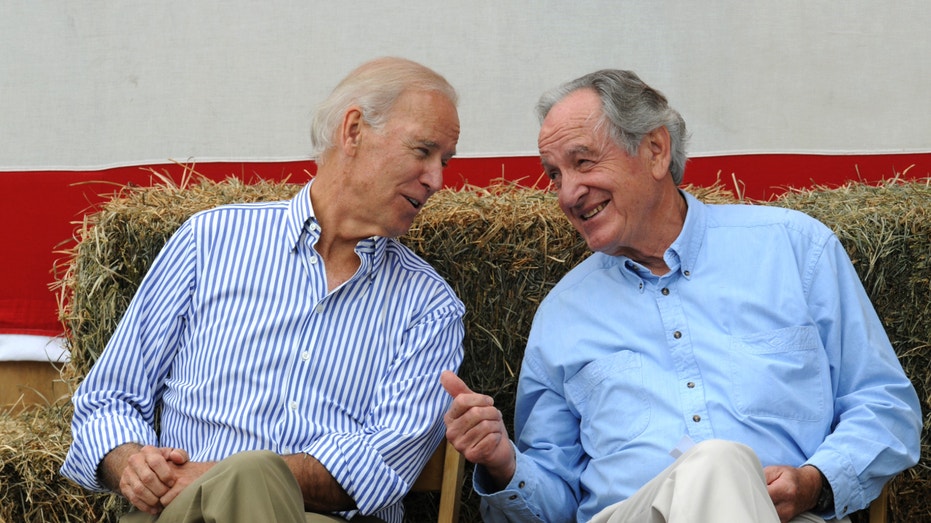
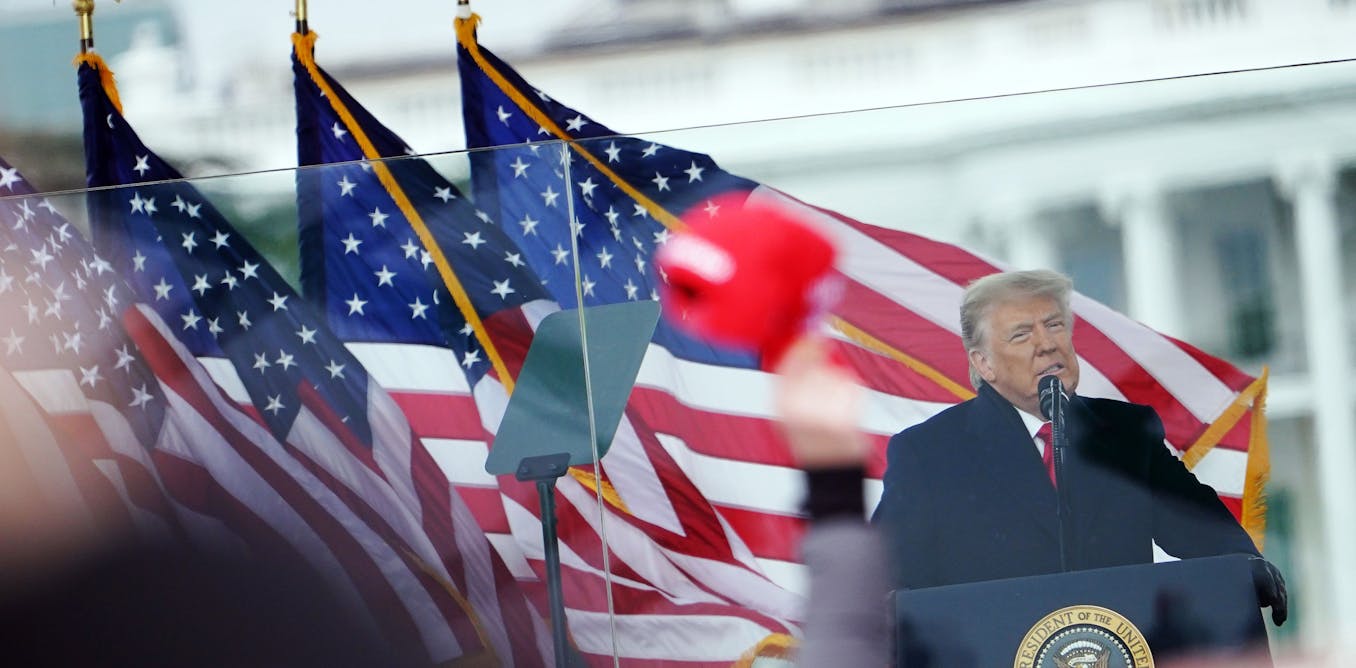
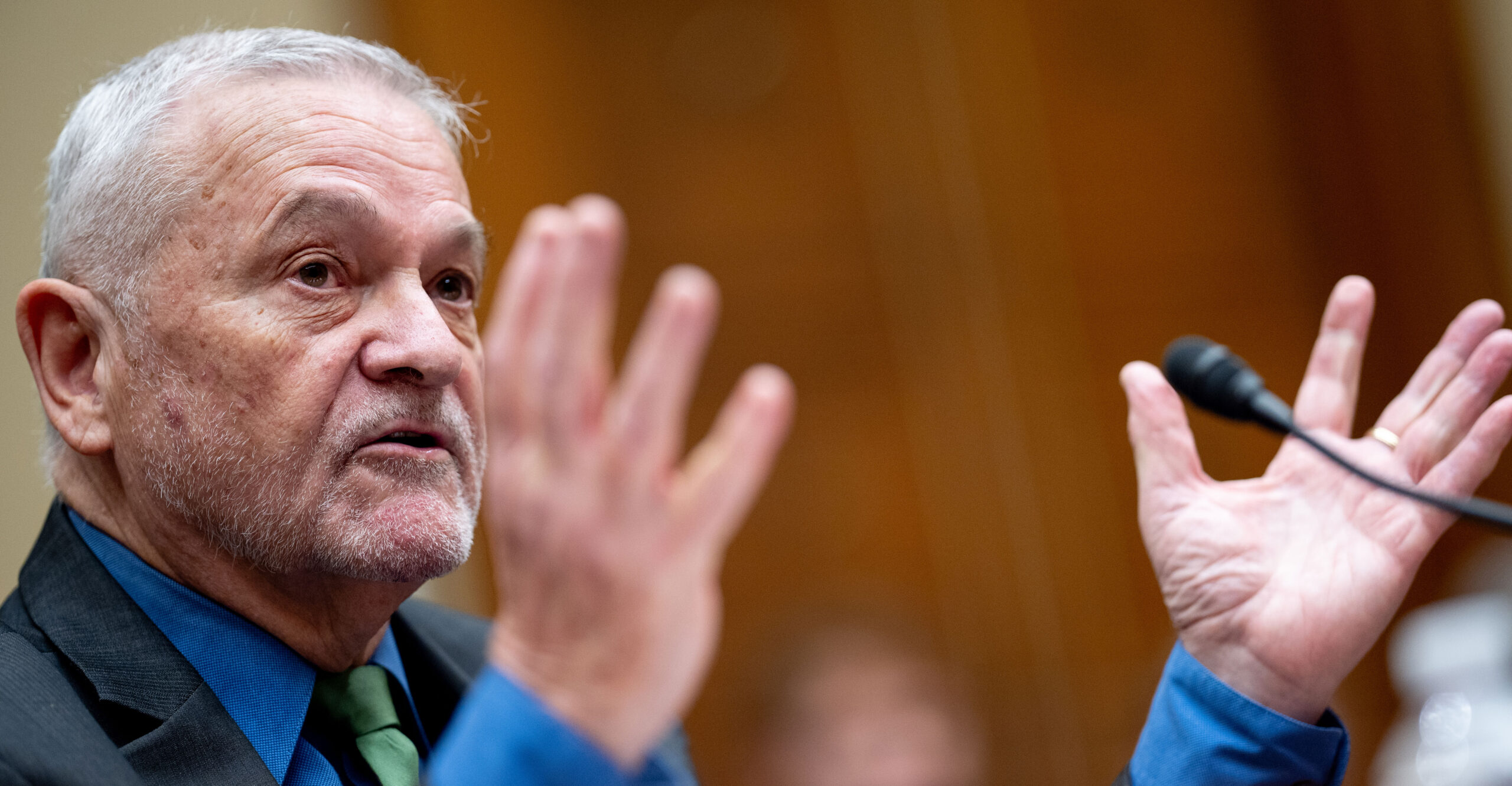
Former Iowa Sen. Tom Harkin, who served with President Biden in Congress for over 20 years, is calling on Democrats to pressure the president into bowing out of the 2024 race following his widely panned debate performance.
Harkin told Julie Gammack’s Iowa Potluck following the debate that voter perception is that Trump is the candidate best “able to take command of a situation and control the outcome.”
“Of course, Trump’s answers were meandering, gobbledygook, and full of lies, BUT they were said with force and directness,” the 84-year-old Harkin said.
“I also think all incumbent Democratic Senators should write to Biden asking him to release his delegates and step aside so the convention can choose a new candidate,” Harkin added. “A couple of governors may need to do the same.”
“Last night was a disaster from which Biden cannot recover,” Harkin said.
The Iowa Democrat said that the president “has gone downhill since his State of the Union speech.”
“Look how he walked and handled himself on the House floor even after the speech, and watch how he walks and uses his arms now,” Harkin said. “Startling!”
Harkin’s comments come after Biden’s performance in the CNN presidential debate on Thursday that immediately sparked calls from within the Democratic Party for Biden to drop out of the race over age concerns.
Other Democrats, including Former Speaker Nancy Pelosi and House Majority Whip James Clyburn have rallied behind the president saying his poor performance was due to “preparation overload.”
The Biden campaign did not immediately respond to a request for comment from Fox News Digital.
“Folks, I know I’m not a young man,” a Biden campaign ad following the debate said. “But I know how to do this job. I know right from wrong. I know how to tell the truth,”
“And I know, like millions of Americans know, when you get knocked down, you get back up.”
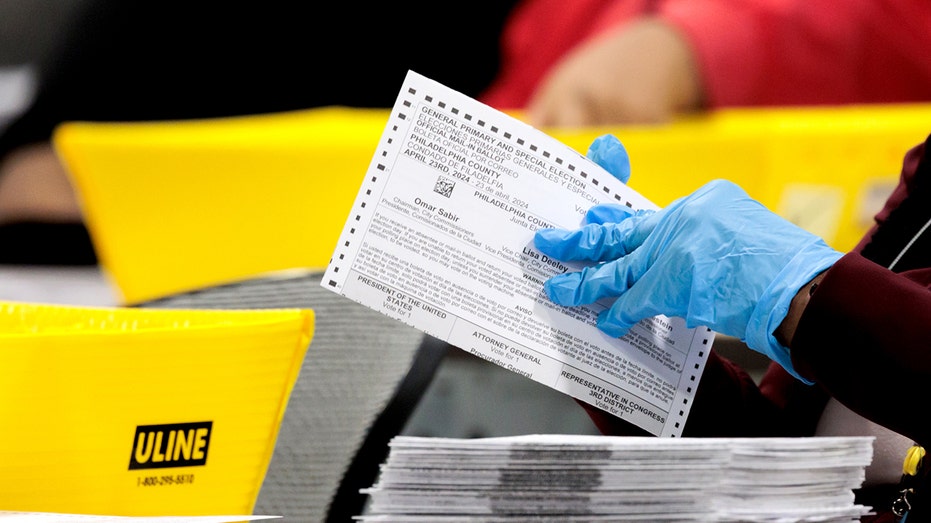
The American Civil Liberties Union says it has filed a lawsuit against Washington County in Pennsylvania, alleging that 259 eligible voters have been “disenfranchised” after not being informed of errors that disqualified their presidential primary mail-in ballots.
The lawsuit, filed on behalf of seven voters, the Washington Branch NAACP and the Center for Coalfield Justice – an environmental group – comes following the Washington County Board of Elections’ “decision before the 2024 primary election to conceal from voters errors they had made on their mail ballot return envelopes that meant their votes would not be counted,” according to the ACLU.
“Because the voters were not informed of the errors, they had no opportunity to correct them by either requesting a new mail ballot or by voting a provisional ballot at their polling place,” the ACLU said in a statement.
A spokesperson for Washington County did not immediately respond to a request for comment Monday from Fox News Digital.
The lawsuit, filed in Washington County’s Court of Common Pleas, says the case is “about fundamentally unfair and egregious conduct by the Washington County Board of Elections that rises to the level of a procedural due process violation of the Pennsylvania Constitution.”
“In April 2024, the Washington County Board of Elections voted 2-1 to adopt a mail-in voting policy that deliberately concealed information about which voters had made disqualifying errors on their mail-in ballot envelopes,” it says. “The Board’s decision was a complete reversal of its prior policy of notifying voters of ballot envelope mistakes – such as missing signatures or incomplete dates – and providing them with an opportunity to correct those errors.”
“Instead, in the weeks leading up to the April 2024 election, the Board determined which mail-in ballots would not be counted, and then implemented a systematic process to keep that information from voters and the public, in many cases affirmatively misleading voters into thinking that their mail-in ballots would be counted,” the lawsuit continues.
It alleges that the Board “deliberately entered information into Pennsylvania’s Statewide Uniform Registry of Electors (“SURE”) system that made it appear as if the Board had accepted the defective mail ballots, when in fact the Board had already set them aside and was planning to not count them” and then “instructed its election office staff not to provide any information to voters who inquired about the status of their mail-in ballot, including whether they had made errors that would prevent their vote from being counted.”
The ACLU says the plaintiffs involved in the lawsuit are seeking a court order for the county to stop “conceal[ing] information about voters’ errors on their mail-in ballot return packets,” and enter the appropriate data in future elections into the state’s system “that will allow voters to be automatically notified about disqualifying mistakes related to their mail-in ballot prior to Election Day.”
The United States Supreme Court has handed former president Donald Trump what may be the most favorable legal decision he could have reasonably hoped for in his fight against federal prosecution for his attempts to reverse the 2020 election outcome.
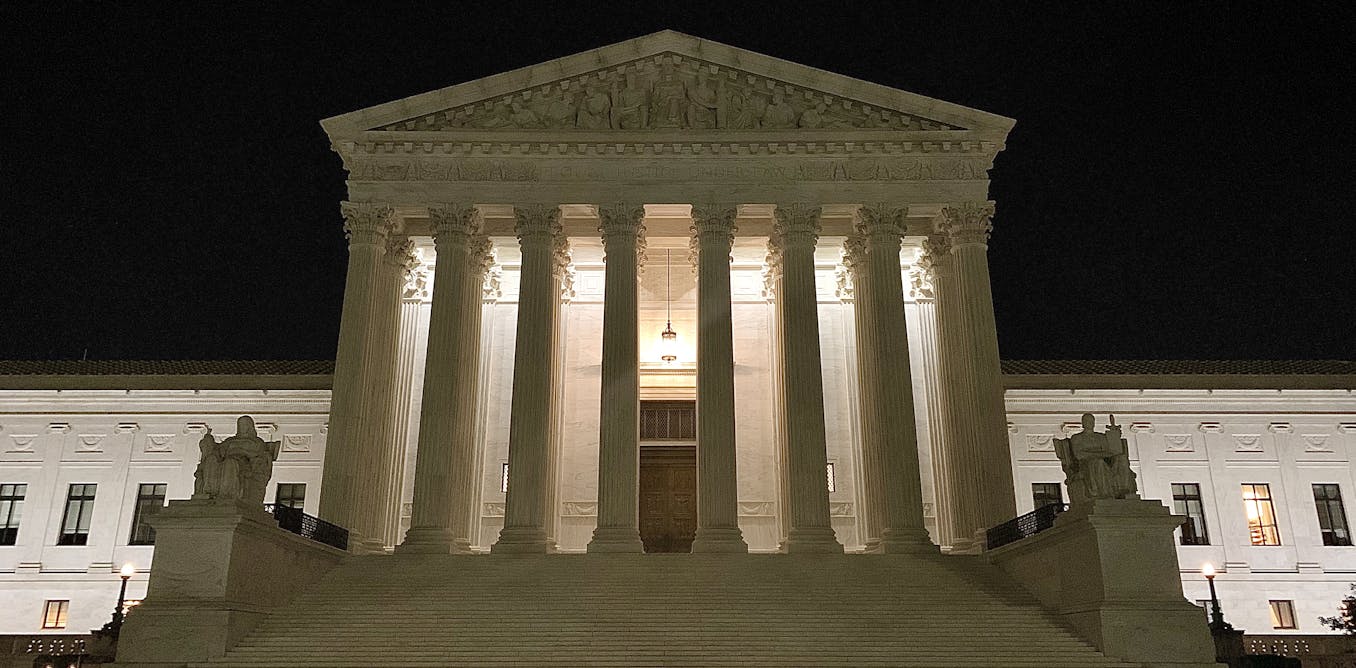
Justices split along ideological lines in a 6-3 decision issued on July 1, 2024, in which the conservative-dominated court declared that a former president has “some immunity for criminal prosecution for official acts during his tenure in office.”
The majority’s use of the word “some,” however, obscures the extent to which its opinion ensures that it will be much more difficult for special counsel Jack Smith to prosecute Trump for actions taken around the 2020 election, much less win that prosecution.
And depending on the extent to which future presidents take advantage of the breadth of legal protection the court is granting, the ruling may also produce fundamental shifts in the nation’s system of checks and balances among the three branches of government and the ability of the legal system to ensure the president complies with the law.
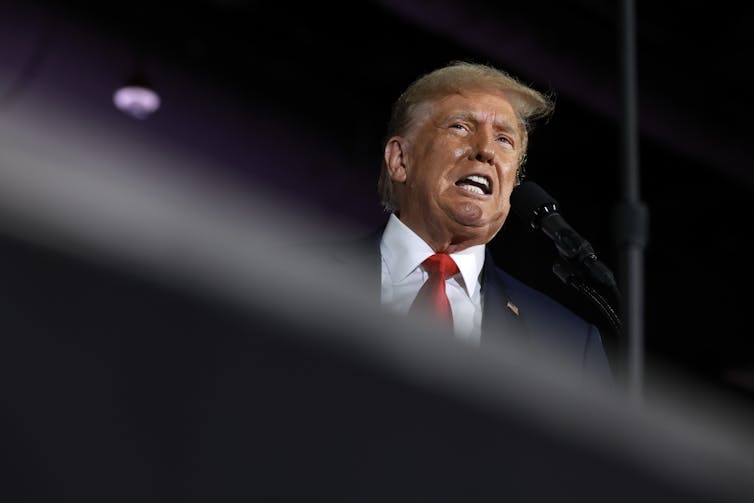
Former president Donald Trump at his 78th birthday celebration.Joe Raedle/Getty Images
Path of the case
At issue in the case was whether the former president could be prosecuted for actions he took related to the 2020 election. Smith originally brought criminal charges against Trump in August 2023, alleging that Trump violated four criminal statutes, including conspiracy to defraud the United States, conspiracy to obstruct an official proceeding, obstruction of an official proceeding and conspiracy against voters’ rights.
Trump argued in an appeal that he could not be criminally prosecuted because he enjoyed absolute immunity for any “official acts” taken while in office.
Government prosecutors countered that the president was not “above the law” and that, given existing safeguards in the criminal justice system designed to mitigate politically motivated prosecutions, Trump should face legal accountability.
U.S. District Court Judge Tanya Chutkan earlier agreed with the government and dismissed Trump’s appeal in December 2023. The U.S. Court of Appeals for the District of Columbia Circuit agreed with her decision, writing in February 2024 that “President Trump has become citizen Trump” and therefore enjoyed no special protection from criminal prosecution.
After initially refusing to hear the case, the Supreme Court agreed to take it on Feb. 28, 2024, and heard oral arguments on April 25, 2024.
The ruling comes after what seemed to many an excessive, even purposeful delay.
Setting the boundaries
Writing for the majority, Chief Justice John Roberts rejected Trump’s claim of absolute immunity from criminal prosecution for official acts taken while he was president, as well as the government’s claim that a former president is not “above the law” and can be criminally prosecuted for all actions done while in office.
Instead, the court ruled that some of the crimes that Trump is alleged to have committed are protected by immunity, but others may not be.
The justices sent the case back to the lower court to make a distinction between the alleged crimes that are now protected acts under the court’s opinion and the ones that remain open to prosecution.
The landmark opinion set general boundaries around how much of a president’s behavior is protected from prosecution. To do that, the court first determined that a president is absolutely immune for actions taken that are part of his “core” executive functions. These include the powers explicitly given to him in the Constitution, such as the pardon power and the power to remove executive branch officials, which are part of his “exclusive authority” into which neither Congress nor the judicial system may intrude.
For his noncore powers, which include all those not specifically listed in the text of the Constitution, such as the formulation of domestic policy, the court took a more nuanced approach.
Attempting to balance the “public interest in fair and effective law enforcement” with the need of the presidency to operate “vigorously” and free from fear of unwarranted prosecution, the majority held that the president has at least “presumptive immunity” for all acts that fall within the “outer perimeter of his official responsibility.”
The court did not clarify precisely what acts fall within this “outer perimeter.”
In an earlier case, Nixon v. Fitzgerald, for example, the court decided in 1981 that former President Richard Nixon’s directive while president to the secretary of the Air Force for how it should be staffed and organized was within that outer perimeter. In its opinion in the Trump case, the court emphasized that as long as the action is not “manifestly or palpably” beyond the perimeter, it should be considered official.
In those instances, the government must demonstrate that there would be “no dangers of intrusion on the authority and functions of the Executive Branch” before it can proceed with a prosecution.
The court also ruled in the immunity case that the president enjoys no immunity from criminal prosecution for nonofficial, private conduct.
Special counsel Jack Smith, who indicted Donald Trump for his alleged actions to overturn the 2020 presidential election results.Ricky Carioti/The Washington Post via Getty Images
Next stop: Back to district court
The justices said it was up to the district court to determine which actions the indictment alleged Trump took were “official” and which were “unofficial” and thus not protected by immunity.
It offered a few guidelines for the lower court to follow.
First, immunity should extend to all actions that are within the “outer perimeter” of the president’s duties. In addition, a president’s motive could not be part of the consideration of whether an act was “official” or “unofficial.” The court also emphasized that “testimony or private records of the President or his advisors” that were related to official conduct could not be used at trial to substantiate criminal charges for his unofficial conduct.
As a result of the opinion, the nation’s first federal criminal trial of a former president will not begin soon. Depending upon how long it takes Judge Chutkan to make the determinations about which aspects of the indictment are still subject to prosecution, it could very well be postponed until after the election.
And if Trump is reelected president, any trial would not occur until after he left office. He could also direct the Department of Justice to abandon the federal prosecution altogether.
‘Law free zone around the President’
Trump’s case was the first time the Supreme Court had been asked to determine whether and to what extent presidential immunity extended to criminal prosecutions of a former president.
In dissent, Justice Sonia Sotomayor, joined by fellow liberal Justices Elena Kagan and Ketanji Brown Jackson, rebuked the majority, writing that its decision created a “law free zone around the President.” Sotomayor asserted that the majority had ignored the text of the Constitution, misread history and precedent, and created an “atextual, ahistorical, and unjustifiable immunity that puts the President above the law.”
In a separate dissent, Jackson argued that the court had invented a new form of legal accountability, under which the president – and only the president – was exempt from the criminal law. In her view, a future president who ordered the assassination of a political rival would have at least a “fair shot” at avoiding any prosecution.
It remains at least somewhat unclear how the ruling will affect future presidents. If this case against Trump is indeed, as the government has argued, a “once-in-history prosecution,” then the court may never again be asked to determine how the criminal law applies to the nation’s chief executive.
If, however, the court’s decision frees future presidents to act in corrupt, even criminal ways, then the “rule for the ages” articulated in this opinion will have a major impact upon the separation of powers among the three branches of government, potentially giving far more power to the president than has been the case throughout American history. That will have huge implications for the functioning of the presidency and the stability, if not existence, of American democracy.
The U.S. Supreme Court has sent back to lower courts the decision about whether states can block social media companies such as Facebook and X, formerly Twitter, from regulating and controlling what users can post on their platforms.
Laws in Florida and Texas sought to impose restrictions on the internal policies and algorithms of social media platforms in ways that influence which posts will be promoted and spread widely and which will be made less visible or even removed.
In the unanimous decision, issued on July 1, 2024, the high court remanded the two cases, Moody v. NetChoice and NetChoice v. Paxton, to the 11th and 5th U.S. Circuit Courts of Appeals, respectively. The court admonished the lower courts for their failure to consider the full force of the laws’ applications. It also warned the lower courts to consider the boundaries imposed by the Constitution against government interference with private speech.
Contrasting views of social media sites
In their arguments before the court in February 2024, the two sides described competing visions of how social media fits into the often overwhelming flood of information that defines modern digital society.
The states said the platforms were mere conduits of communication, or “speech hosts,” similar to legacy telephone companies that were required to carry all calls and prohibited from discriminating against users. The states said that the platforms should have to carry all posts from users without discrimination among them based on what they were saying.
The states argued that the content moderation rules the social media companies imposed were not examples of the platforms themselves speaking – or choosing not to speak. Rather, the states said, the rules affected the platforms’ behavior and caused them to censor certain views by allowing them to determine whom to allow to speak on which topics, which is outside First Amendment protections.
By contrast, the social media platforms, represented by NetChoice, a tech industry trade group, argued that the platforms’ guidelines about what is acceptable on their sites are protected by the First Amendment’s guarantee of speech free from government interference. The companies say their platforms are not public forums that may be subject to government regulation but rather private services that can exercise their own editorial judgment about what does or does not appear on their sites.
They argued that their policies were aspects of their own speech and that they should be allowed to develop and implement guidelines about what is acceptable speech on their platforms based on their own First Amendment rights.
Here’s what the First Amendment says and what it means.
A reframe by the Supreme Court
All the litigants – NetChoice, Texas and Florida – framed the issue around the effect of the laws on the content moderation policies of the platforms, specifically whether the platforms were engaged in protected speech. The 11th U.S. Circuit Court of Appeals upheld a lower court preliminary injunction against the Florida law, holding the content moderation policies of the platforms were speech and the law was unconstitutional.
The 5th U.S. Circuit Court of Appeals came to the opposite conclusion and held that the platforms were not engaged in speech, but rather the platform’s algorithms controlled platform behavior unprotected by the First Amendment. The 5th Circuit determined the behavior was censorship and reversed a lower court injunction against the Texas law.
The Supreme Court, however, reframed the inquiry. The court noted that the lower courts failed to consider the full range of activities the laws covered. Thus, while a First Amendment inquiry was in order, the decisions of the lower courts and the arguments by the parties were incomplete. The court added that neither the parties nor the lower courts engaged in a thorough analysis of whether and how the states’ laws affected other elements of the platforms’ products, such as Facebook’s direct messaging applications, or even whether the laws have any impact on email providers or online marketplaces.
The Supreme Court directed the lower courts to engage in a much more exacting analysis of the laws and their implications and provided some guidelines.
First Amendment principles
The court held that content moderation policies reflect the constitutionally protected editorial choices of the platforms, at least regarding what the court describes as “heartland applications” of the laws – such as Facebook’s News Feed and YouTube’s homepage.
The Supreme Court required the lower courts to consider two core constitutional principles of the First Amendment. One is that the amendment protects speakers from being compelled to communicate messages they would prefer to exclude. Editorial discretion by entities, including social media companies, that compile and curate the speech of others is a protected First Amendment activity.
The other principle holds that the amendment precludes the government from controlling private speech, even for the purpose of balancing the marketplace of ideas. Neither state nor federal government may manipulate that marketplace for the purposes of presenting a more balanced array of viewpoints.
The court also affirmed that these principles apply to digital media in the same way they apply to traditional or legacy media.
In the 96-page opinion, Justice Elena Kagan wrote: “The First Amendment … does not go on leave when social media are involved.” For now, it appears the social media platforms will continue to control their content.
The U.S. Supreme Court has ruled that a president, including former President Donald Trump, “may not be prosecuted for exercising his core constitutional powers, and he is entitled, at a minimum, to a presumptive immunity from prosecution for all his official acts.”
The decision is “super nuanced,” as a law scholar explained to The Conversation shortly after the decision was announced on July 1, 2024.
While a president has total immunity for exercising “core constitutional powers,” a sitting or former president also has “presumptive immunity” for all official acts. That immunity, wrote Chief Justice John Roberts in the majority opinion, “extends to the outer perimeter of the President’s official responsibilities, covering actions so long as they are not manifestly or palpably beyond his authority.”
“There is no immunity for unofficial acts,” the court ruled.
The vote was 6-3, as the court’s three liberal justices – Elena Kagan, Sonia Sotomayor and Ketanji Brown Jackson – strongly disagreed with the majority opinion in a dissent.
“Today’s decision to grant former Presidents criminal immunity reshapes the institution of the Presidency. It makes a mockery of the principle, foundational to our Constitution and system of Government, that no man is above the law,” Sotomayor wrote in the dissenting opinion.
The federal prosecution against Trump for his actions to overturn the 2020 presidential election will now go back to lower courts to determine which of the federal charges against Trump can proceed. One outcome, though, is clear – this decision will have a major impact on presidential power and the separation of powers in government.
Until all of the decision’s nuances are parsed by constitutional law scholars, here are four stories to help readers better understand the arguments leading up to the decision and what was at stake with this case.
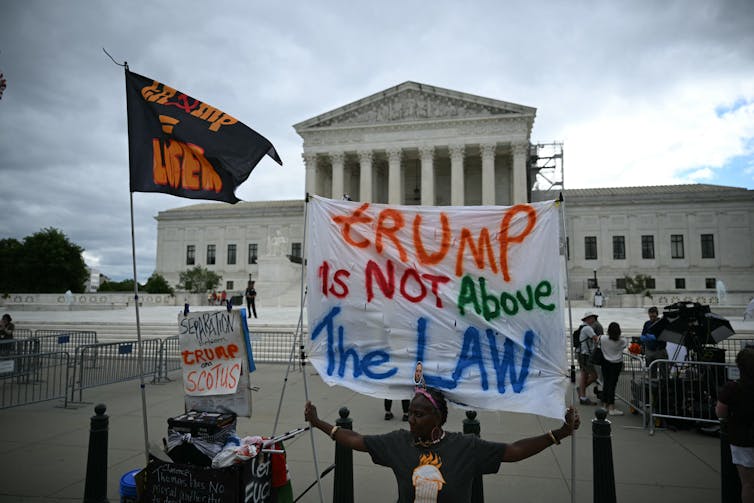
People protest outside the Supreme Court on July 1, 2024, ahead of the court’s anticipated decision on whether Donald Trump is immune from prosecution.Drew Angerer/AFP via Getty Images
1. Laying the groundwork
Trump claimed he is immune from federal prosecution for his efforts to overturn the 2020 presidential election because he was in office as president at the time.
“Trump’s argument centered on a claim … that a president cannot be subjected to legal action for official conduct or actions taken as part of the job,” wrote Claire B. Wofford, a political science scholar at the College of Charleston.
Since 1982, in a case dating back to Richard Nixon’s presidency, presidents have been deemed immune from civil lawsuits based on their officials acts, Wofford explained, and Trump sought to expand that immunity protection. But it was a big ask, Wofford wrote:
“Protecting the president from the hassles of civil litigation is one thing; permitting the president, charged in Article 2 of the Constitution with faithful execution of the laws, to be able to break those same laws with impunity is quite another.”
Indeed, U.S. District Court Judge Tanya Chutkan wrote in December 2023 that Trump did not have the “divine right of kings to evade criminal accountability.” And a federal appeals court agreed in February 2024. That’s the ruling Trump appealed to the Supreme Court.
Read more: Trump was not king and can be prosecuted for crimes committed while president: Appeals court places limits on immunity
2. An inconsistent claim
Trump’s claim faced an uphill battle. Stefanie Lindquist, a scholar of constitutional law at Arizona State University, observed:
“In several of the lawsuits he filed challenging election results in the wake of the 2020 election, Trump himself said he was acting ‘in his personal capacity as a candidate,’ as distinct from his official capacity as president.
“Now, though, Trump claims that whether or not he was acting as a candidate on Jan. 6, his comments on ‘matters of public concern’ fall within the scope of his presidential duties.”
That inconsistency, as well as the general principle in the Constitution that no person could be above the law, made Trump’s position a difficult one to argue.
Read more: Trump claims Constitution gives him immunity − here’s why judges and the Supreme Court may not agree
3. A decision a long time coming
Wofford, a constitutional law scholar at the College of Charleston, observed before the Supreme Court’s July ruling that there was public concern about the time it took the court to reach a decision, but she said that delay was much more likely in service of democracy than it was a partisan play:
“When the Supreme Court makes a decision, it is inevitably answering a very difficult legal question. If the answers were clear, the case never would have been the subject of high court litigation in the first place.”
And the task the justices have in deciding the case is vital to the nation, she wrote:
“(G)iven the potentially unconstitutional actions Trump has threatened to take if re-elected, the country will need a strong and well-respected Supreme Court in the very near future. Those angry with the court should actually be very glad it is working as usual here. If it weren’t, their fear that Trump will get away with it all may indeed be realized.”
Read more: Supreme Court’s slow roll on deciding Trump’s immunity is the opposite of politics
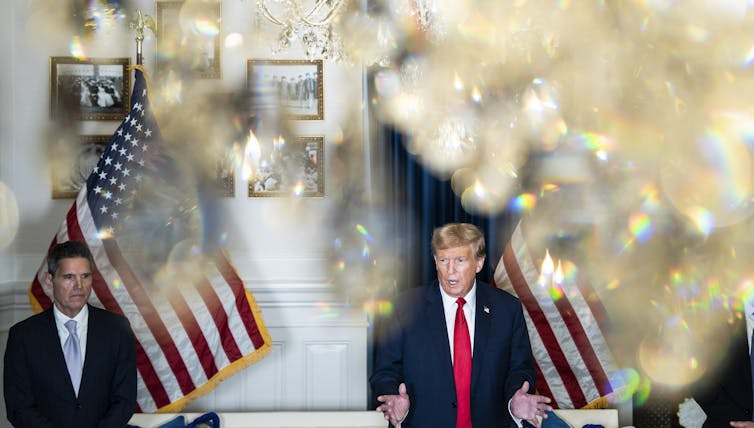
Donald Trump speaks after the appeals court hearing on his claim of immunity from prosecution on Jan. 9, 2024, in Washington.Jabin Botsford/The Washington Post via Getty Images
4. What this means for the future
Earlier this spring, Wofford noted some disturbing portents during the oral arguments before the Supreme Court on April 25, 2024:
“Several of the justices, across the ideological spectrum, were very concerned about the practical implications of allowing a president to have immunity to some extent, or not allowing the president to have immunity.”
For instance, Wofford noted,
“Justice Samuel Alito seemed really concerned about the president being subject to political prosecution if he were not protected by immunity. … On the flip side … (Justice Ketanji Brown Jackson) said a president could enter office ‘knowing that there would be no potential penalty for committing crimes.’”
Wofford expected the justices would try to avoid granting either complete immunity or no immunity at all – and therefore allow Trump’s federal trial for attempting to overturn the 2020 presidential election to continue based on the fact that many of his actions were private, not official. Though that held peril, too, Wofford wrote:
“I wish there were a different vehicle through which the court could resolve this question and that it didn’t feel to so many people that the fate of our government, and the stability of our system, was on the line. … If it does not make a clear, resounding statement that the president is not above the law, then I think we have a serious problem.”
Read more: Trump’s immunity arguments at Supreme Court highlight dangers − while prosecutors stress larger danger of removing legal accountability
This story is a roundup of articles from The Conversation’s archives.
In what is undoubtedly one of the most significant constitutional decisions it has ever issued with respect to the separation of powers and the powers… Read More
Pro-housing Democrats won a victory Friday in San Francisco after state authorities declared the city had not met its housing permitting goals in 2023, triggering… Read More
Surges in military aggression near Taiwan since President Lai Ching-te’s inauguration last month are defining a provocative new Chinese military posture. At the same time,… Read More
France’s premier right-wing party won massively in the country’s first round of snap elections on Sunday, delivering a blow to President Emmanuel Macron’s liberal coalition…. Read More
Can there any longer be any doubt? The behavior of senior officials at the National Institute of Allergy and Infectious Diseases, the powerful federal agency… Read More